Traditional Archery
Archery…The Song after Hitting the Target
Photos from Bhutan to Bangkok and Beyond!

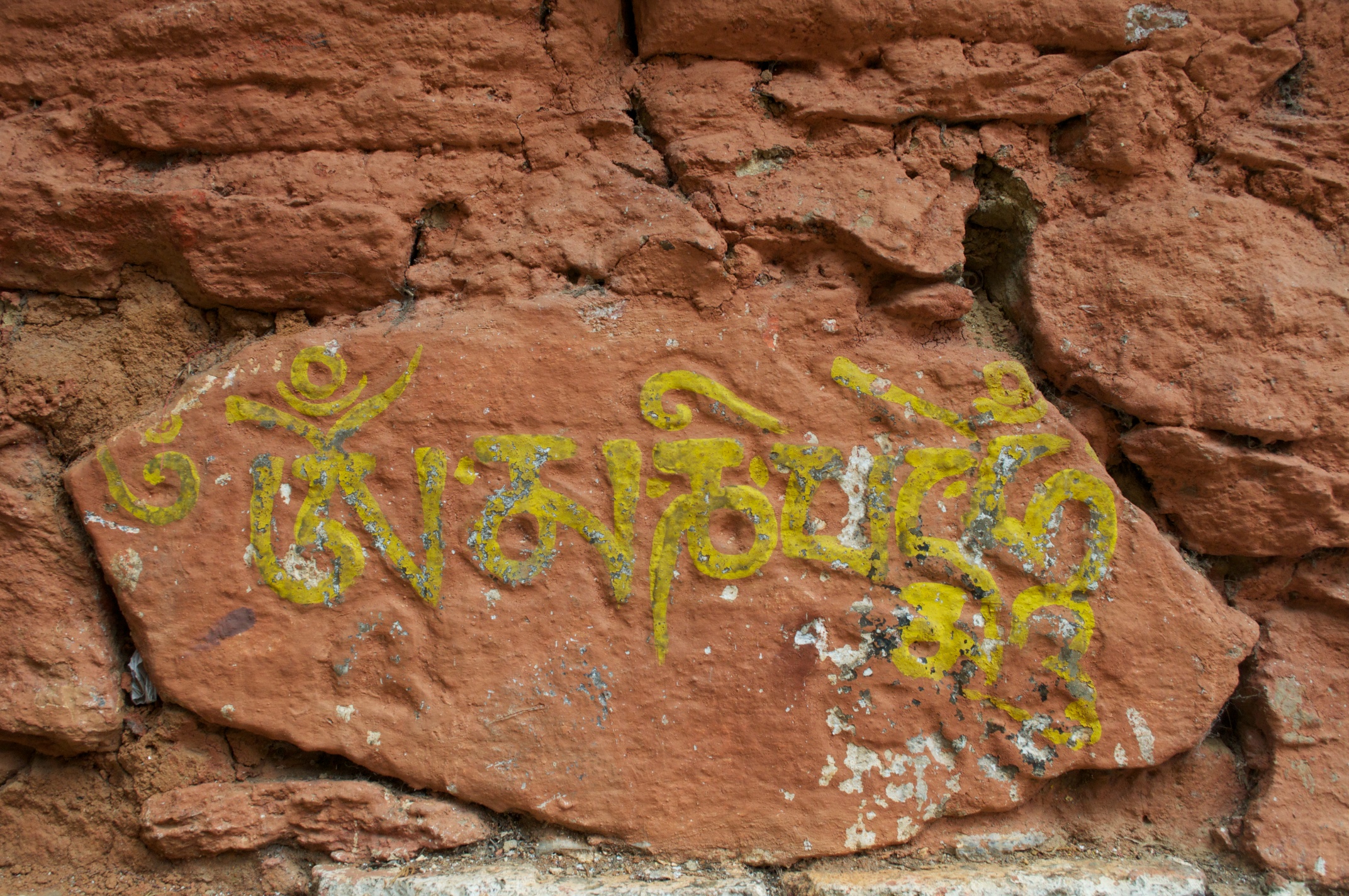
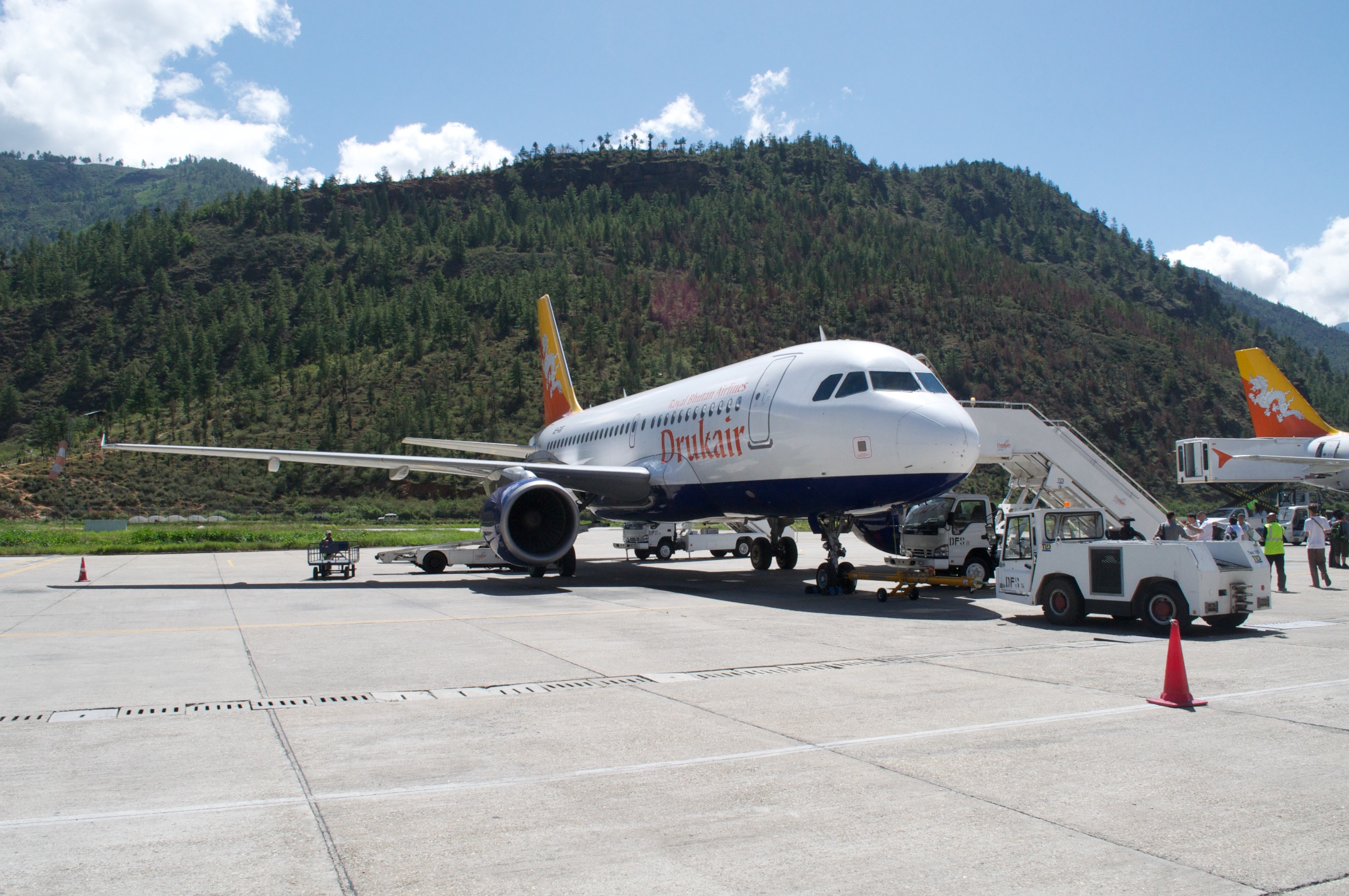
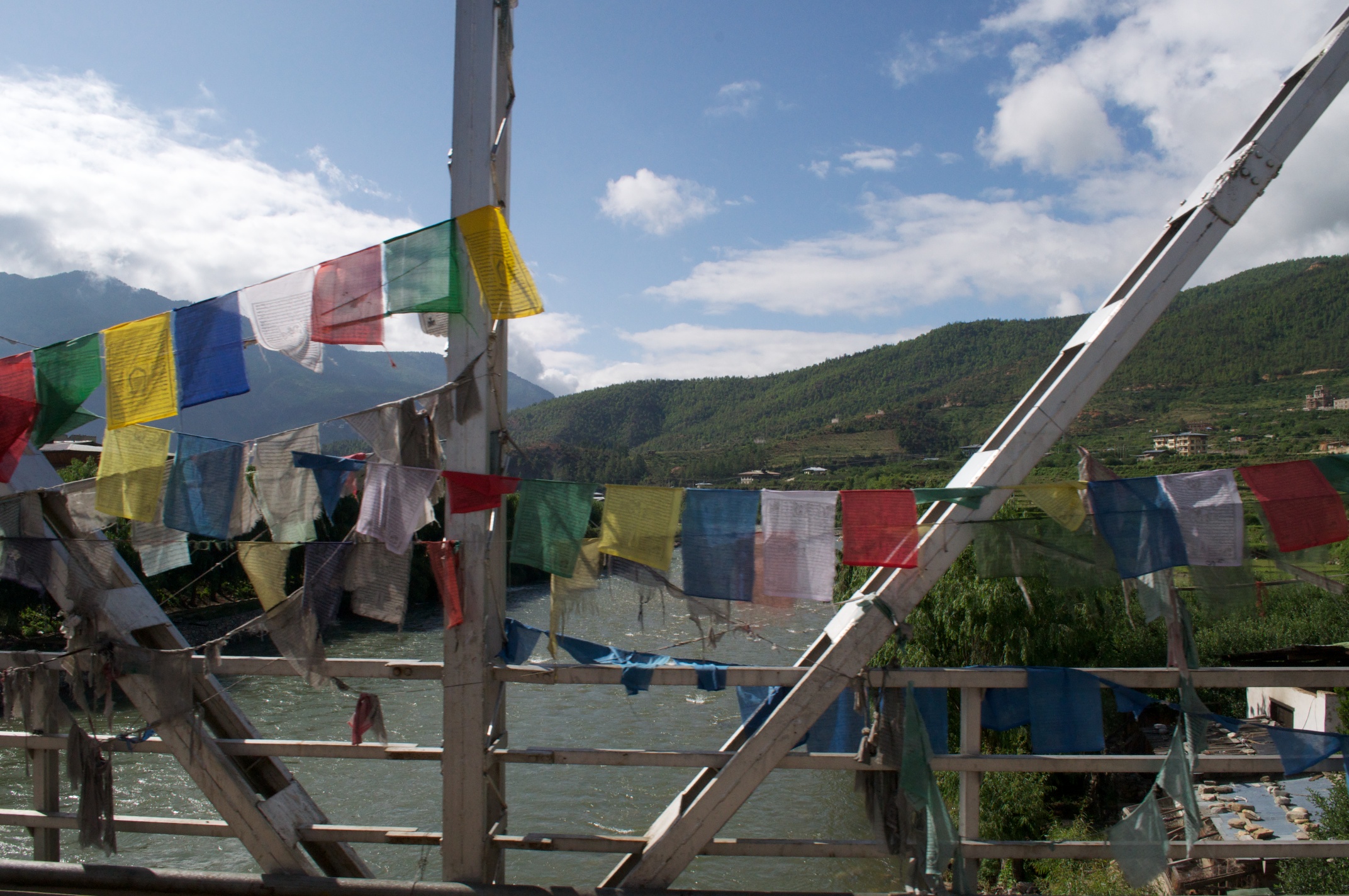
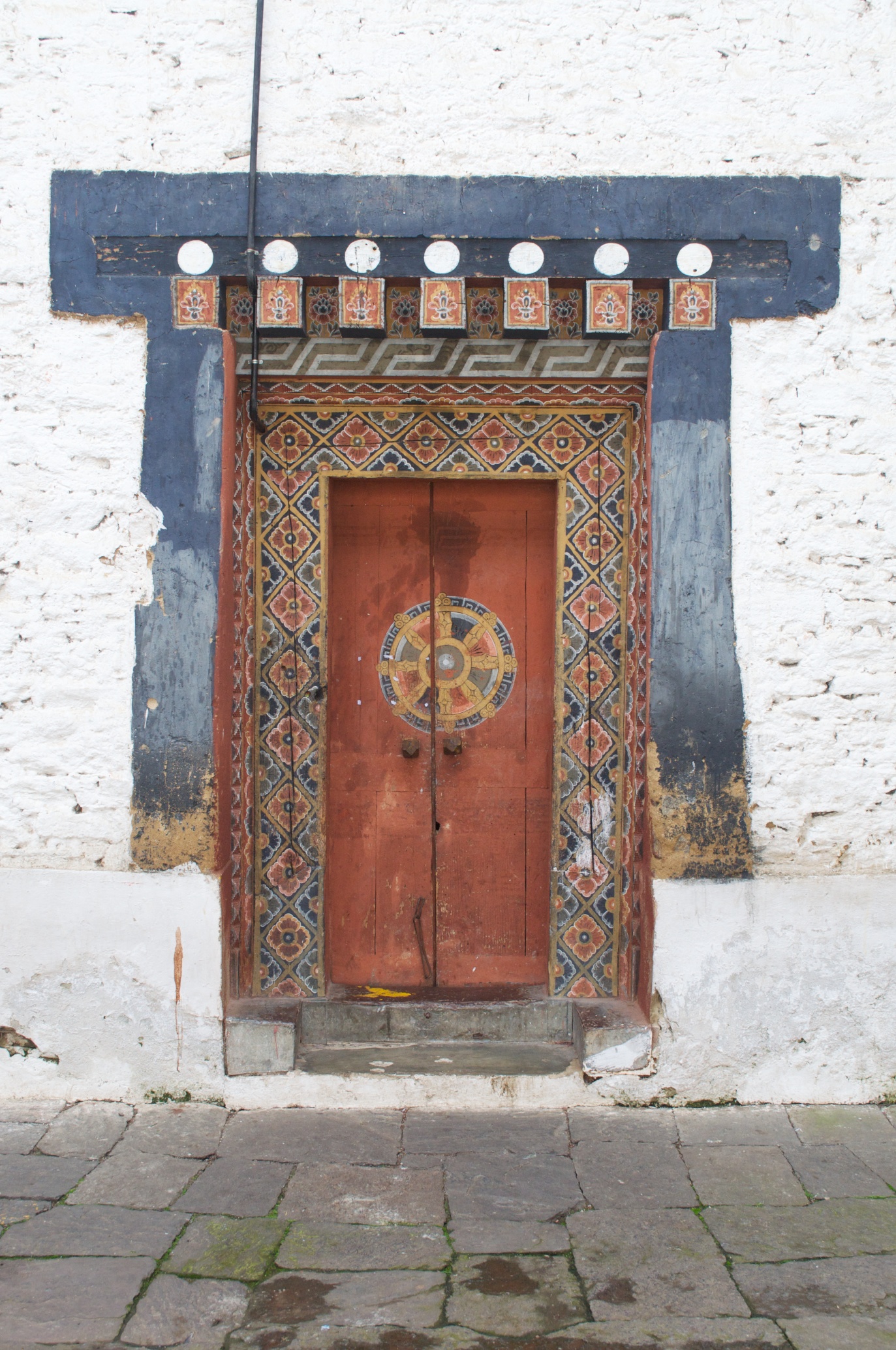
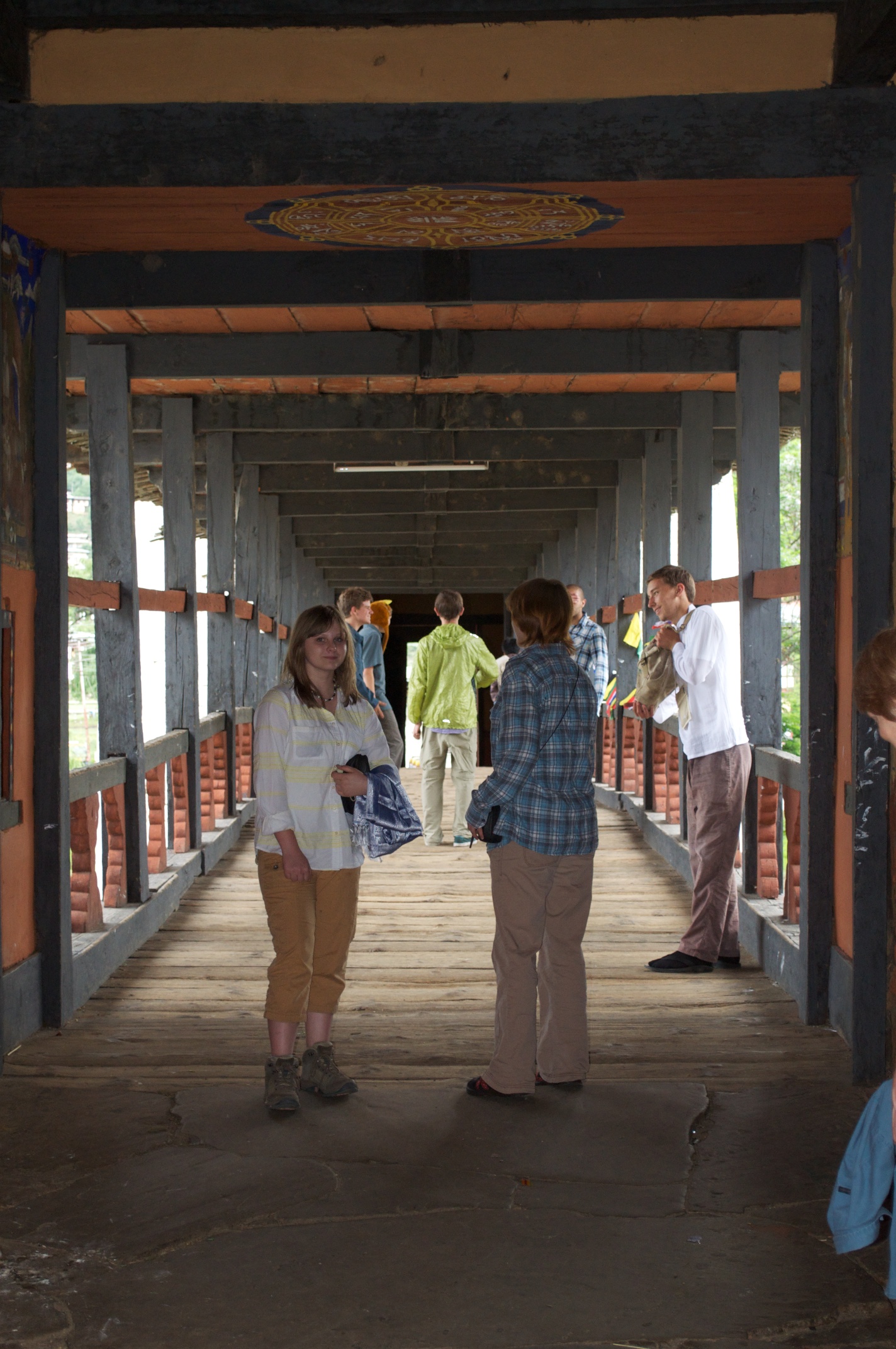
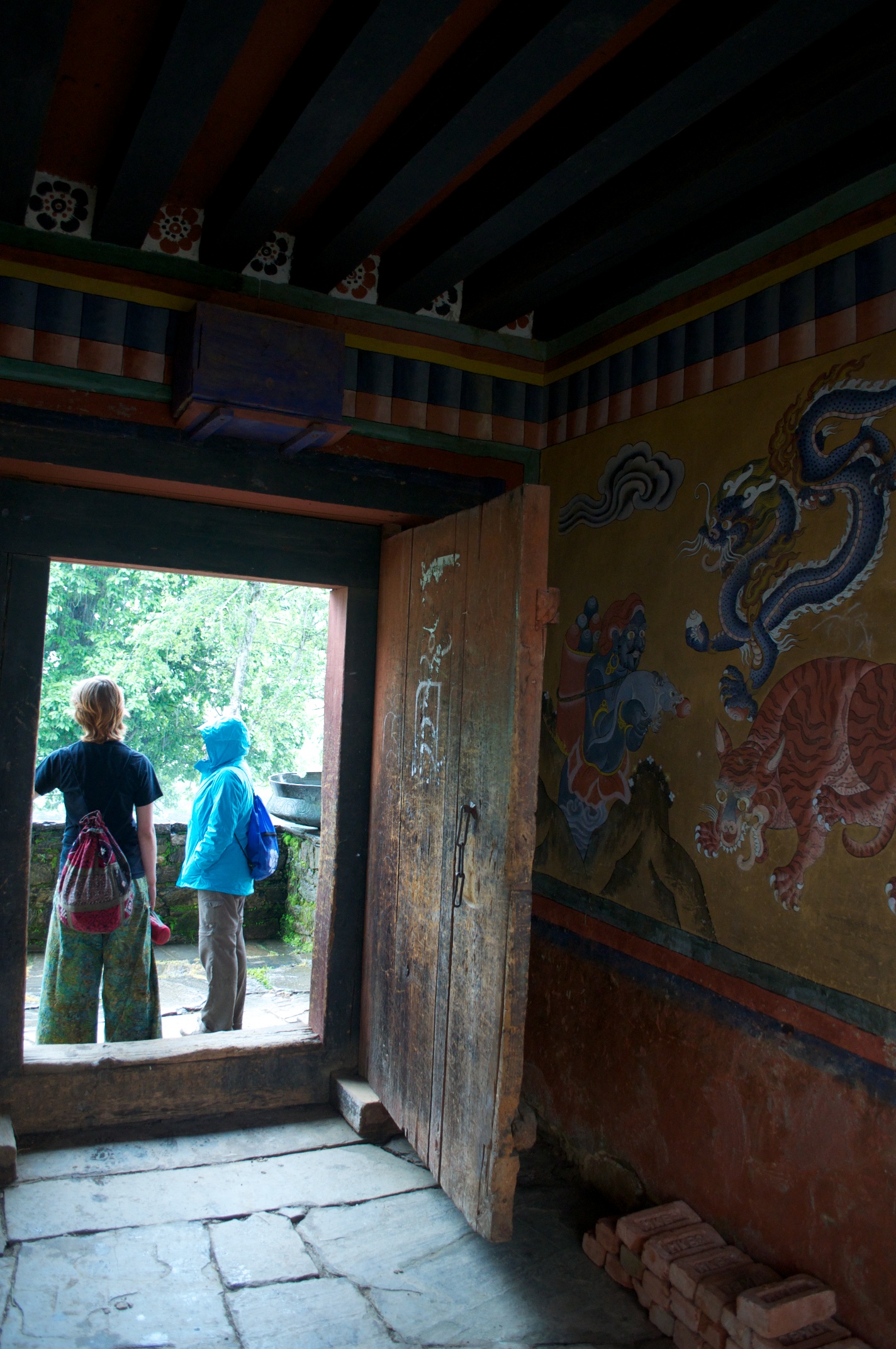
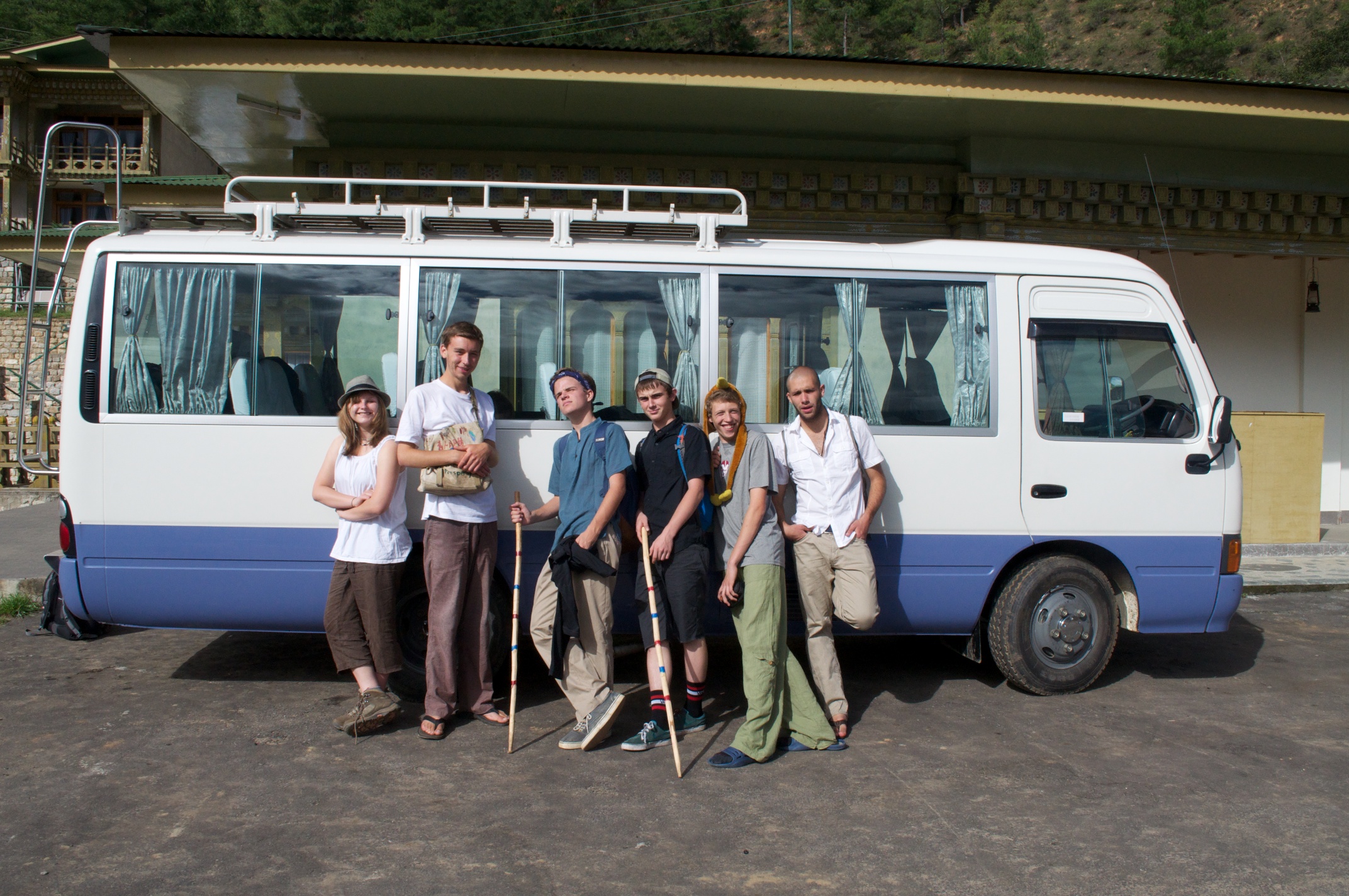
Final Days in Asia
It’s hard to characterize exactly how one feels when confronted with the idea of leaving Bhutan. Of course we all want to see our families and our focus is on home and getting back to our lives. At the same time, at one time or another during that last day, I heard just about everyone say they were not ready for the trip to end. The end of this trip really crept up on us, and some of us just weren’t ready to go…..Sebi said it best when he mentioned, “This trip went so quickly that just as we got into it, it was over.”
Our final morning was easy and included a short drive to the airport. Namgay sat with us at breakfast and we talked about this trip, future trips, and thoughts about Bhutan and the U.S. Cole and Layla both said, “I’m definitely coming back” and Miles said, “This place gets into your bones.” Miles is so right. One visit to Bhutan really captures your imagination and you take with you a sense of the people and place unlike other trips we have been on.
As we boarded the flight, many of us looked back on the Paro valley. The green rice paddies, the light shining through the clouds, all made the departure idyllic.
The flight stopped in Dakar, Bangladesh and then onto Bangkok. When we got off the plane and waited for the van to our hotel, the heat was oppressive at 40 degrees Celsius. We waited for a while and finally the van showed up and we got to the Great Residence Hotel (http://greatresidencehotel.com) by about 5:00 PM. An outdoor pool made this day a bit more relaxed.
That last evening in Bangkok, we wandered the streets looking for some food….we found a place that had outdoor, covered seating and we ordered food en mass to share. The food was great and very reasonable….we enjoyed sharing a final meal together in good old family style dining….it was a wonderful end to the trip to Asia.
We had to be at the airport the next morning by 3:30 AM….this departure required waking before 3:00 to make the shuttle to the airport. I am glad we got to the airport that early because the place was crowded and any later arrival would have been disastrous!
The six-hour flight to Tokyo-Narita was uneventful and we landed in Tokyo tired. Matt immediately found a place to buy a hot dog and some of us found a great noodle shop to have a local meal of udon noodles with tofu or chicken. Many of us found last minute gifts for family and friends, and we prepared for the nine-hour flight to San Francisco.
The flight back home was necessarily rough in the sense that we were tired, lacked any real sleep for a couple of days, and Struggled with simple tasks in our sleep-addled brains.
Climbing to Taktsang Temple
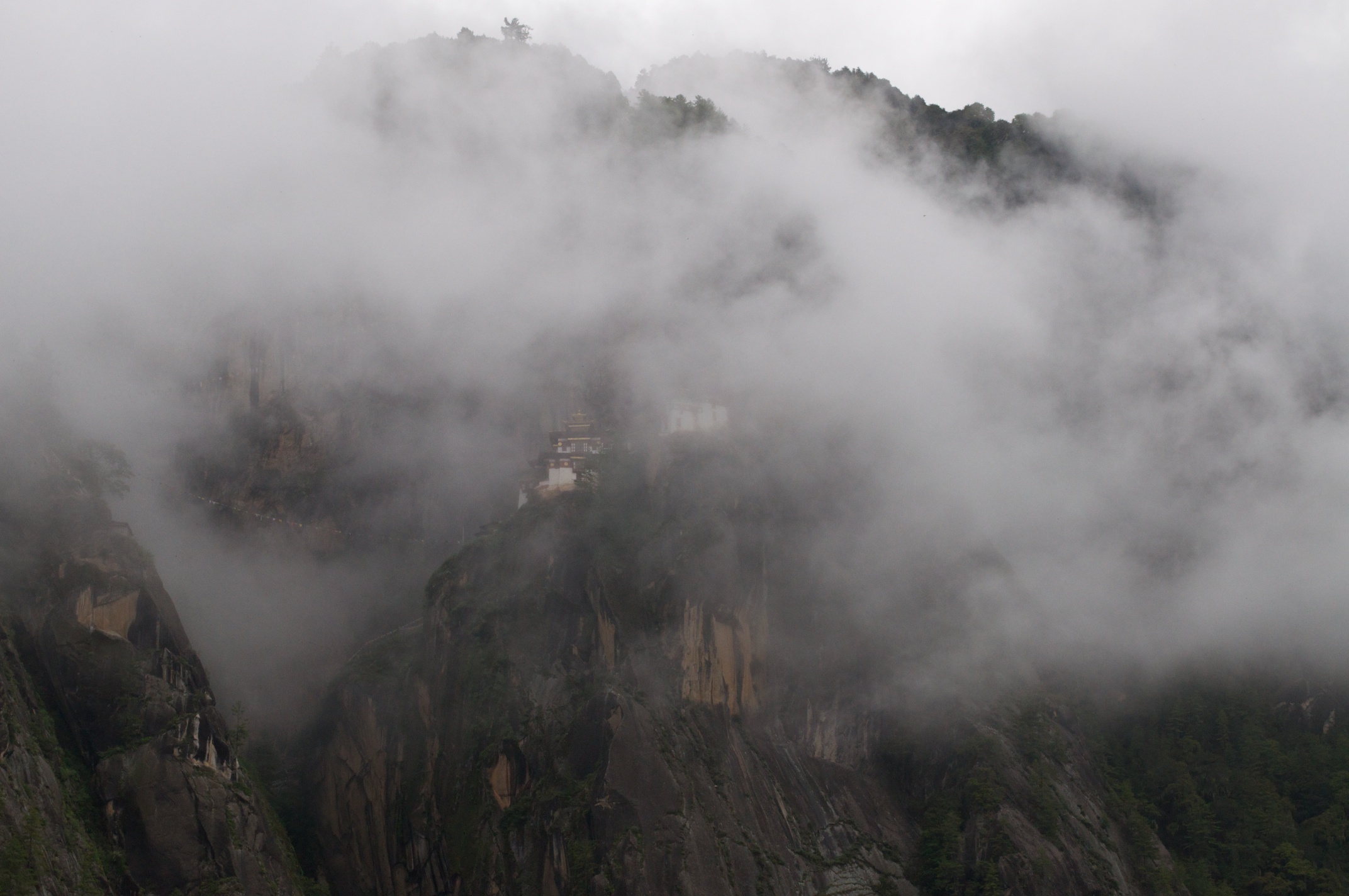
The hike to the Tiger’s Nest is a remarkable experience. The trail is steep, muddy, and brutal in places. The steps up to the temple number 700, and the view of the temple itself is among the most spectacular in the world.
We started our day early, at 7:00 AM, and headed to the trail by 8:00. We were walking by 9:00 AM and headed UP! On this day, a Sunday in Bhutan, hundreds of folks traveled to the temple. A large majority of travelers were Indian soldiers training in Bhutan. Others included Japanese, Indian nationals, and a scattering of folks from Europe and North America.
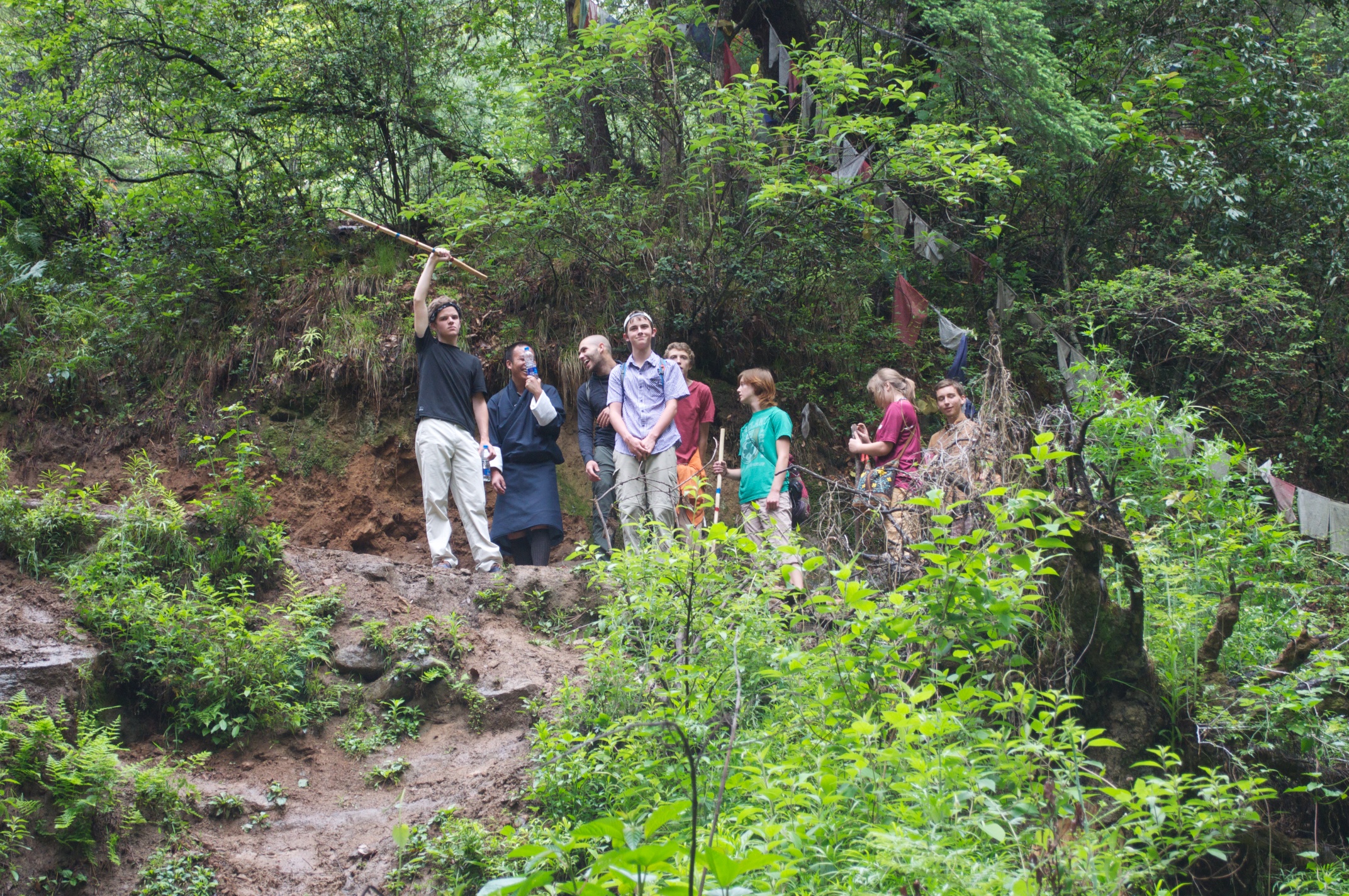
As you can see from the few photos posted here, the trail was challenging for most of us. At the same time, it was enjoyable and a beautiful day, cloudy, humid, and not too hot.
I’ll let the pictures speak for themselves.
The slow internet connections here in Bhutan have limited the number of pictures I can load. Today you will see only two….hopefully I can load a few more in Bangkok this afternoon.
Wangdue to Paro
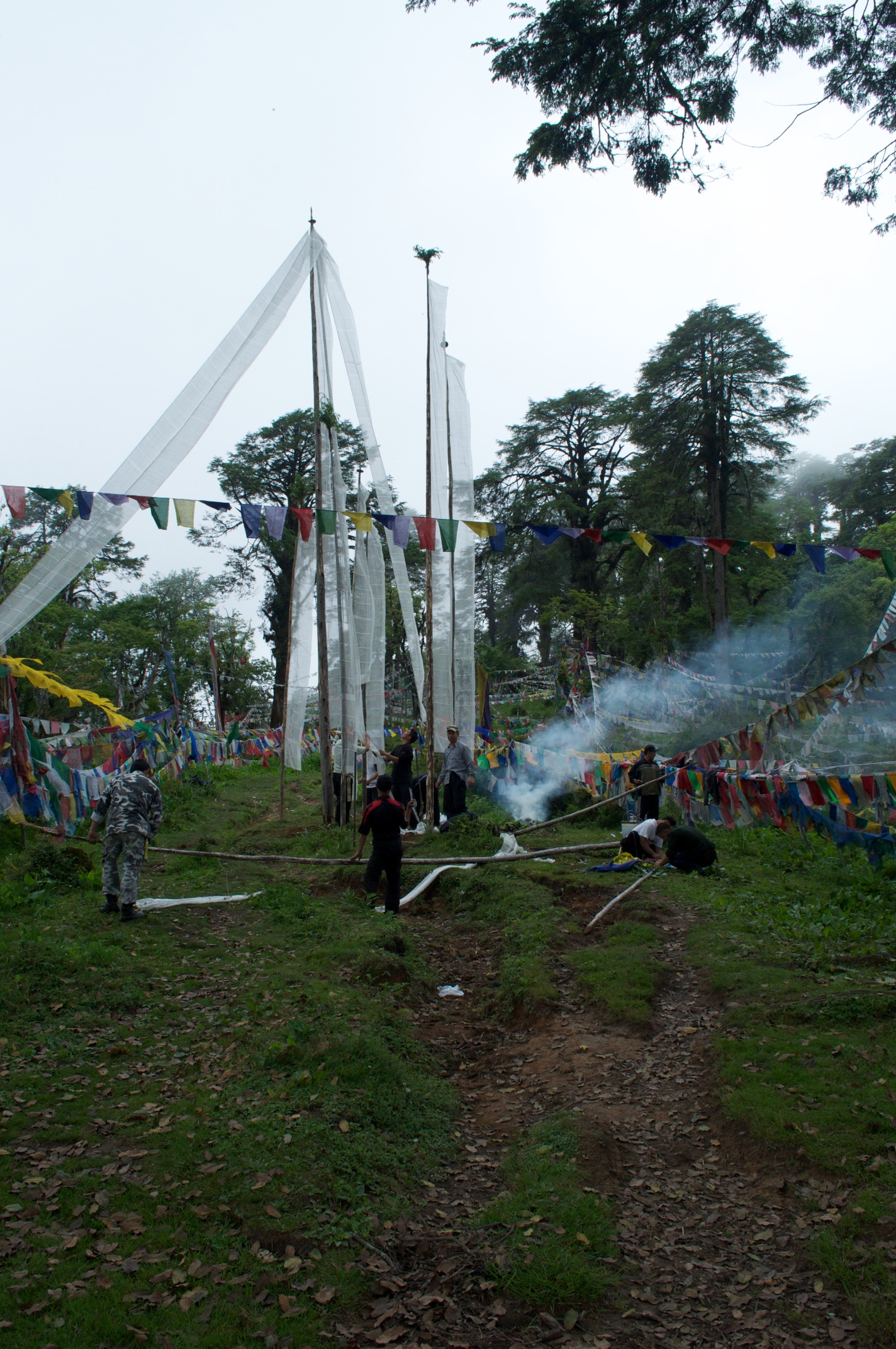
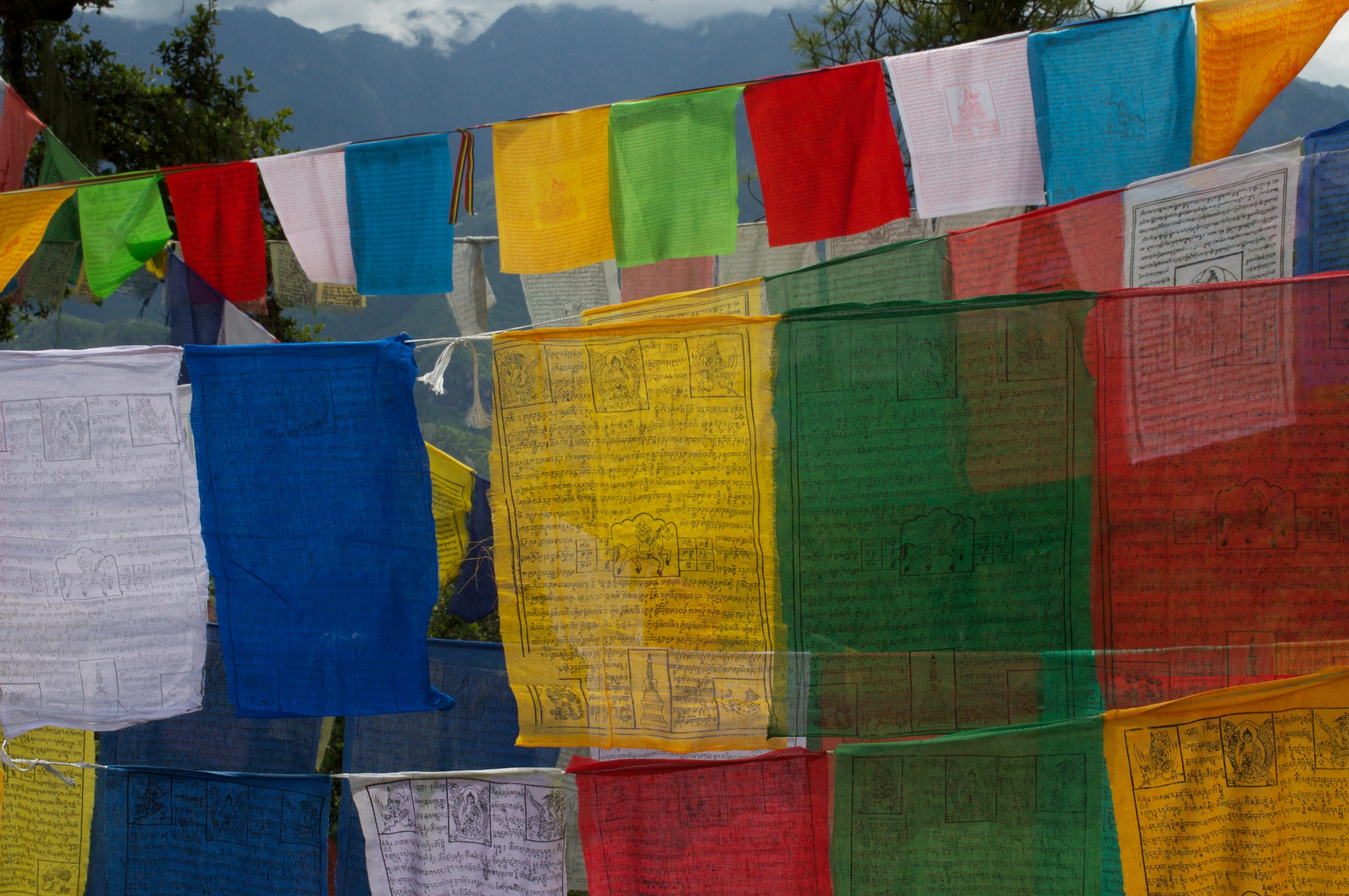
Our travels have taken us across the country and ow back to the west and the streets of Paro. As we traveled across the pass between Wangdue and Thimphu, we stopped and talked to a family raising prayer flags for a deceased relative. Families raise these flags in honor and memory of their passing and the flag poles, 15 to 20 feet tall, are markers of their life.
We headed down the valley road into Thimphu for a lunch stop and visit to Namgay’s sister’s restaurant. We ate wonderful food, saw baby Atticus again, and were given hand-made journals and a small textile for each of us to carry. The reception was warm and truly wonderful. Atticus, of course, was the highlight of the event!
Our arrival in Paro marked the final destination of our trip. Tomorrow we head to the Tiger’s Nest, Taktsang temple on the cliff face of the Paro Valley.
Photos from Chamkar


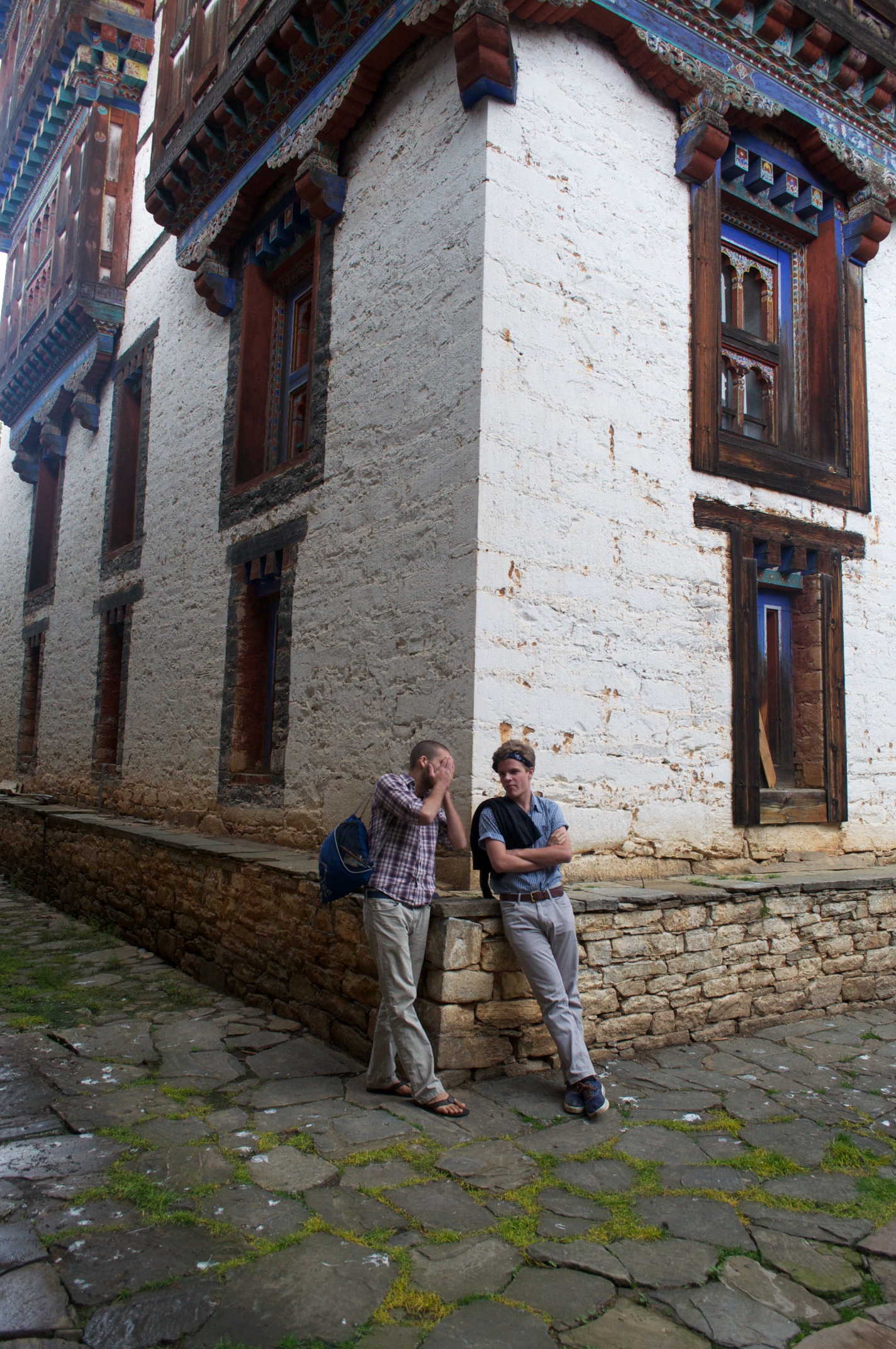


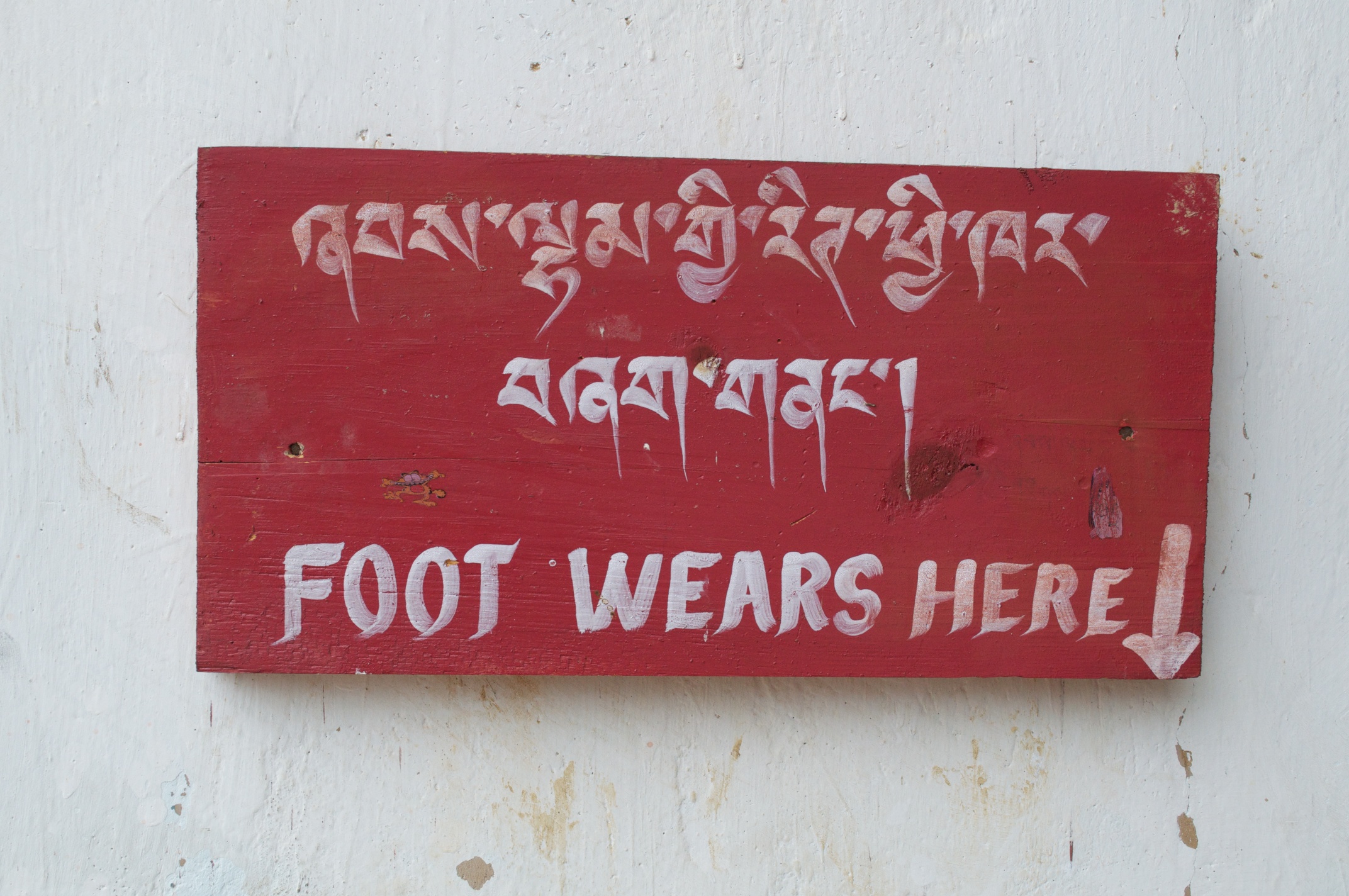
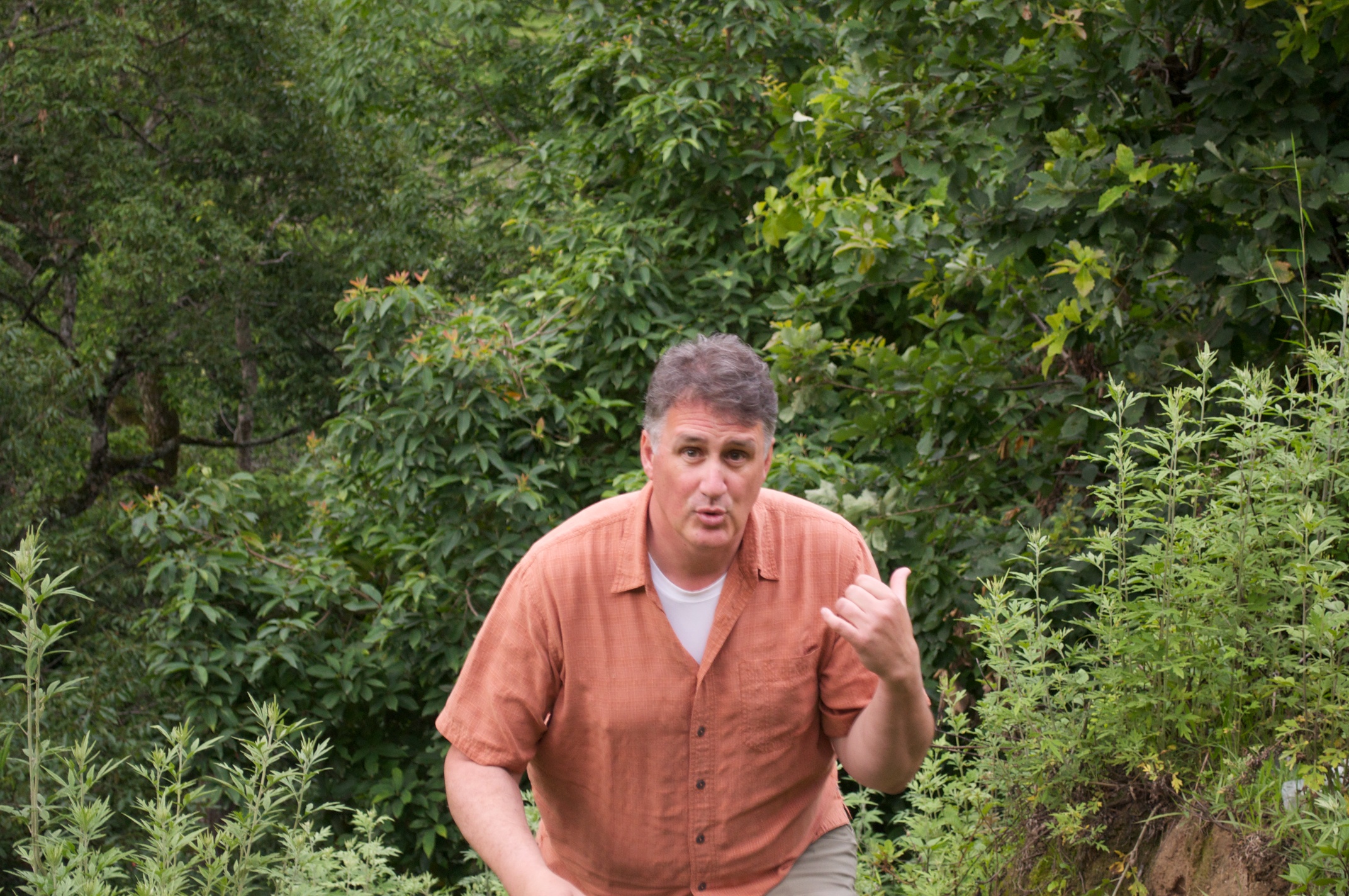
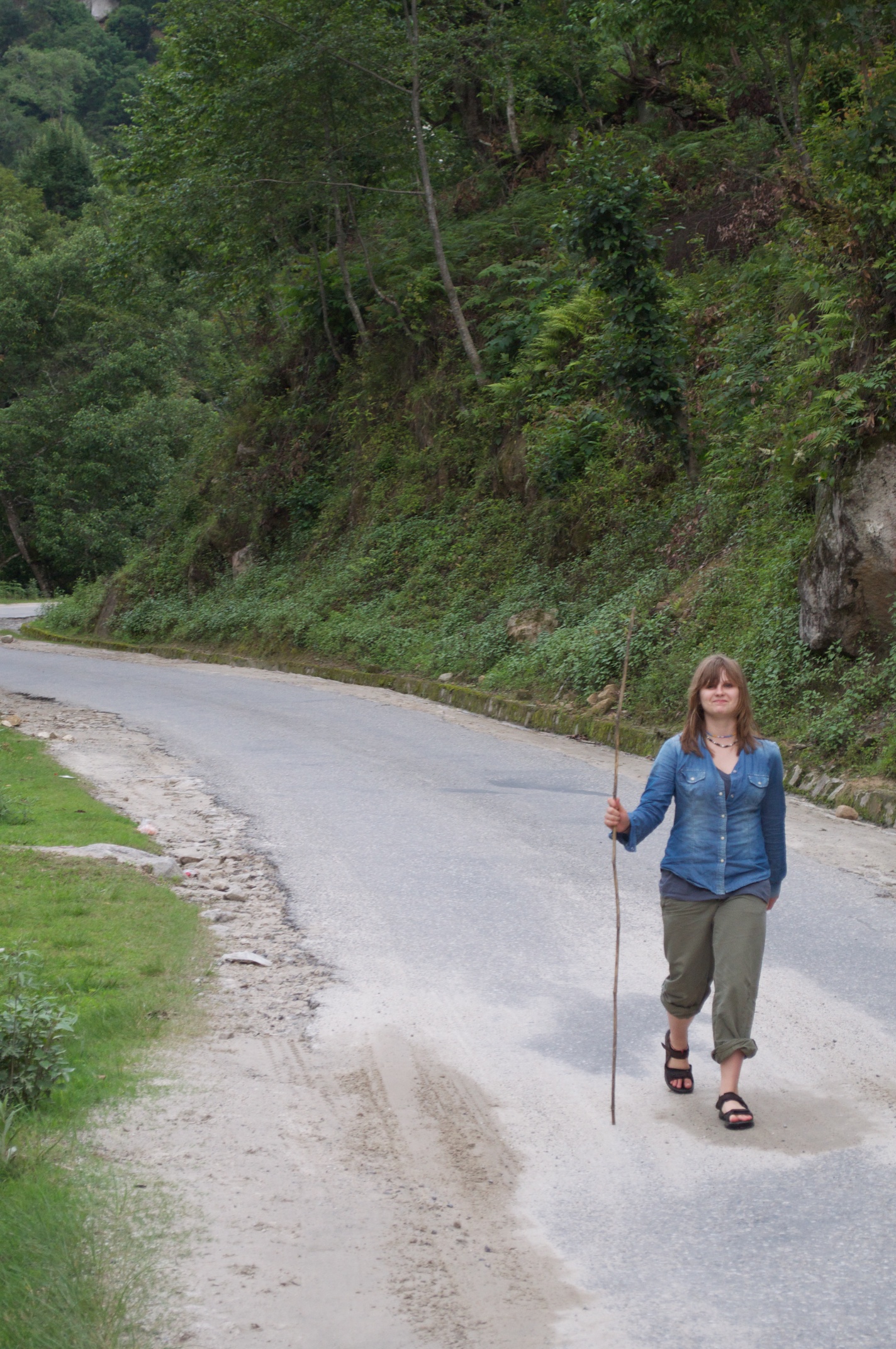
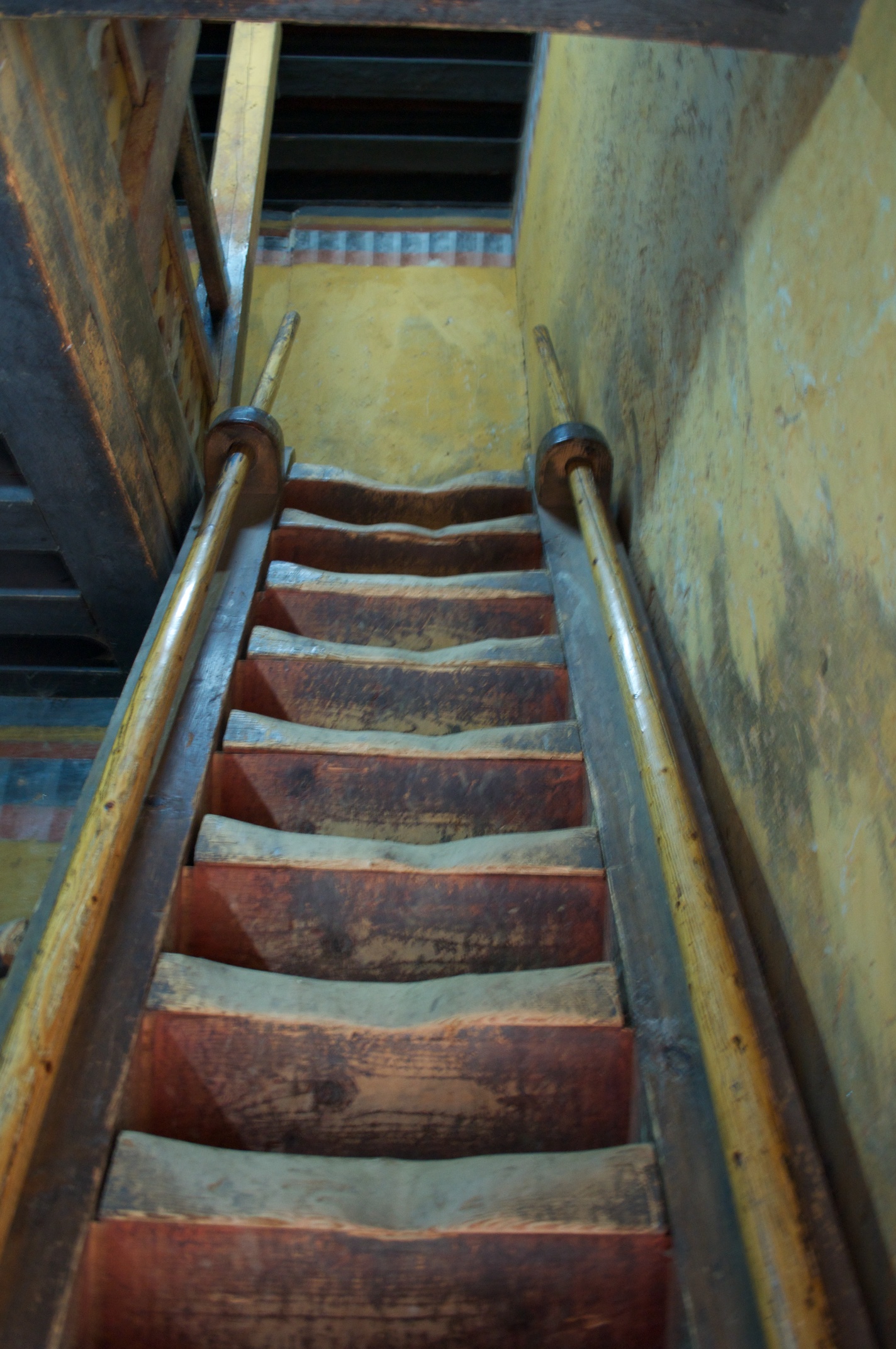
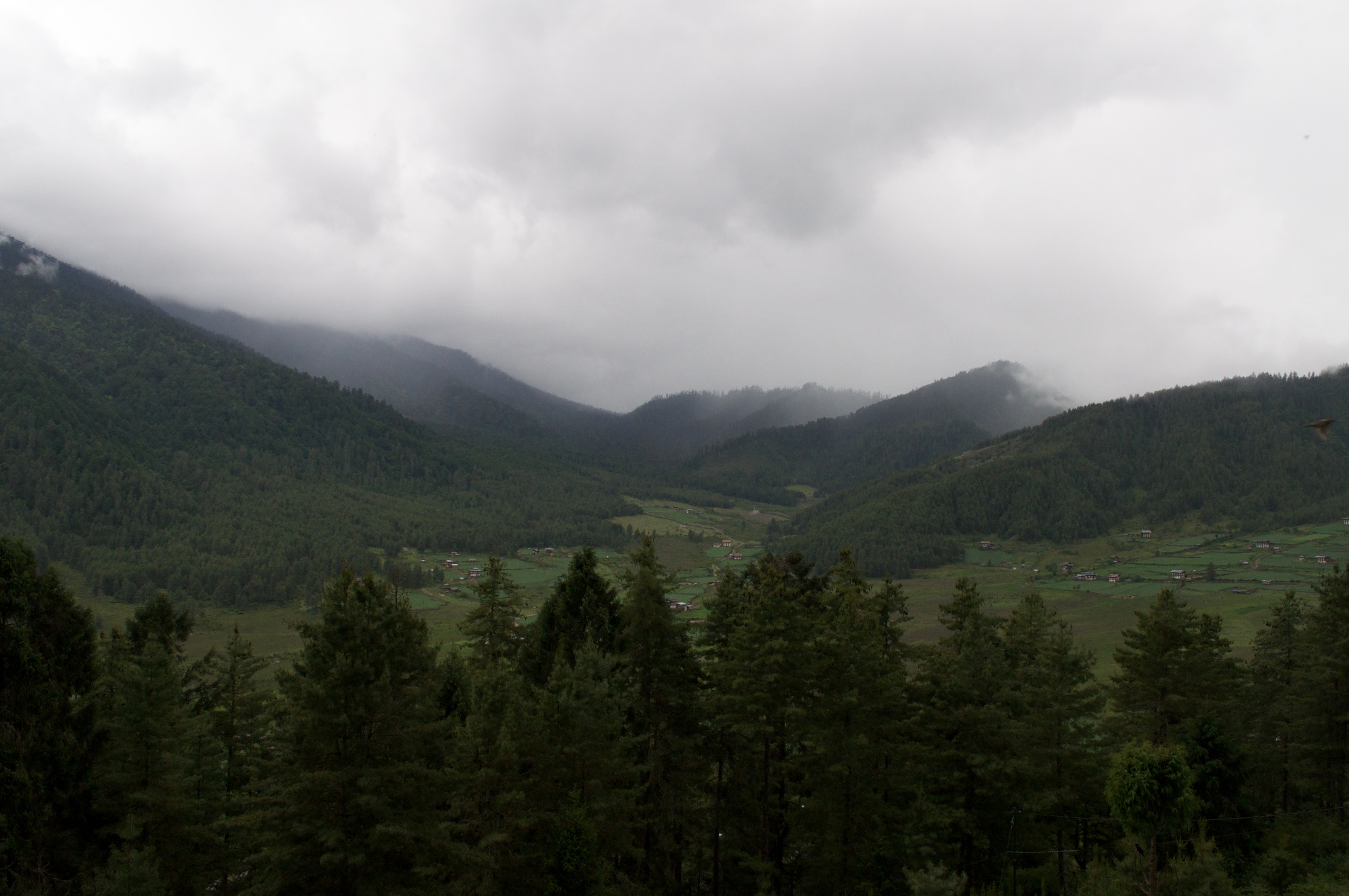
The Long Drive West
Sitting in the dining area this morning, I wondered at the trip and the travel we have done. We have covered miles and miles of ground in the past eight days and this day promised to be the longest so far.
The thing to know about Bhutan is that the roads are one lane tracks that hug the mountains. I imagined looking at a topo map of Bhutan, the road carved into the side of mountains, contouring around each hill and valley. The road winds back and forth across the country. And this road is, in fact, the only West-East road in Bhutan, meaning that all traffic crossing the country must, by necessity, use this trunk road for all travel.
The amazing thing is, it all seems to work fairly well. We passed TATA trucks, dump trucks, machinery of all sorts, small cars, big cars, SUVs, tiny vehicles….bikes, motorcycles and folks walking along the road. All headed in one direction or another traveling on this remarkable road.
At the same time, when you see a sign that says “65 kilometers” what it should say is “about three hours if you are lucky!” The thing is, travel in Bhutan is necessarily slow. For those of us who are
anxious or ADD, this scenario might seem like a nightmare. For those of us more patient, the travel becomes an experience in seeing a lot of scenery, flora, and fauna in this Asian nation.
To summarize this day for you: we left Chamkar at 8:15 AM and arrived in Wangdue at about 6:45 PM (with numerous stops). We saw landslides, stopped vehicles, temples, and ate lunch in one of the most serene places in the country.
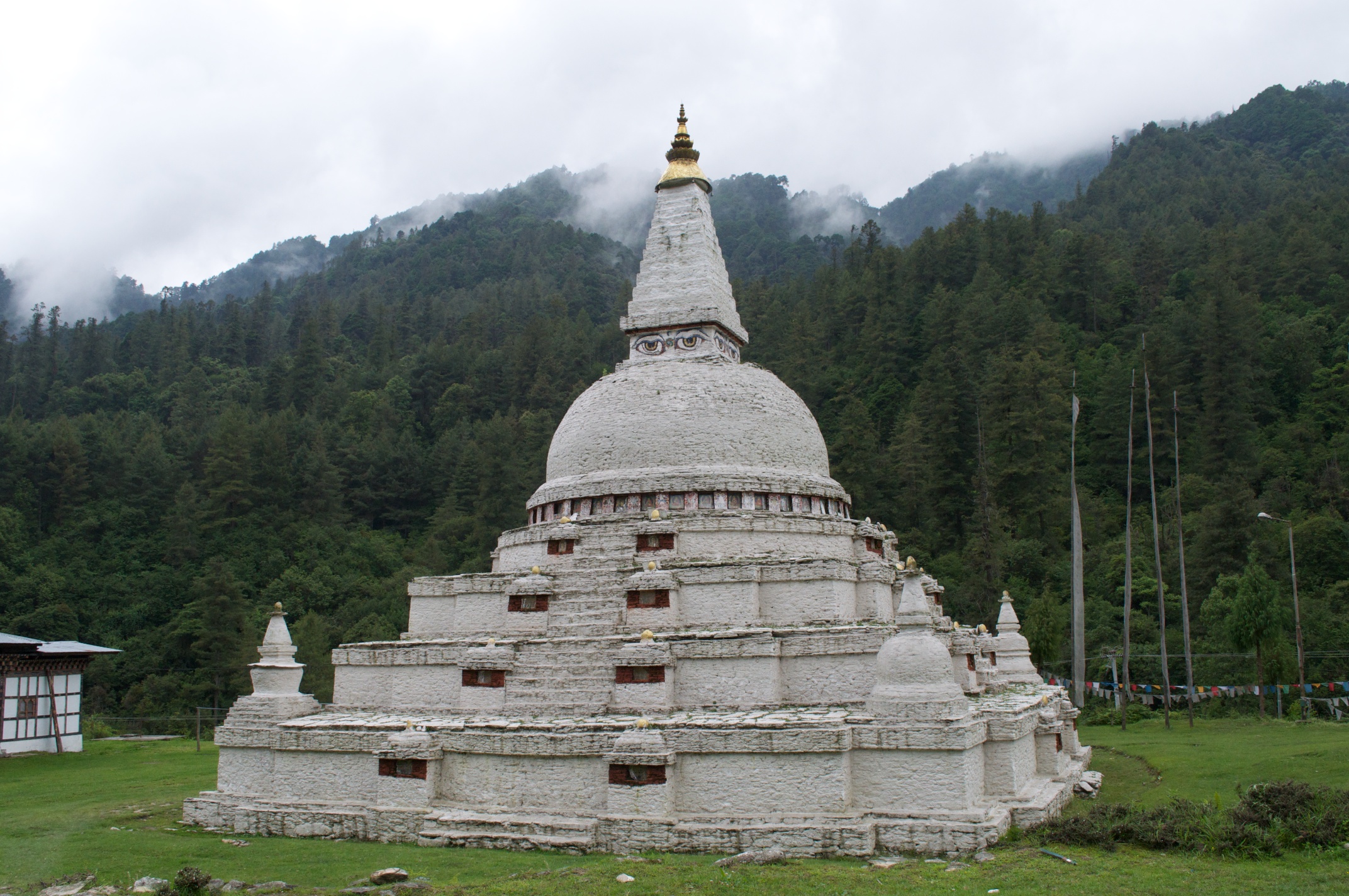
In fact, along this road are some of the most remarkable sights you can see in Asia. One of them, Chendebji Chorten is a stupa copied from the style of the great stupa in Kathmandu, Bodhanath. The stupa is white, rounded, and, at the top, the eyes of the Buddha face each direction. We stopped for lunch at this site as rain began to sprinkle on us in the dim daylight of the afternoon. The hotel we stayed at in Chamkar town prepared a boxed lunch that included eggs, sandwiches, cut vegetables, and a small cake. Our moments here we quite wonderful and the stream nearby offered a beautiful melody that passed through the trees surrounding the road.
All in all, we traveled a long way (in terms of time spent in a vehicle) and saw a lot of the country of Bhutan.
A Variety of Photos