From Trongsa to Jakar

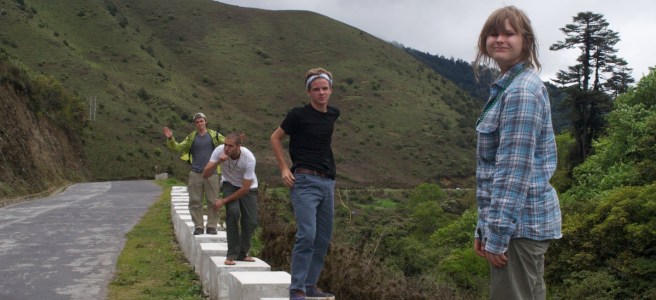
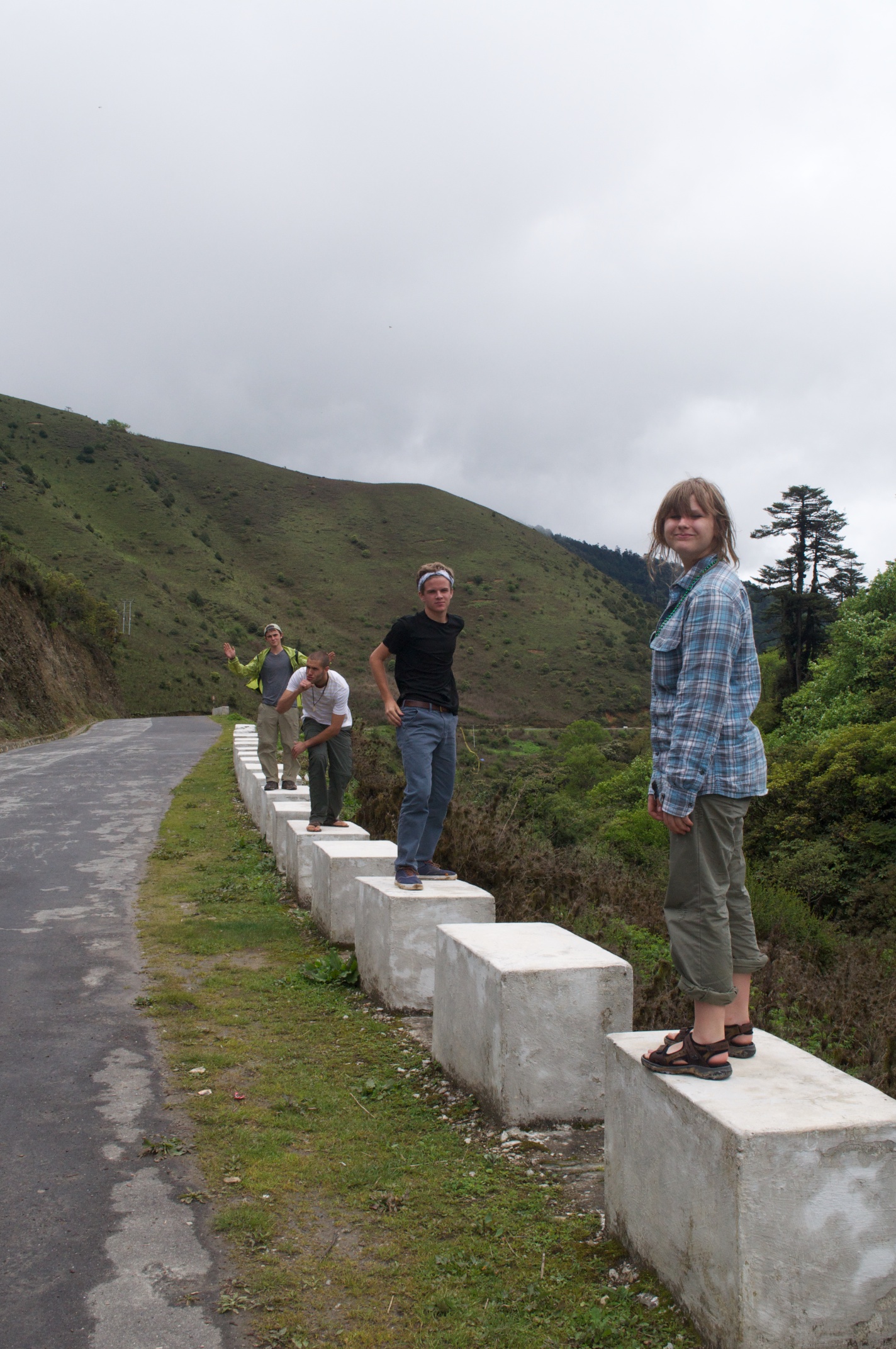
On the pass to Trongsa.

Trongsa to Bumthang

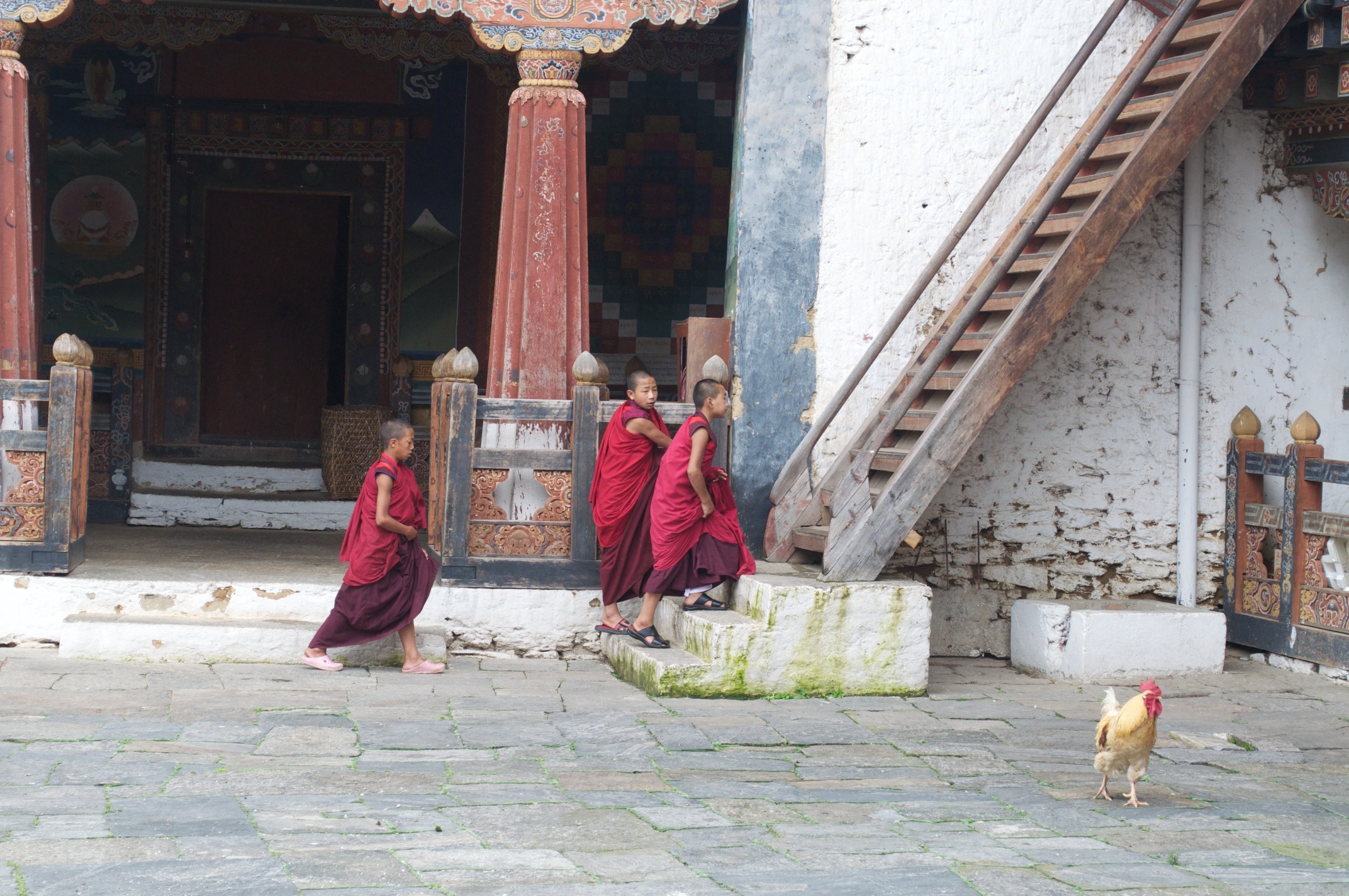
As morning dawned we had breakfast and headed into the town of Trongsa and a visit to the Dzong and Watchtower.  The Dzong is by far the largest in Bhutan and we toured every inch of this fascinating structure.

However, the most interesting part of the Dzong for the students were the monkeys perched on the trees at the western side of the Dzong.  A whole group of monkeys played in the trees and we got relatively close to them as we walked down through the back door entrance to the building.

The one notable feature of the Dzong was the fact that all folks heading east or west through Bhutan had to cross through the Dzong and pay a tax to the officials.  The doors into and out of the dzong are situated in such a way that they pass through the center part of the building and on to the next place.  Namgay gave us some idea of the time involved in travel in the 16th century: someone walking from Trongsa to a festival in Thimphu would walk for about three weeks!  Today, it takes about 5 hours by car.  Amazing.
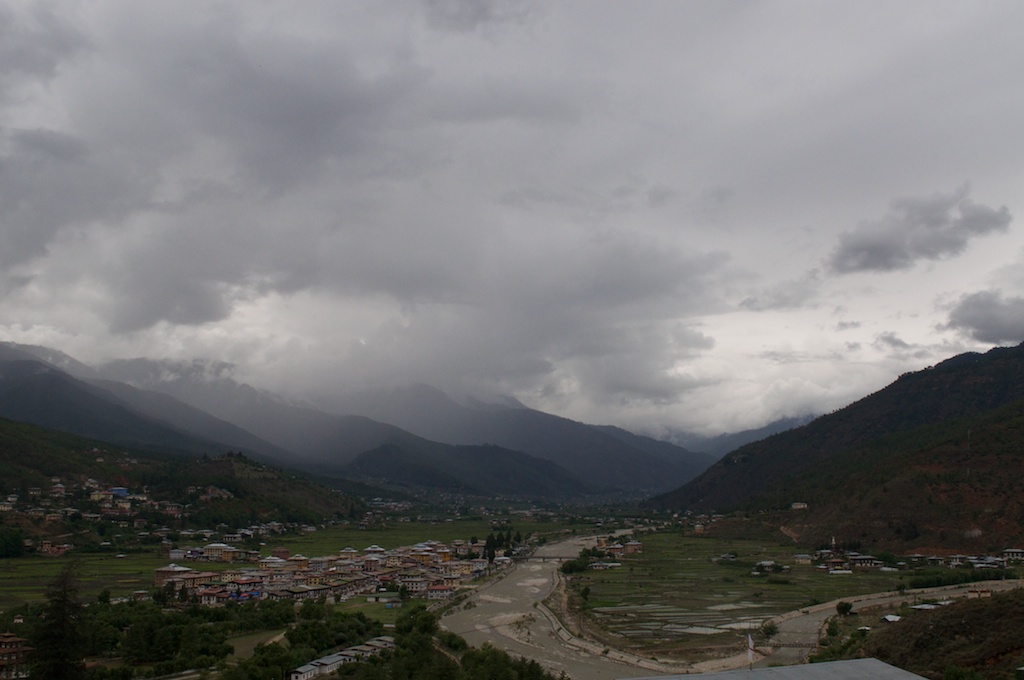
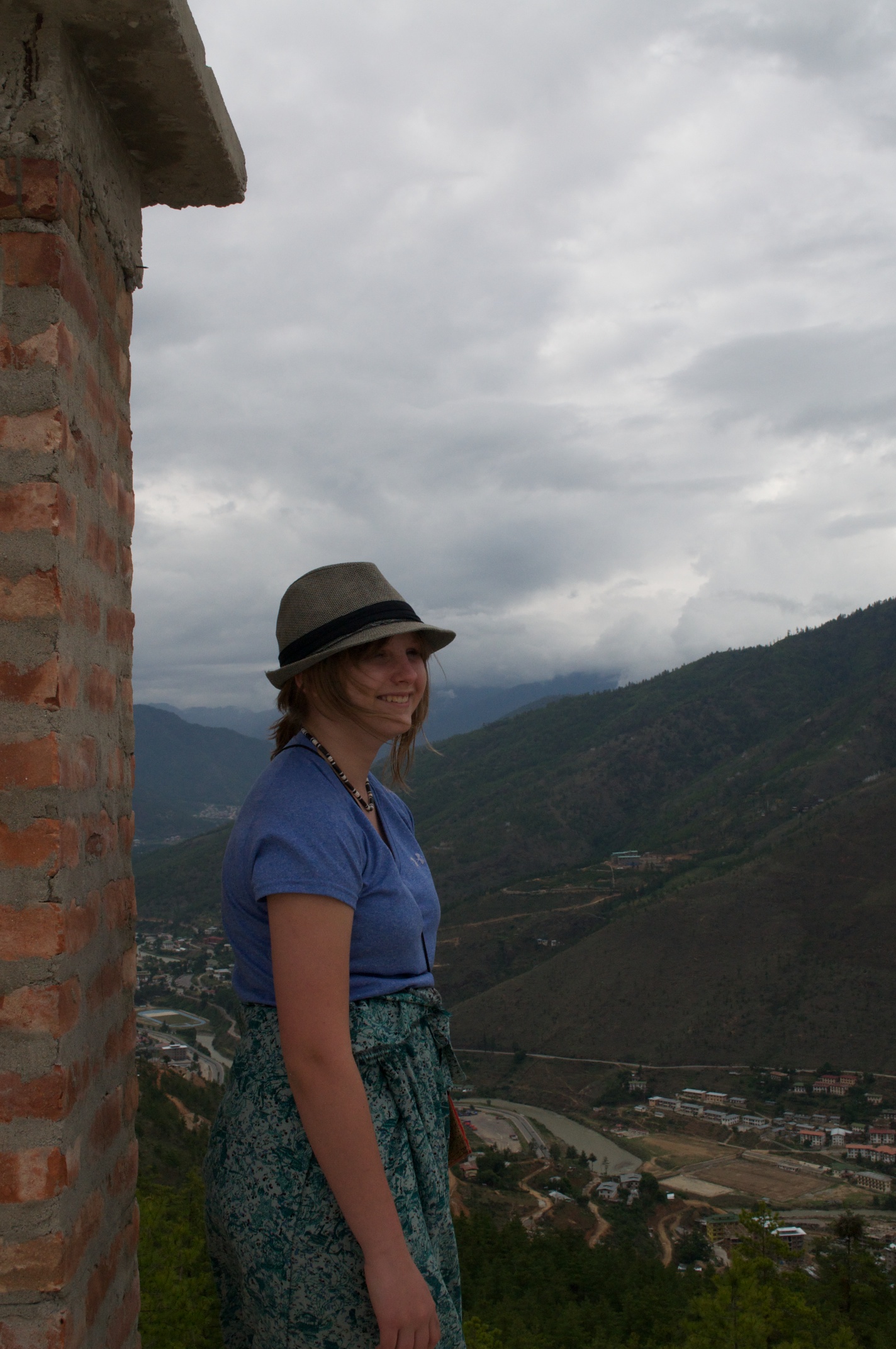
Our visit to the watchtower museum culminated in a quiet sit at the top of the watch tower.  This spot is one of the most peaceful in Bhutan.  You sit on benches with a 360 degree view of the valleys surrounding Trongsa.  The view is spectacular and the space is about the most quiet open space I can imagine.  Many members of our group sat there for about forty-five minutes just taking in the place.

We left Trongsa and traveled the empty roads to Bumthang and the town of Jakar.  The government declared this day a “Green Day” meaning that all vehicle movement was halted.  Walking was the only way to get around (except for tourists traveling from place to place).  As a result we made good time on this leg of the journey.

One of the most notable features of this road is the long, straight stretch of road passing through pine trees (similar to an American White Pine) along the roadside.  What really stops you is the fact that we are no longer driving around corners…the road in the valley is straight as it heads into the town of Jakar….that one change really lightened the mood of the group.

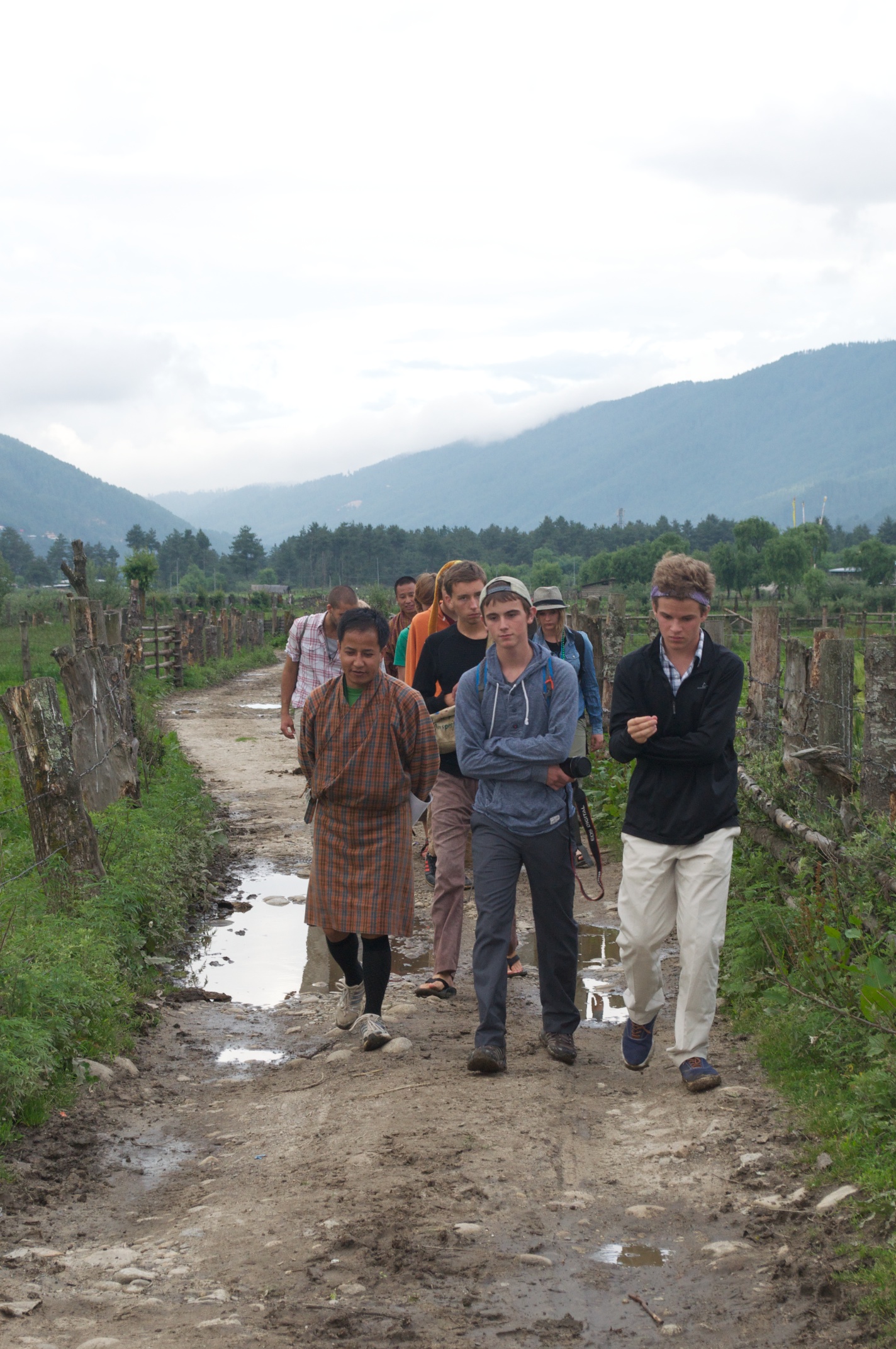
In addition, we passed folks working along the roadside building drains and curbs next to the roadway.  These folks carried their tools in large baskets slung on their backs and we met them all as they walked along the road back home after a long days work.  With the workers were children from infants to probably ten years old, all involved in the days efforts.  I remember having two young children at home and trying hard to get work done…and not being very successful; I admired the work of these folks on that afternoon.

We arrived in the town of Jakar in the late afternoon, checked into our rooms and headed to two famous temples in town.

Jam-Lhakhang

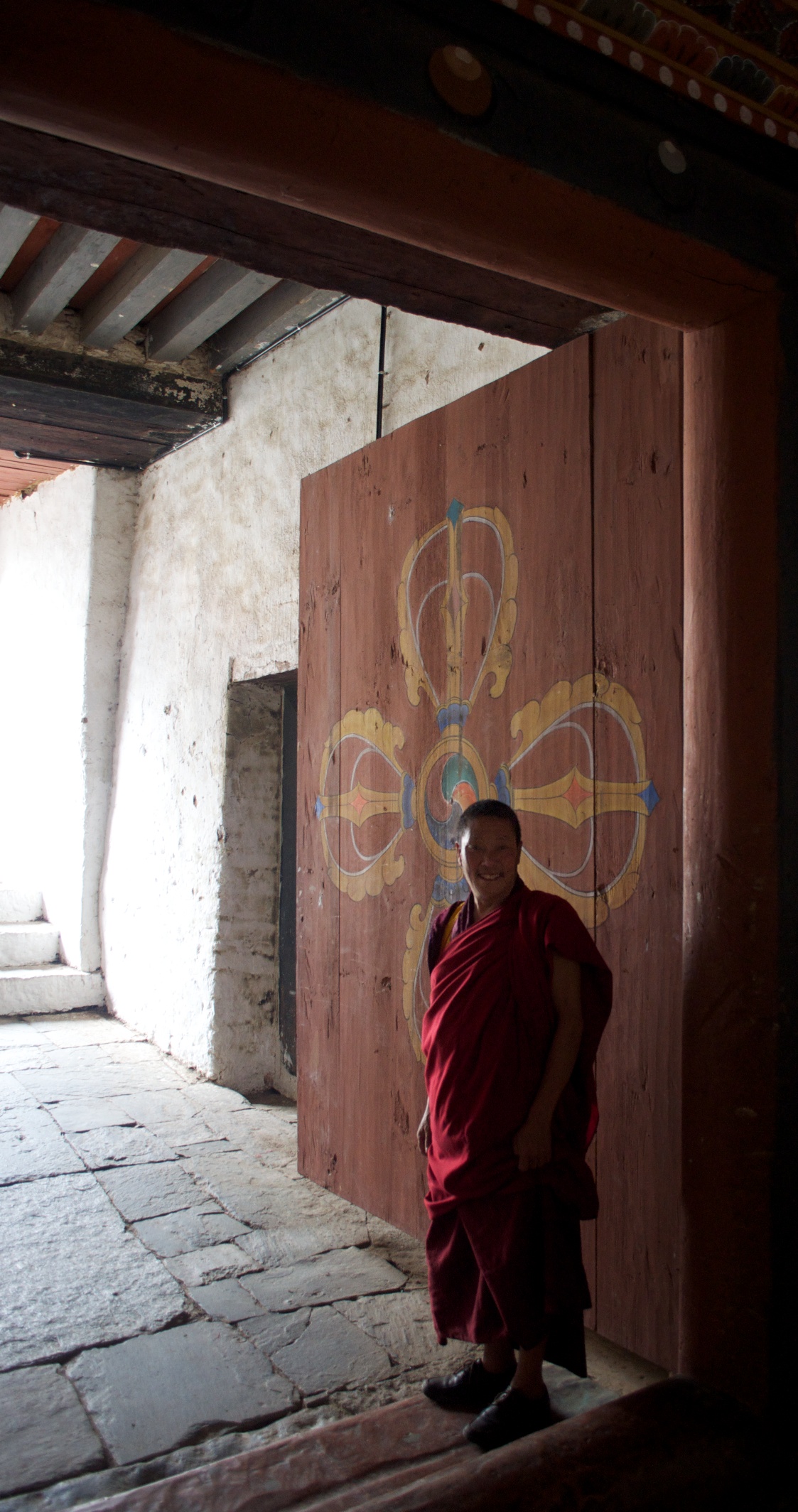
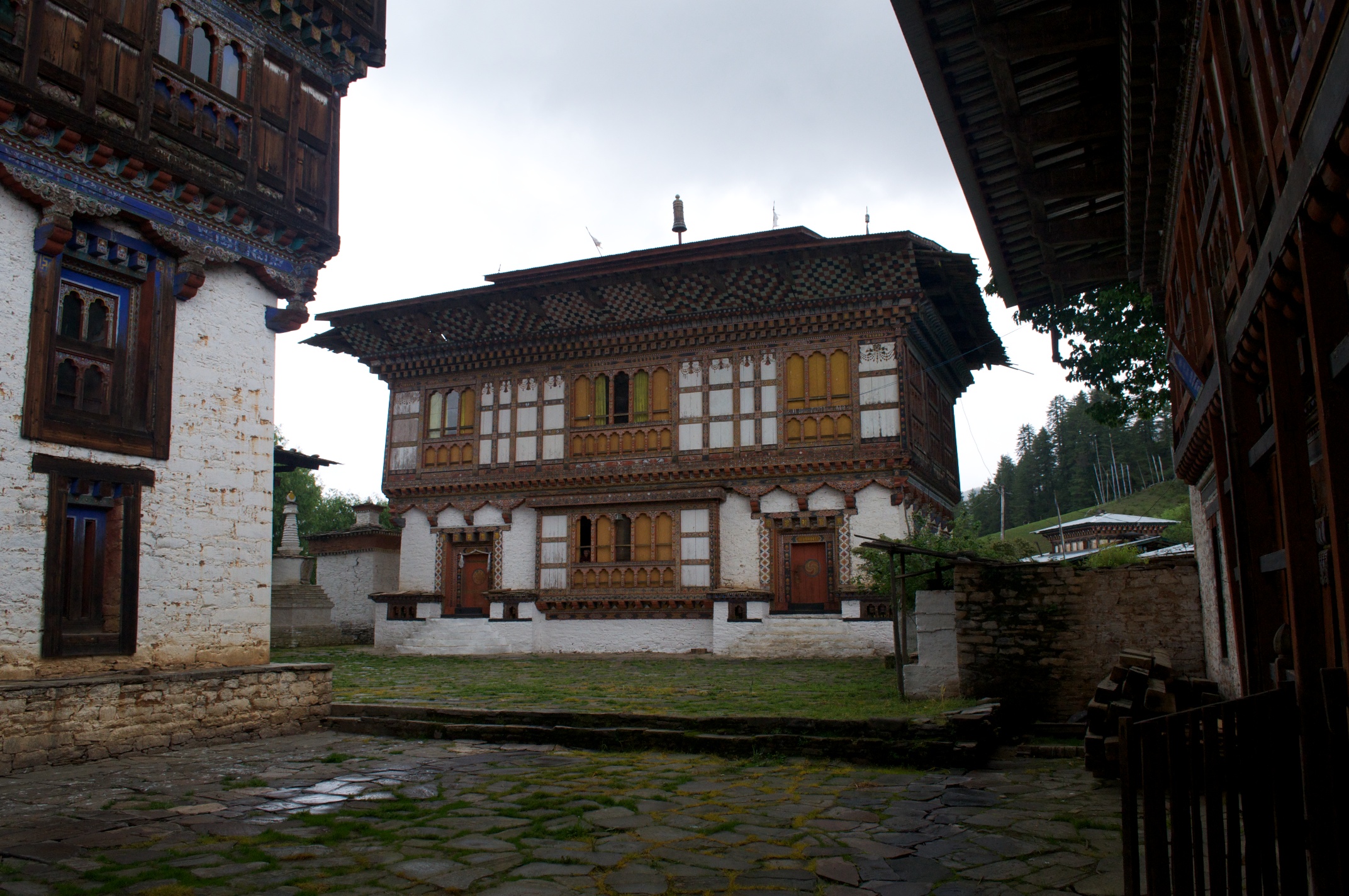
The first temple we visited, Jam-Lhakhang, is one of the most sacred places in Bhutan.  This temple, built in 659 C.E., has been continuously run by Buddhist monks.  The building just feels ancient as you walk through the doors.  The weight of the roof weighs down on the doorways and the slight bend in the door frame is testament to the age and use of this structure.  It’s quite amazing to realize that this ancient structure is made of stone and wood and still survives in the world virtually unchanged in 1500 years.

As we entered the building, we saw many towns folk spinning prayer wheels and praying in the temple.  They walk clockwise around the structure, spinning prayer wheels that are built into the walls of the building.  Folks gave us a quick red, smile as the betel nut juices flowed out of their mouths, spit on the ground.  The moment was serene.

In the inner shrine room is a sculpture of Maitreya, the future Buddha, sitting on a chair.  The room and the relics in the room are very old and the space is very small.  We gathered in the inner reaches of this building and Namgay explained the significance of the images and the structure.

Seeing this inner sanctum, you can’t help wonder at the power of these images and sculptures.  The dominant image of Buddha, sitting in the center of the room surrounded by statues of later teachers and practioners was moving to us all.  Combine that feeling with the dim light in the room, casting shadows on the beams above and the floor below, and you feel a real sense of being centered.

On the Road Across Bhutan

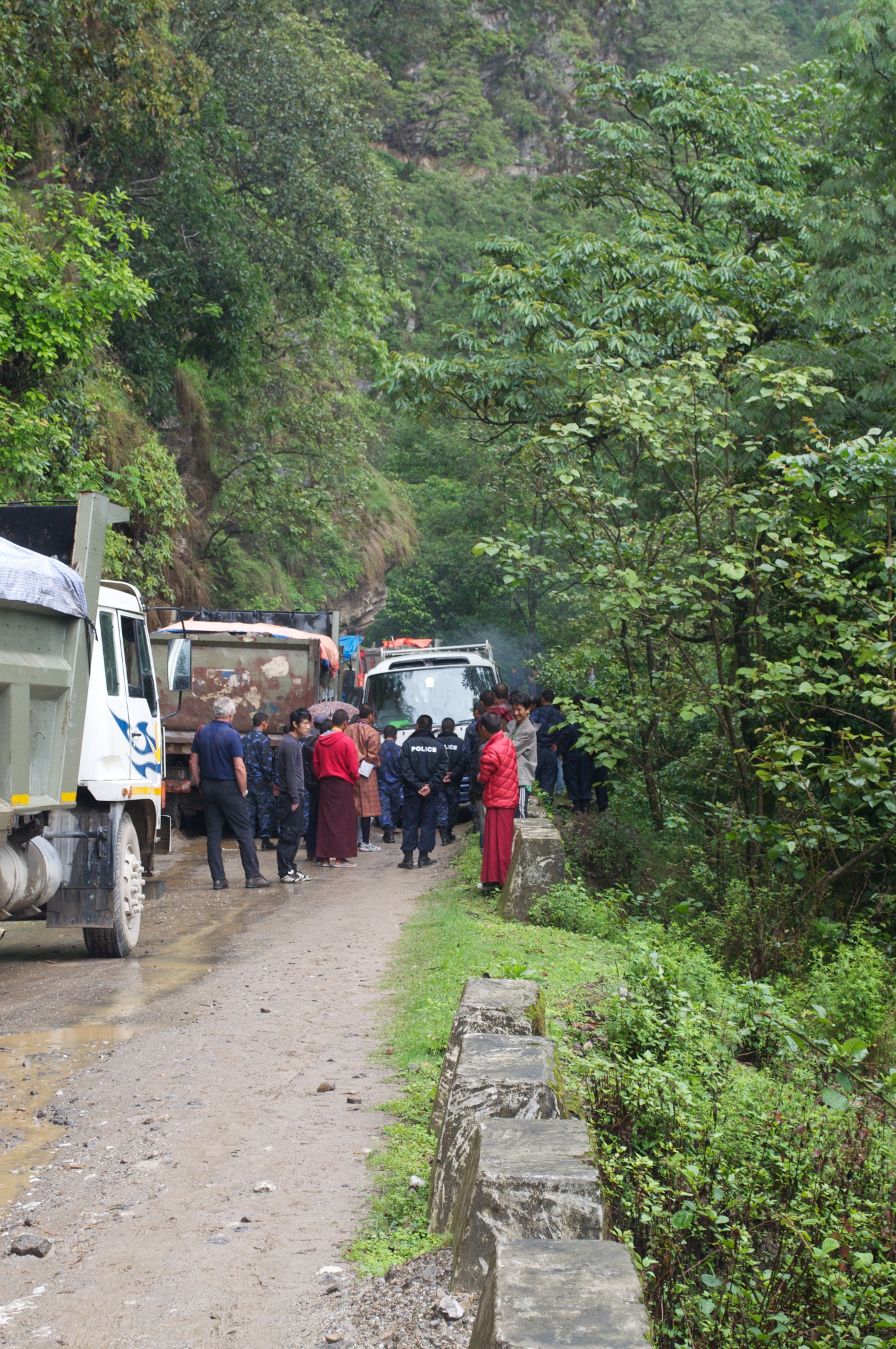
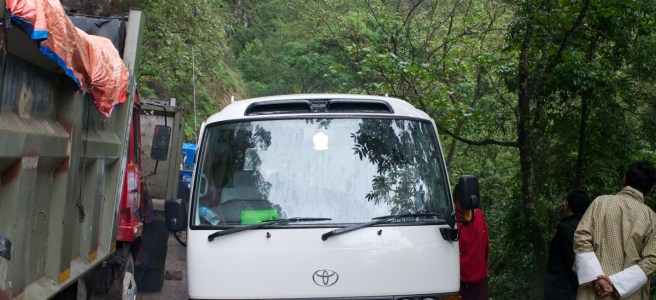
Stuck on the road to Trongsa!

The Main Road Through Bhutan

Bhutan has only a few paved roads across the country between Thimphu and any place to the east.  The main road is a sometimes one lane, sometimes two lane thoroughfare that includes passenger vehicles, cargo trucks, construction vehicles and farm equipment.  Travel on this road is exciting and on virtually every turn, a fascinating dance between truck and car, bus and dump truck.

Our route today included the ubiquitous landslide or mudslide, and the occasional vehicle breakdown.  Driving about an hour past Punakha, a truck carrying about 20 tons of rocks broke down as it headed downhill from a rock slide.  The truck blocked almost the entire road.  Behind the truck were about 40 vehicles of varying shapes and sizes, the largest were more trucks carrying rocks away from a landslide up the road.

Vehicles traveling from Punakha (headed east) creeped past the truck; our vehicle, however, came to a dead stop, blocking the east bound lane (more like a foot path at this point).  We were, literally trapped in the vehicle as the door to the outside was within inches of a cliff that dropped about 1000 feet through thick forest to the river below.

While we waited, a busload of police trainees, monks, drivers, and some other folks trapped in their own vehicles headed west, came to survey the situation.  In a matter of minutes about thirty people gathered in front of our bus, pointing, and shaking their heads.

To our right, inches from the windows, were a line of ten trucks filled with rocks….everyone speculated, could we pass the dead truck and make it past the line of cars, busses, and other vehicles?

We crept, very slowly forward, the wheels of our vehicle on the edge of the abyss.  As we inched forward we made it past the stalled truck and about 30 feet later, stopped again by another truck, pointed downhill at a diagonal.

At this point, we exited our bus, and all of us jumped out, realizing that it was better to have our feet firmly on land than at the mercy of a bus.

To better set the scene let me explain one more thing: it was raining, slightly, and had been raining for days.  The road was more mud track than road, and the hill on the south side had collapsed in places, rocks and mud blocking sections of the pavement.

In addition, as we walked along the now muddy road, the unpaved portions of the road to the north showed huge cracks in the dirt, looking as if, at any minute, the entire hill would give way to a mudslide, taking us all with it.

So, the question you may have is: was it dangerous?  Yes and no.  You could see where the road had taken a beating from the mud and rocks that covered its surface, but somehow the road felt stable….I kept us all away from the edge (as much as Cole wanted to peek at the steep drop to our north), and we walked down the road, our bus trying to negotiate the track.

After about 45 minutes, cars and vehicles had inched to the side, allowing our bus, and all of the vehicles behind us, to make their way east.  We cheered our driver, knowing that he had done yeoman’s work and performed a task much beyond our humble driving abilities.

Stay glued for more excitement to come!

To the Temple of the Divine Madman!

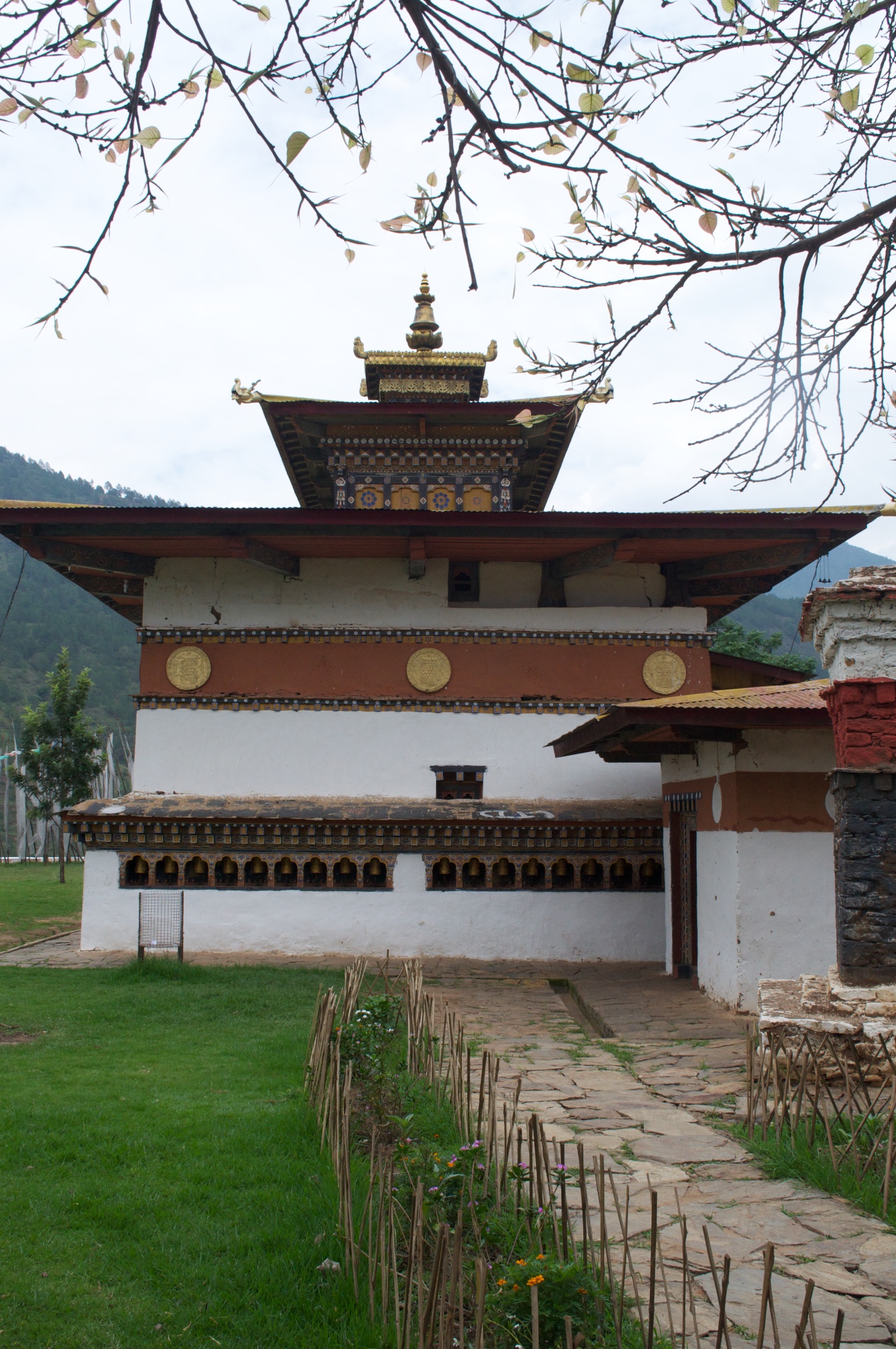
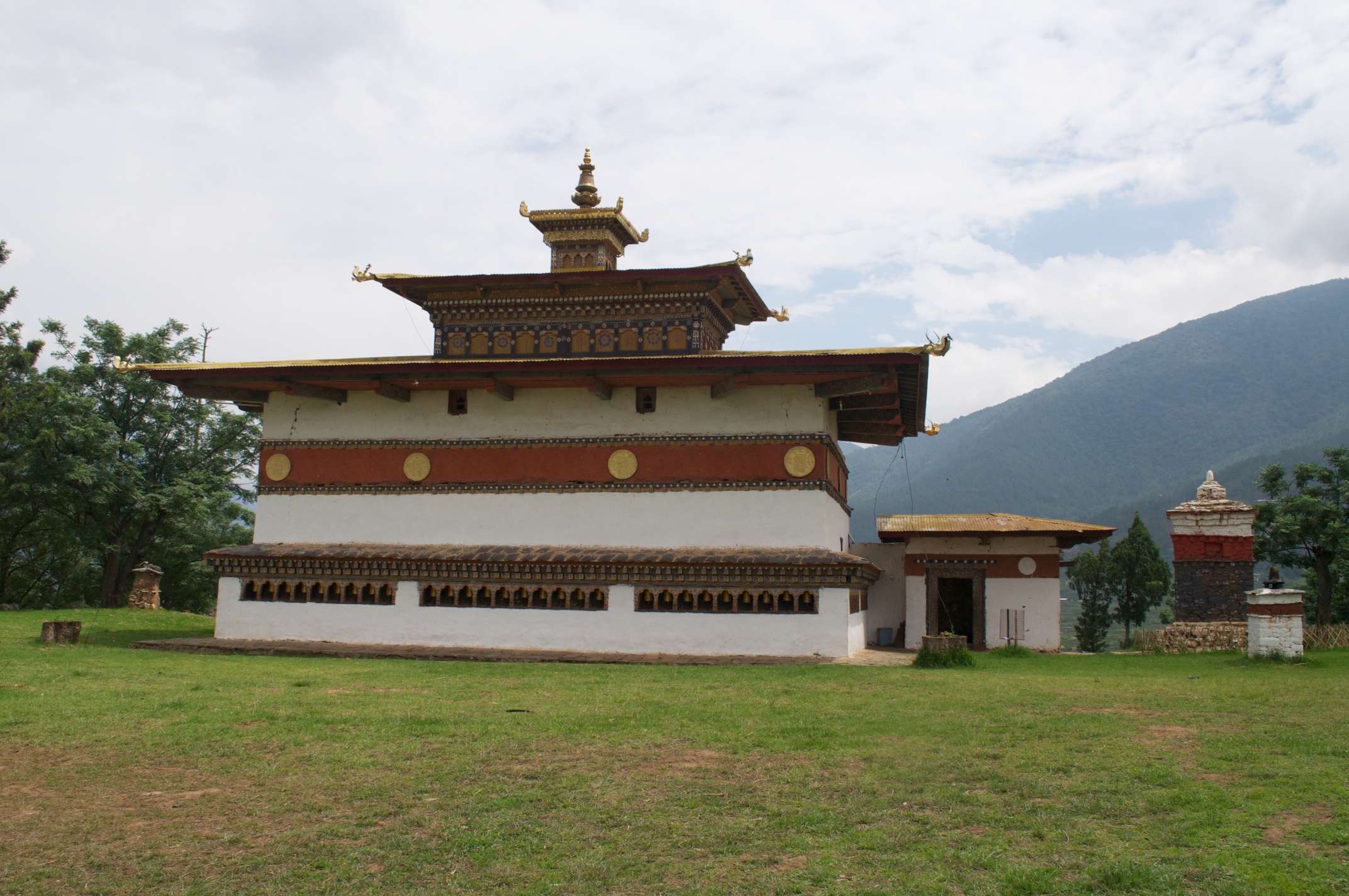
Our travels today led us to the temple of the Divine Madman, Lama Drukpa Kunley (Kinley).  The Temple was established in honor of this bizarre spiritual leader in Bhutan.

While the story of Lama Drukpa Kunley is one that is inappropriate for an online journal, the main idea behind the story is that even someone who exhibits crazy behavior can be enlightened.  The message here is that any person you meet might be that teacher, that friend, that person who can change your life for the better and help you understand the world a little bit better.

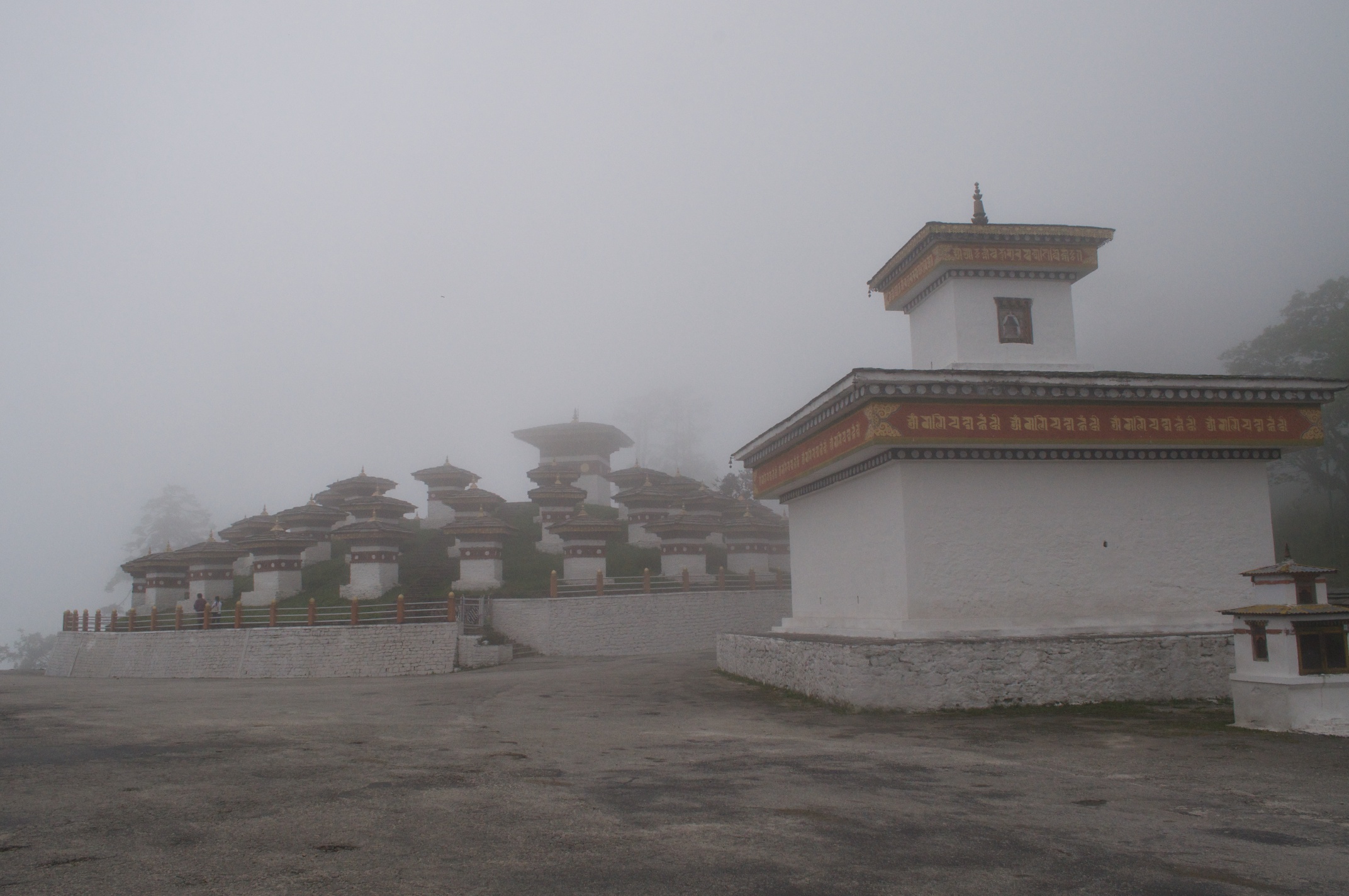
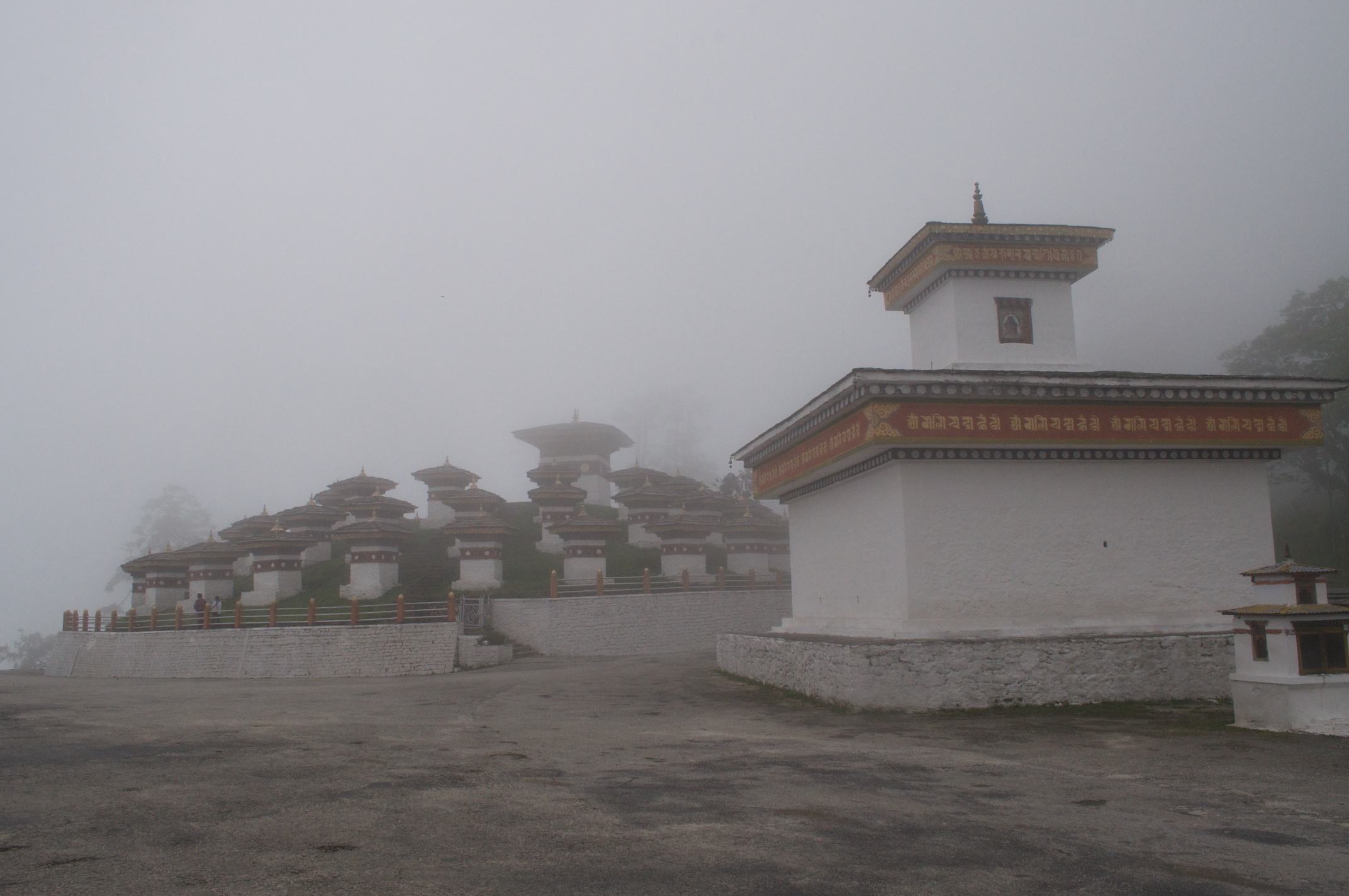
Chortens on the Docho La Pass
DSC_0557
Drupka Kunley’s Temple
DSC_0577
Drupka Kunley’s Temple, back view

This author, Keith Dowman, has written a version of the story of this remarkable person and you can check it out here: http://www.keithdowman.net/books/dm.htm

A Word About Food

Food in Bhutan is full of vegetables, especially ferns.  What? Yes, ferns.  People pick the ferns from specific places in the country and they are stir fried like any other vegetable.  They come in a variety of forms (from bright green, thin stalks to black thick bean-like pieces) and are very tasty.

In addition, our group has grown to love the Ema Datshi served at every meal; Eme Datse is a national dish made of hot, green chilis and cheese curds.  Very much like a hot New Mexican chili, the dish is wonderful and varies slightly from place to place.  Check out information on this dish here: http://www.food.com/recipe/ema-datshi-bhutan-477883

Of course, on the bus rides, we have some hungry folks and Isa has been nice enough to buy snacks for the students….snacks that get devoured by the time we stopped!

On to Punahka

We continued our travels down the road to Punakha.  As you travel through Bhutan on this main road (when I say main, I should say ONLY West-East road across Bhutan), you rise out of the Thimphu valley into the mountains that separate Western Bhutan from Wangdue and the dry lowlands in west-central Bhutan.  The climb reaches to about 10,000 feet at the pass, with views (if you are lucky) of the Himalayas.  The sharp peaks, snowcapped and gleeming in the sunlight are a dramatic sight when compared to the dense forests that surround you on this drive.  As Isa mentioned, this forest reminds one of the cloud forests of South America and Peru in particular.

When crossing the Dochu La Pass, you arrive at the site of a newly built temple and 108 chortens constructed in the center of the road.  These small (four to five foot high) structures, painted white with a deep orange color around the top and sides, represent important deities and lamas.  The chortens (also referred to as stupas) were built to honor the fourth king of Bhutan, His Majesty Jigme Singye Wangchuck.  Each time we have visited this place, the mists enshroud the chortens giving the whole area a sense of mystery as if you just found this site deep in the middle of some forest.

As you drive down the road into Punakha, you wind your way through forests and around the mountainsides.  The descent is long, dropping from about 10,000 feet to about 1,800 feet above sea level.  As you can imagine, the heat came upon us slowly and by the time we made it to the little town at the site of the temple of the Divine Madman, the heat was around 90 degrees F!

The short drive from the temple to the historical capital of Bhutan follows the Pho Chu river toward the Dzong.  The structure is impressive, straddling two rivers, the Pho Chu and Mo Chu and saw the impressive 17th century Dzong built by the man who unified the country, Zabdrung.

The most impressive aspect of the Dzong is the shrine room, including massive statues of Padmasambhava, the founder of Buddhism in Bhutan, Buddha Shakyamuni, and Zabdrung.  The temple includes a painted version of the life of the Buddha on the walls surrounding the interior of the structure, and the massive quality of the structure feels BIG.

After leaving the building we walked a short distance to a large suspended bridge stretching across the Punakha river.  Near the bridge is the cremation ground for the western part of Bhutan.  Families bring their loved ones here after they die and place them on the concrete structures that are then covered and surrounded in wood.  We saw two families praying over the bodies and some can sit for days according to the specific instructions of lamas and monks.

The suspension bridge was cool in that it swung side to side in the wind as we crossed.  Cole decided to run quickly from one side to the other, making the whole thing swing in the breeze. Awesome.


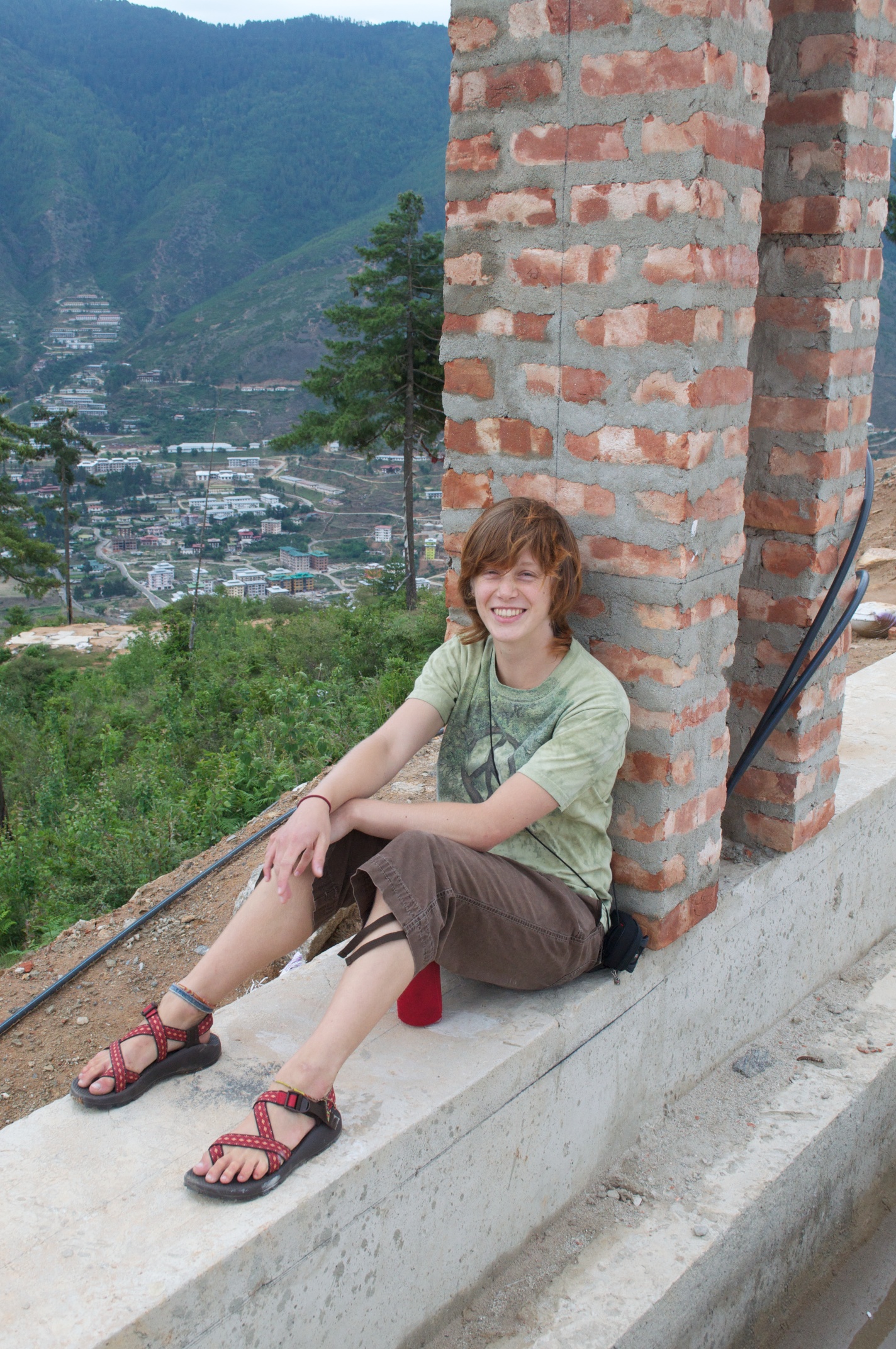
Photos from Bhutan: Thimphu

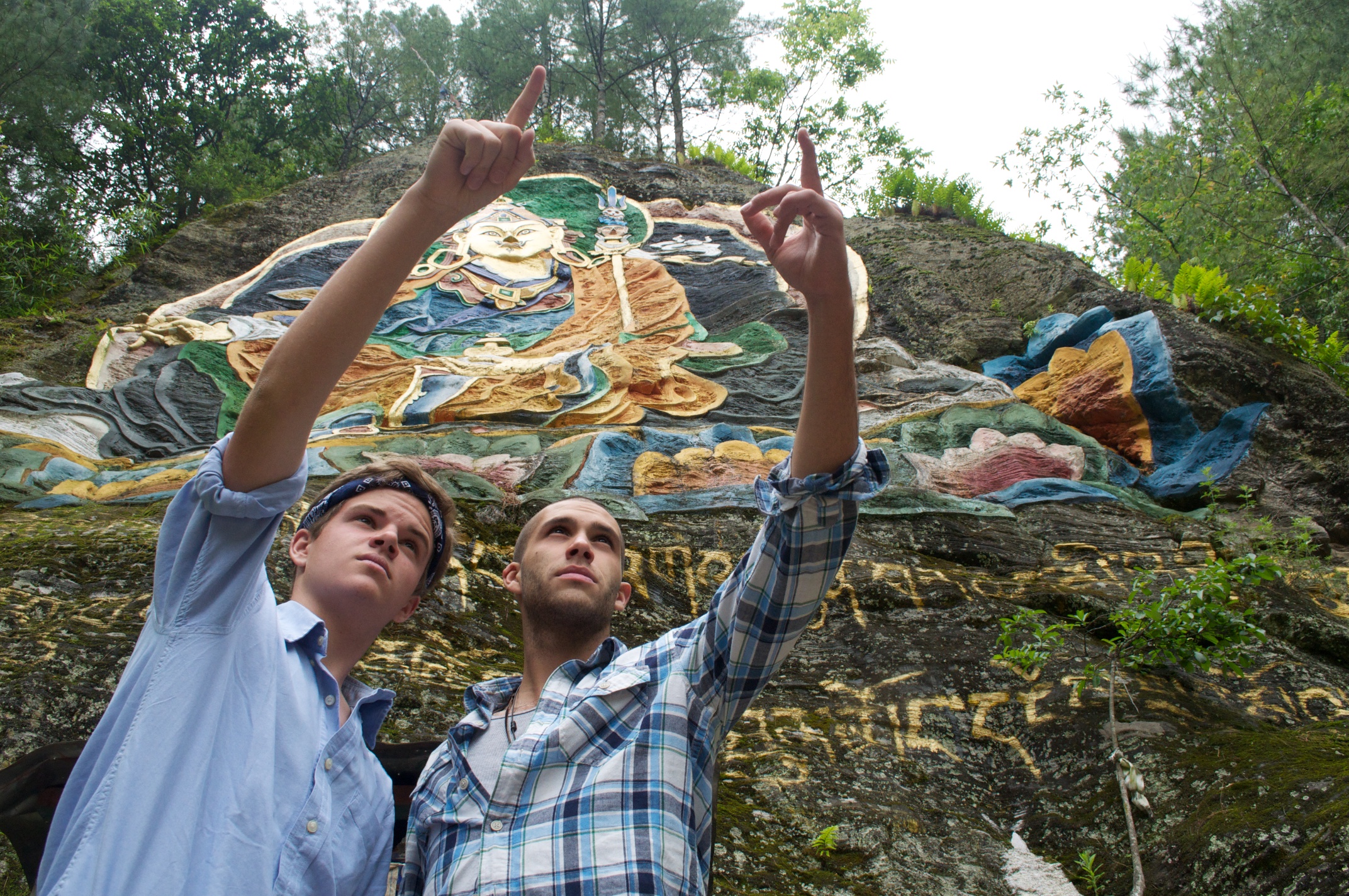
Padmasambhava carved into the hillside on the road to Tango Buddhist University.
DSC_0322
Yes, Yes, I see it!
DSC_0350
The hike to Tango Monastery….the foot path built by the monks.
DSC_0354
Jasper on the way to Tango…the monastery.
DSC_0366
Contemplation happens everywhere.
DSC_0413
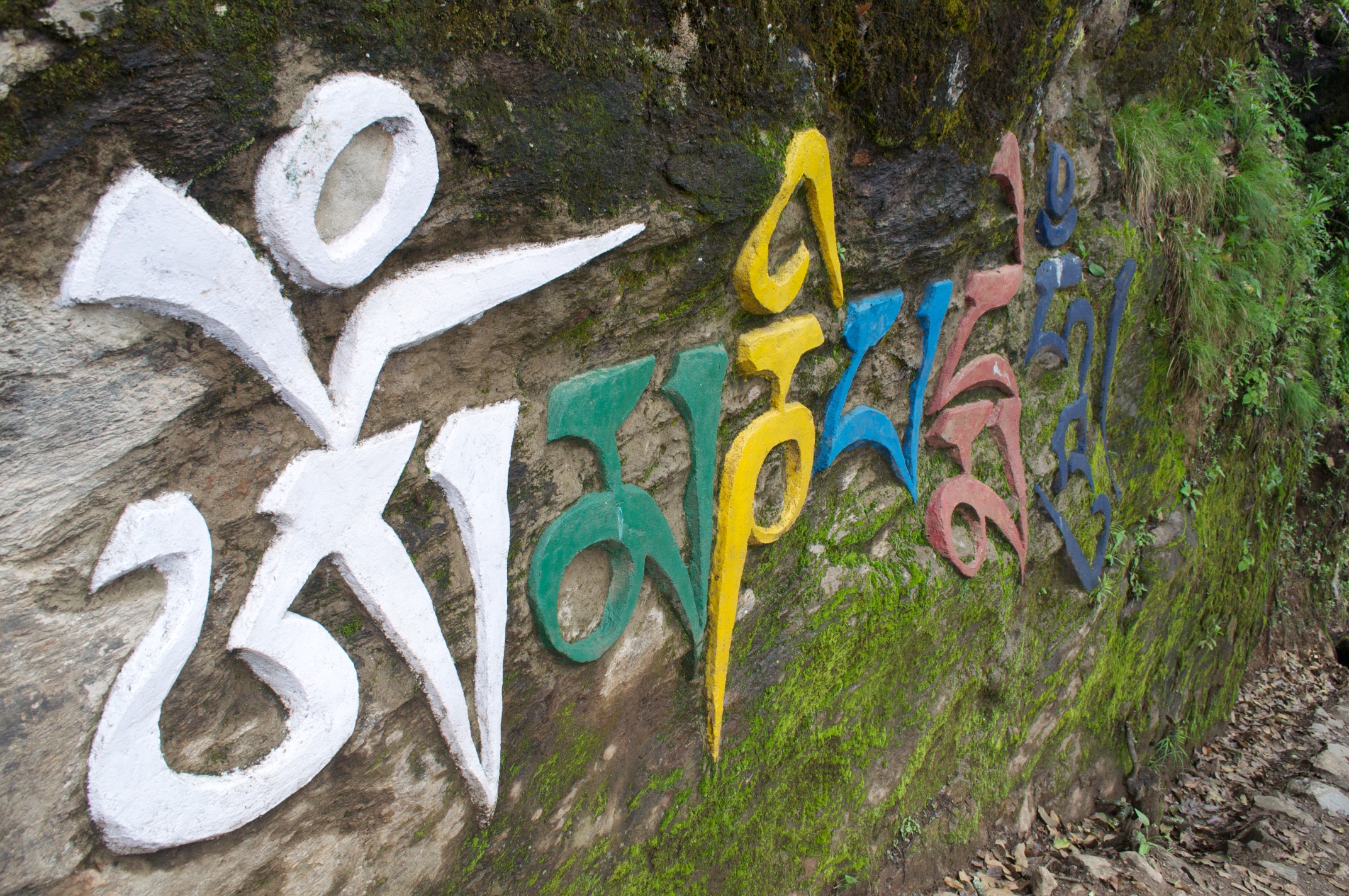
At the entrance to the Monastery, Om Mane Padme Hung.
DSC_0419
Jordan….
DSC_0421
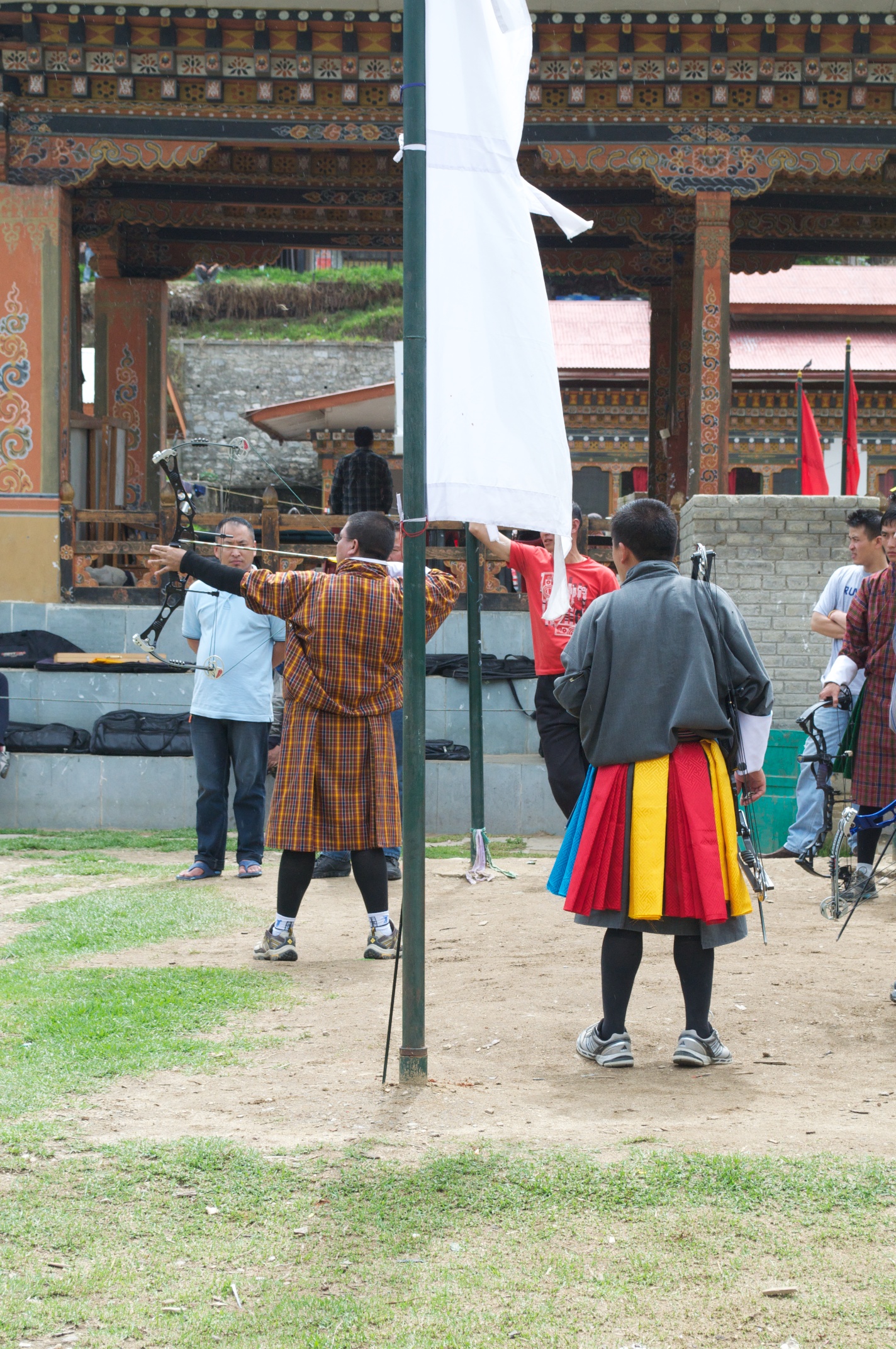
The archery competition.
DSC_0442
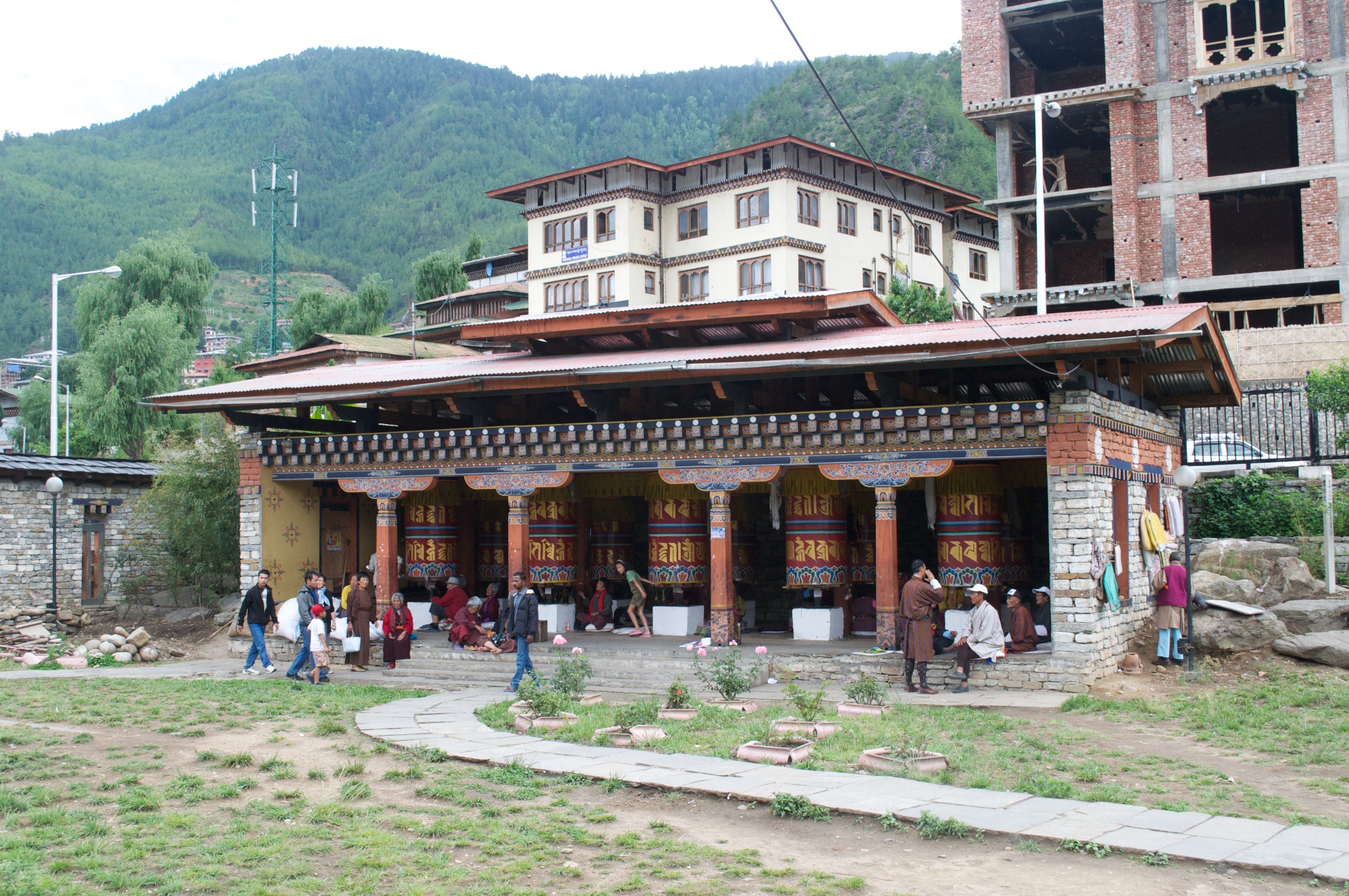
Prayer Wheels at the Thimphu Stupa
DSC_0444
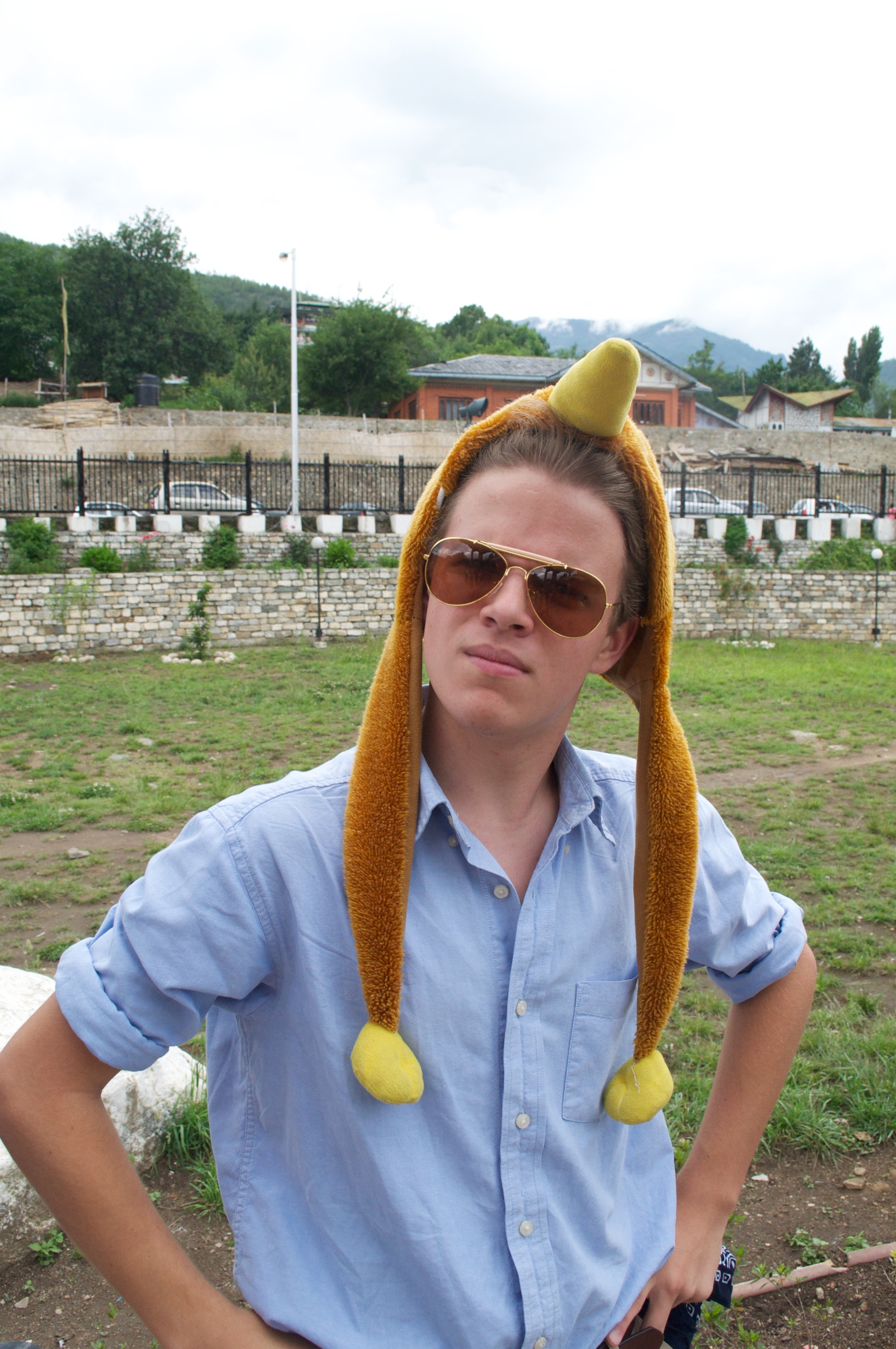
Do I look dumb in this hat?
DSC_0473
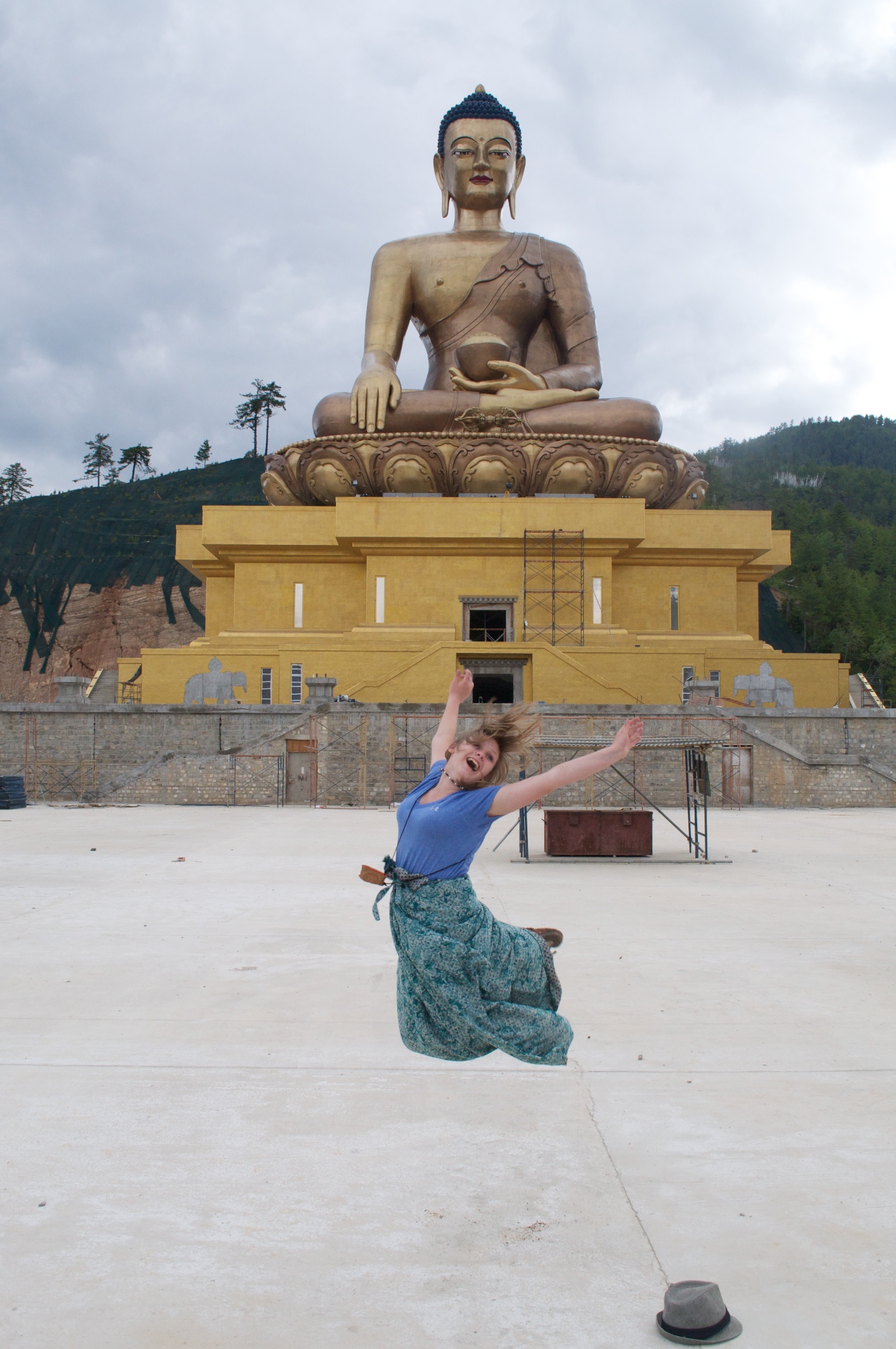
At the temple of the Buddha
DSC_0475
Miles, taking it all in.
DSC_0483
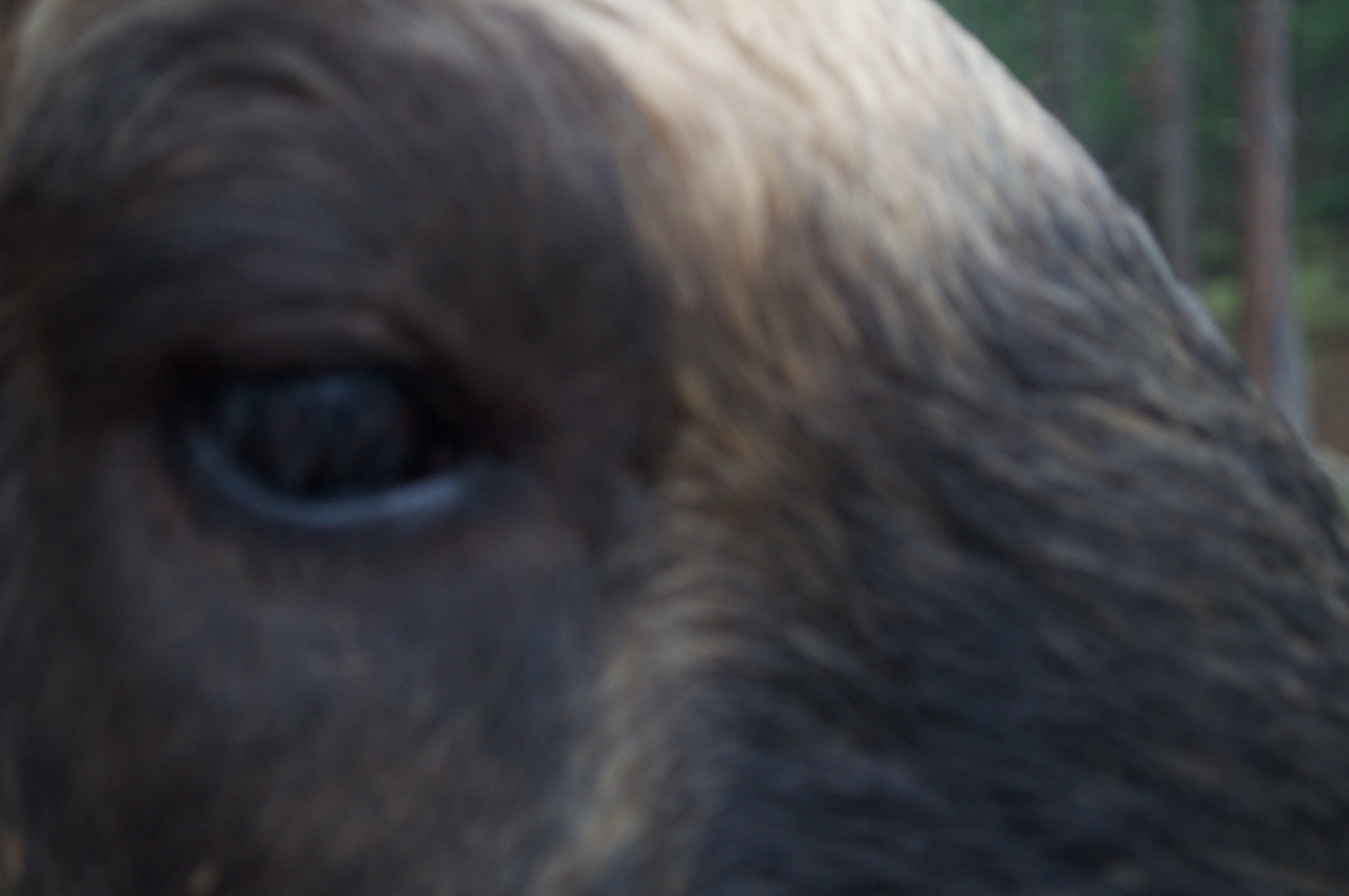
A VERY friendly Takin.
DSC_0464
JOY!
DSC_0451
The Student Crew.

In the Capital City: Thimphu

Our first full day in Bhutan began with a trip to Tango Buddhist University in the mountains surrounding Thimphu.  The city of Thimphu is the largest community in Bhutan, boasting about 90,000 residents.  In the mountains surrounding the city are many monasteries, this one founded in the 17th century.

The hike to the stupa, temple, and monastery was hard.  Although the path was built by monks in the past two years, the climb was steep.  It took us about forty-five minutes to make the trek to the top through thick forest and in a canopy of trees.

The monastery and university is run by the realized incarnation of the original founder of the university, a boy about 16 years old.  We were allowed to sit in the room while the monks chanted a Four Thoughts mantra with the use of drums, horns, and cymbals.  Sitting in his seat at the front of the group was the bespeckled young man.  Walking around the room was a monk who kept the other monks singing and chanting without slouching or falling asleep.

Namgay explained that this young boy, the head of the University, was found at the age of about three years old when he was brought to the temple and told the monks that he had hidden a lash in a secret place in the chanting room.  The monks had to pry open some wooden boards and found the lash stowed there nearly 500 years before.  Wow.

After leaving the temple, we headed back to town for a quick lunch and then onto watch archery competitions in the archery grounds in Thimphu.  Four teams competed: 2 teams with compound bows, and 2 teams with traditional bows and arrows.  The target was easily 150 yards away and was no more than about one foot wide by two feet tall.  Each time someone hit the target, the group would sing a song.  This competition was awesome to watch.

Soon after, we spent about 45 minutes at the handicraft market across the Paro River.  Later we traveled to the Thimphu Stupa and to the new construction of a 100 meter Buddha, and finally to see the national animal, the Takin.

Our day was full of surprises, interesting interactions, and LOTS to see and do.  I realize that I cannot do justice to the travels in this blog and will attempt a more detailed description of events in another location.

In the meantime, enjoy the photos….more tomorrow!

Bangkok to Bhutan: Travel into the Land of the Thunder Dragon

Some reflections about our last day in Bangkok:

After a long conversation this morning with everyone in our group, many decided that our experience in Bangkok was one for the history books.  The feeling of being overwhelmed (as I mentioned yesterday) was pervasive.  Students wondered out loud what life was really like in this city.  They asked remarkable questions about the lives of folks just trying to get by hawking wares or trying to provide some service, any service, to tourists and residents.

In the late evening, walking the streets of Chinatown on Yaowarat Road, a woman was packing her kitchen and her umbrella and entire cook set dropped on the ground, spilling utensils and equipment into the street.  Miles and Layla were walking in front of me and immediately came to her aid as the wind threatened to send more plastic bowls, cups and the like into the busy thoroughfare.  As they bent down to help, this woman looked warily at the two and thanked them, in Thai, profusely.  After that moment we really wondered at the life lived in this city of immigrants, tourists and Thai….what is life like, really?

Travel to Bhutan

I think I can say with some confidence that we all left Bangkok ready for our travel in Bhutan.  The morning gathering in the hotel went well and we took the 15 minutes ride to the airport.  If you have never traveled through Bangkok, you will find the Suvamabhumi airport something to behold.  The sheer size of the airport is impressive.  The airport also is one of those places in the world where people from just about every part of the world intersect.  As one of the main hubs of travel for all of Asia, Suvamabhumi has become a kind of gathering place for the world.  I wonder if we couldn’t solve most of the world’s issues right here, having a cup of tea and working together in this massive gathering place?  Just a thought.

The flight to Bhutan took three hours and we stopped, briefly, in northern India before heading into Paro.  If you haven’t landed in Paro, it is a dramatic end to a beautiful flight on the edge of the Himalaya mountains.  (http://www.youtube.com/watch?v=YsZqN-uEgQU) Clouds covered the region and we did not get a glimpse of Everest or Jomolhari….maybe when we leave!

We met our tour guide Namgay and his company Illuminating Tours.  (http://www.illuminatingtours.com) Namgay we befriended a couple of years ago on our trip and we were excited to see him.  Let me make one note about our return: both myself and Miles were the only two folks to were traveling to Bhutan a second time with the school and  as we got off the plane, we were both taken with emotion as we walked into the airport building (in Bhutan, you deplane on the tarmac).  This place has special meaning for us both, for very different reasons, and we hugged as we shared this moment of wonder.

Our first visit was to Paro Dzong, an impressive 17th century fortress build here to defend the Paro valley from Tibetan invaders.  The structure is impressive with ten-foot walls surrounding a central “keep”.  Today, the dzong houses about ninety monks and government officials.  We visited with the monks as they were memorizing important chants and sutras.

We finally made it to our hotel and settled in after a wonderful vegetarian meal.  Sleep, tonight, was welcome

Bangkok: We Came, We Saw, and We Were Conquered

asiatravelday1 8
Sam Giving a Lecture on the Grand Palace
Layla fanning herself with the closest leaf available.


Isa and Sebi, lounging in 100 degree heat.

Bangkok is an amazing city and reveals a new sight, a new idea, a new experience around every corner.  We were so impressed by the majesty of the Grand Palace and the sheer opulence of the gold leaf and enlay throughout this 60 acre site along the Chao Phraya River.  Combined with the mass of humanity seeing the temples and shrines at the same time was almost overwhelming for our group.

Our guide, Sam, picked us up on time and ready to depart.  We left at about 8:30 AM and drove through traffic that makes any U.S. traffic jam look like a lazy summer drive in the country.  Cars flew around our van, people cut in front, around the side, and nearly sent us flying numerous time.  The white lines identifying the “lanes” were mere suggestions to drivers as car after car, motorcycle after motorcycle bobbed and weaved through the streets.

The temple was certainly worth the visit and we learned a lot about the foundations of the monarchy.  Really words cannot do this experience much justice…check out some of these photos….more will come as soon as we have an internet connection that resembles dial-up.

Be well and I will write again tomorrow.

Arrived in Bangkok!

Bangkok Arrival on the Tarmac!

After twenty hours of flying and three plane changes, we arrived in Bangkok at 11:15 PM a little tired but ready to go.  Our day was relatively uneventful except for the panic-cry “I lost my passport, I lost my passport” by a few of our group.  Of course nothing was lost and everything geenrally flowed from place to place.

I’d like to say that we had some kind of profound experience….maybe the most profound thing was buying food in Tokyo.  From Green Tea Kit Kat candy to Pocari Sweat drinks out of vending machines (yes, they taste a lot like sweet) our experience was muted.

We landed in Bangkok in the rain and made it pretty quickly out of the airport and to the hotel, the Mariya Boutique Residence….the hotel is a little funky, and many had trouble figuring out how to turn on the lights…now we are all in bed, ready for our morning jaunt into the city and a visit to the Emerald Buddha, the Grand Palace, and the Old City of Bangkok.

Until tomorrow, be safe and be well Albuquerque!