





Reflections, Observations, Meanderings in Asia
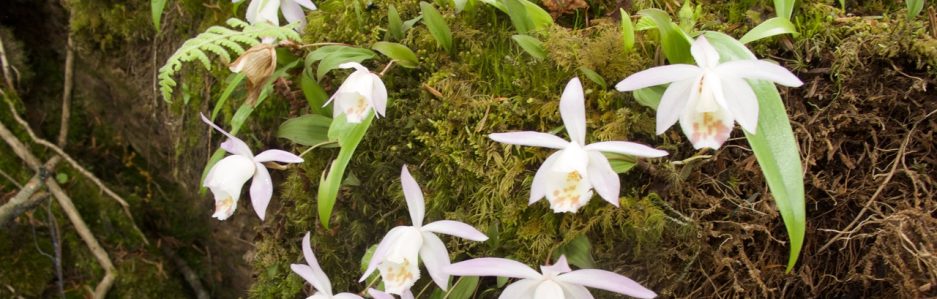

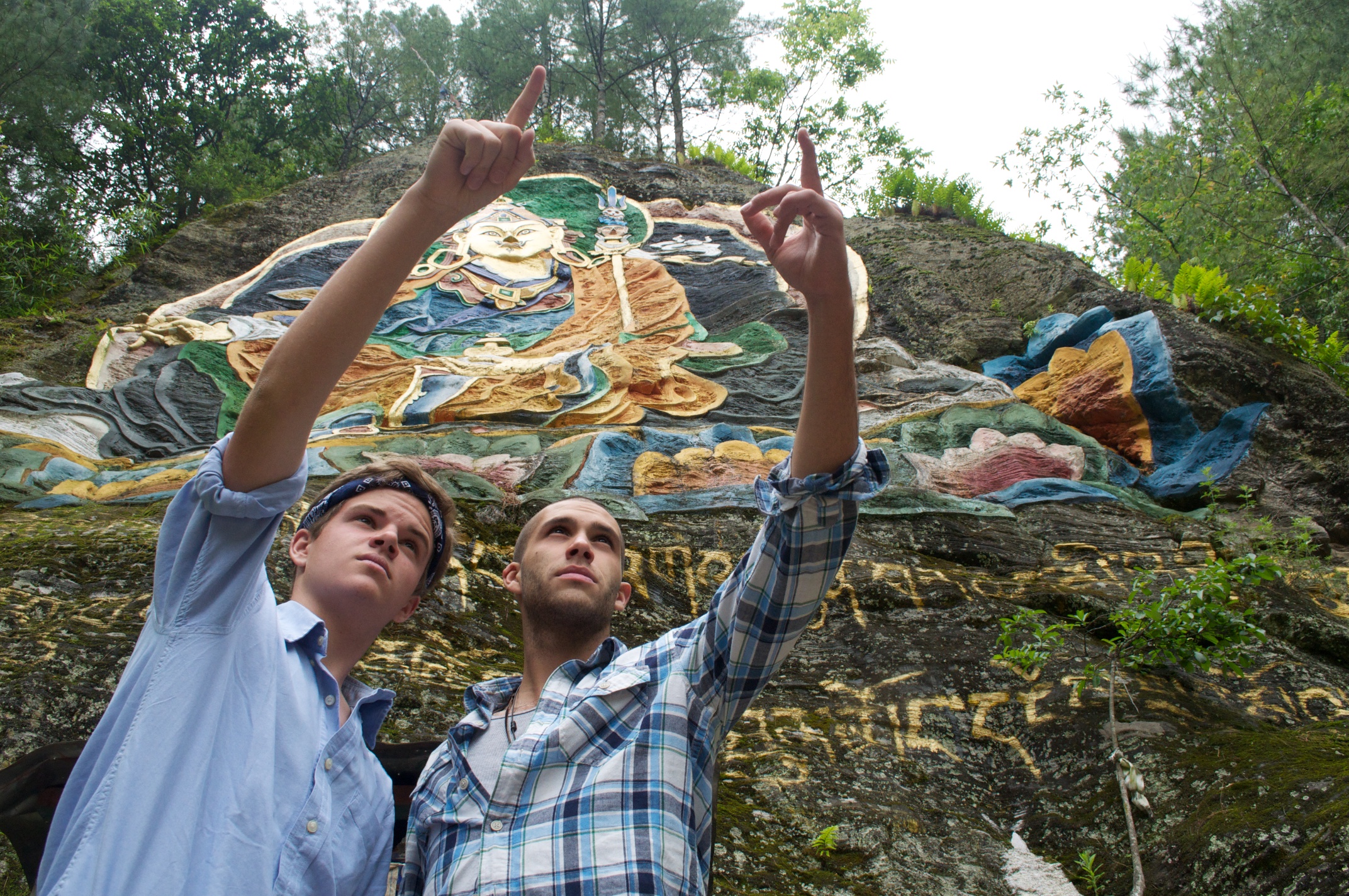
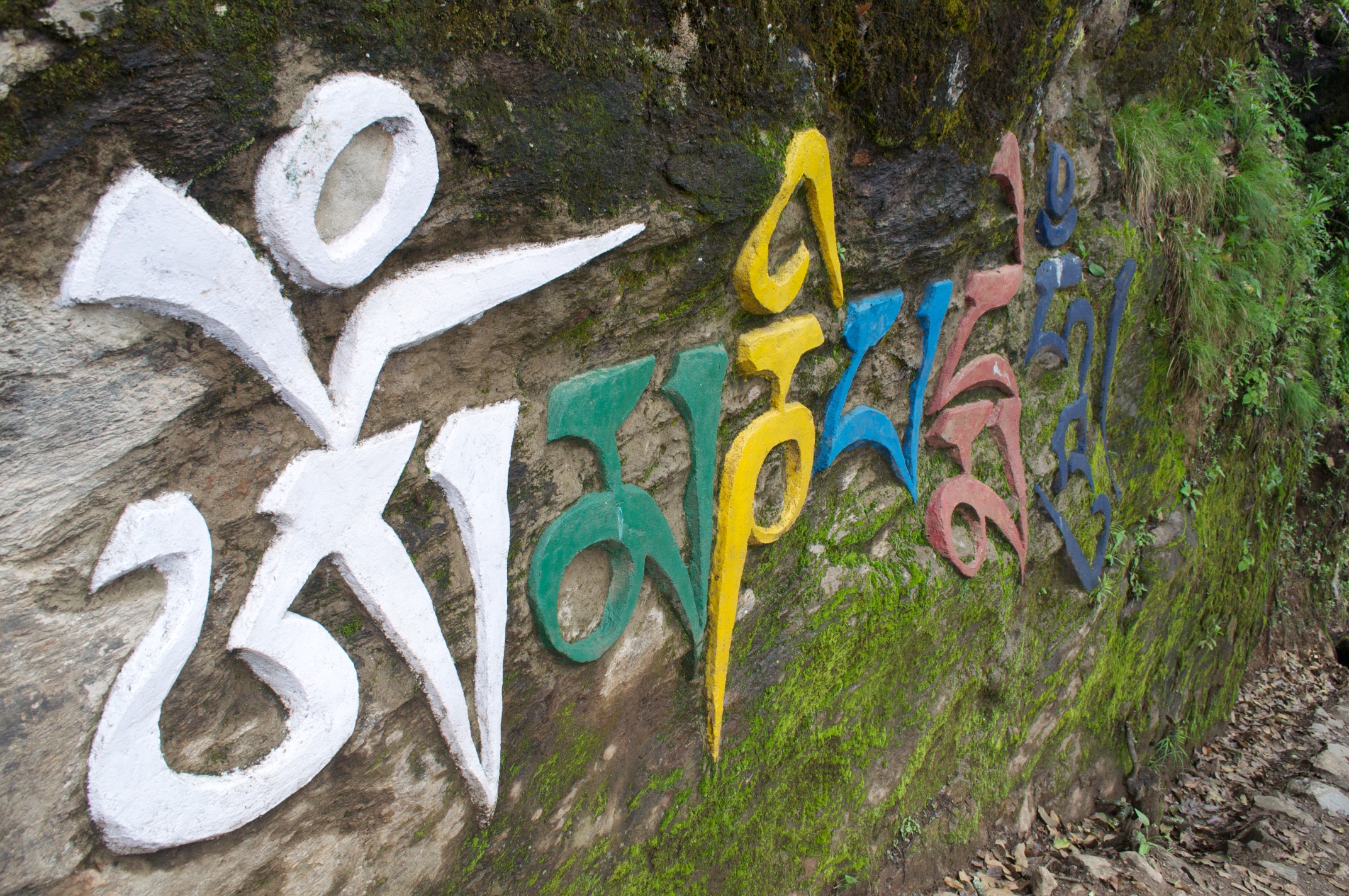
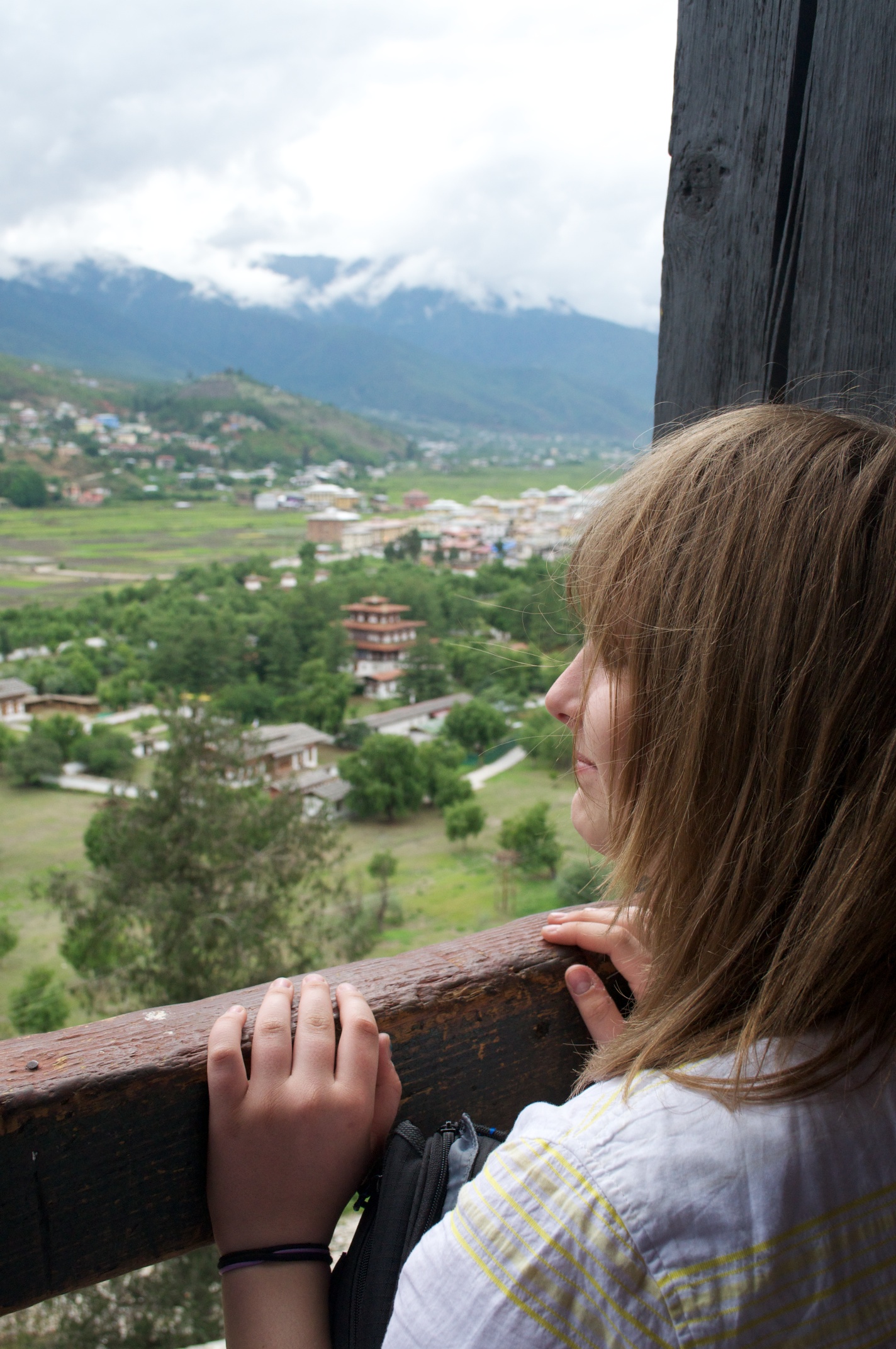
Our first full day in Bhutan began with a trip to Tango Buddhist University in the mountains surrounding Thimphu. The city of Thimphu is the largest community in Bhutan, boasting about 90,000 residents. In the mountains surrounding the city are many monasteries, this one founded in the 17th century.
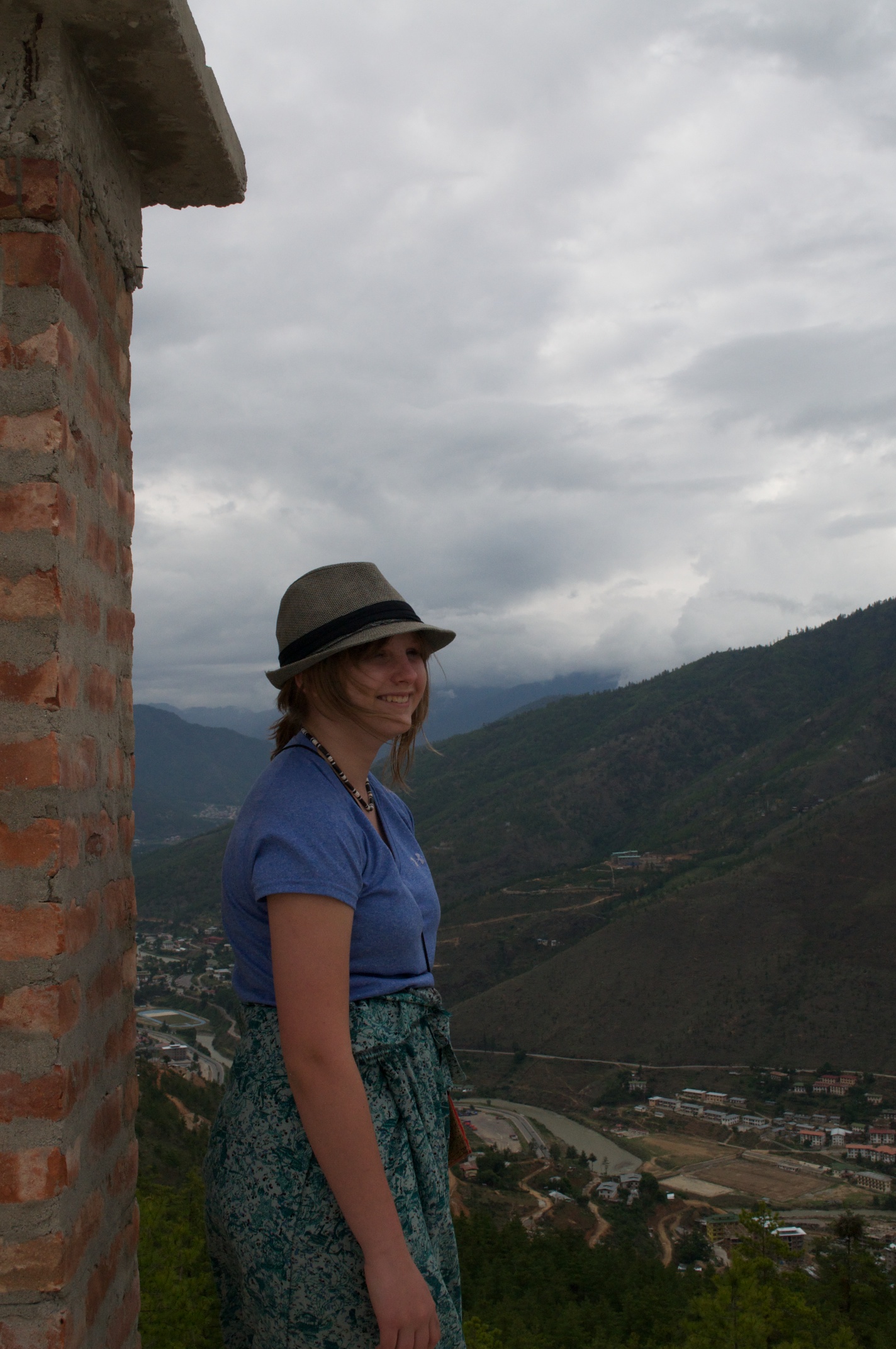
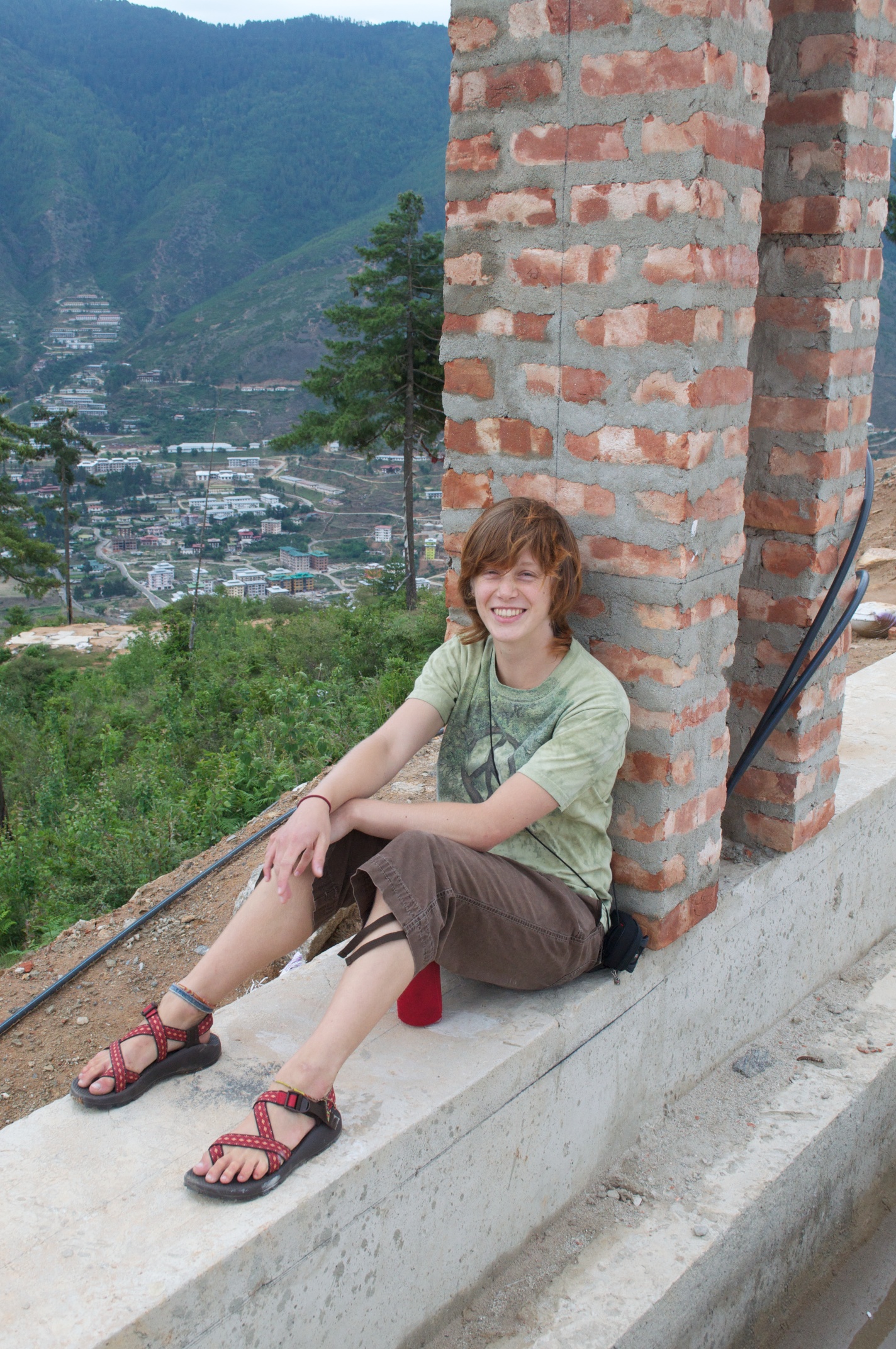
The hike to the stupa, temple, and monastery was hard. Although the path was built by monks in the past two years, the climb was steep. It took us about forty-five minutes to make the trek to the top through thick forest and in a canopy of trees.
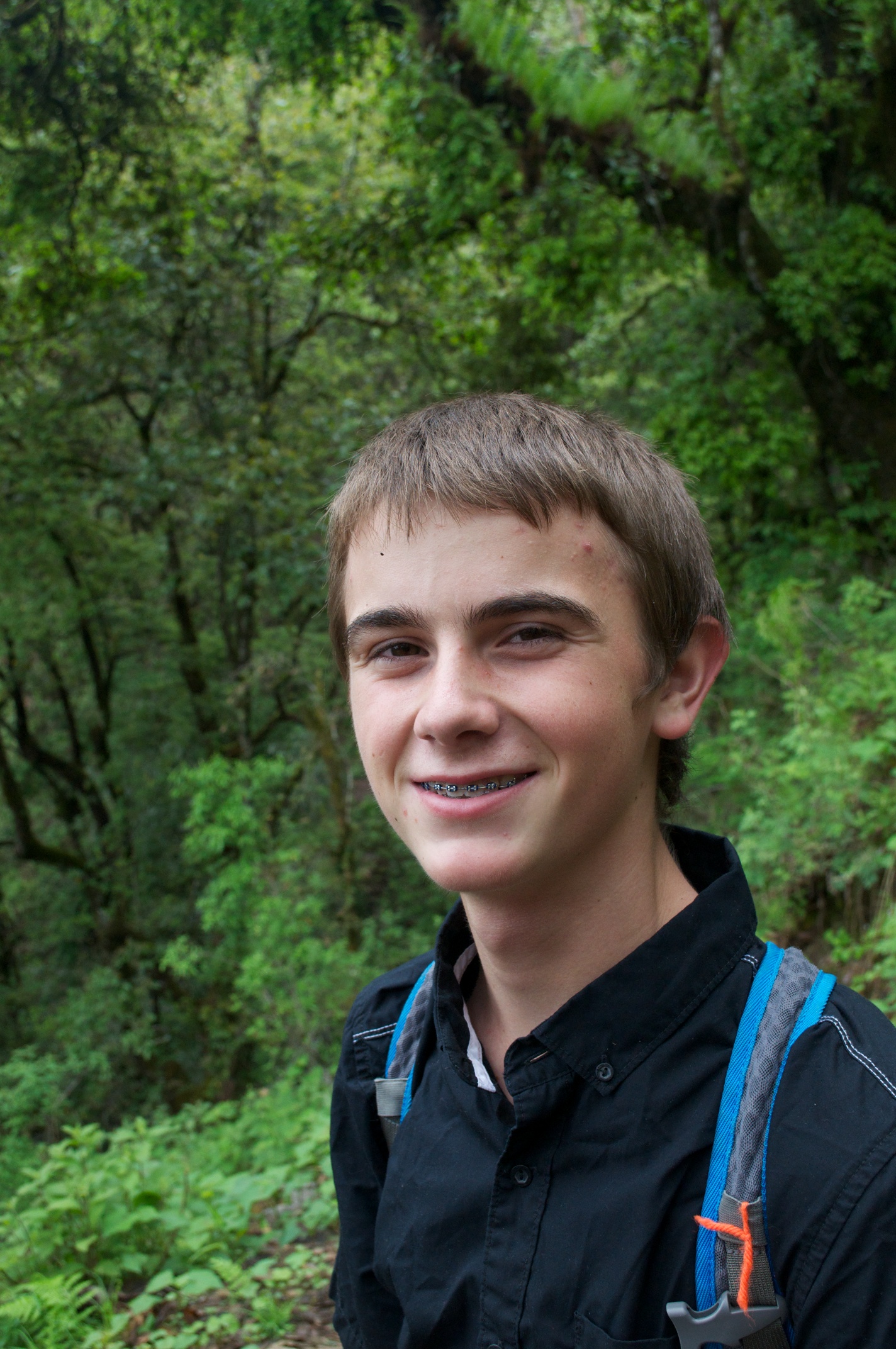
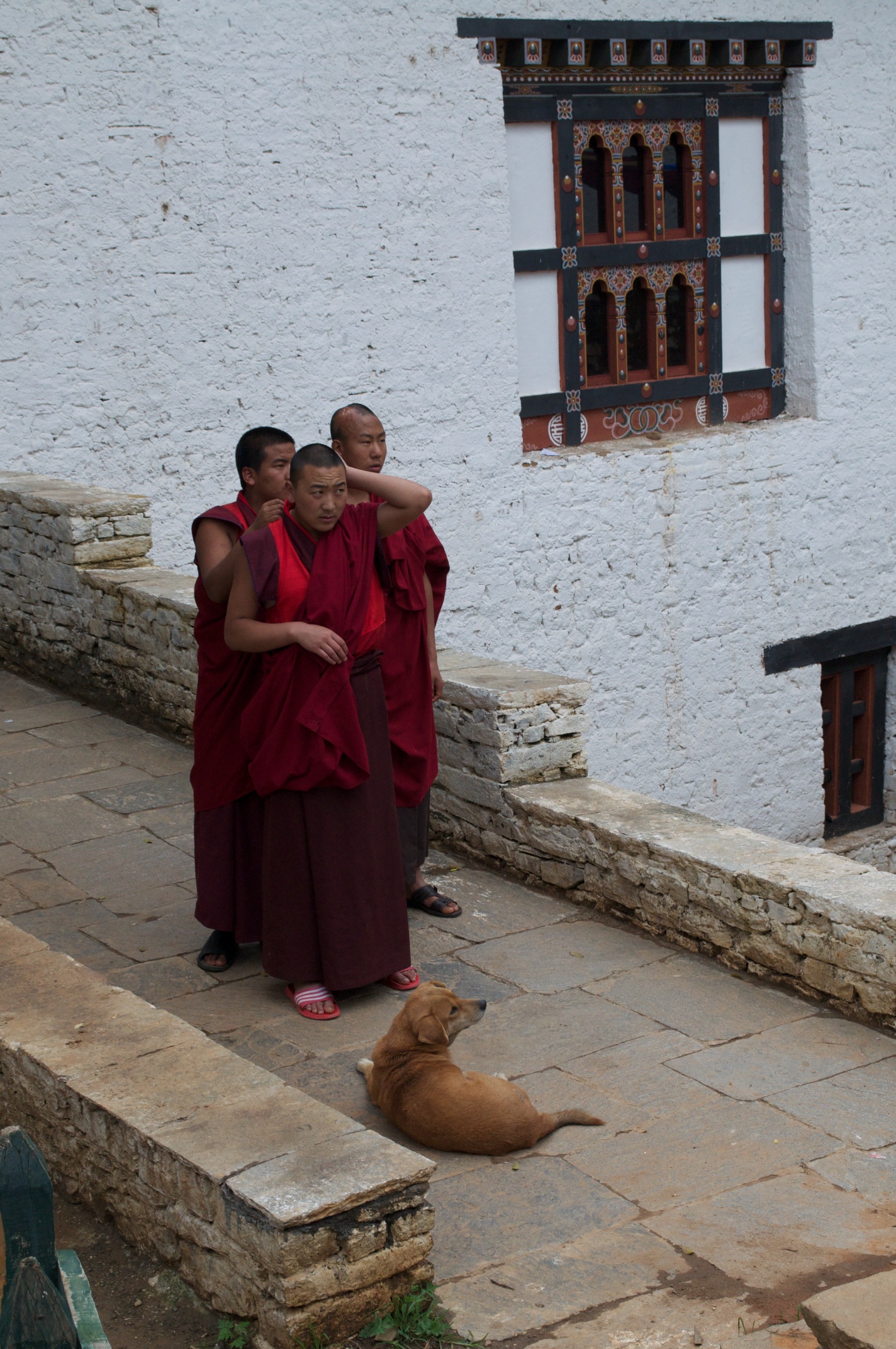
The monastery and university is run by the realized incarnation of the original founder of the university, a boy about 16 years old. We were allowed to sit in the room while the monks chanted a Four Thoughts mantra with the use of drums, horns, and cymbals. Sitting in his seat at the front of the group was the bespeckled young man. Walking around the room was a monk who kept the other monks singing and chanting without slouching or falling asleep.
Namgay explained that this young boy, the head of the University, was found at the age of about three years old when he was brought to the temple and told the monks that he had hidden a lash in a secret place in the chanting room. The monks had to pry open some wooden boards and found the lash stowed there nearly 500 years before. Wow.
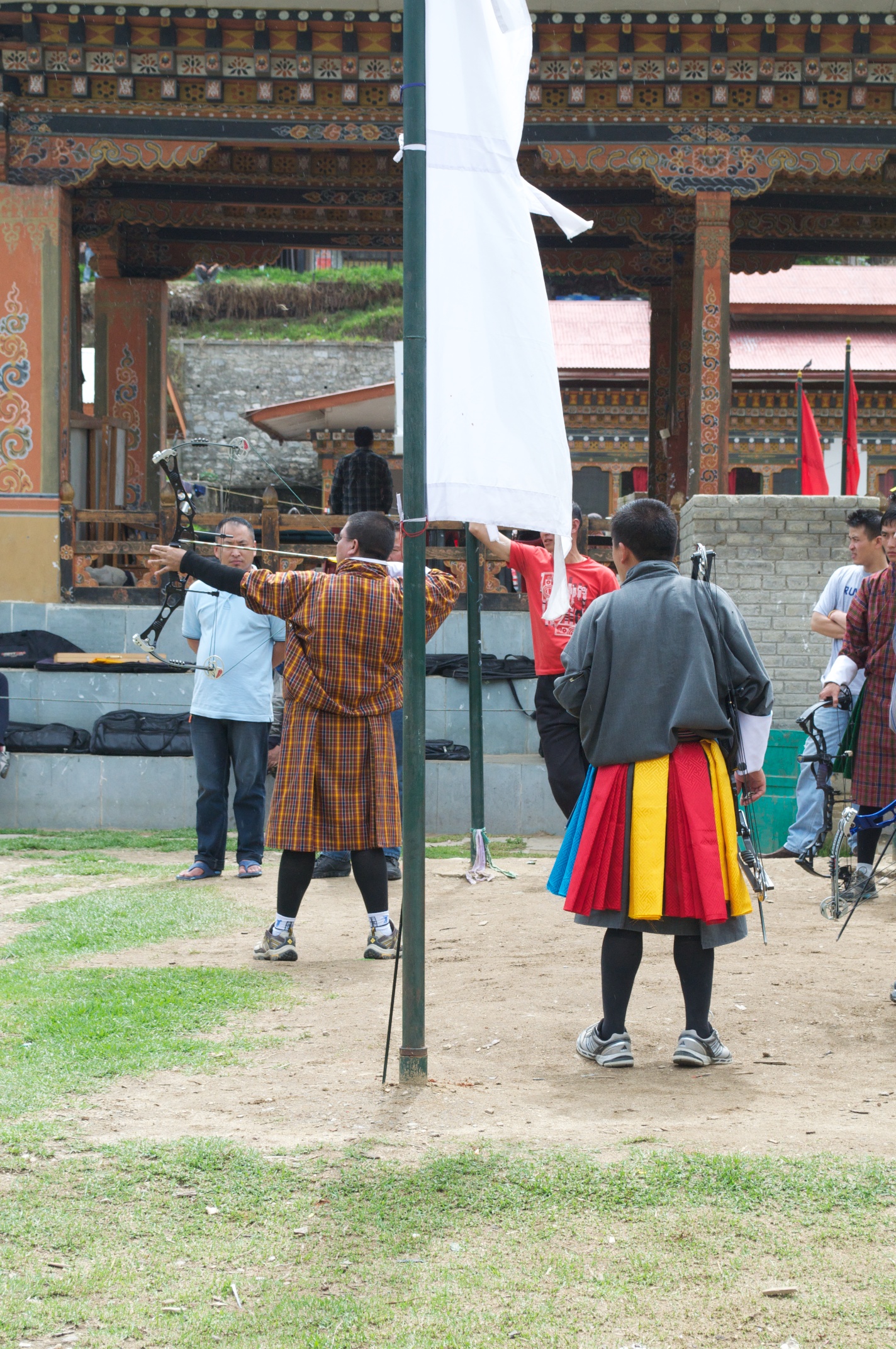
After leaving the temple, we headed back to town for a quick lunch and then onto watch archery competitions in the archery grounds in Thimphu. Four teams competed: 2 teams with compound bows, and 2 teams with traditional bows and arrows. The target was easily 150 yards away and was no more than about one foot wide by two feet tall. Each time someone hit the target, the group would sing a song. This competition was awesome to watch.
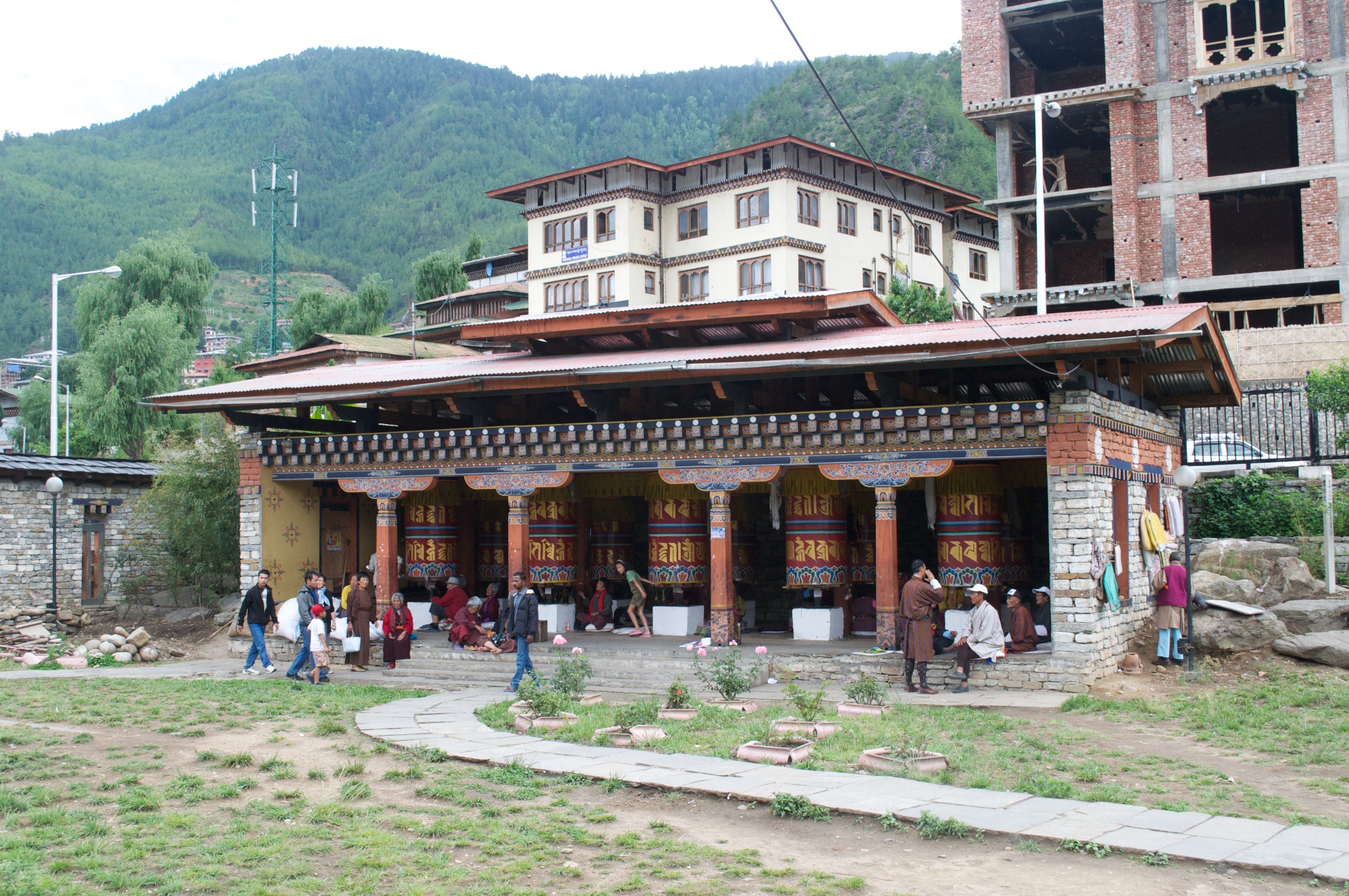
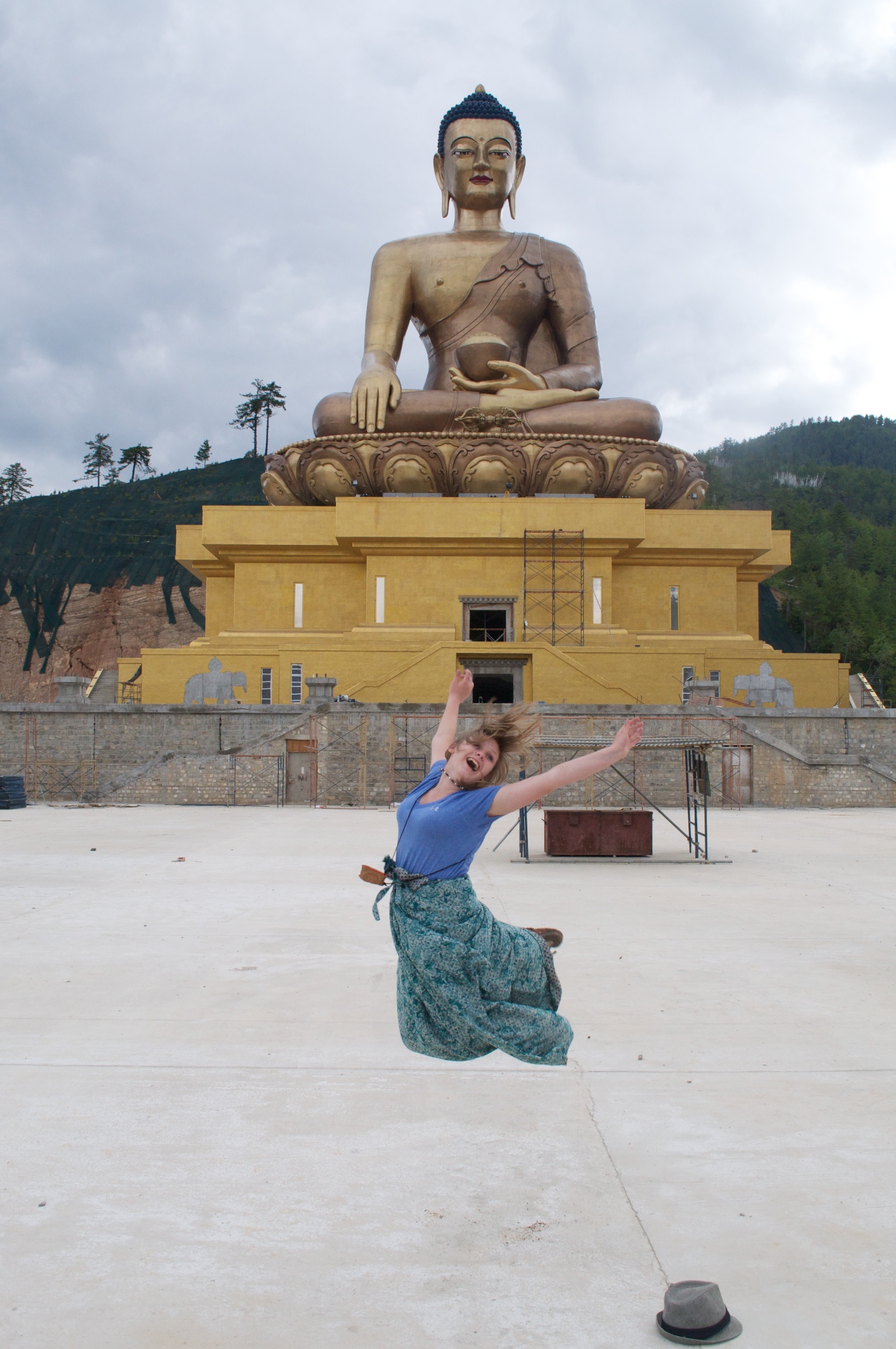
Soon after, we spent about 45 minutes at the handicraft market across the Paro River. Later we traveled to the Thimphu Stupa and to the new construction of a 100 meter Buddha, and finally to see the national animal, the Takin.
Our day was full of surprises, interesting interactions, and LOTS to see and do. I realize that I cannot do justice to the travels in this blog and will attempt a more detailed description of events in another location.
In the meantime, enjoy the photos….more tomorrow!
Some reflections about our last day in Bangkok:
After a long conversation this morning with everyone in our group, many decided that our experience in Bangkok was one for the history books. The feeling of being overwhelmed (as I mentioned yesterday) was pervasive. Students wondered out loud what life was really like in this city. They asked remarkable questions about the lives of folks just trying to get by hawking wares or trying to provide some service, any service, to tourists and residents.
In the late evening, walking the streets of Chinatown on Yaowarat Road, a woman was packing her kitchen and her umbrella and entire cook set dropped on the ground, spilling utensils and equipment into the street. Miles and Layla were walking in front of me and immediately came to her aid as the wind threatened to send more plastic bowls, cups and the like into the busy thoroughfare. As they bent down to help, this woman looked warily at the two and thanked them, in Thai, profusely. After that moment we really wondered at the life lived in this city of immigrants, tourists and Thai….what is life like, really?
Travel to Bhutan
I think I can say with some confidence that we all left Bangkok ready for our travel in Bhutan. The morning gathering in the hotel went well and we took the 15 minutes ride to the airport. If you have never traveled through Bangkok, you will find the Suvamabhumi airport something to behold. The sheer size of the airport is impressive. The airport also is one of those places in the world where people from just about every part of the world intersect. As one of the main hubs of travel for all of Asia, Suvamabhumi has become a kind of gathering place for the world. I wonder if we couldn’t solve most of the world’s issues right here, having a cup of tea and working together in this massive gathering place? Just a thought.
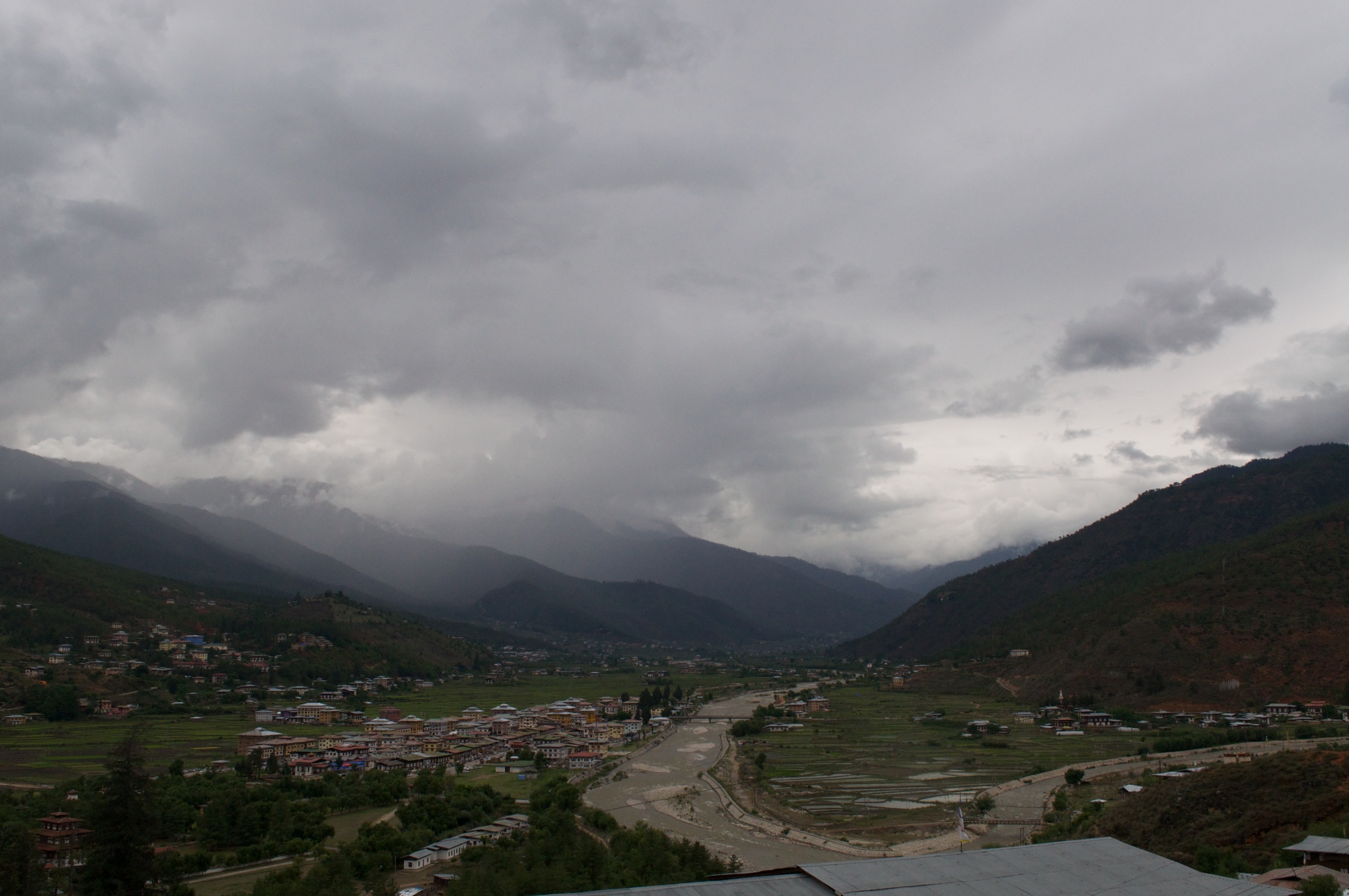
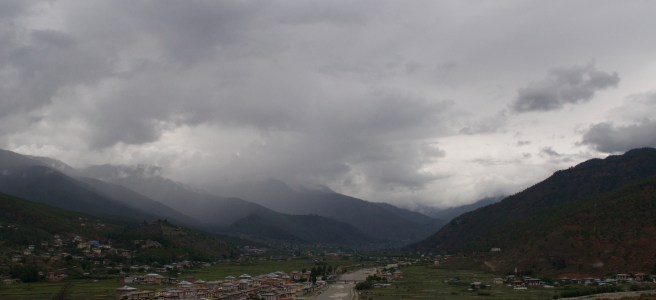
The flight to Bhutan took three hours and we stopped, briefly, in northern India before heading into Paro. If you haven’t landed in Paro, it is a dramatic end to a beautiful flight on the edge of the Himalaya mountains. (http://www.youtube.com/watch?v=YsZqN-uEgQU) Clouds covered the region and we did not get a glimpse of Everest or Jomolhari….maybe when we leave!
We met our tour guide Namgay and his company Illuminating Tours. (http://www.illuminatingtours.com) Namgay we befriended a couple of years ago on our trip and we were excited to see him. Let me make one note about our return: both myself and Miles were the only two folks to were traveling to Bhutan a second time with the school and as we got off the plane, we were both taken with emotion as we walked into the airport building (in Bhutan, you deplane on the tarmac). This place has special meaning for us both, for very different reasons, and we hugged as we shared this moment of wonder.
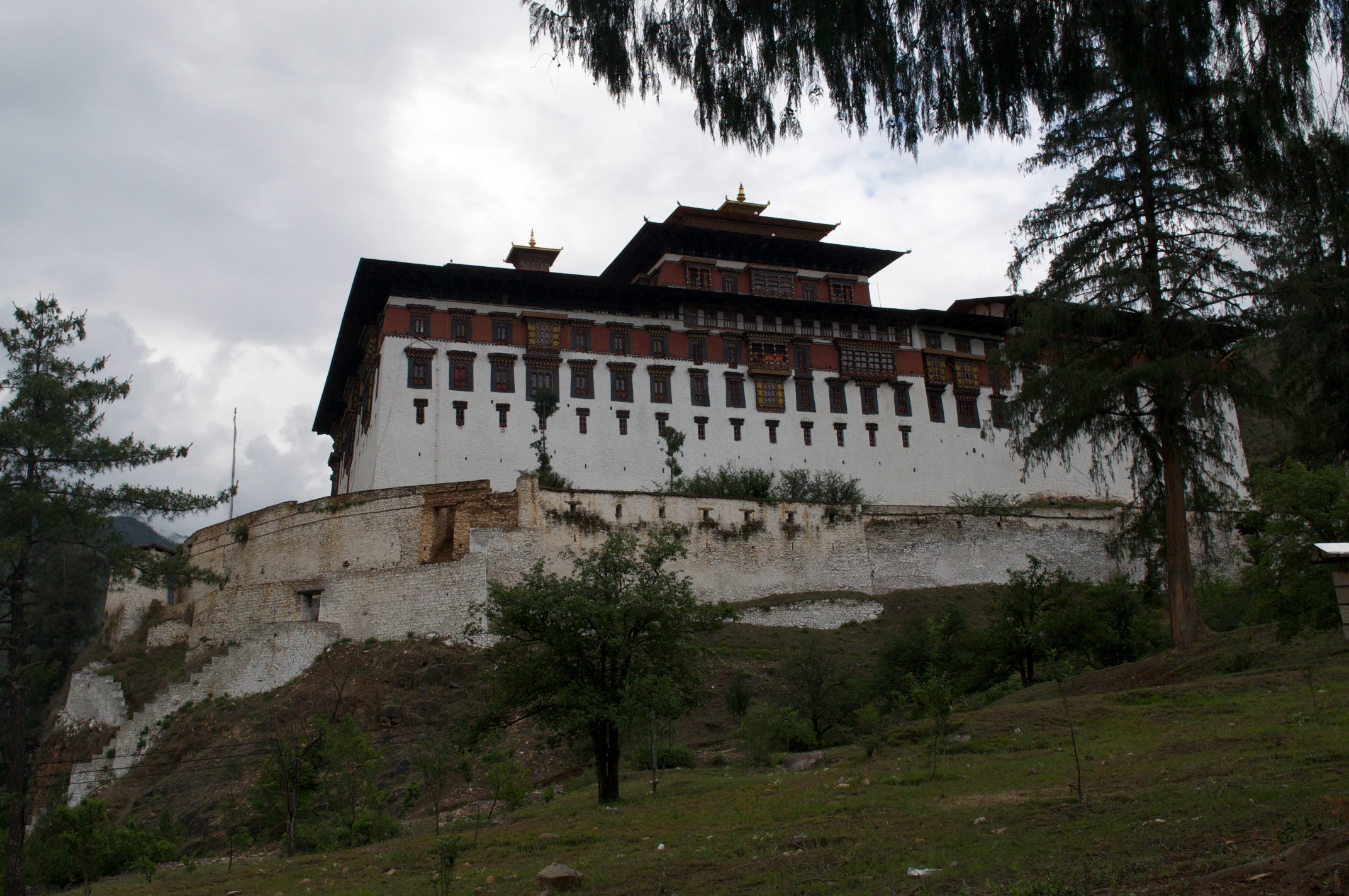
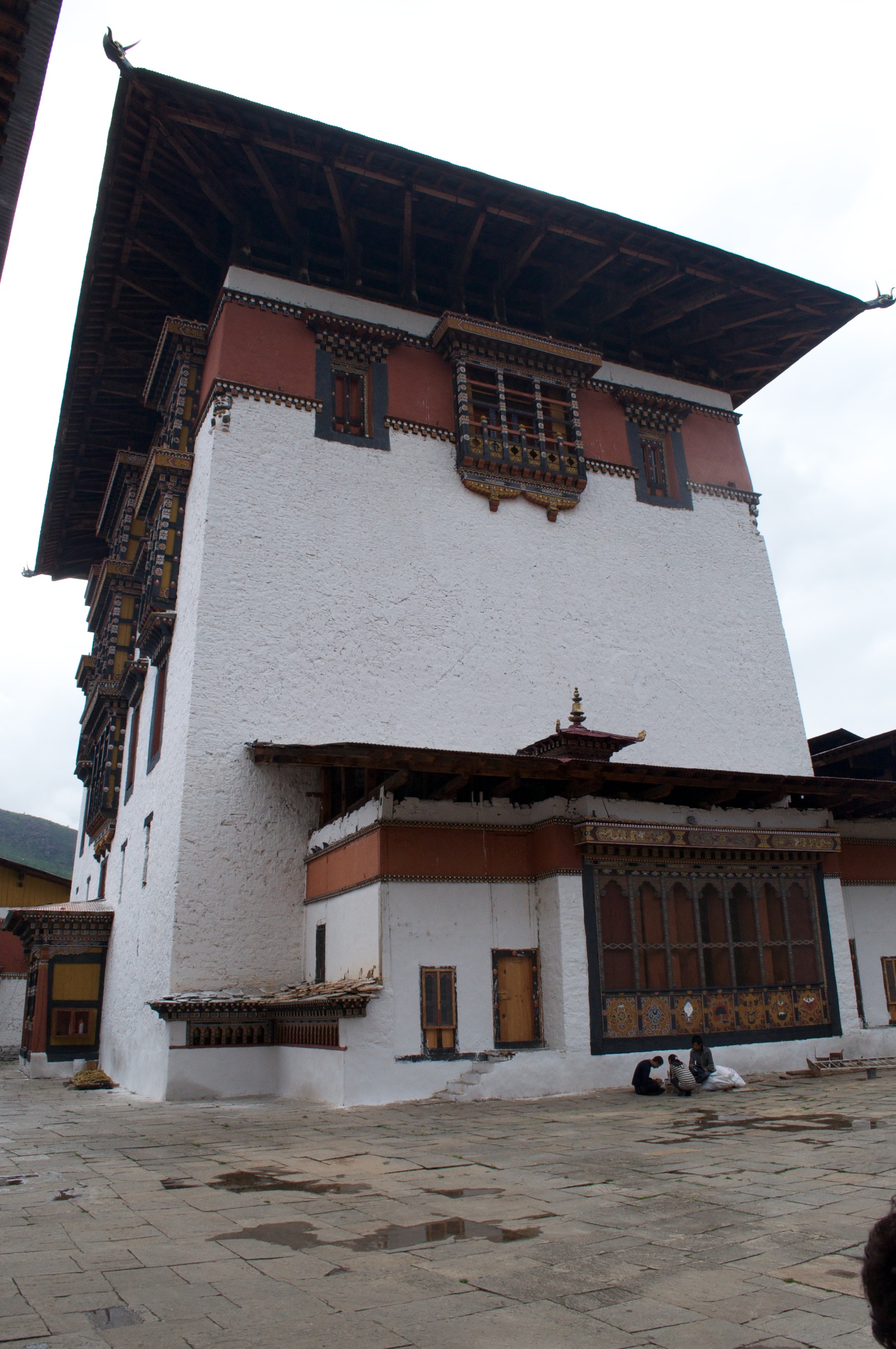
Our first visit was to Paro Dzong, an impressive 17th century fortress build here to defend the Paro valley from Tibetan invaders. The structure is impressive with ten-foot walls surrounding a central “keep”. Today, the dzong houses about ninety monks and government officials. We visited with the monks as they were memorizing important chants and sutras.
We finally made it to our hotel and settled in after a wonderful vegetarian meal. Sleep, tonight, was welcome


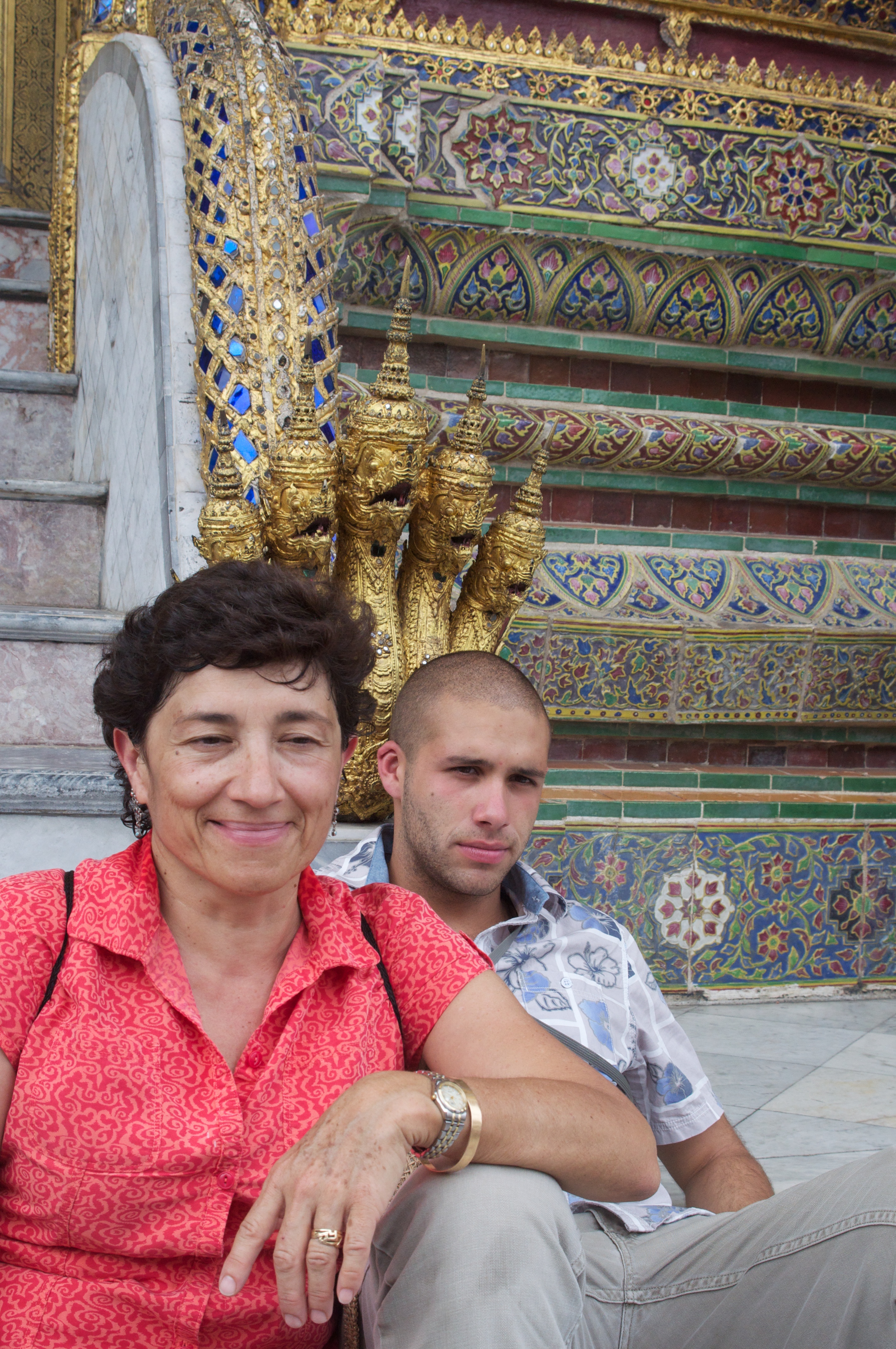
Bangkok is an amazing city and reveals a new sight, a new idea, a new experience around every corner. We were so impressed by the majesty of the Grand Palace and the sheer opulence of the gold leaf and enlay throughout this 60 acre site along the Chao Phraya River. Combined with the mass of humanity seeing the temples and shrines at the same time was almost overwhelming for our group.
Our guide, Sam, picked us up on time and ready to depart. We left at about 8:30 AM and drove through traffic that makes any U.S. traffic jam look like a lazy summer drive in the country. Cars flew around our van, people cut in front, around the side, and nearly sent us flying numerous time. The white lines identifying the “lanes” were mere suggestions to drivers as car after car, motorcycle after motorcycle bobbed and weaved through the streets.
The temple was certainly worth the visit and we learned a lot about the foundations of the monarchy. Really words cannot do this experience much justice…check out some of these photos….more will come as soon as we have an internet connection that resembles dial-up.
Be well and I will write again tomorrow.

After twenty hours of flying and three plane changes, we arrived in Bangkok at 11:15 PM a little tired but ready to go. Our day was relatively uneventful except for the panic-cry “I lost my passport, I lost my passport” by a few of our group. Of course nothing was lost and everything geenrally flowed from place to place.
I’d like to say that we had some kind of profound experience….maybe the most profound thing was buying food in Tokyo. From Green Tea Kit Kat candy to Pocari Sweat drinks out of vending machines (yes, they taste a lot like sweet) our experience was muted.
We landed in Bangkok in the rain and made it pretty quickly out of the airport and to the hotel, the Mariya Boutique Residence….the hotel is a little funky, and many had trouble figuring out how to turn on the lights…now we are all in bed, ready for our morning jaunt into the city and a visit to the Emerald Buddha, the Grand Palace, and the Old City of Bangkok.
Until tomorrow, be safe and be well Albuquerque!

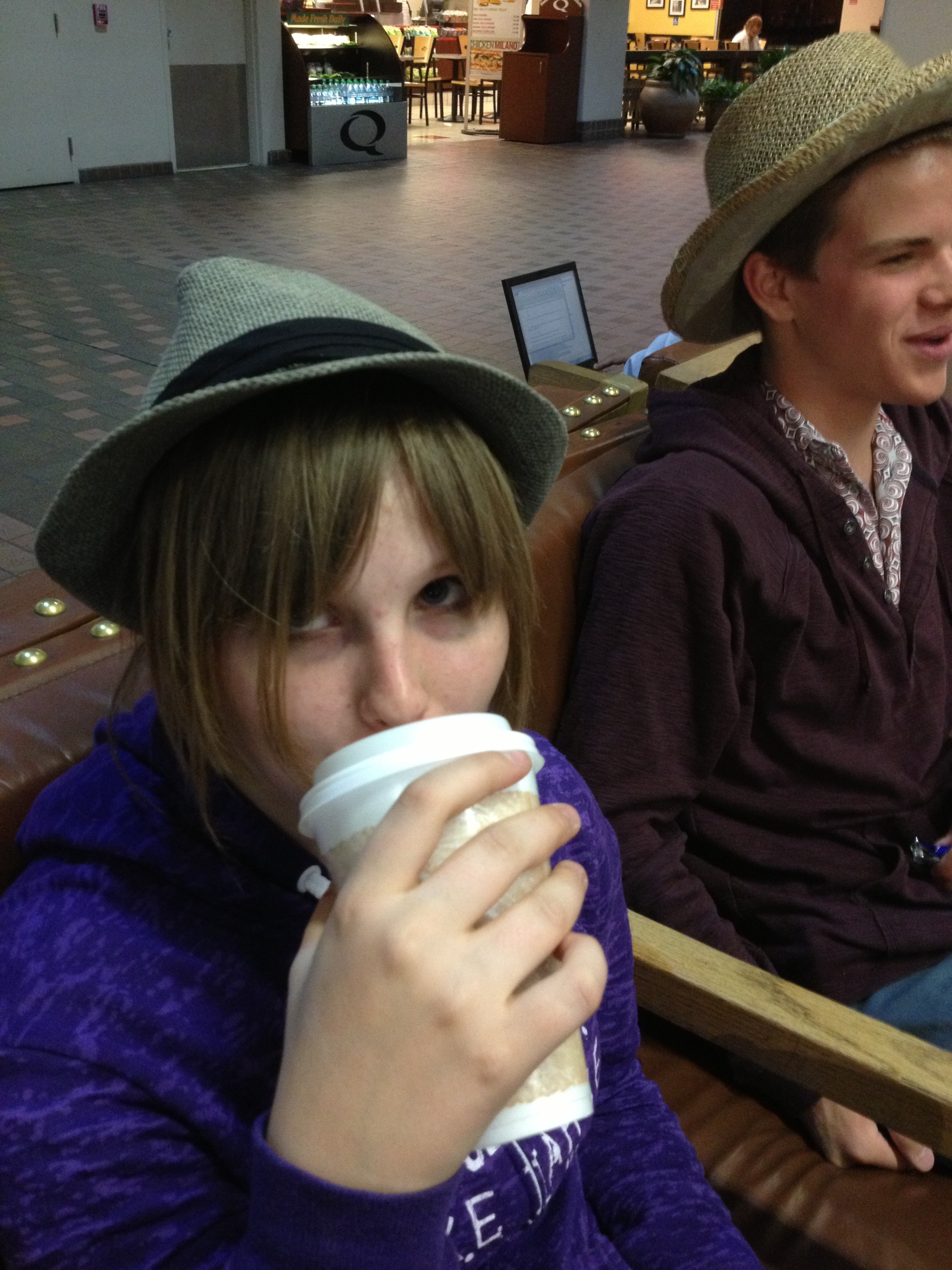

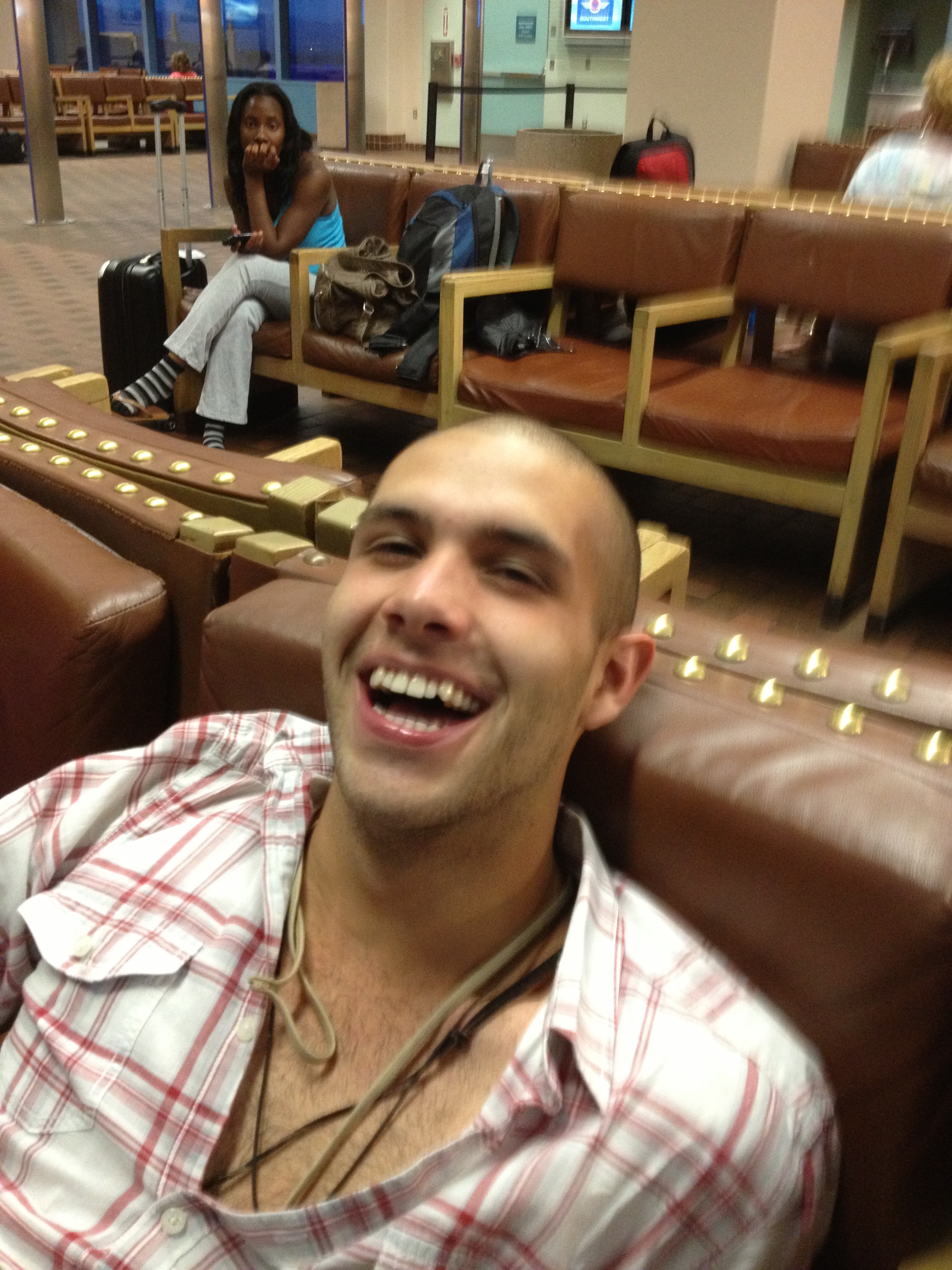



We made it! At least we made it THIS far. Here we are in LAX for an extended period of time waiting, patiently, for the flight to Bangkok. The airport is crowded, noisy, and I saw Brent Spiner, Data, on Star Trek the Next Generation, in the waiting area.
The students are in various stages of sleep….that 4:45 AM meeting in Albuquerque was ROUGH.
Stay close for more information, details, and photos of the experience of a lifetime….or at least an experience for today….
Going on a trip requires some planning. Going on a trip with students requires more planning. Going on a trip with students across the globe requires a ridiculous amount of planning. The thing is, I have lists that refer to lists right now. I always wonder, am I making too many lists? Is there a way out of this crazy trap?
Today I made, what I thought was, my final list. It has about ten bullet points…and at the end of the list I put the things I forgot to put on the list….and so I created another list that included all of the things I thought of….until I remembered something else. So I decided, I’ll make a couple of different lists for different types of items: a list for *group* gear; a list for personal gear; a list of tech I need; a list of clothing…..then, this list mania made me kind of nuts.
Let’s face it, lists are great as long as they are functional and help you complete a task…..these lists were doing NOTHING of the sort….my lists were lists of things to remember….and, strangely enough sparked my memory of things I had forgotten.
OK, so what did I do about planning and making lists? I stopped. I have a list from a great web site: http://www.onebag.com/checklist.html. This site tells it all…it’s a site within a site…including lots of useful information.
I grabbed information and moved on….hopefully, at the end of it all, I will have taken exactly what I needed. Somehow, I’m not so sure.

The day of departure draws near and the students in school are eager to fly across the ocean to Asia. Our trip preparations are almost at an end as we make final decisions and make small changes to what we are carrying, thinking, doing in preparation.
I spoke with Jasper today who is trying to get over a cold and is focused on completing his finals. When asked, “Are you ready?” he said, “I will be on Wednesday.” His comment definitely summarized what most of us are feeling….get what we need to get done so that we can get done what we need to get done so that…..you get the idea.
A FEW RANDOM THOUGHTS ABOUT TRAVELING TO ASIA
1. Travel light; yeah I know people *say* this all the time, but in traveling to Thailand and Bhutan it is doubly true….lugging around stuff you don’t need is definitely a problem on this trip….take only what you need and don’t take what you don’t….so, what do you need? Not much.
2. Take the basics; basics include a small vial of liquid soap (Dr. Bronner’s Peppermint is my favorite)….having the chance to clean your face is a beautiful luxury…the soap helps.
3. Don’t sweat the details, unless the details include your Passport! Having traveled with students on many trips, the Passport issue is huge…I cannot tell you how many times someone has “misplaced” that document…lesson here: is it secret? Is it safe?
4. Be open and accepting….that’s always the lesson!
Thailand and Bhutan are places of contrasts; ancient and modern, past and present flow together in a kind of perfect dance. In terms of material culture and the structure of the communities, often both past and present live side by side….not really seamlessly, but certainly together.
Our travels to Thailand and Bhutan definitely reflect the challenges both societies face in addressing modern issues like global warming or economic determinism….the questions we will encounter and will certainly inform our trip.
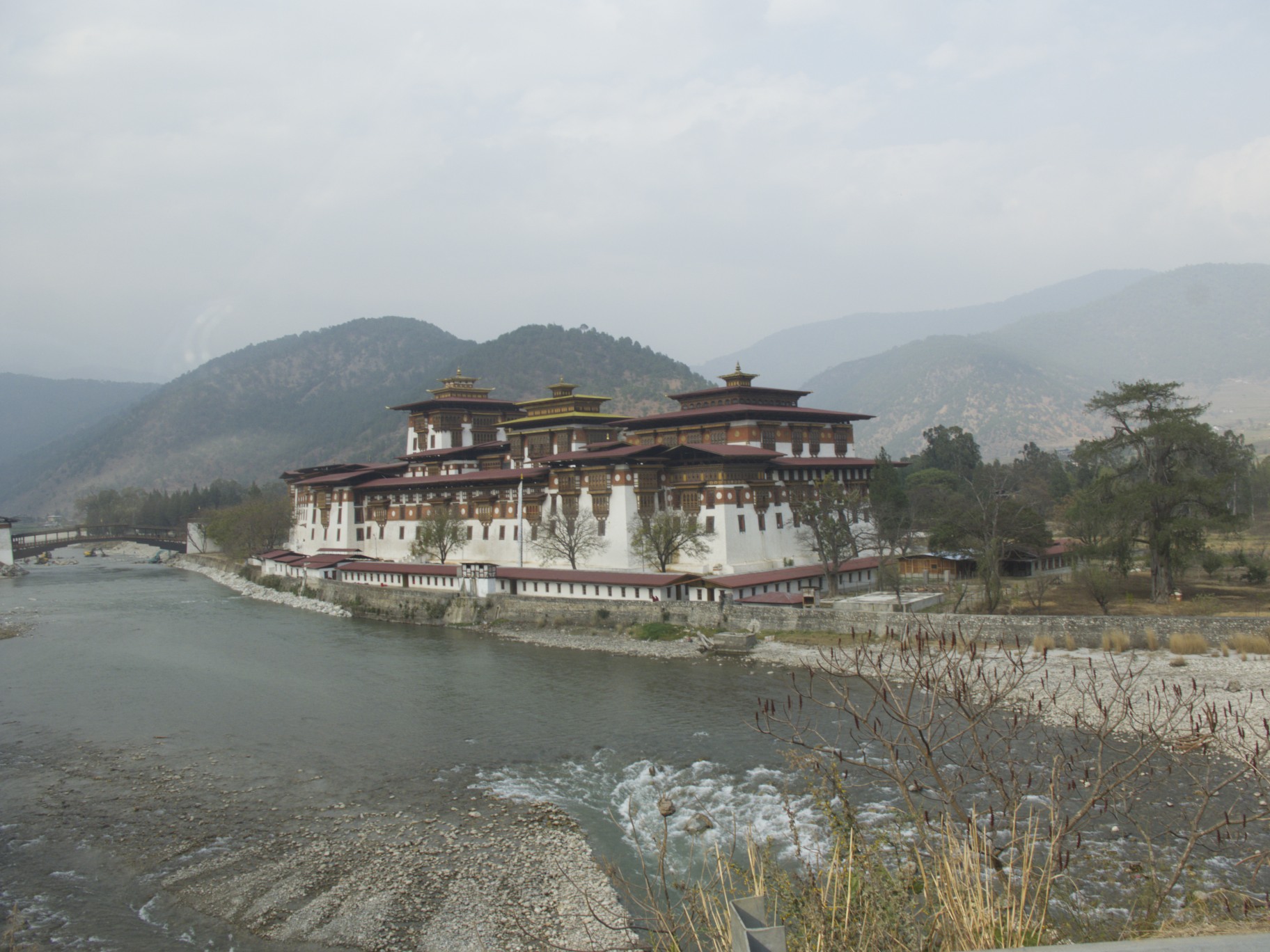
The photo above, of Punakha Dzong was taken traveling in a mini-bus on a small two-lane dirt and gravel road in Wangduphodrang province in Bhutan. The Dzong stands as it has for more than 500 years sitting between two rivers. The building itself houses government officials and monks (sometimes one and the same), young folks attending monastic training, and a giant hive of bees living above the front entrance way to the building.
This building, constructed of something very much like adobe and cement mortar, reminded us of churches in New Mexico built during the Spanish period. The massive walls, thick enough to support the tall sides of the structure, represent the power and authority of the building itself. The solid, white walls stand out from the hills that surround the structure making a clear distinction between this building and the environment around it.
 gentryfunkblog