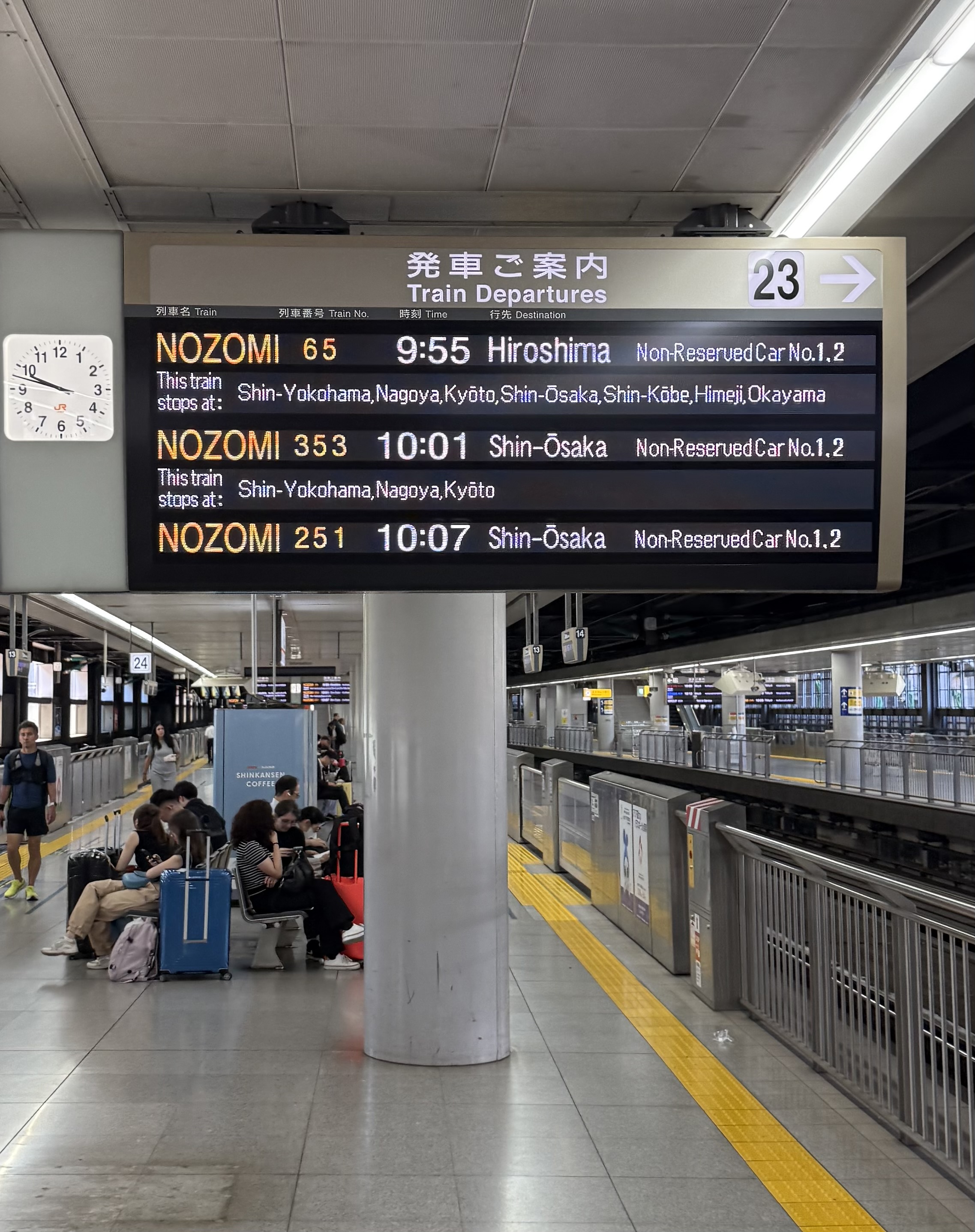
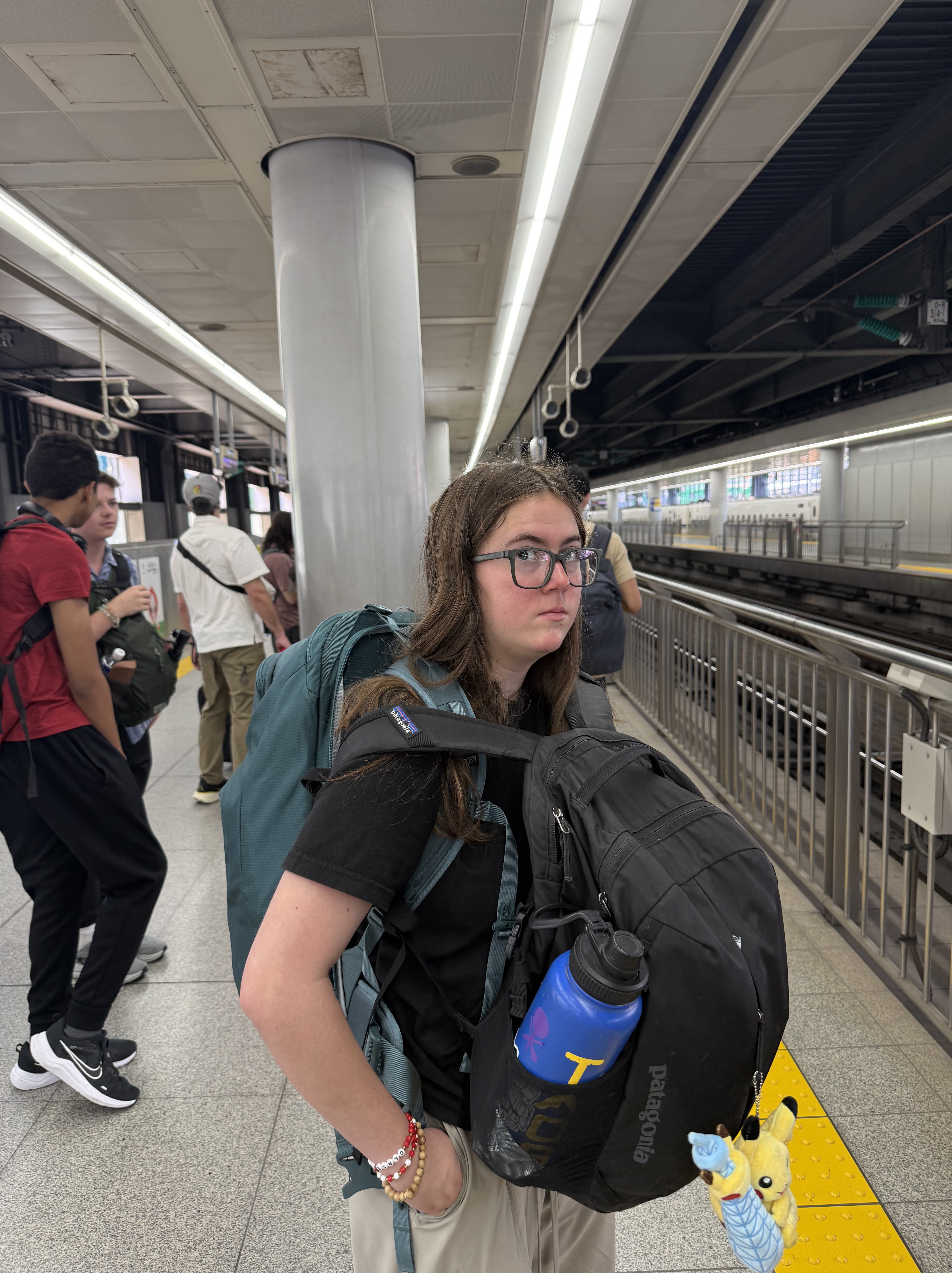
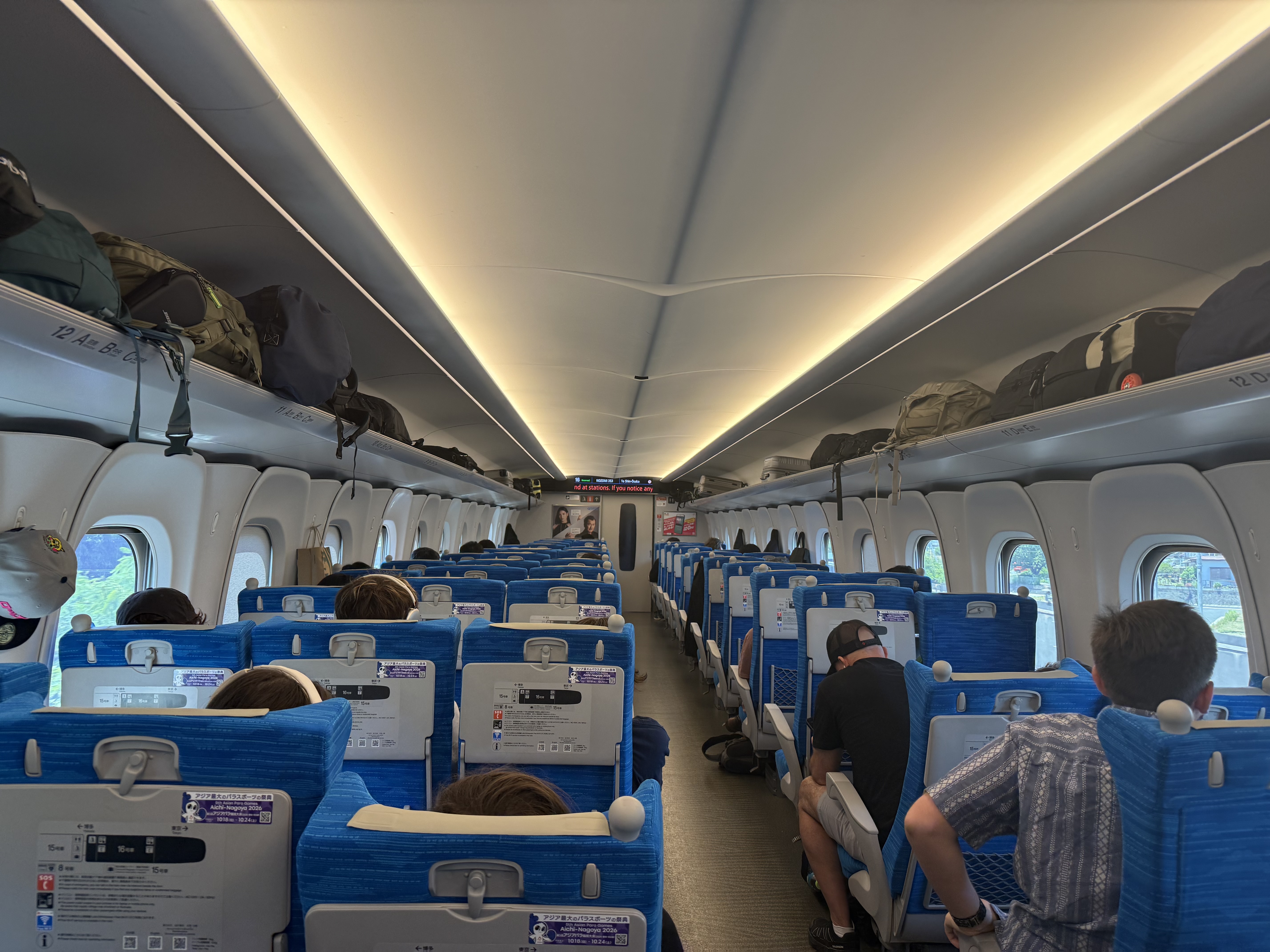
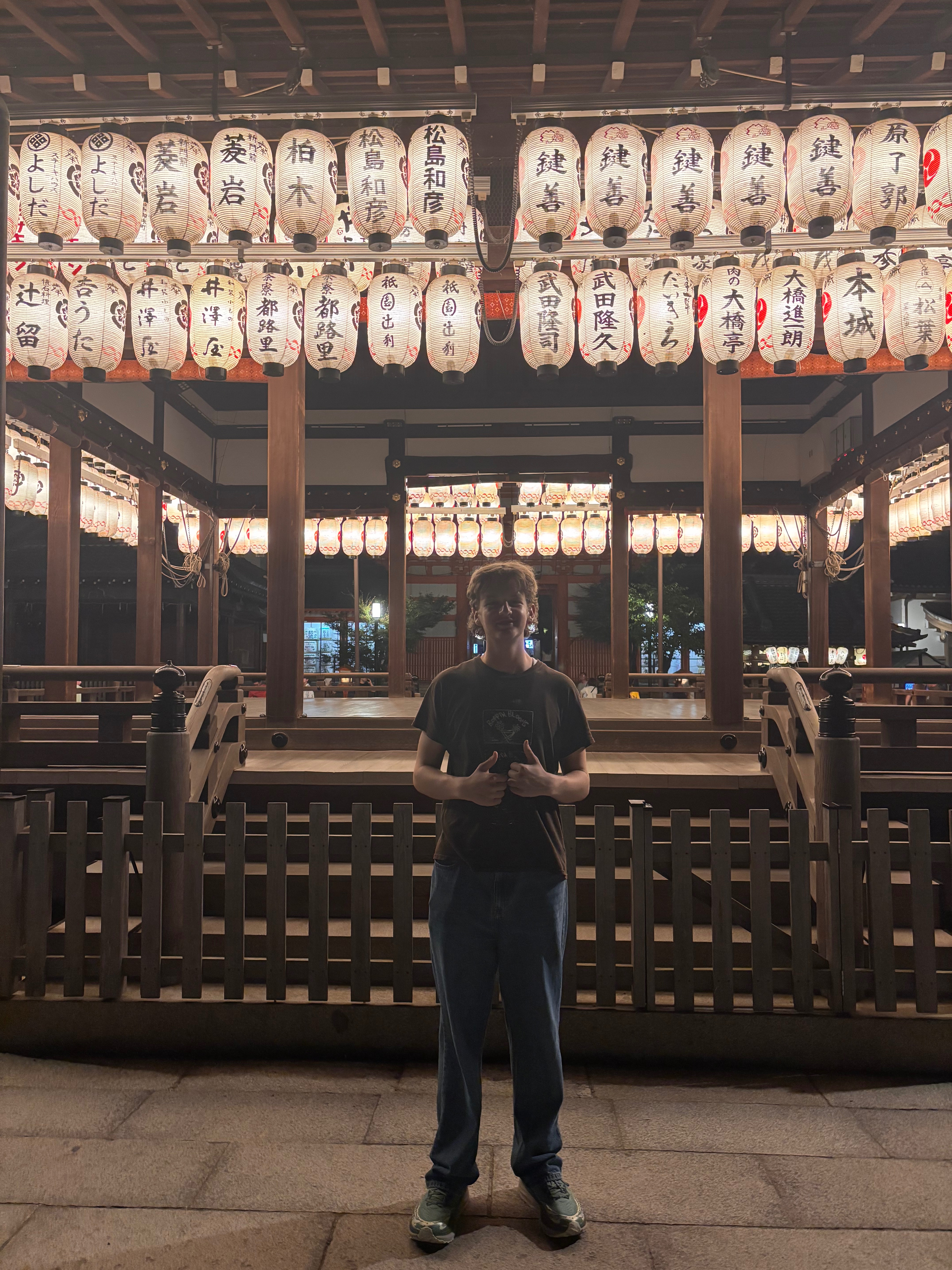
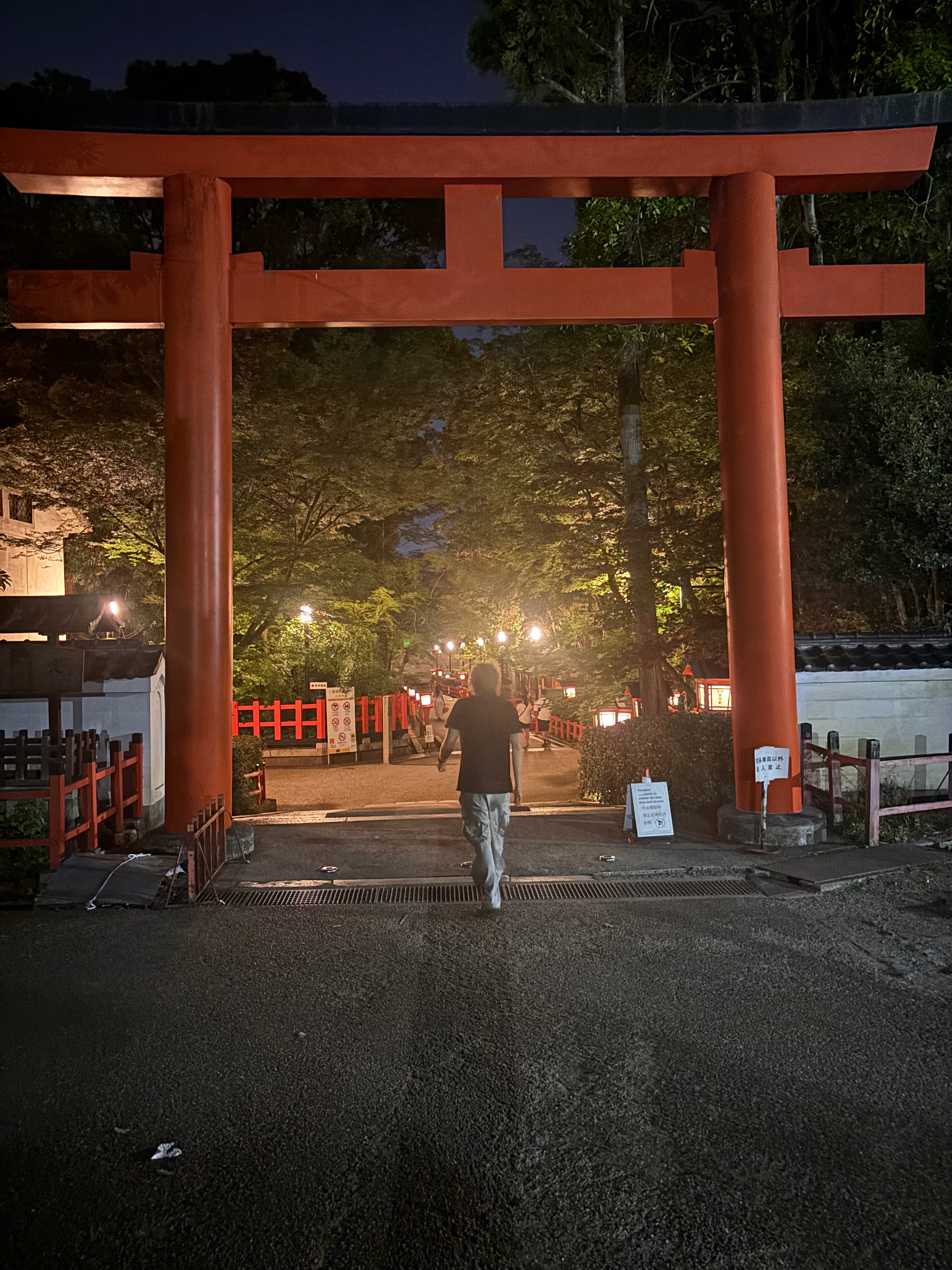
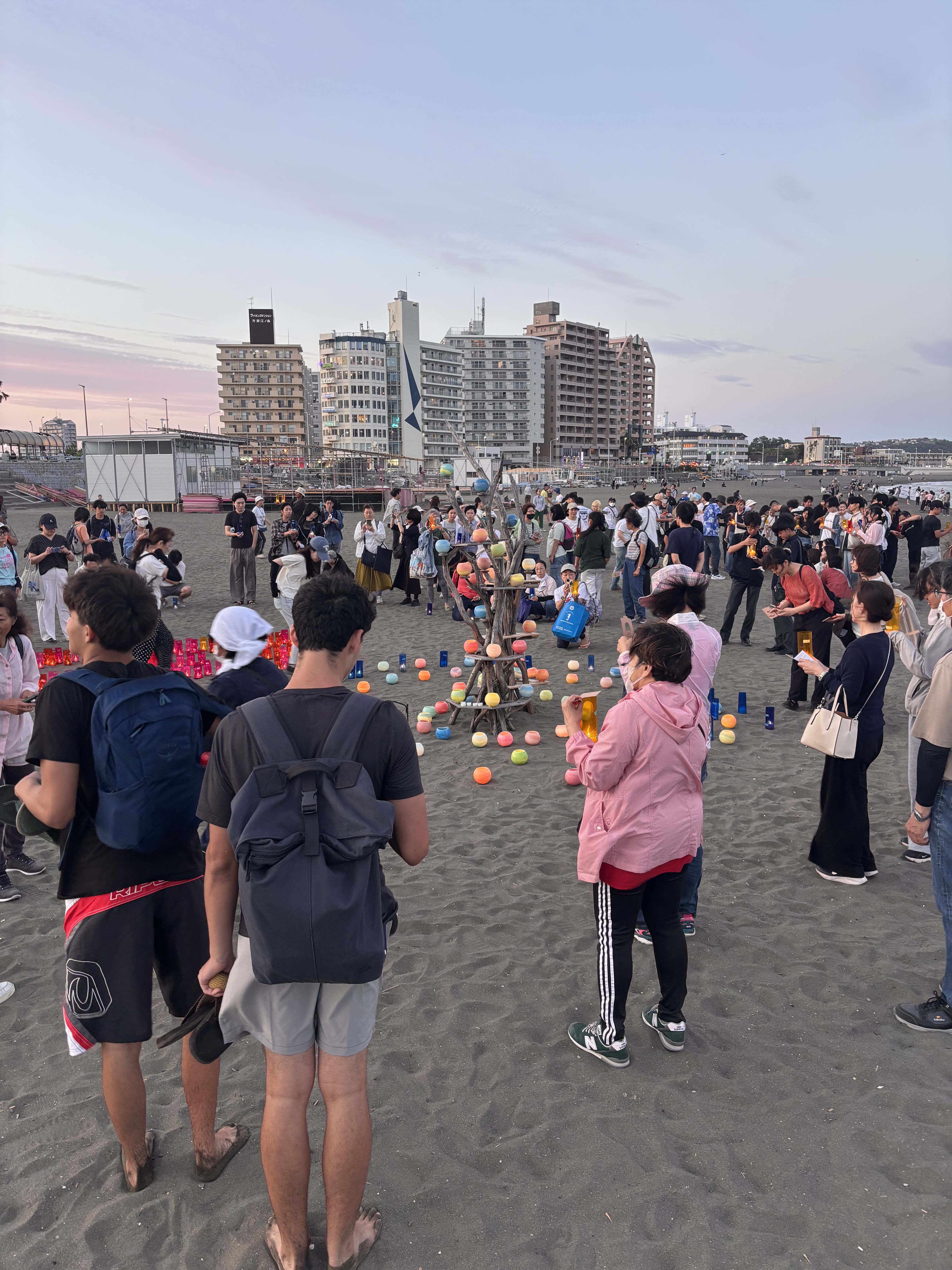
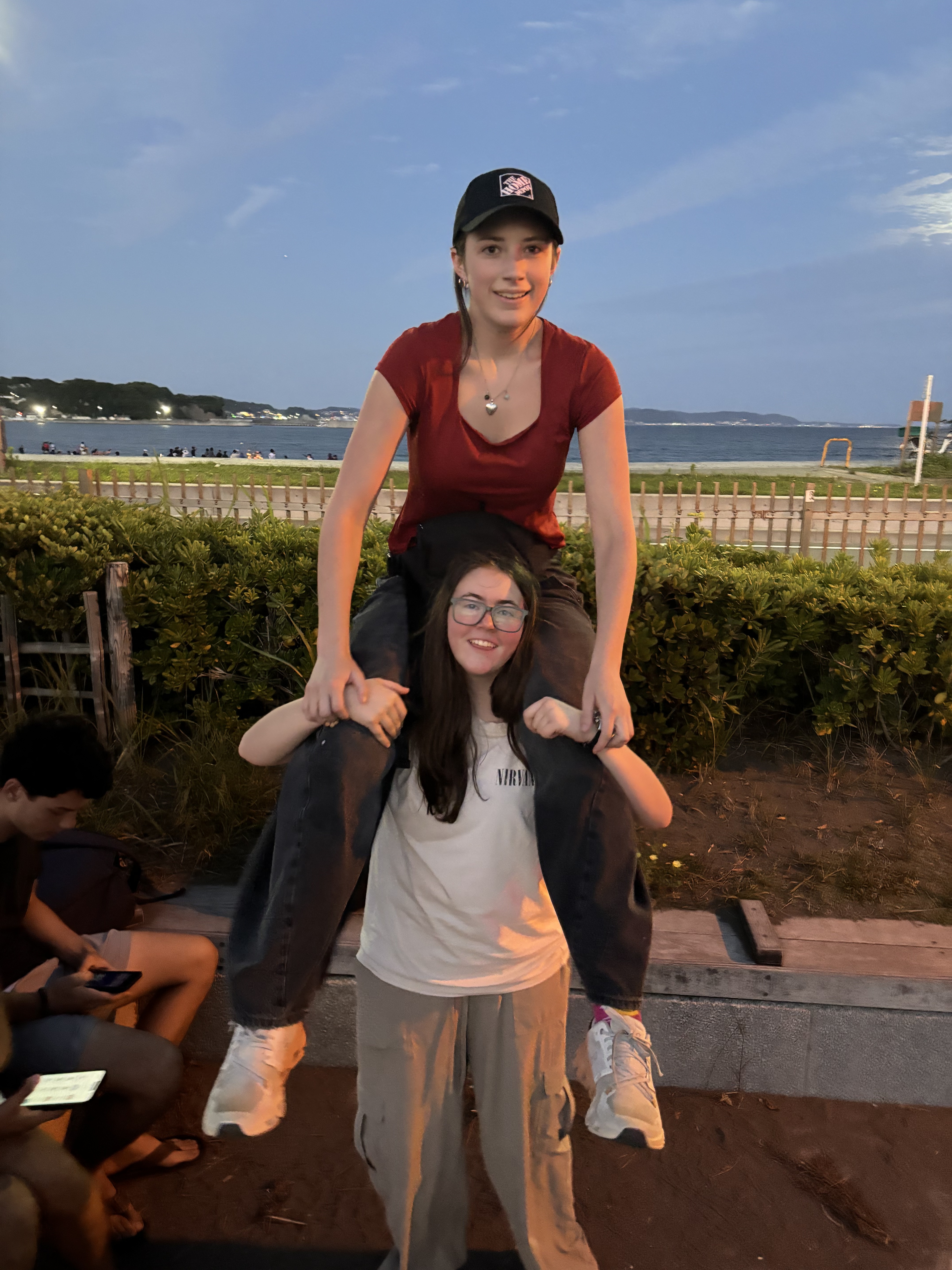
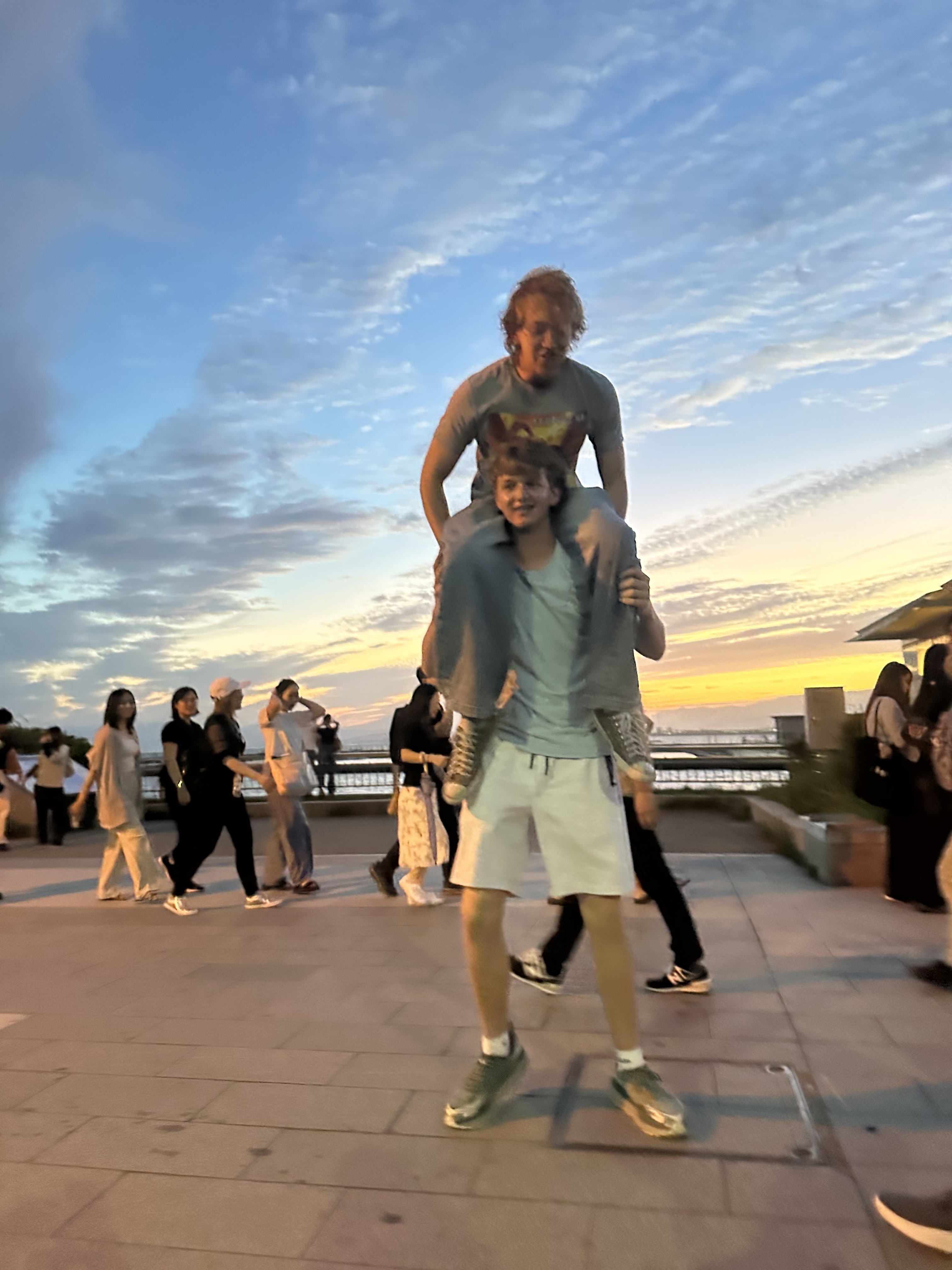
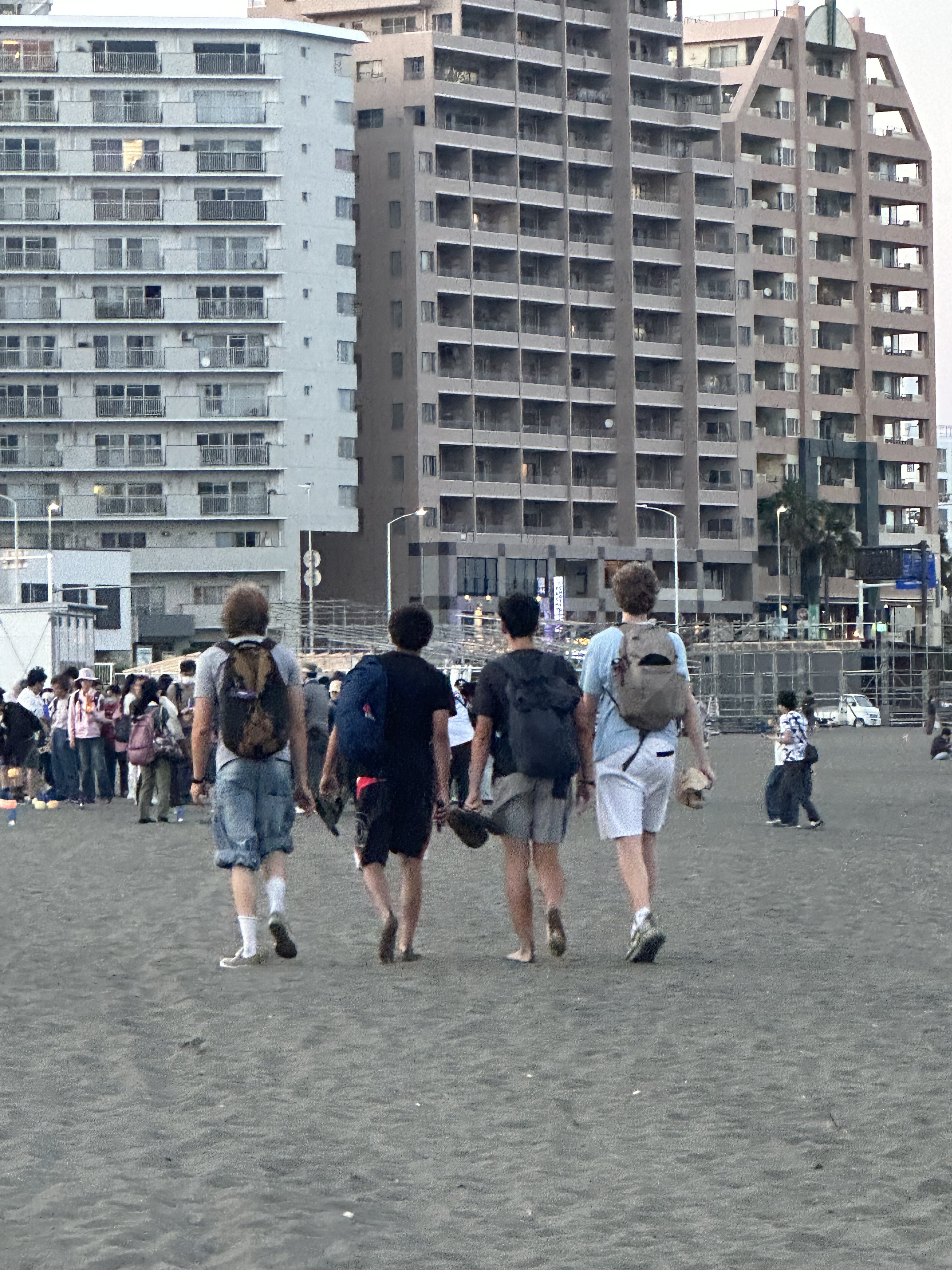
Our group was recovering from feeling ill, and folks didn’t want to miss Osaka. By late afternoon, we gathered and decidede ot take the Shinkansen to Osaka and hit the Castle and the Aquarium, finishing the night with Okonomiyaki, a local dish.
Planning a trip to Osaka requires careful mapping of the city. Here’s why: it can take an hour or more to go from place to place. We did some impromptu planning and then hit the train station late…we wouldn’t realize our mistake until we were sprinting through the train station to get on the LAST train…and then missing it.
Nevertheless, our trip into the city started at Osaka Castle, an impressive reconstruction of the Castle by Tokugawa Ieyasu and his son in the 17th century. The grounds are massive and to do this visit right it takes hours; we did it in a little less time to make our way to the Aquarium across town.
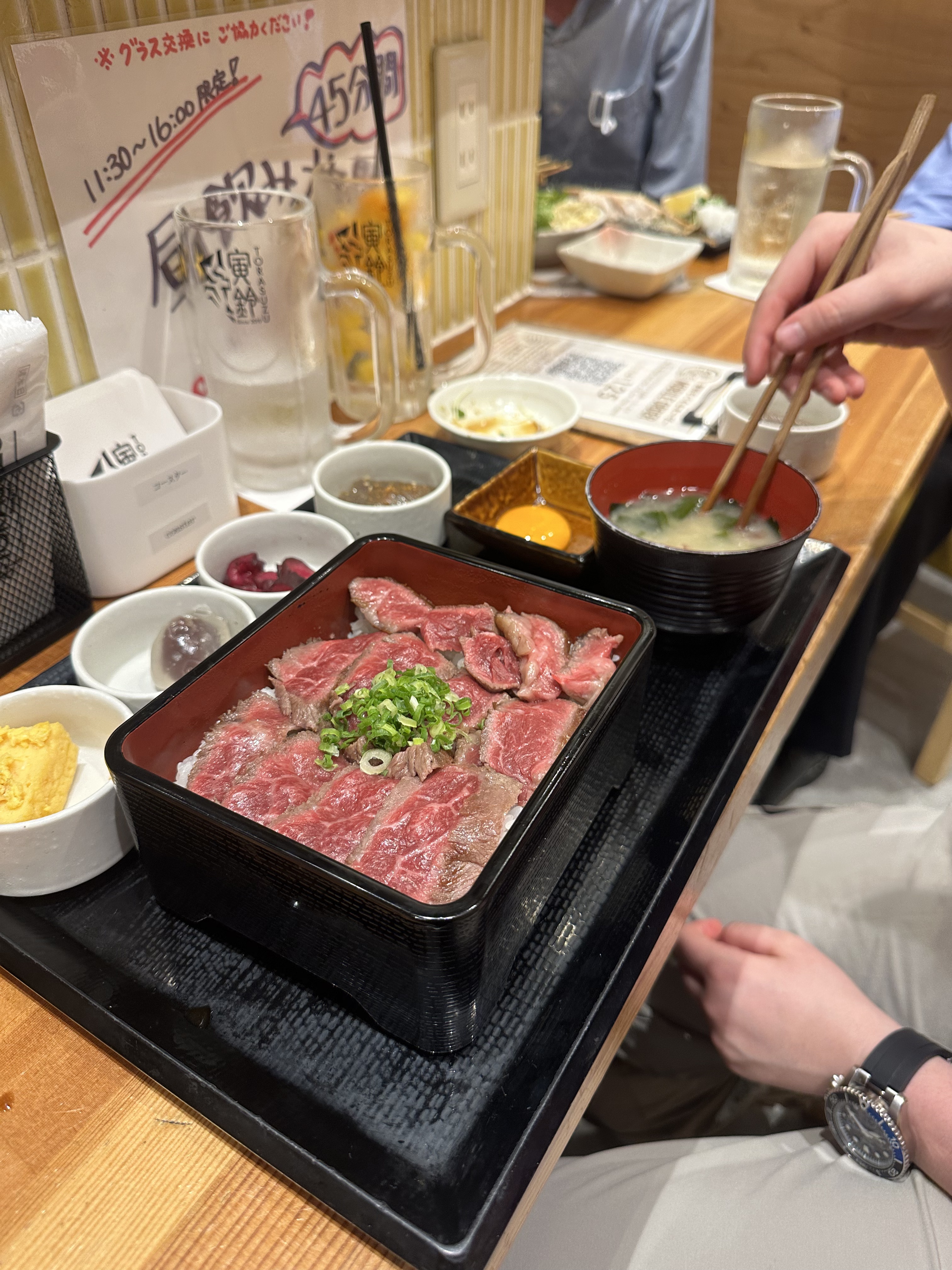
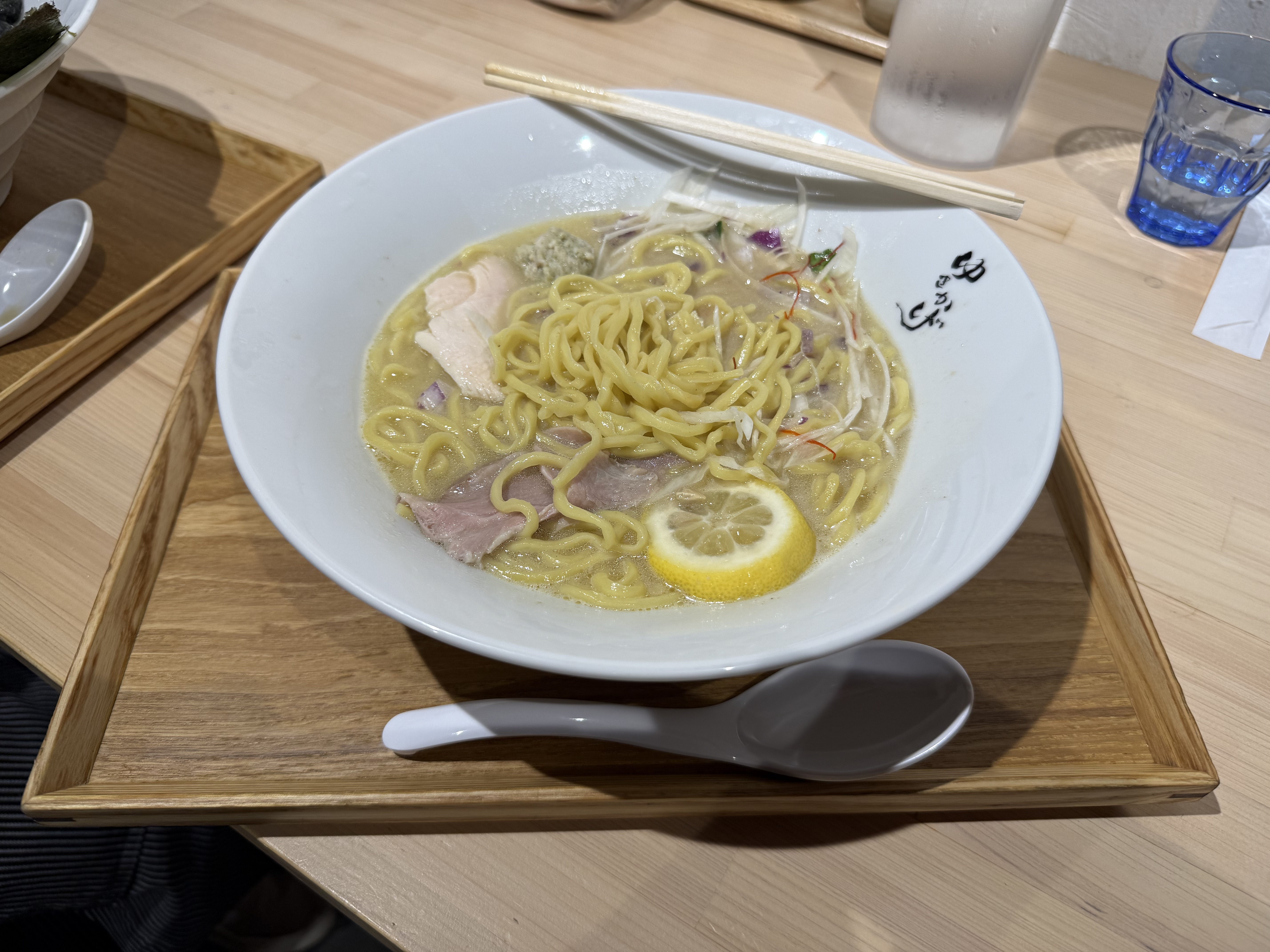
The Osaka Aquarium is a marvel, and students loved visiting this massive facility. After seeing the fishes, we grabbed Okonomiyaki at Chibo in the heart of the city. I cannot say enough about how unique and wonderful this dish is…We ate our fill and then quickly realized that we needed to GO!
The excitement that builds when you start to recognize that in minutes, you might not be able to make it to the 40km trip to Kyoto rushes through your body. Combine that a a trip leader and, damn, things get weird.
We hopped on the train to Kyoto at the last minute, and I wondered if we would make it in time to get back to our houses? We arrived at Kyoto Station, headed to the Karasuma line which felt like a MILE away from the JR lines we just left. We walked/ran with purpose and literally jumped on the train to Karasuma Oike to change trains….WOULD WE MAKE IT???
No.
We missed the last train, and the station staff shooed us out of the station (saying shoo!), and we headed up the stairs, recognizing the long walk home.
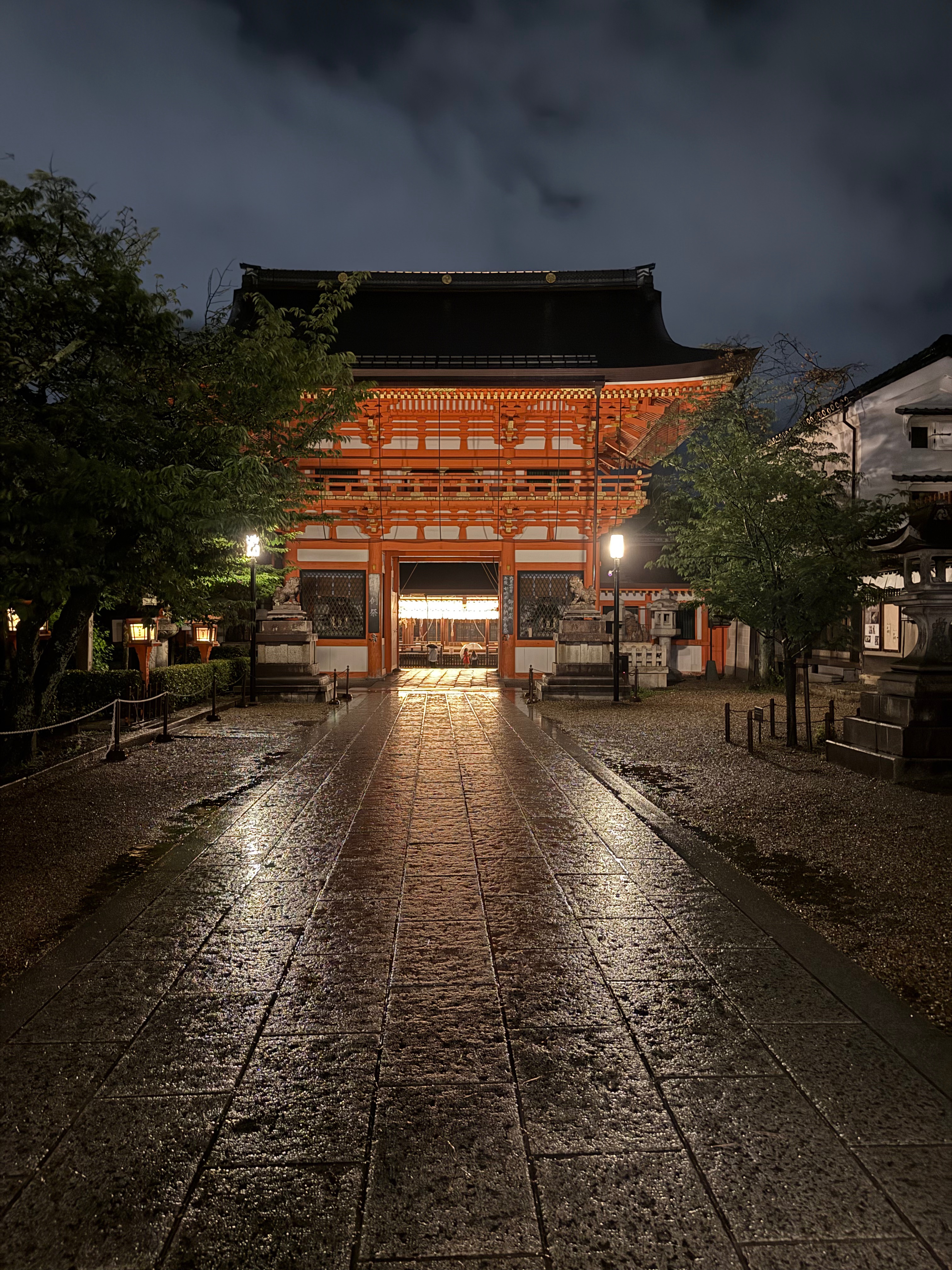
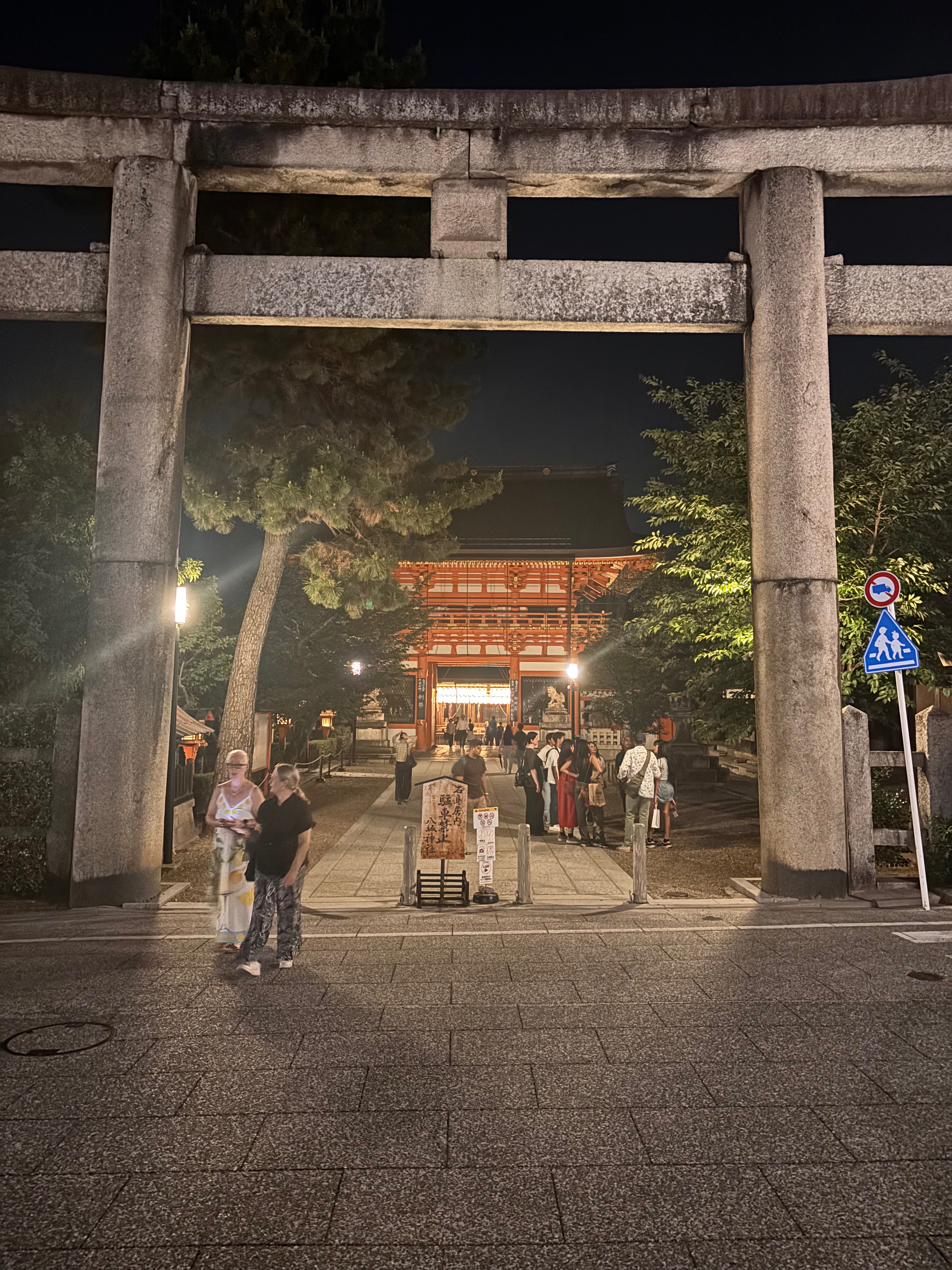
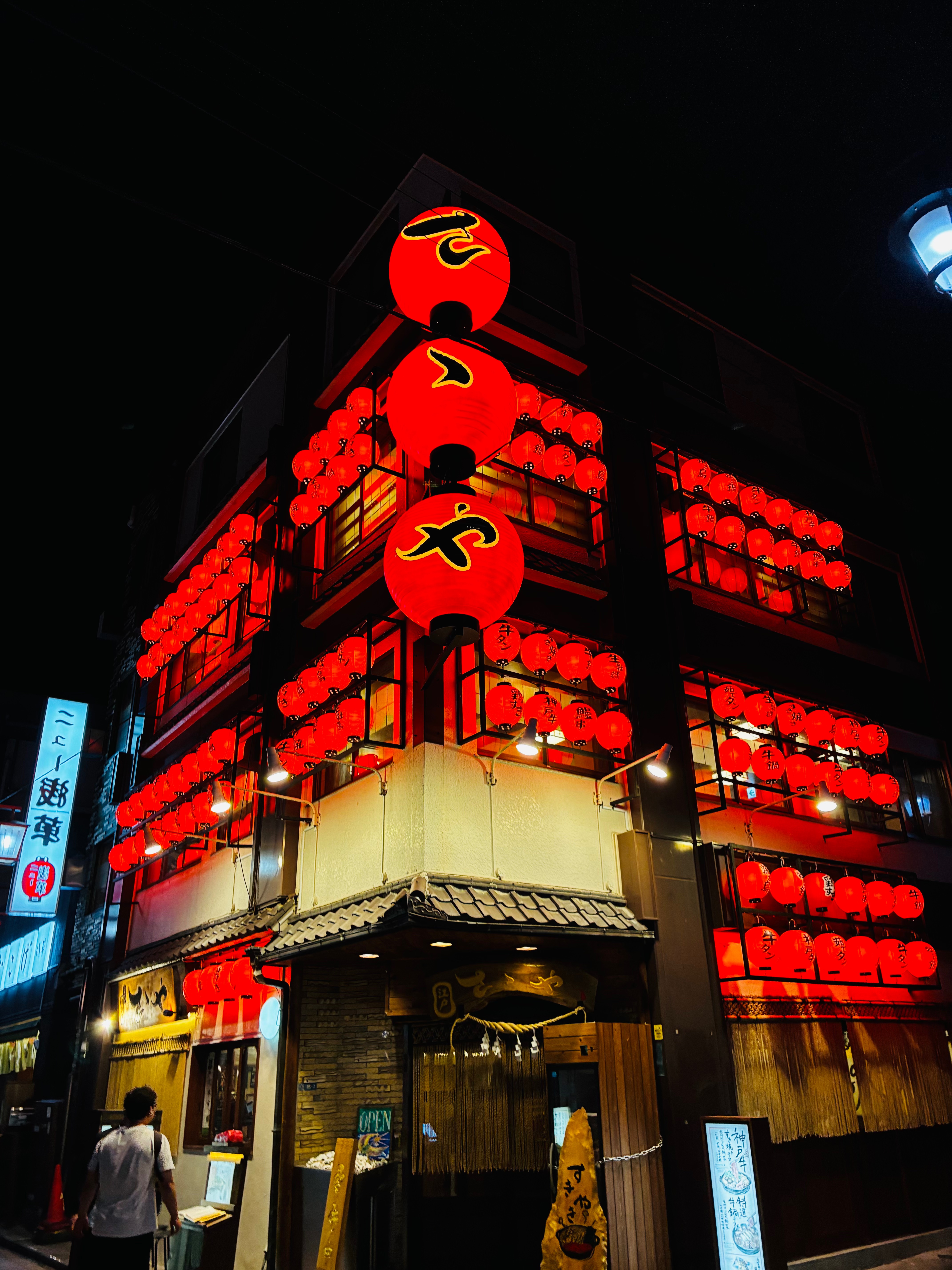
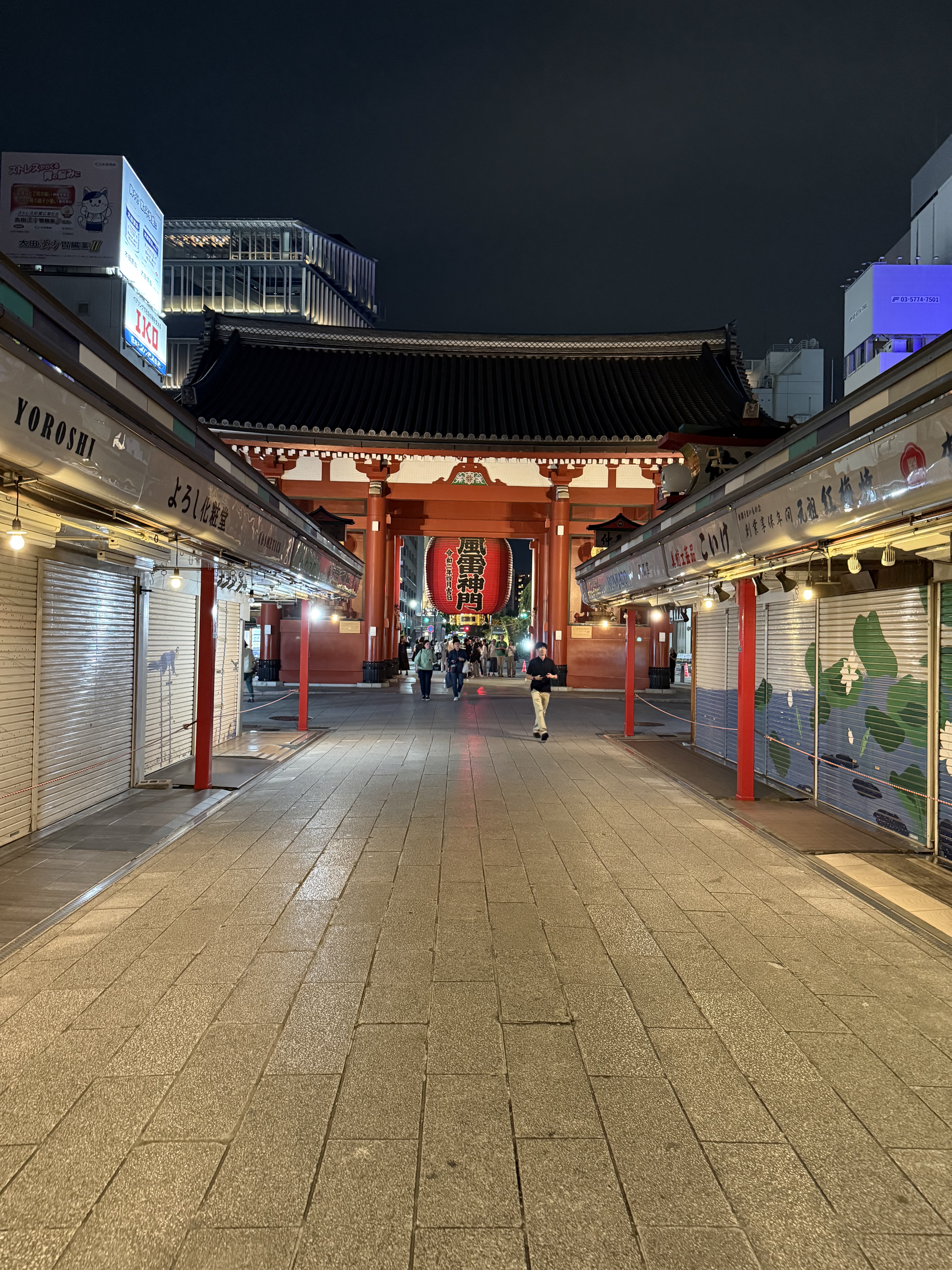
The night was pleasant, and some of us were tired from a short/long day of walking. As we walked, some of us photographed night scenes as this city was still wide awake at 12:20 AM. We headed up the long hill to the houses. Crashed in bed, and smiled at a full day and an exciting end!
By far, Kyoto is one of my favorite cities in the world for the care and consideration this city takes in preseving its past and reclaiming its future. The city is modern in every sense of word and retains the powerful qualities of a rich and deeply influential past.
Our visit to the city is all about being a part of daily life while we are here and so that means living in houses, preparing food in a kitchen, shopping at groceries stores, and,. as I’ve mentioned before, having students choose their own adventures. This group was up to the challenge and began our first day by seeking out places and experiences that called to them.
Our first day took in Nijo Castle, the home to shoguns from the early Tokugawa period. Built as a residence for the Tokugawa family, the building and grounds are elaborate. On this day, rain from a tropical storm descended on us. We persevered and wandered the grounds and the castle. The wood structure, silk paintings, and the history of the place offers a unique insight into the lives of the upper class and the structure of their daily lives.
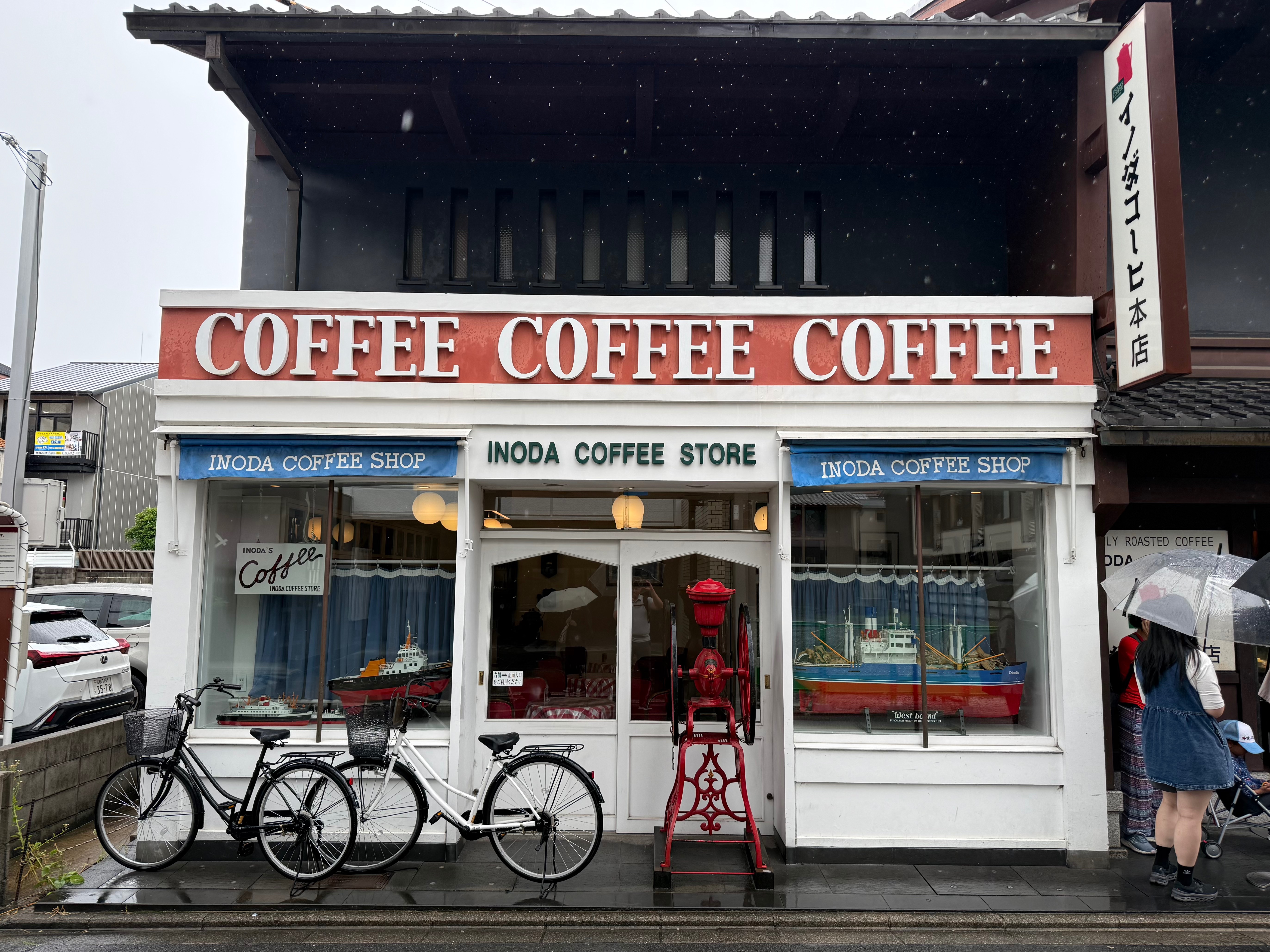
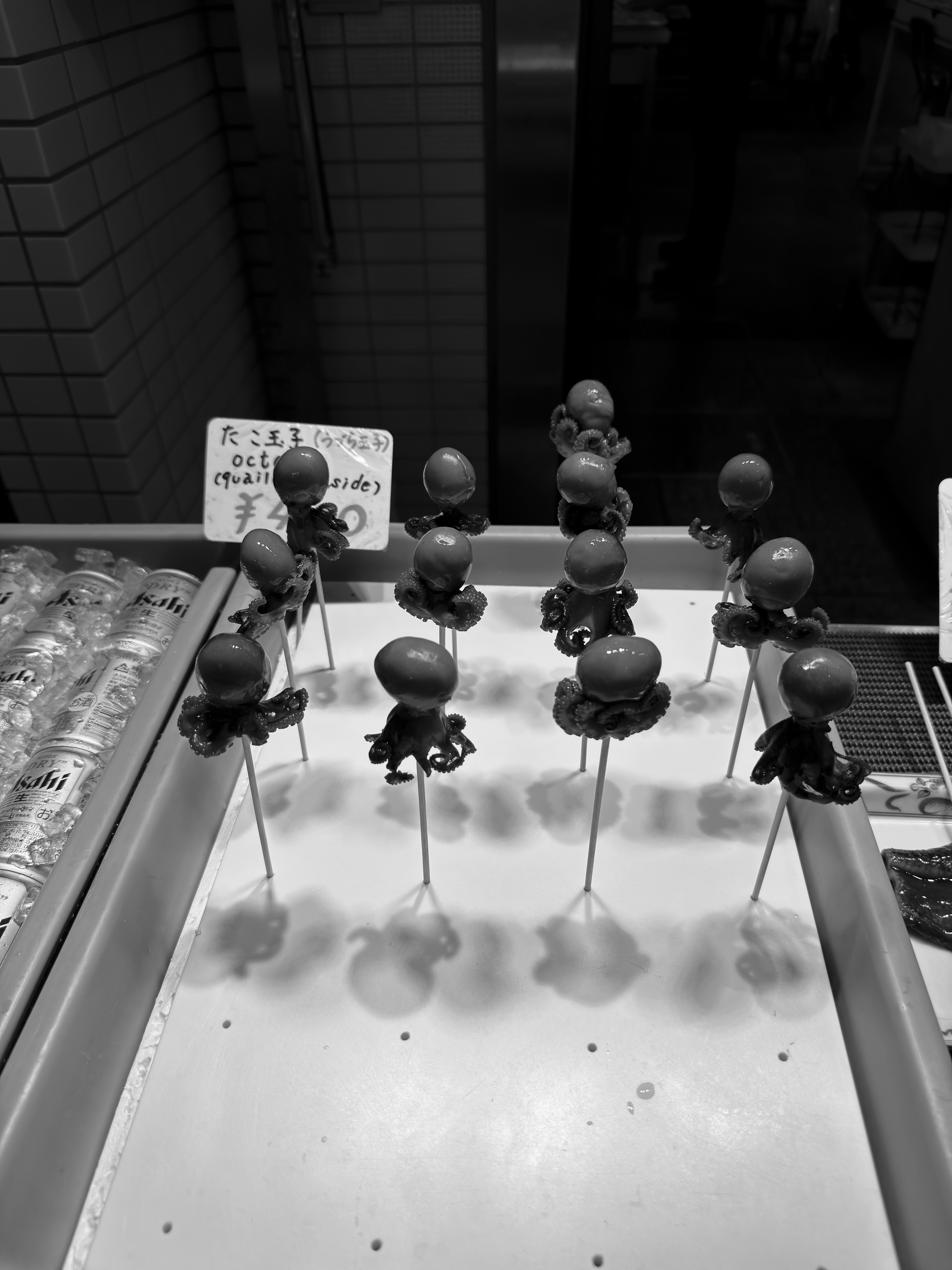
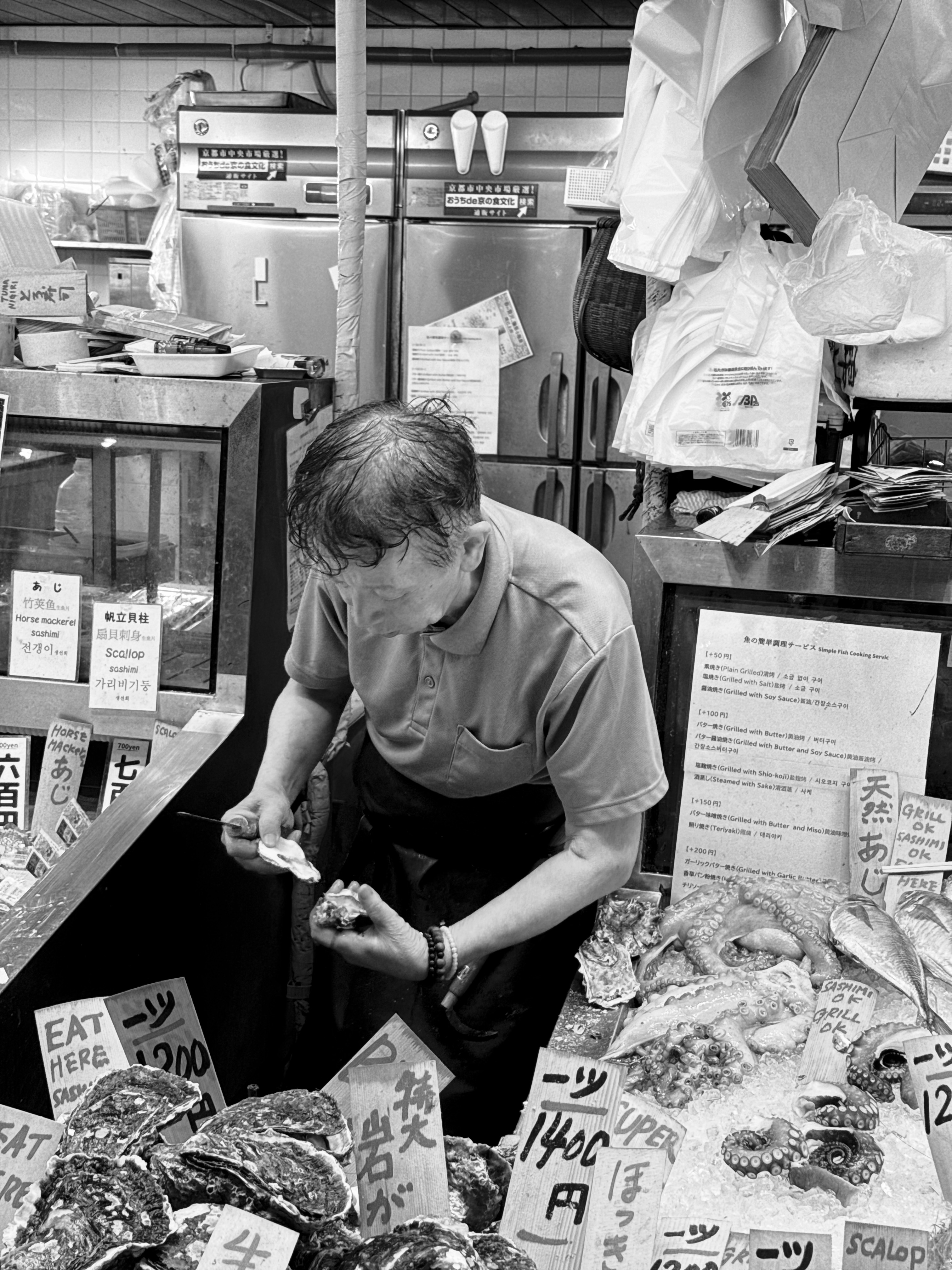
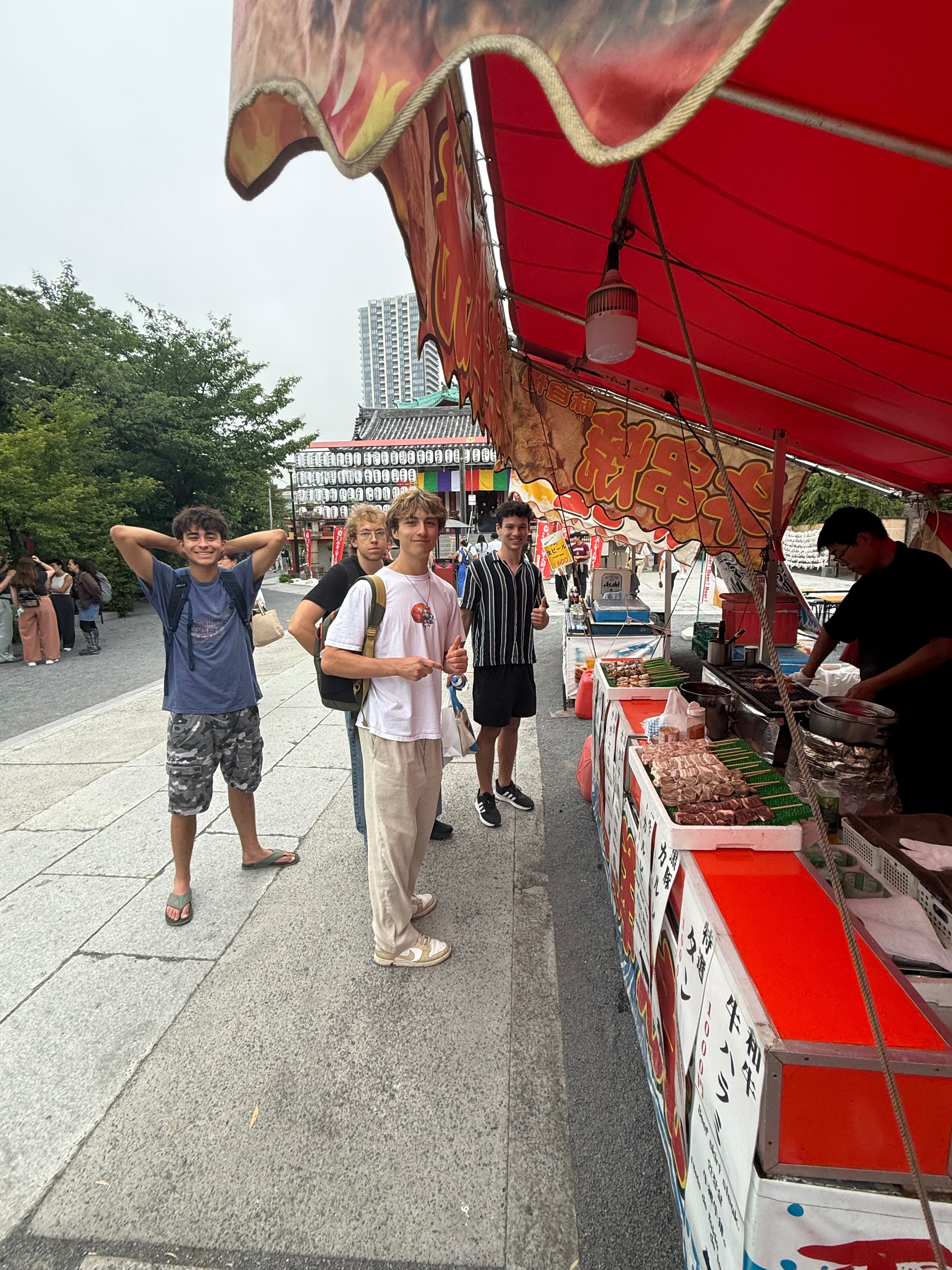
From the castle, we headed to lunch at Nishki and Shinobiya Markets. The street food is good, and we hit it just in time to experience the moment. Crowds, of course, greeted us, and we were unfazed by the masses as we made our choices.
The afternoon was given over to individual pursuits, and by evening, we settled into a heavy rain storm with high winds and downed trees.
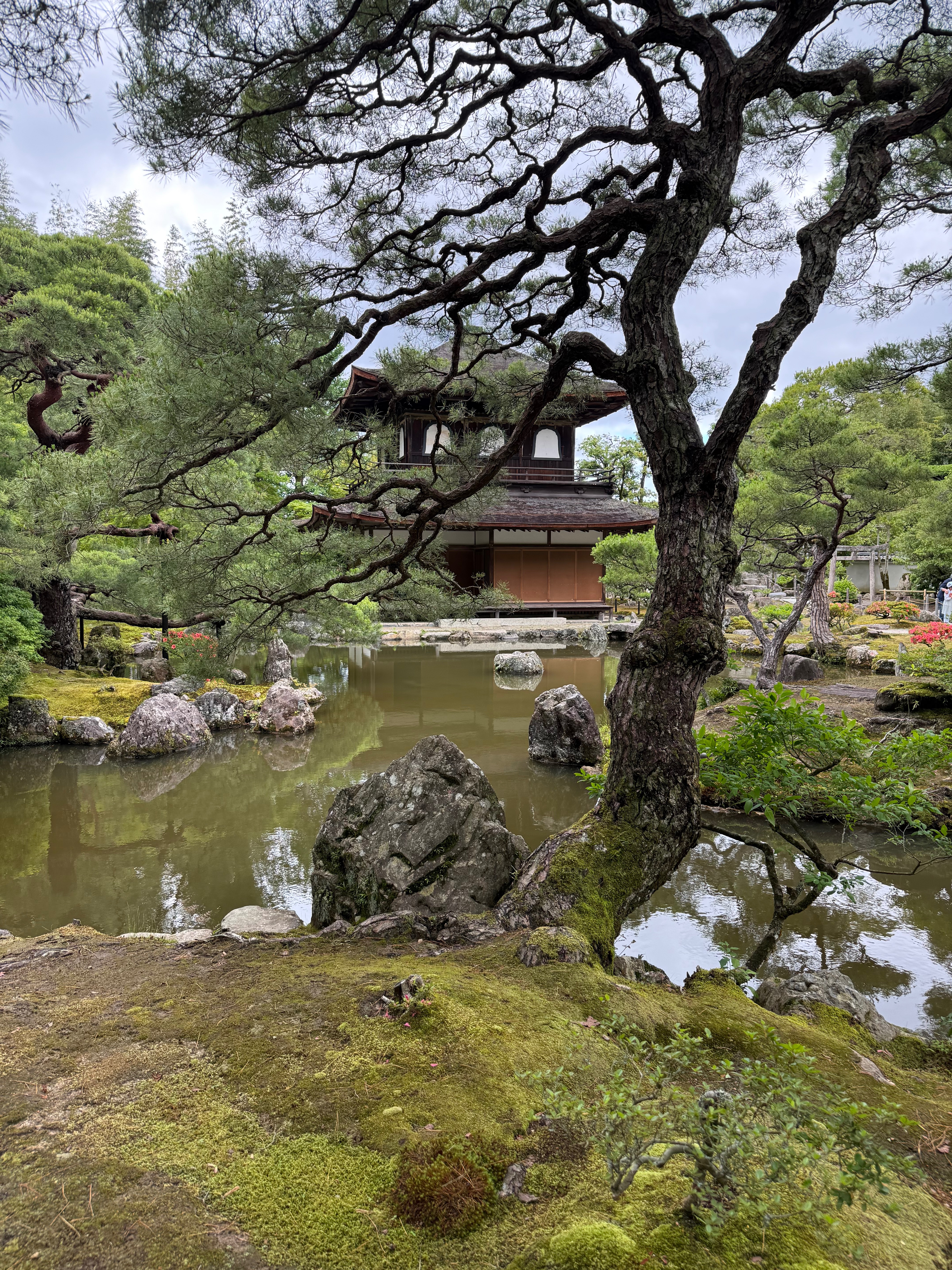
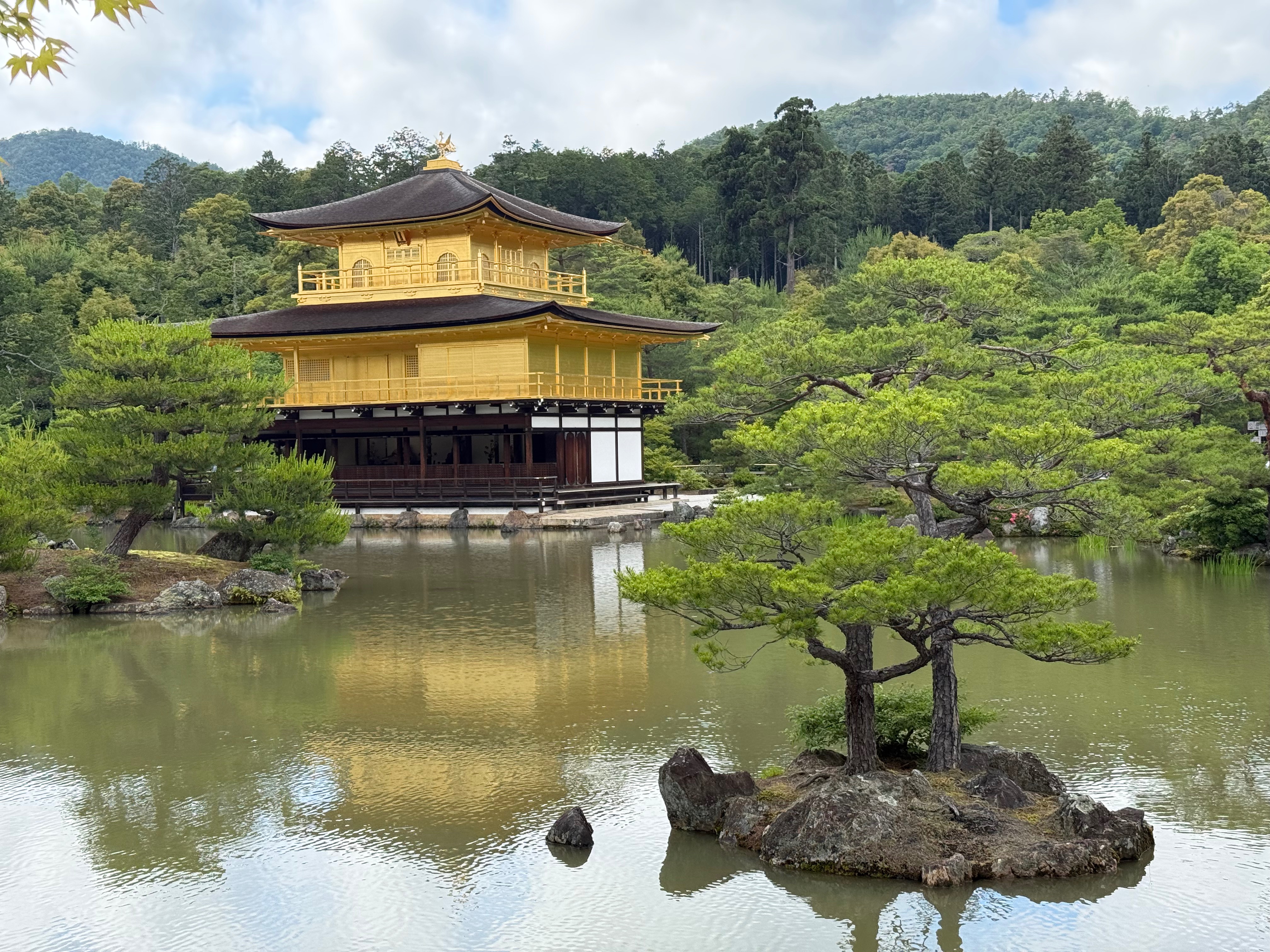
The following AM started with drizzle, and the intrepid group walked with us to the Path of Philosophy,Gingaku-ji Temple, and then on to Kinkaku-ji. On our walk to the temple, we stop along the way and read poems from Basho’s Narrow Road to the Interior. Then, after getting used to the sound and meter of the poems, each student composed one to read about this moment. Each one offered a fascinating insight into where they were. Here are a few examples from student work:
Meditative thoughts
Visions of a peaceful life,
Fulfillment in the now
_______________________________
Every step I take
has been taken before me
I walk a new path
___________________________
Wind rustling leaves
Crunching gravel on our feet
Writing of haiku
At the end of these two days, we had each walked about 12 miles each day, and our bodies felt the need for rest. A few of us came down with an odd stomach/head cold illness and rested.
If you have never taken the Shinkansen in Japan, it is a technological marvel. As a traveler, the train is comfortable, quiet, and among the most pleasant ways to go from place to place in Japan. As I said when I first traveled on one of these trains, it’s like you’re living in the future. Of course, that’s not hard to imagine coming from the United States, where rail travel is stuck in the 1930s. The rail infrastructure in the U.S. pales by comparison.
Today, you can grab tickets for these trains at a kiosk; for our group, I had to go to the JR East office at Shinagawa station to purchase the group tickets… It’s much easier to manage a group of 16 through the office rather than the ticket machine. Then navigating the process of getting to the train is a bit of a chore as you scan an IC card pass or phone pass AND then put the ticket into the machine…Then, retrieve it from the machine at the end. A few members of our group lost their tickets in the machine, and an attendant had to retrieve them from the bowels of the beast. Fun!
Once on the platform, we waiting for the train. Once it arrives you’ve got 3 minutes to board and then is goes…that may sound like plenty of time, AND it’s a little stressful making sure everyone gets on before the bells start ringing! Of course, we all made it and headed south for the 2 hour ride to Kyoto Station.
After arrival, we grabbed some food and then made our way to the houses in Higashiyama. I cannot say strongly enough how wonderful these places are….four houses surrounding a small courtyard. The space alone was worth the price of adventure, and many of us made food in the kitchens.
On the following day, we faced constant rain as a tropical storm descended on Kyoto. We made the best of it, heading to Nijo Castle and the home of the Shoguns. We walked the halls of the building. The grounds are impressive, and because of the rain, we just stayed inside. We then headed into the city to the Nishiki Market for some street food. We fanned out across the city after that and ended up eating together at Sushiro, a conveyor belt sushi place in Gion. Some of us did a night hike, some walked through a series of temples, and others made their way back to the houses. By late evening, we were all ensconced in our beds, ready for the Path of Philosophy tomorrow!
This trip has been a whirlwind that is working as designed; a structured morning activity and an afternoon choose your own adventure approach. So far, things are going very well!
The trips I lead are not technically tourist trips or what people might refer to as tours. They are about finding your way around and choosing your own path. Students have time to explore the city and enjoy their own adventures after some AM planned activities. The goal here is to help students become members of the world community, engaging in activities that enhance their understanding of the communities we are in.
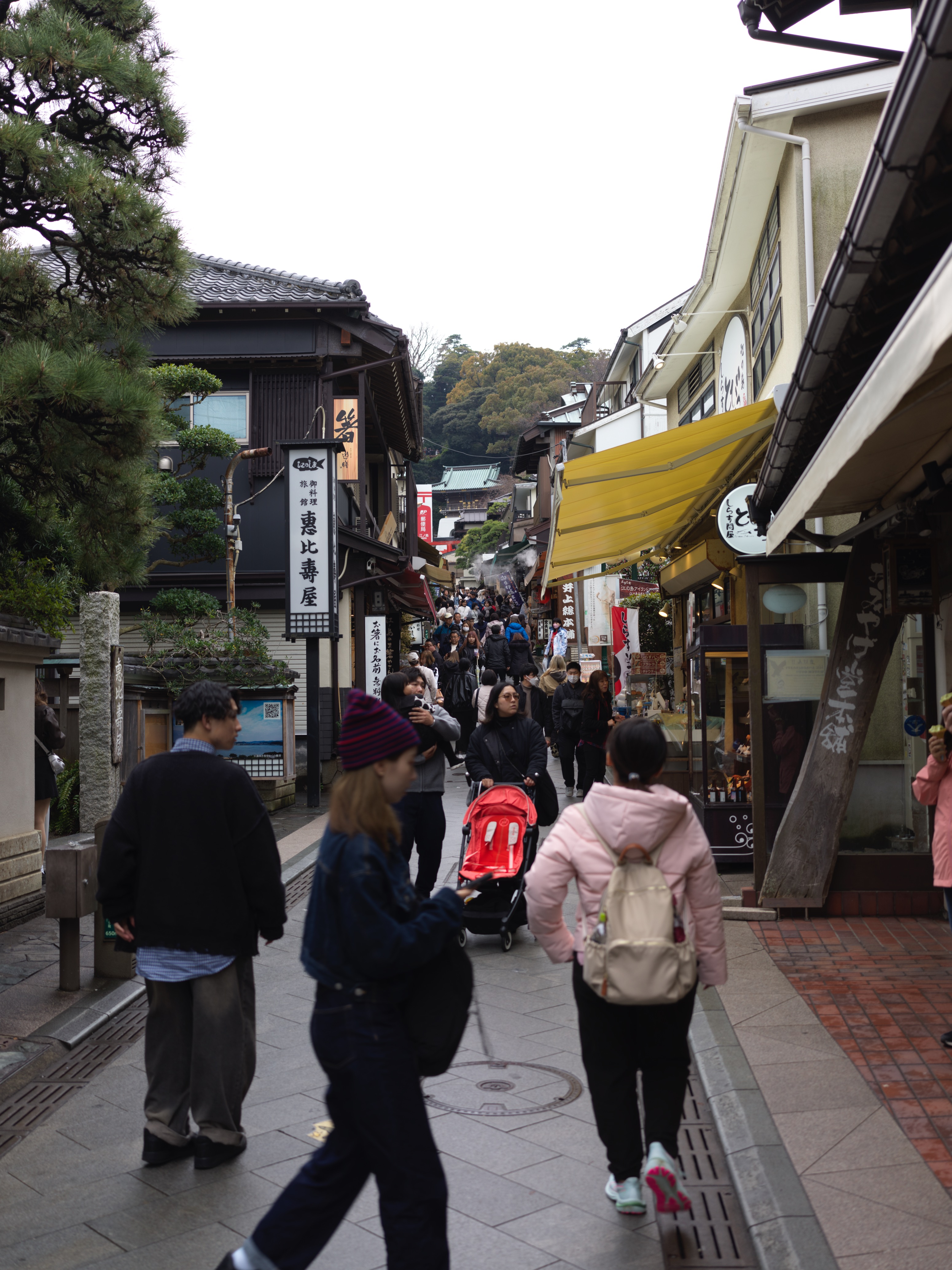
On these days, we did a couple of activities…the main one was a trip to Kamakura and Enoshima. we traveled the hour train ride to this coastal town and then played on the beach, walking the stairs around the island and finding our way around the area.
Our first stop in Kamakura included my favorite ramen spot, now renamed Takasuru. It was as great as I expected. Many of us ate there and enjoyed the kindness of the new owners.
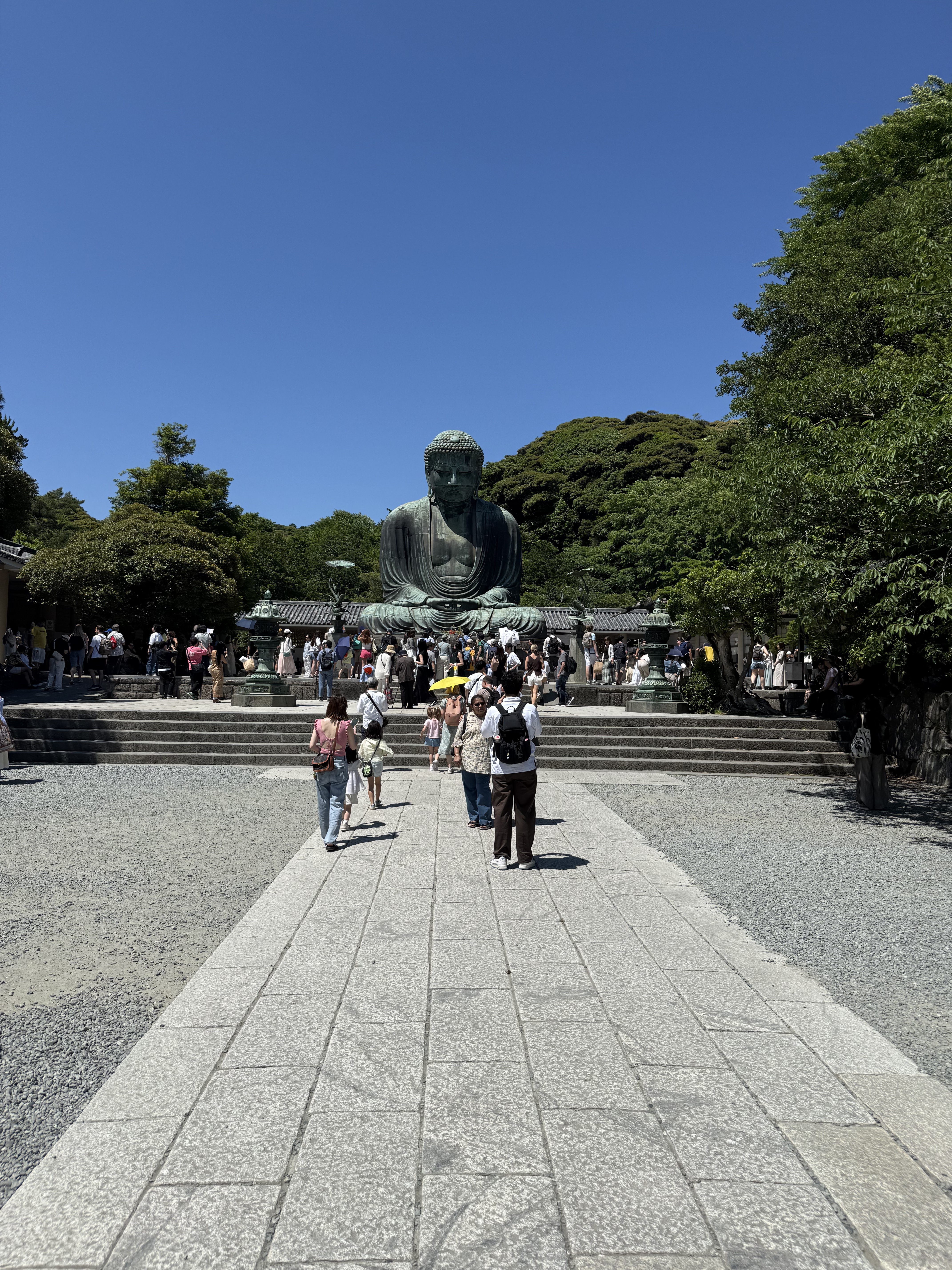
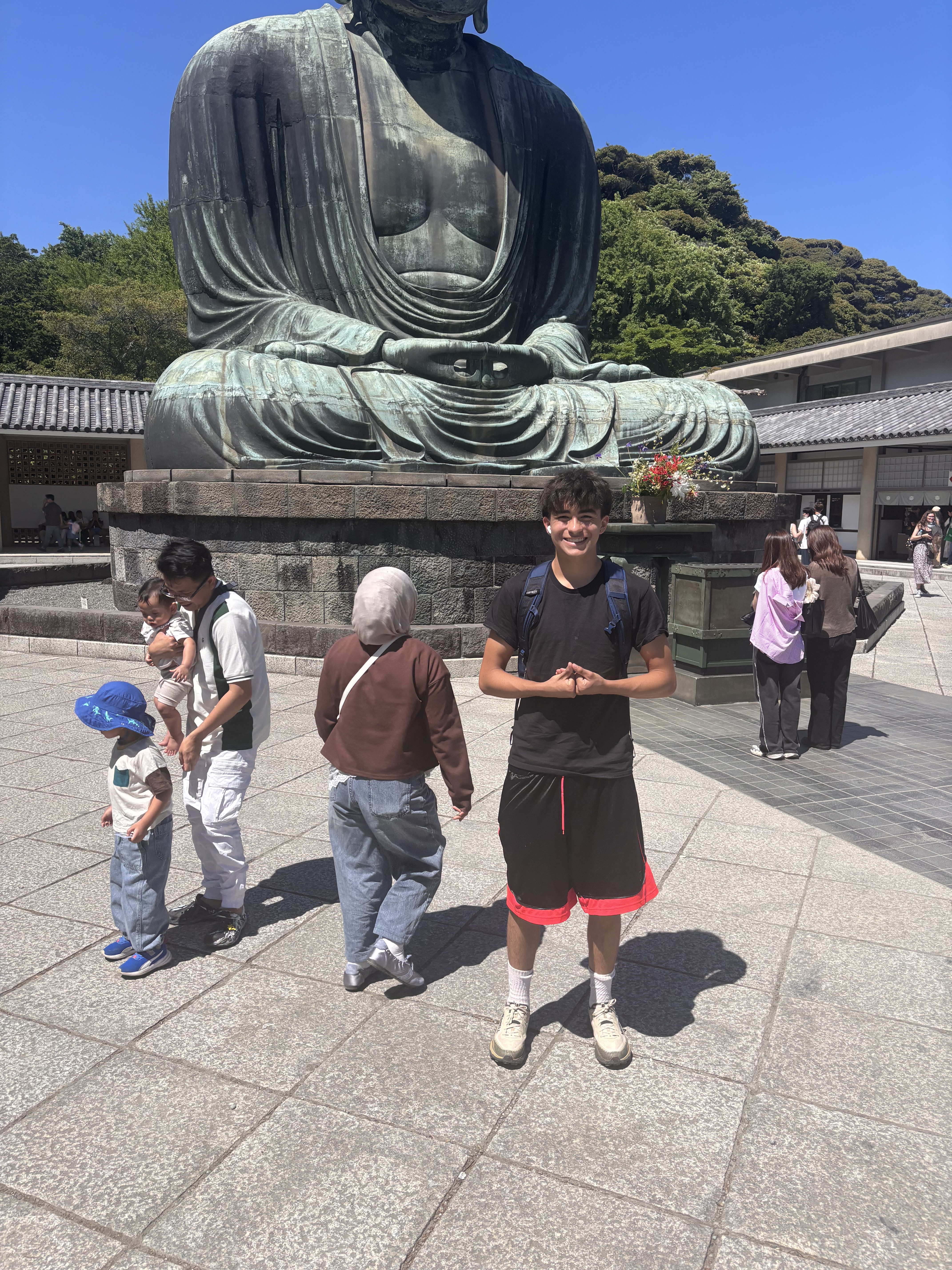
From there, we walked to the Daibatsu, the bronze Buddha perched on a platform that survived a tsunami in the 13th century. I’m always struck by the remarkable nature of this place. Situated in the hills that dot the landscape of this place, the buddha sits above the town, as if watching over the village.
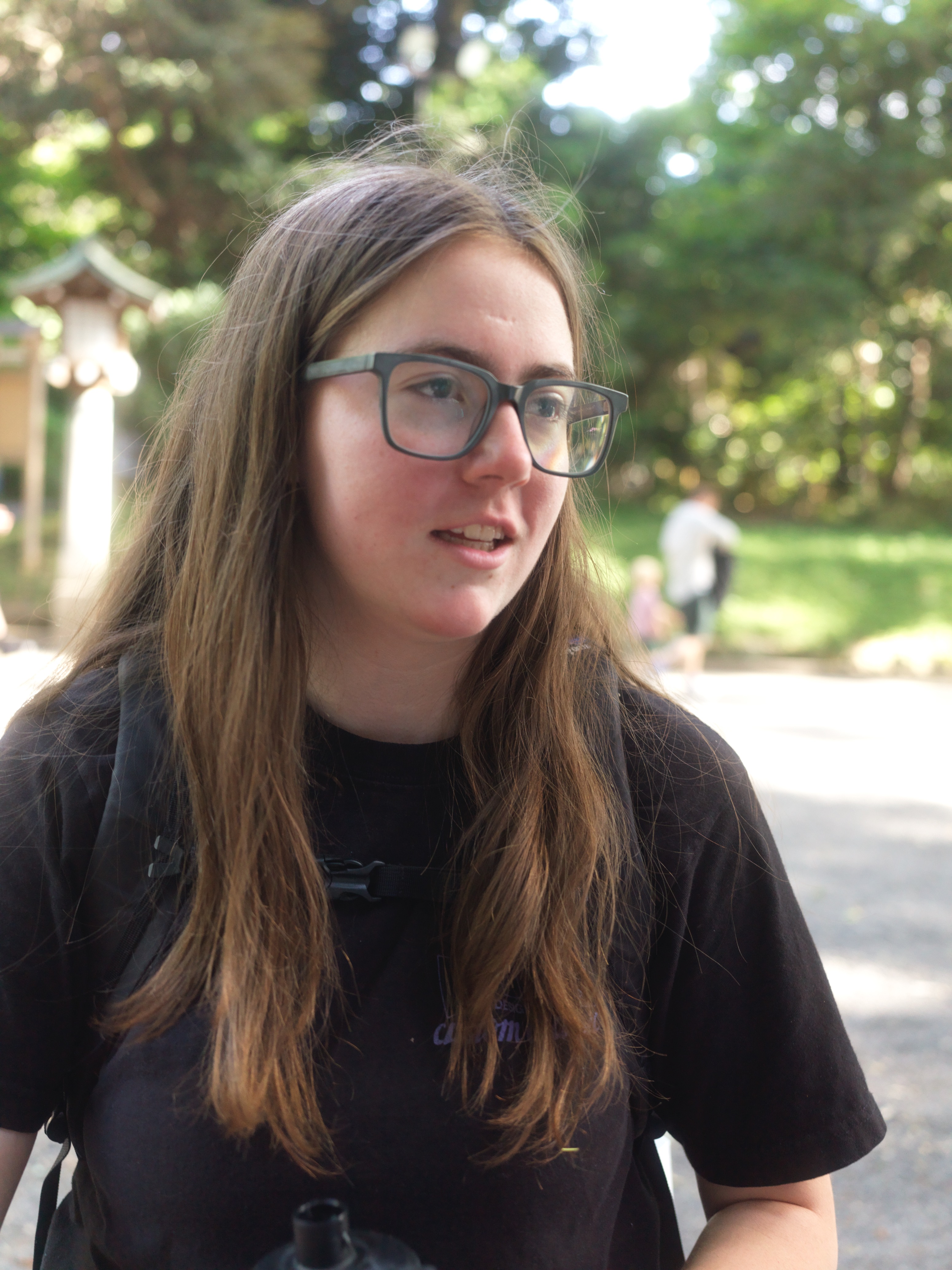
Once we finished our visit, we walked the 800 meters to Hasedera Temple. The caves, shrines, and temples are remarkable, and the statue of Kannon in the shrine room is impressive, built into the side of the hill.
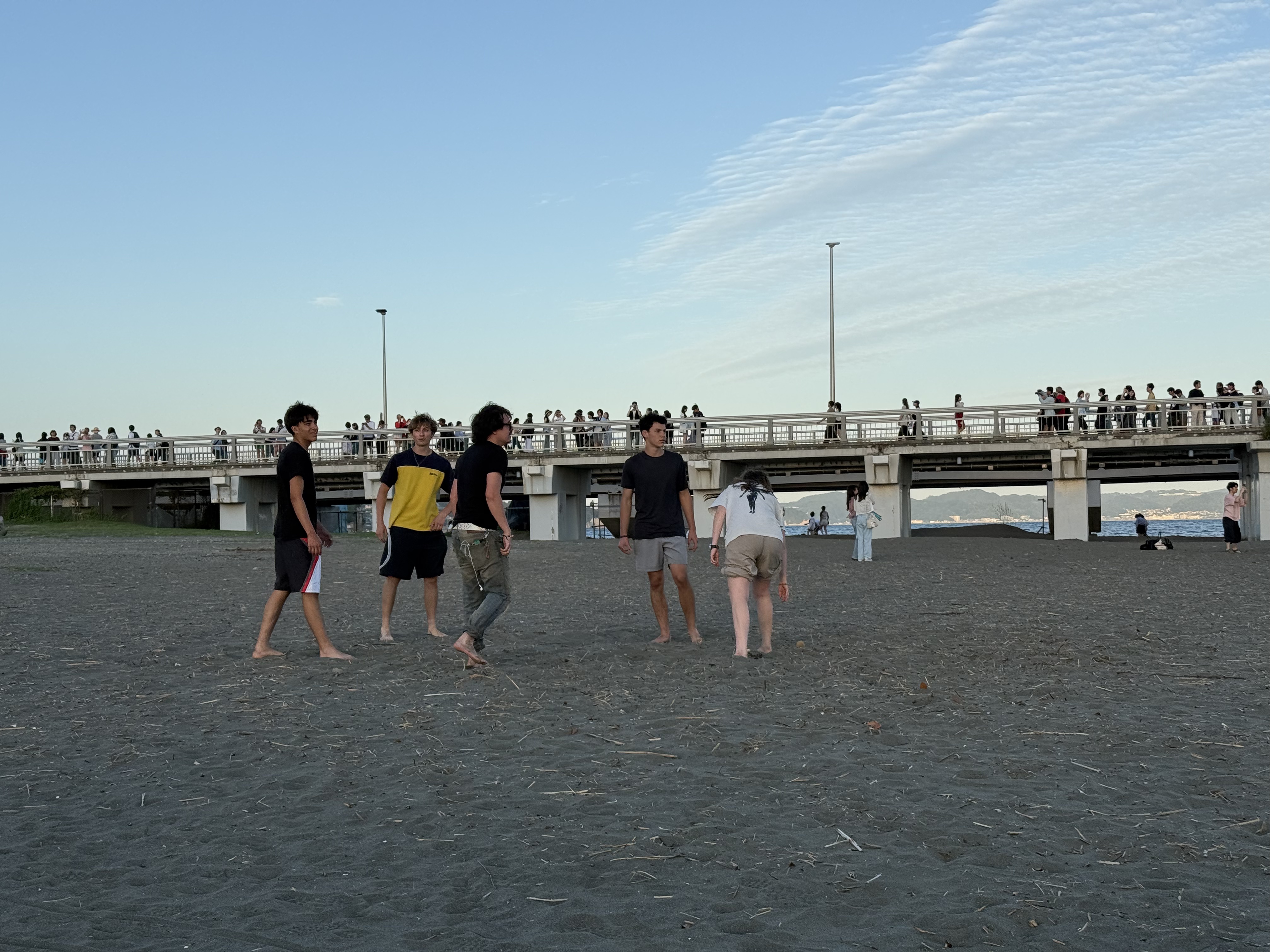
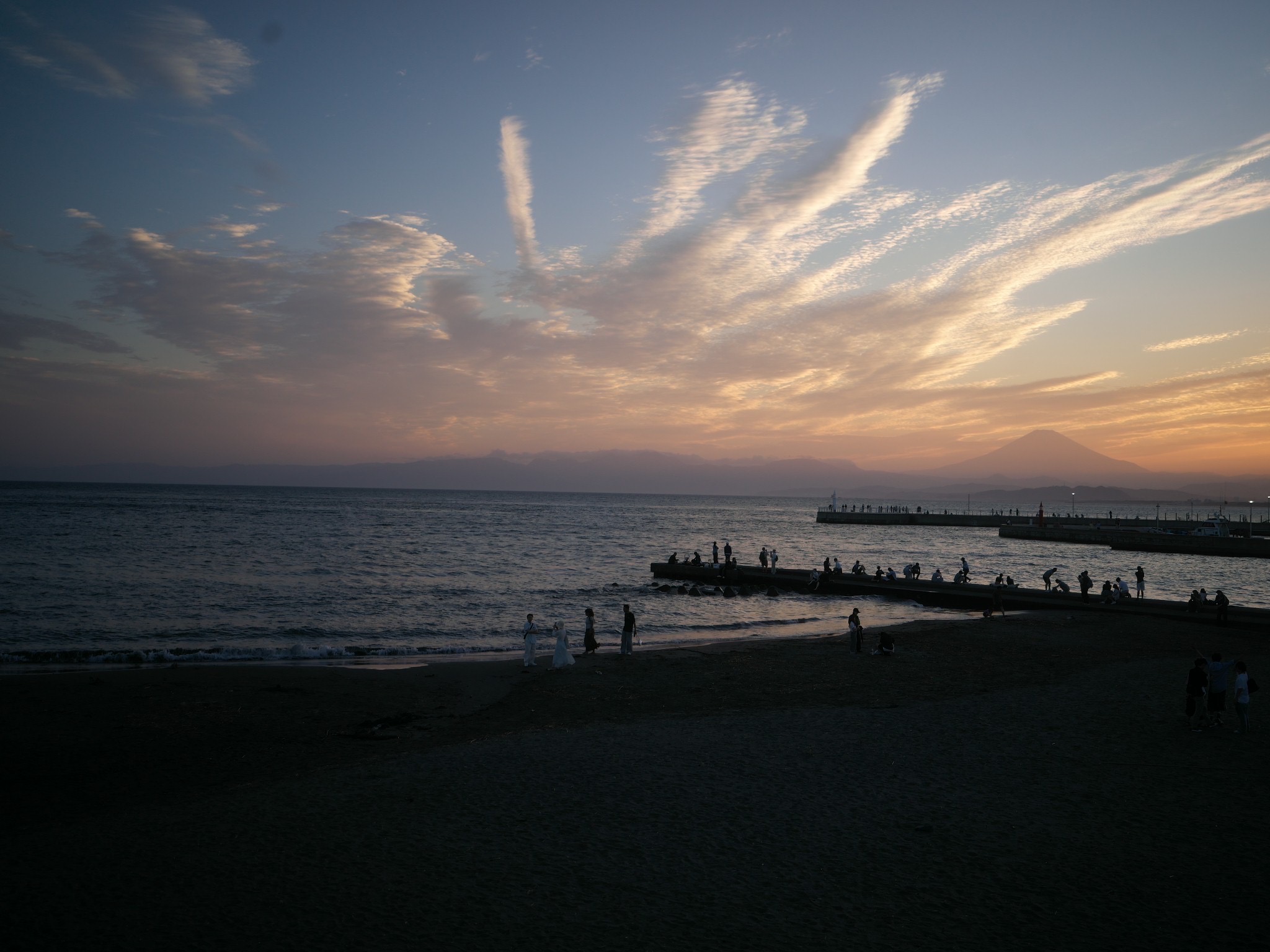
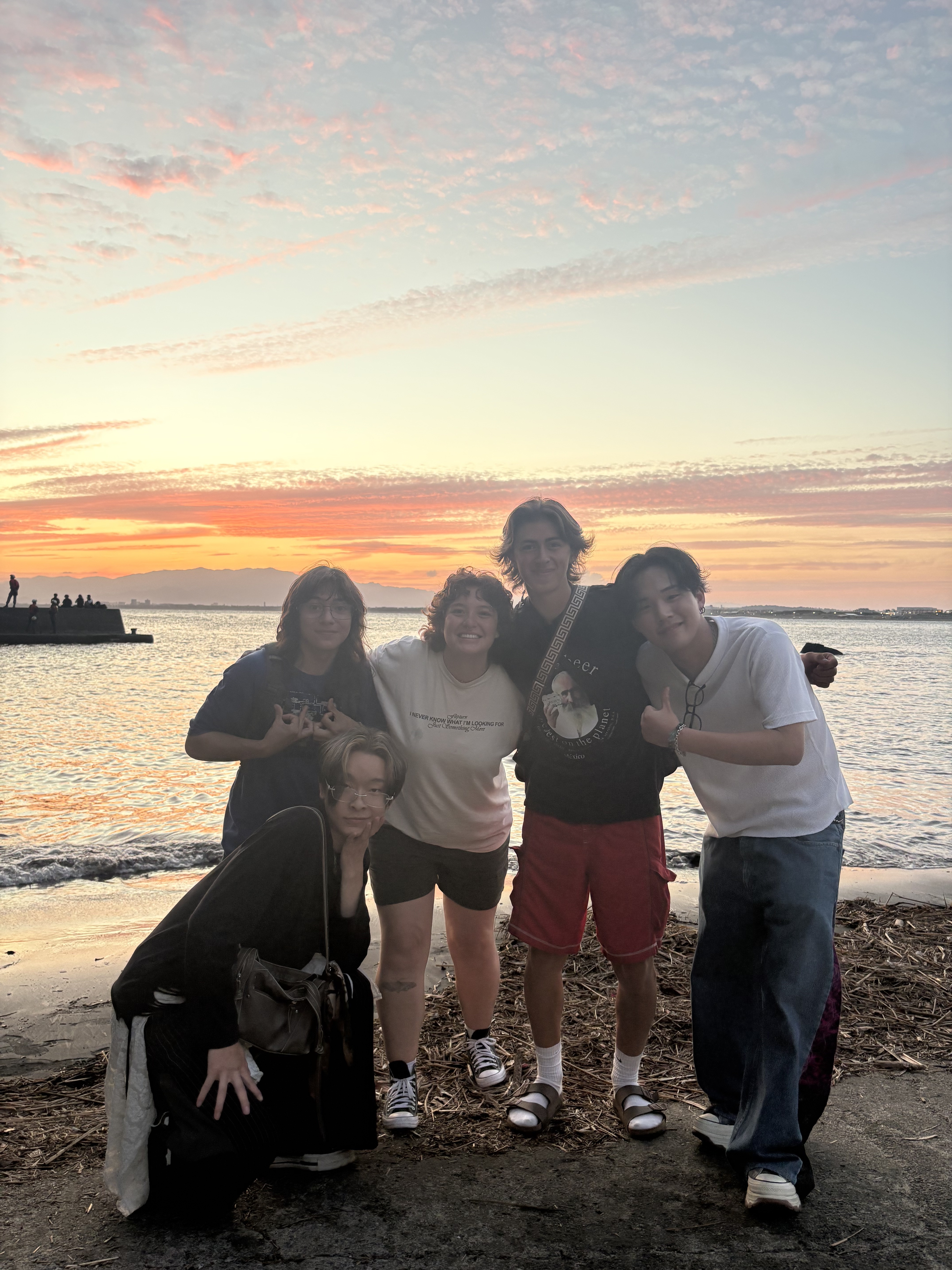
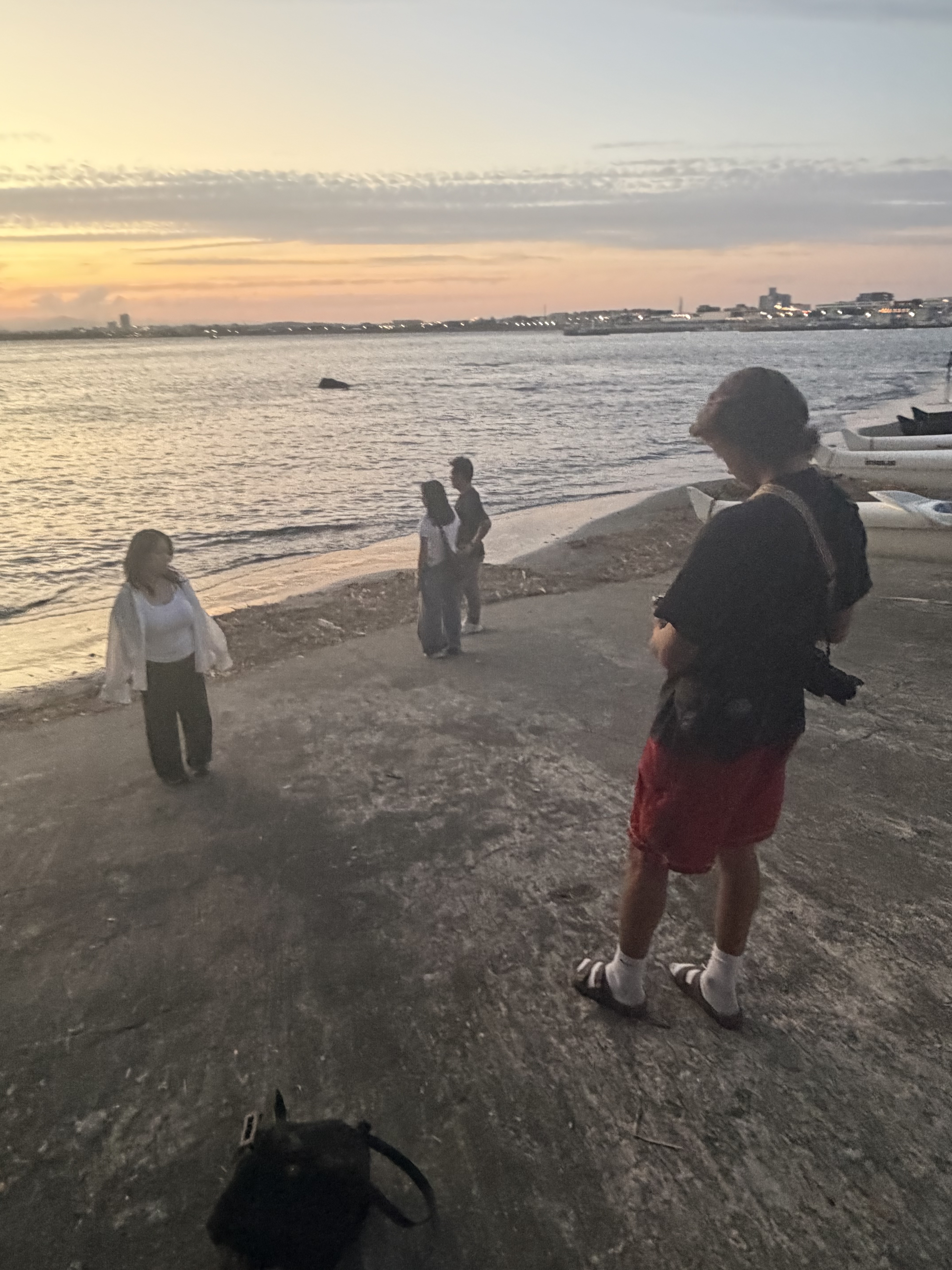
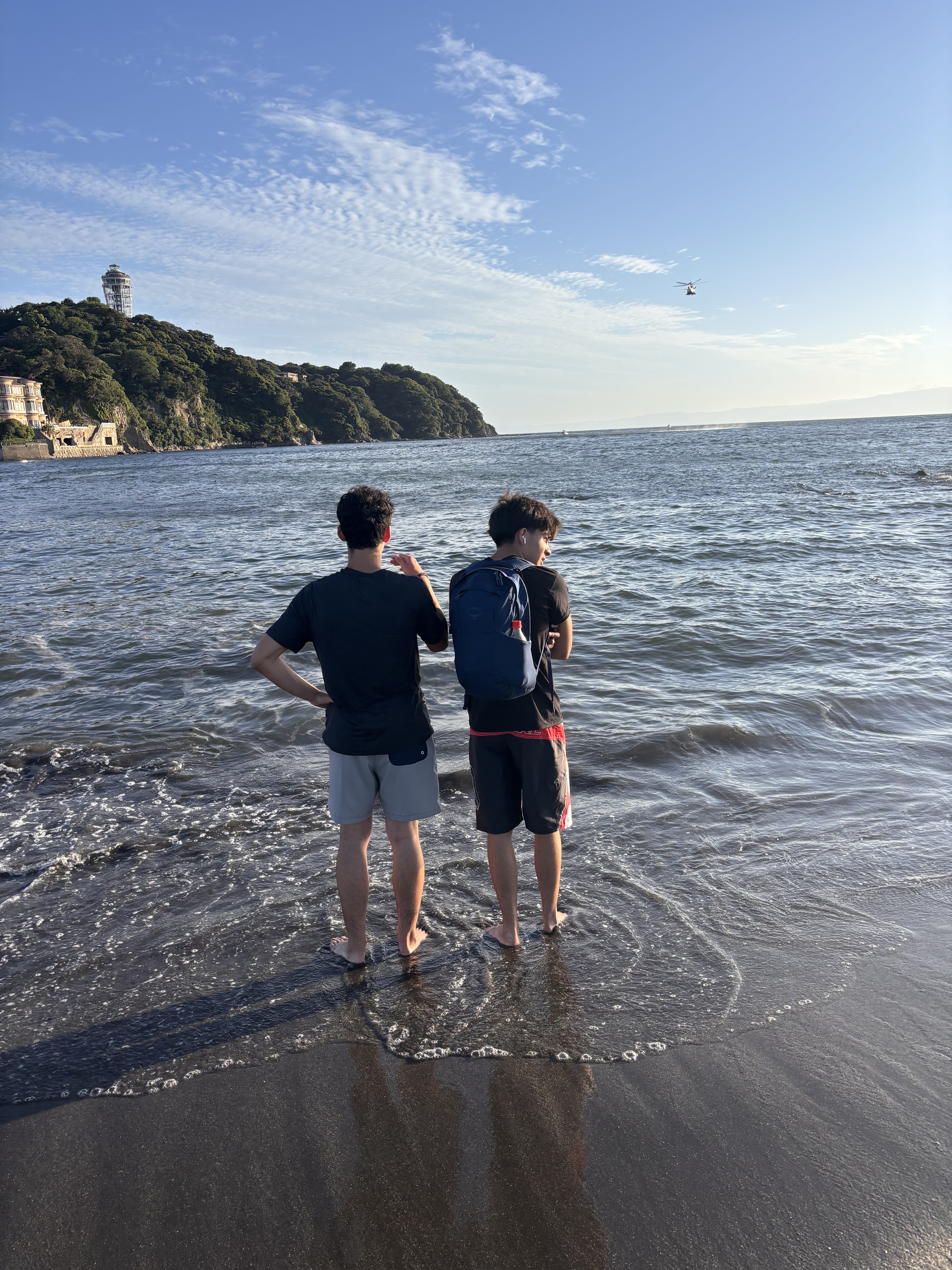
We left Kamakura for Enoshima, and students chose their adventure. A small group walked the stairs across the island while another played on the beach. After a brief trip into the water, they played hacky sack and were joined by some local folks.
By the end of this long day, most of us had walked 15 – 20 miles and were exhausted once we arrived at the hotel. We crashed and prepared for tomorrow.
On our last day in Tokyo, the group wanted complete freedom, and I let them find their way. Some went to a flea market, some to Odaiba, some looking for camera equipment, and others stayed close to the hotel. Everyone went their own way, and I was happy to accommodate their interests.
Now, it’s off to Kyoto, our houses in Higashiyama, and more wandering!
This trip, unlike most high school trips, is more of an adventure and less of a tour. In fact, my whole goal for this trip is to avoid the “T” word entirely and give students the power to explore the world. So, beginning with our walks through Asakasa and Ueno, we found ourselves wandering past shops, homes, temples, and shrines. One of the things I love to do with students is to walk through neighborhoods in the city. On this day, people were biking to work, walking their children to school, buying groceries, and doing the parts of daily living that make life manageable and sometimes wonderful.
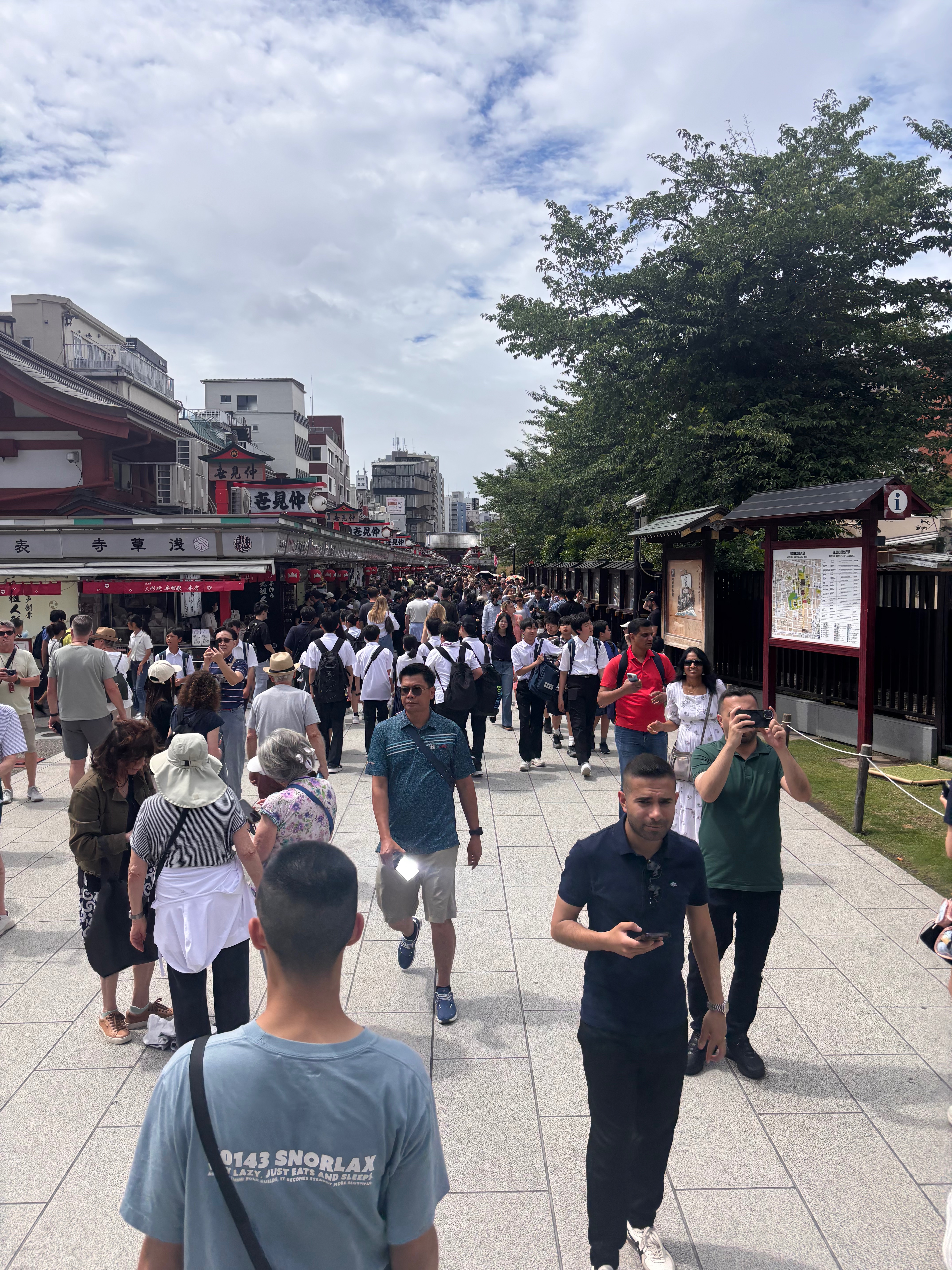
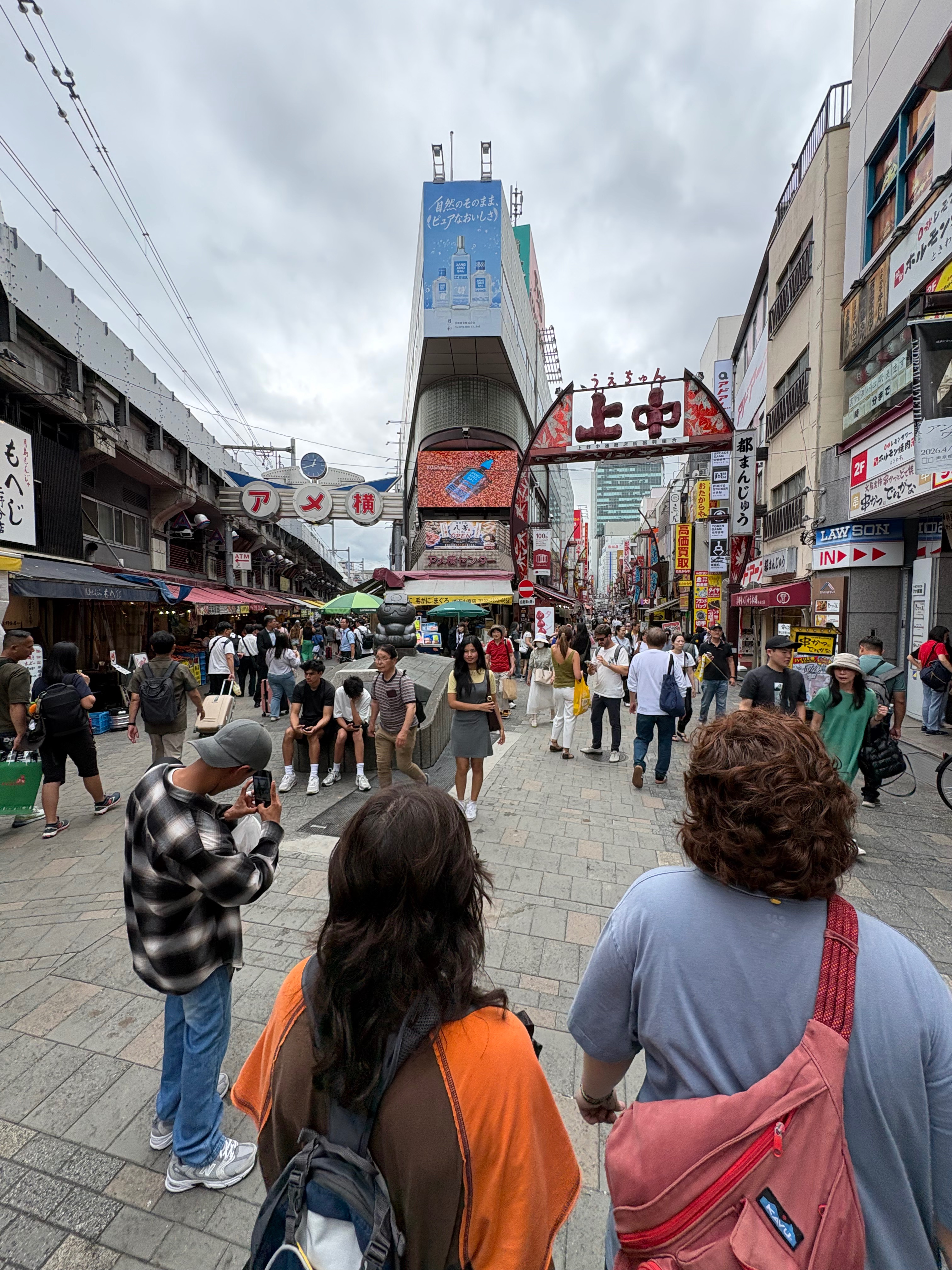
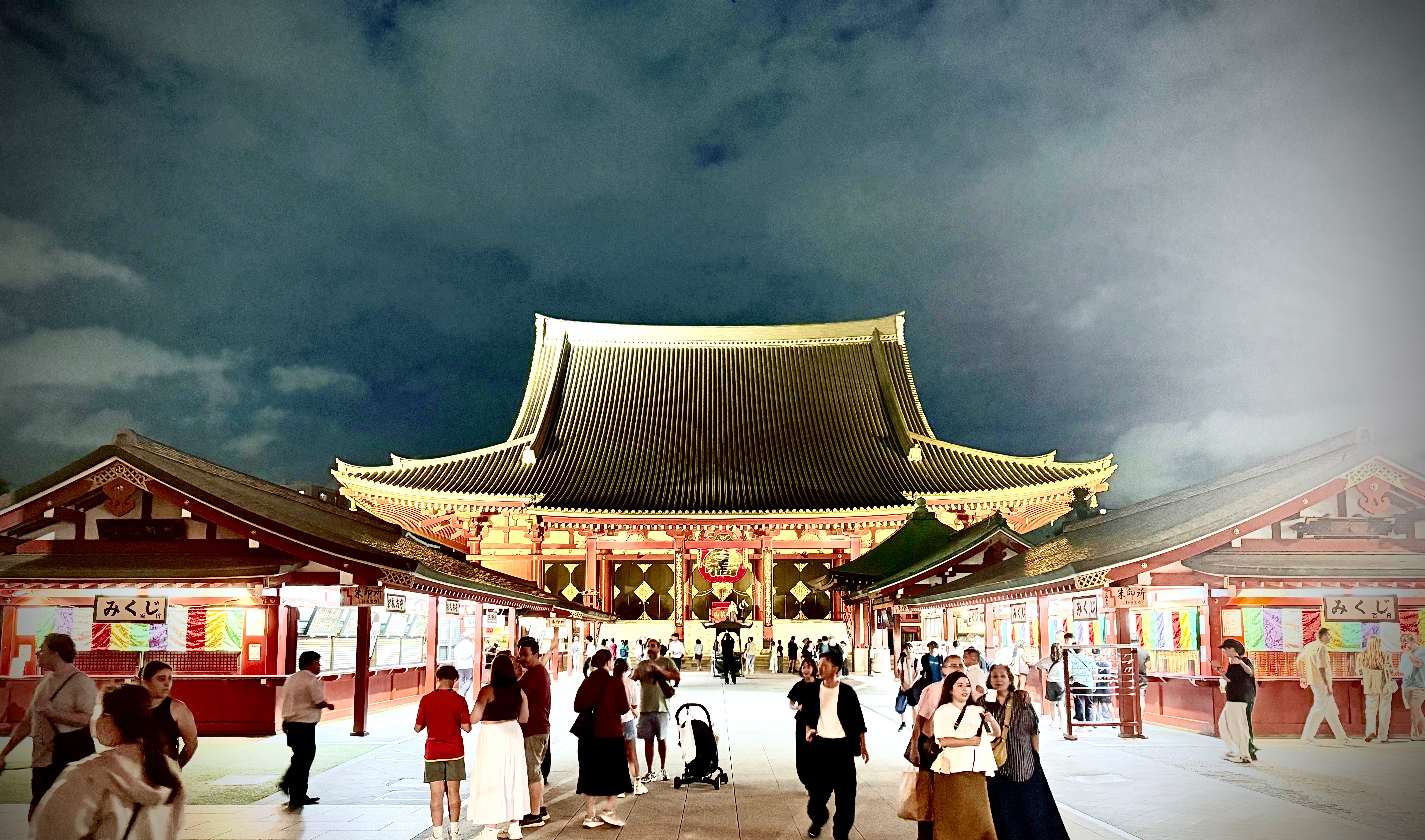
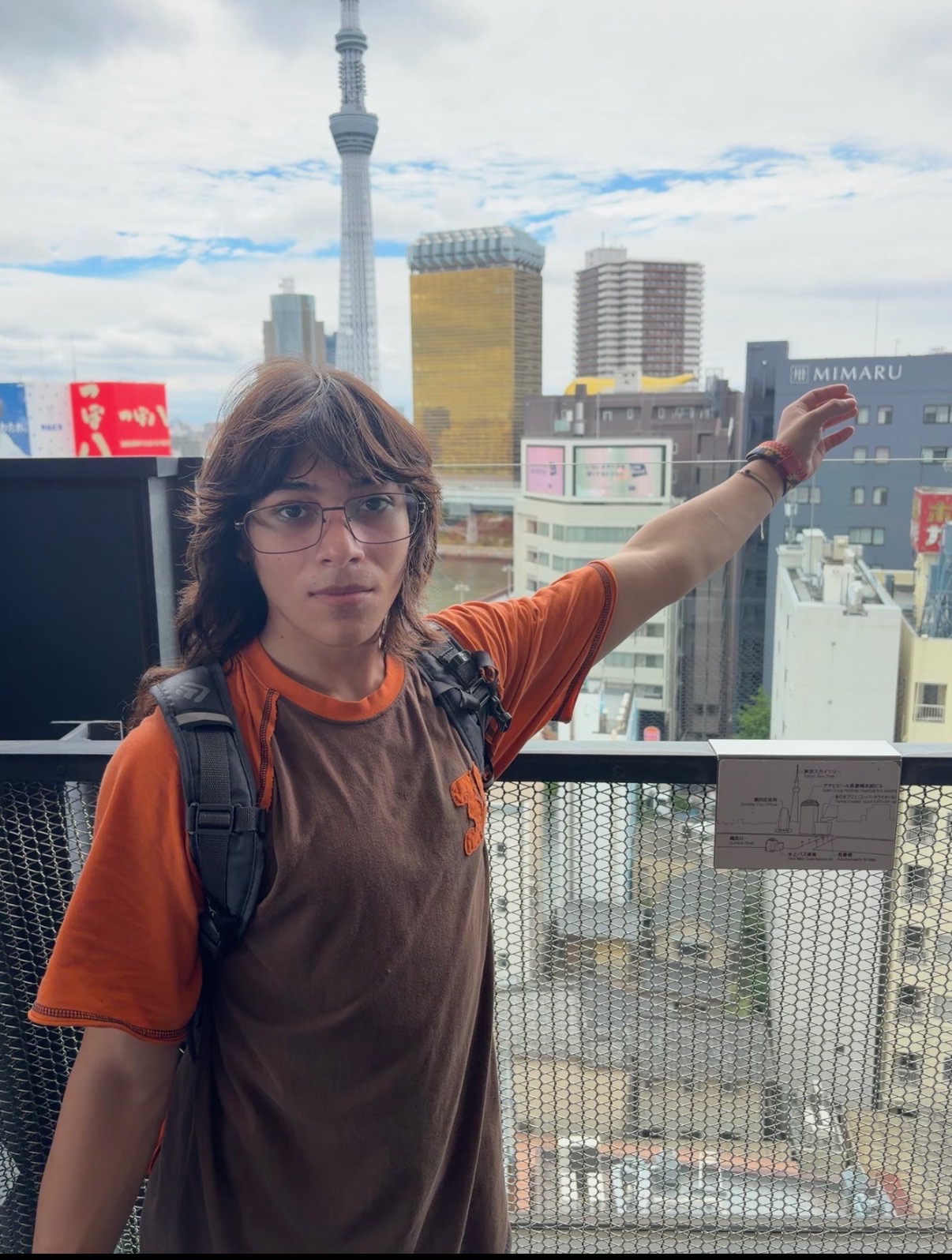
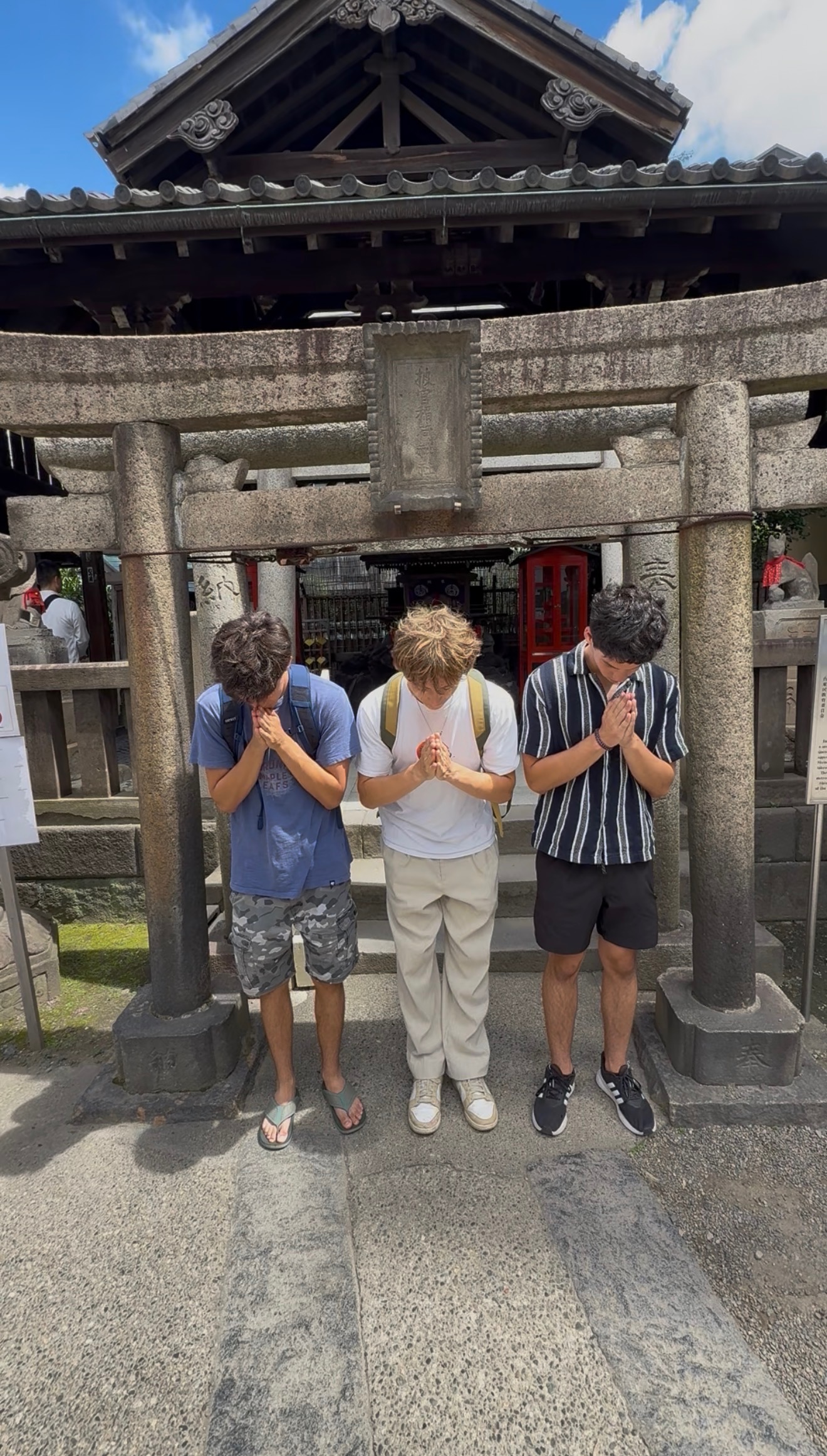
We began our morning in the shadow of the Skytree Tower, then walking the 1.6KM to Asakusa and Senso-ji. I send students on a scavanger hunt to find the kitsune on the temple/shrine grounds. From there we walked to Ueno, passing through Kappabashi and the many shops with knives, kitchwarre for restaurants, and ceramic shops.
ScreenshotScreenshotScreenshotStudent Photos from Day 2
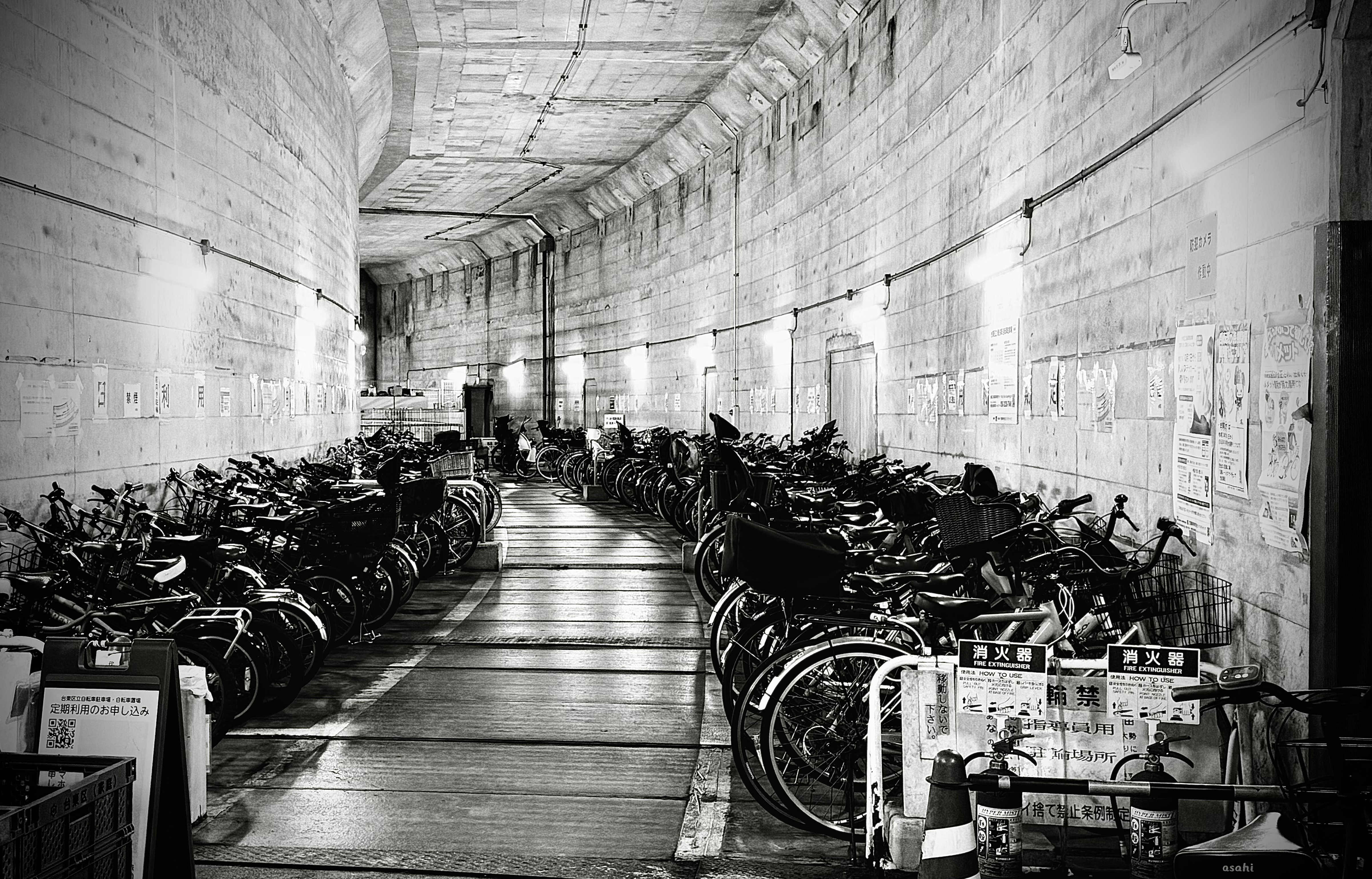
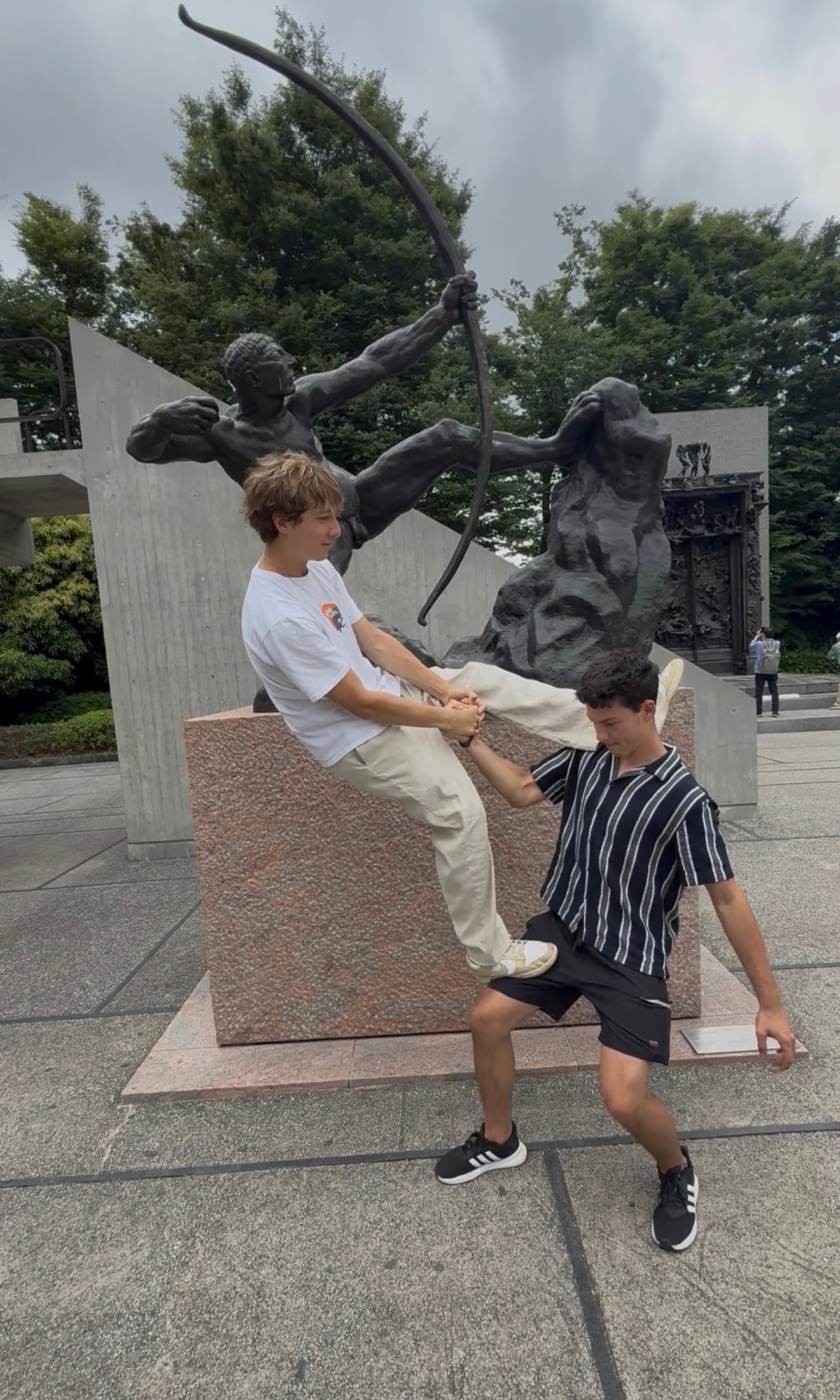
From there we made our way into Ueno Park and headed to the Tokyo Museum of Western Art. After a couple fo hours of visiting the museum, we spread out across the area. Some went into the markets below the bridges filled with speeding cars. Some ventured further afield into other parts of the city, and some of us made the long walk back to the Sumida River to walk the trails that line the waterway.
Through it all, this early interduction to Tokyo and Japan gave students some confidence in navigating the city on their own.
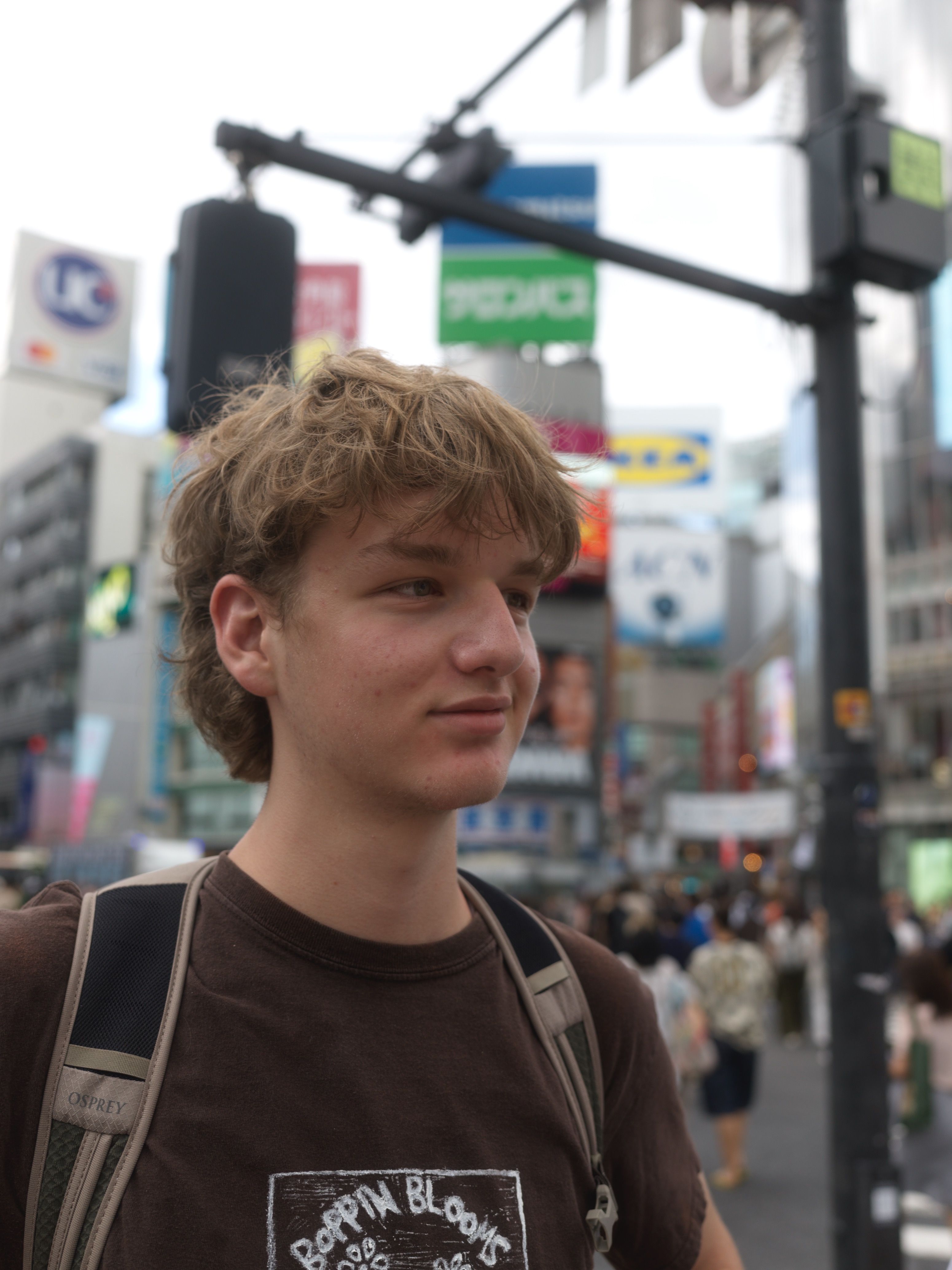
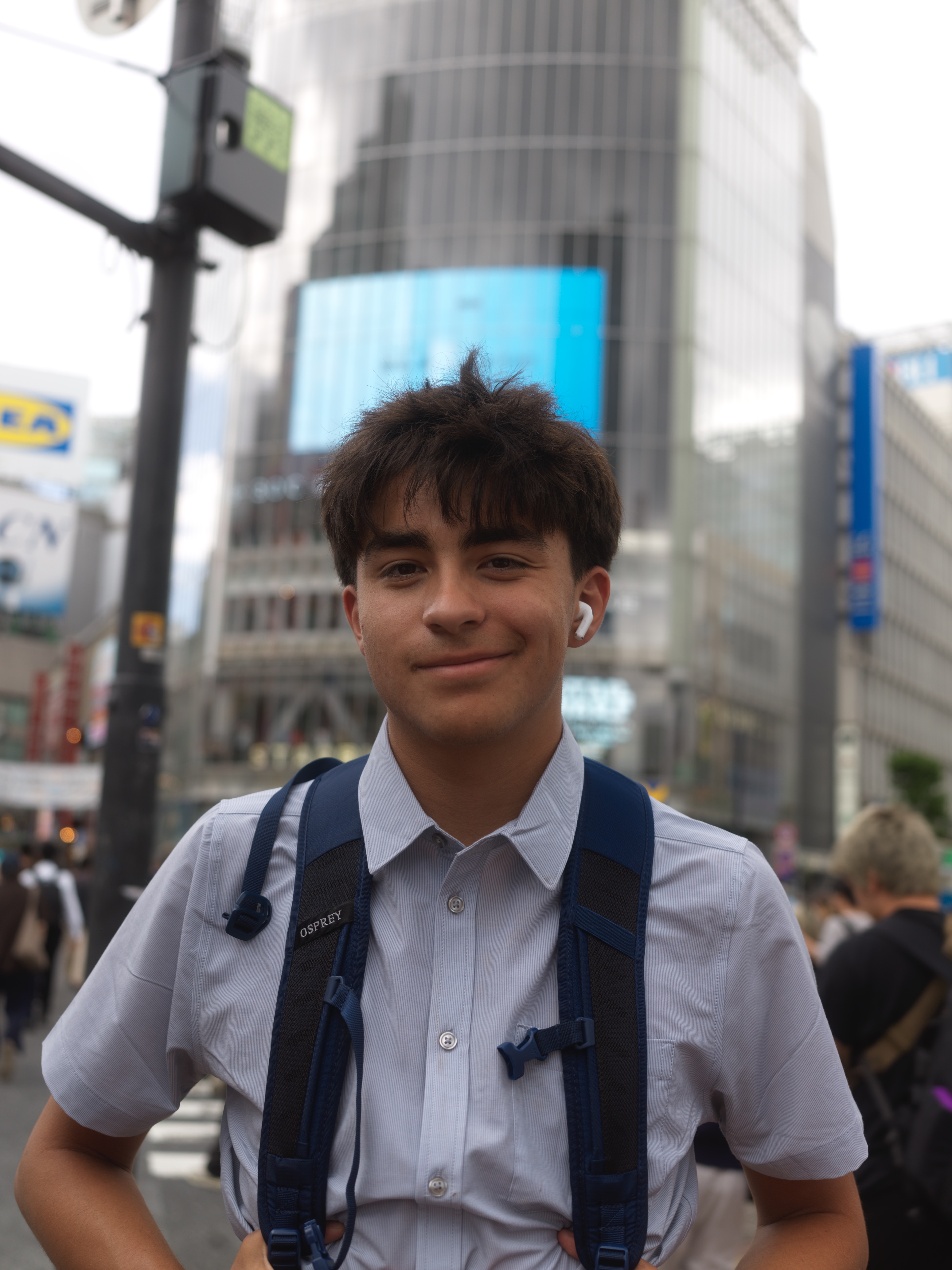
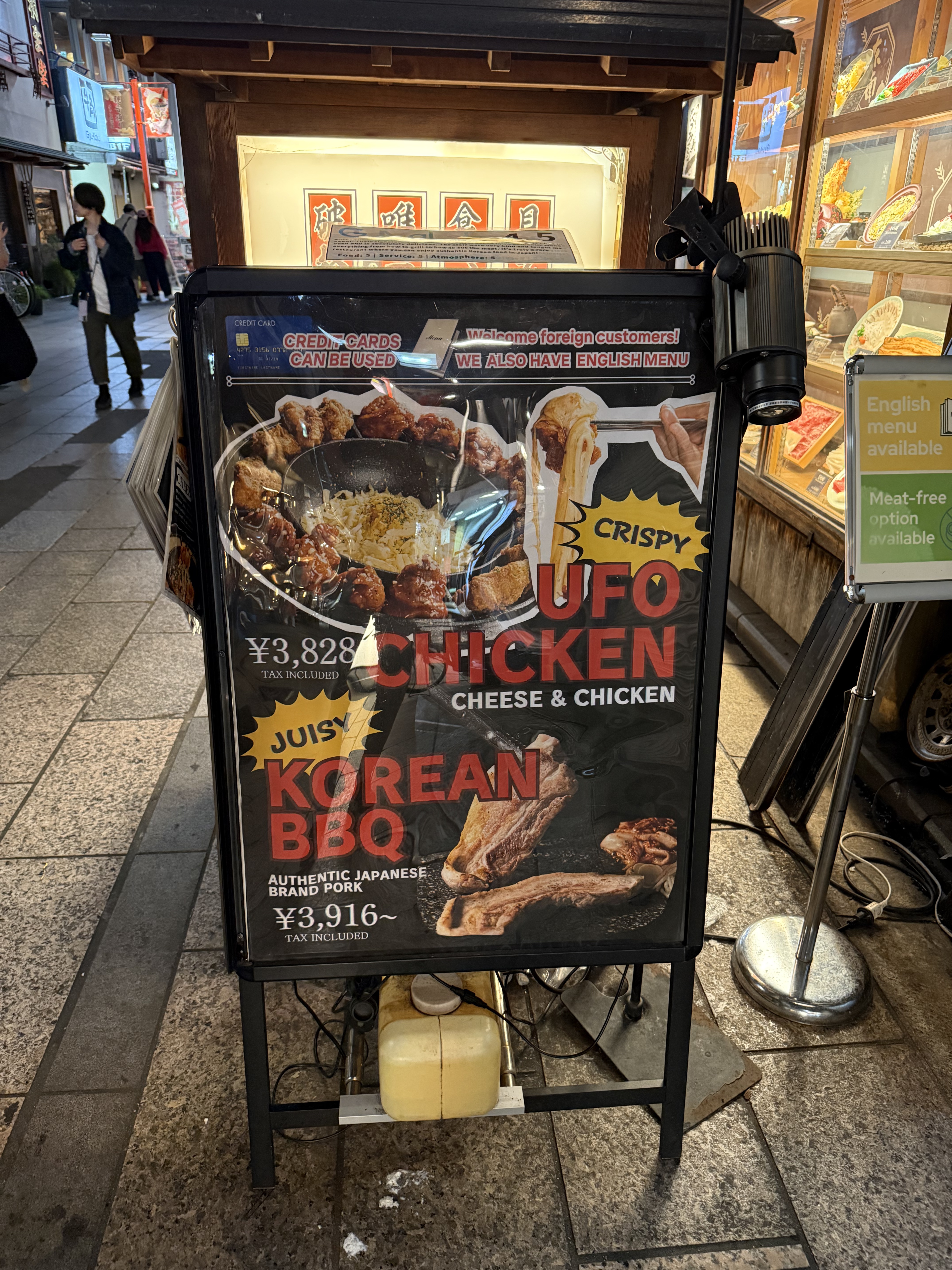
Today, we had a late start, and then grabbed a train to Shibuya. We put a student in charge of navigating the train system, and off we go! We hit Shibuya Crossing, then split up for lunch, finding Omoirice, Korena BBQ, and everything in between. Tower Records was a huge hit, and after lunch, we walked through the Meiji Shrine.
After those antics, I unleashed the students on Takeshita Street in the heart of Harajuku. The crowds were not at all what I;’ve seen in the past, and they dropped into places along this small avenue.
From there we split up; one group stayed in the Shibuya area, another went to the Nintendo Store, and a third traveled to Iyota the Stationary Store mecca in Ginza.
After dinner, we againh fanned out and finally, around 10:00PM made our various paths back to the hotel.
I don’t want to jinx it, and, right now, this trip is humming along nicely. Tomorrow we travel to Kamakura and Enoshima. Can’t wait for the group to see the Daibatsu, Hasedera Temple and climb the stairs at Enoshima. If you’re eondering. our mileage is starting to add up, as most of us are hitting 15 – 20 miles of walking each day. Like I said, Tokyo is a walking city, and sometimes the BEST way to see the world is on our feet!
From our home base in Albuquerque to our new spot in Asakusa, we’ve traveled across the globe to experience Japana nd Japanese culture in all its glory. As you can imagine, the flight across the Pacific Ocean is a long one…on this day, exactly 11:50 hrs to land in Haneda International Airport. The flight was uneventful (no wifi on this one), and the food plentiful. United Airlines seems to have upped the ante in terms of offering food for travelers.
A few shots from our first evening in Japan
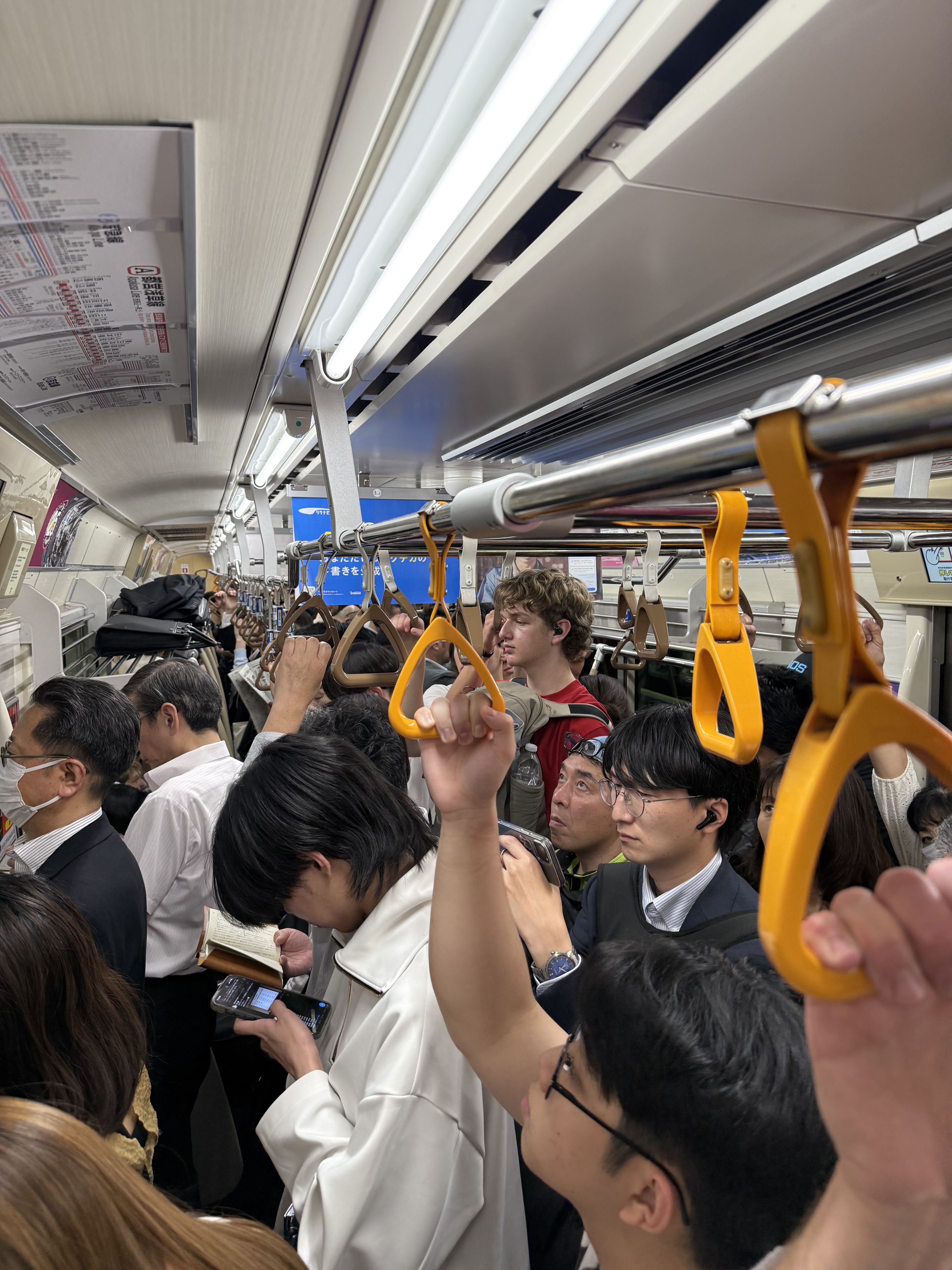
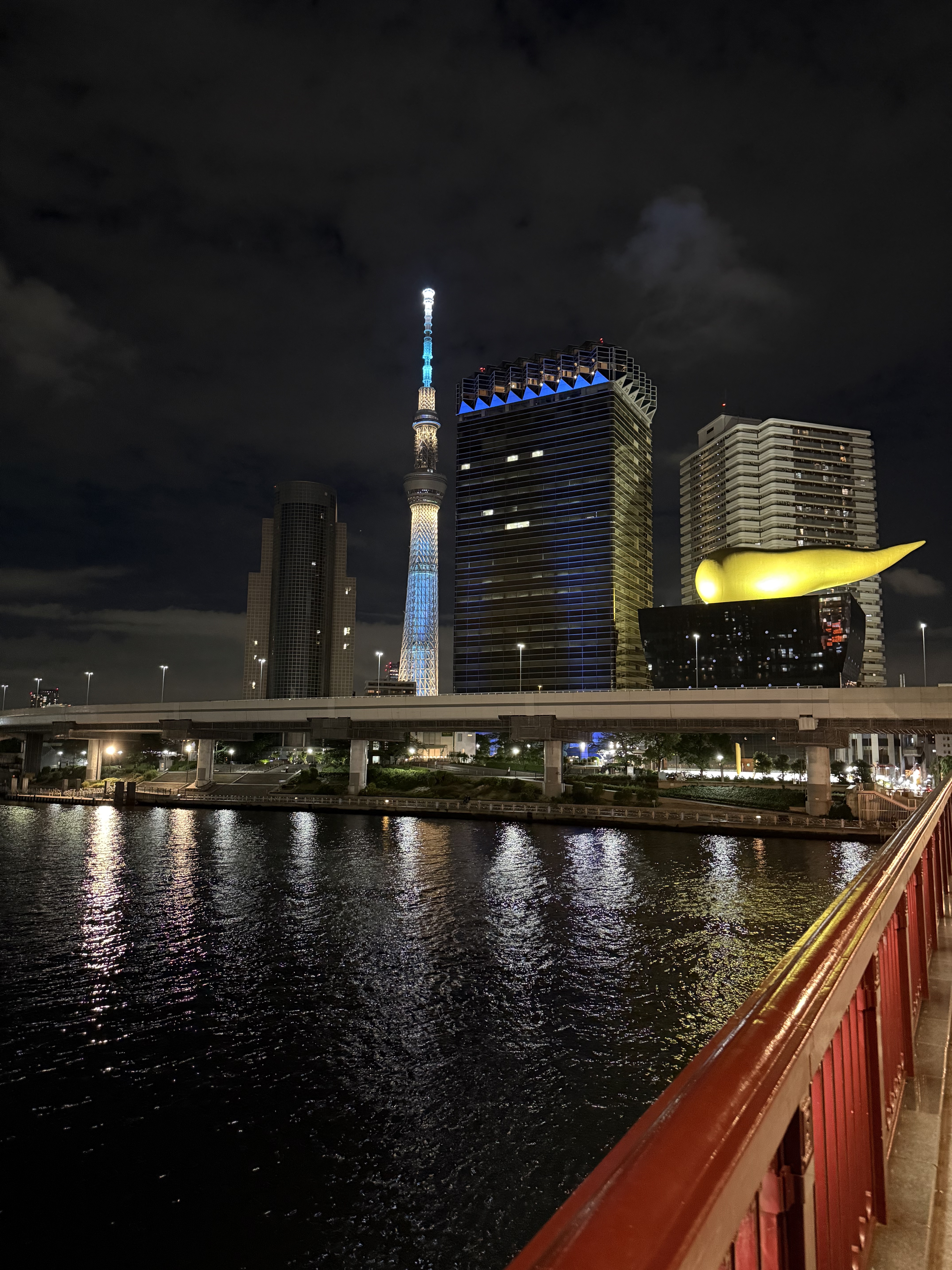
We made it through the long flight to land and get acquainted with Japan. The experience of a new place combined with jet lag is a powerful, mind-numbing force. Navigating the crowds of humans to make our way across Tokyo to Asakusa is a challenge. After $$ was exchanged, hotspots purchased, we hopped on the Keikyu Line to Asakusa and our hotel. We’re staying across from the Skytree Tower and it’s presence is a powerful one looming over the streets in this area (technically Sumida City).
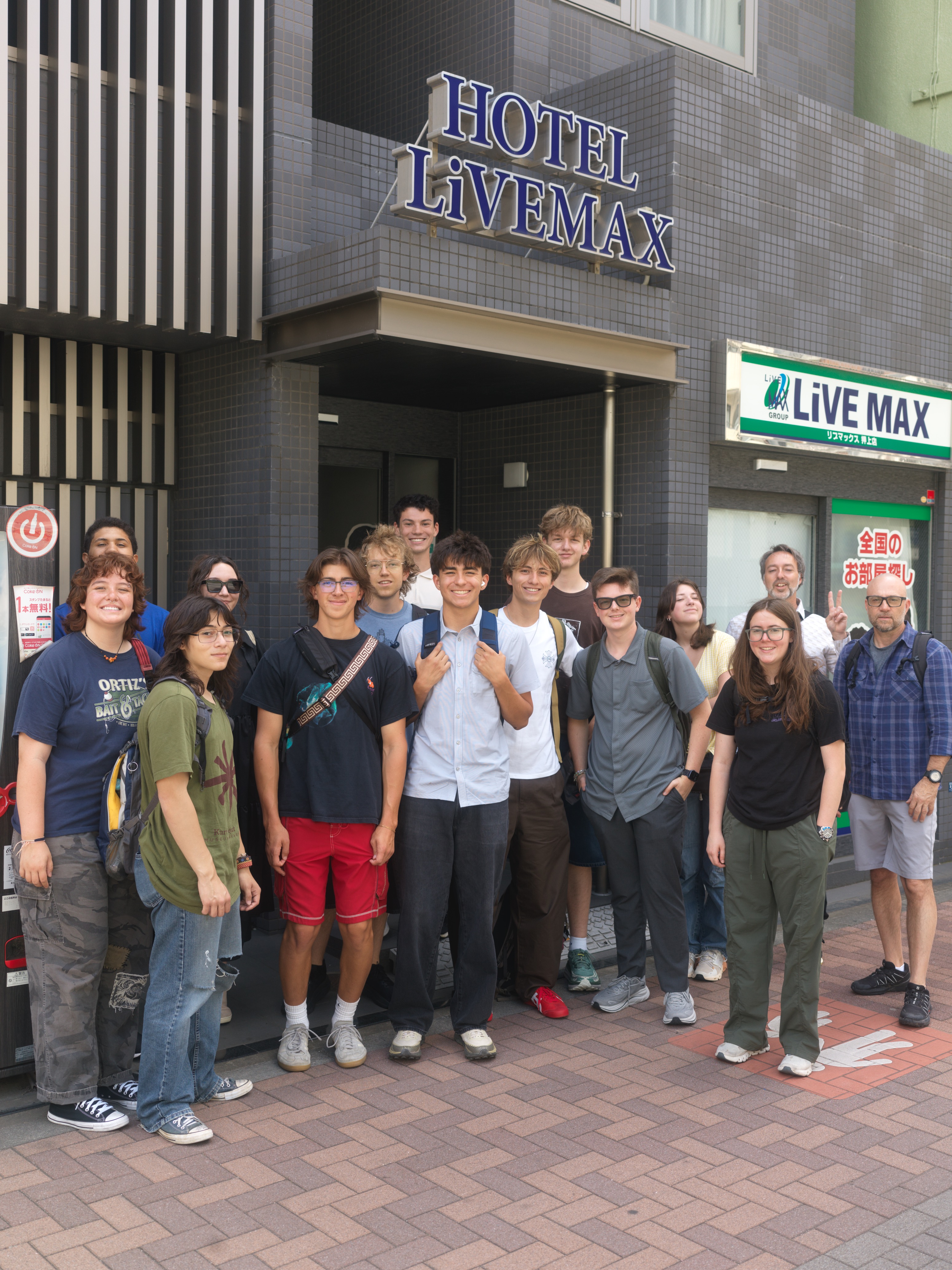
Our hotel check-in was efficient, and I’d definitely recommend this spot to fellow travelers looking for a reasonable price for rooms (LiveMax Asakusa Skyfront).
The Skytree Tower looming over the area
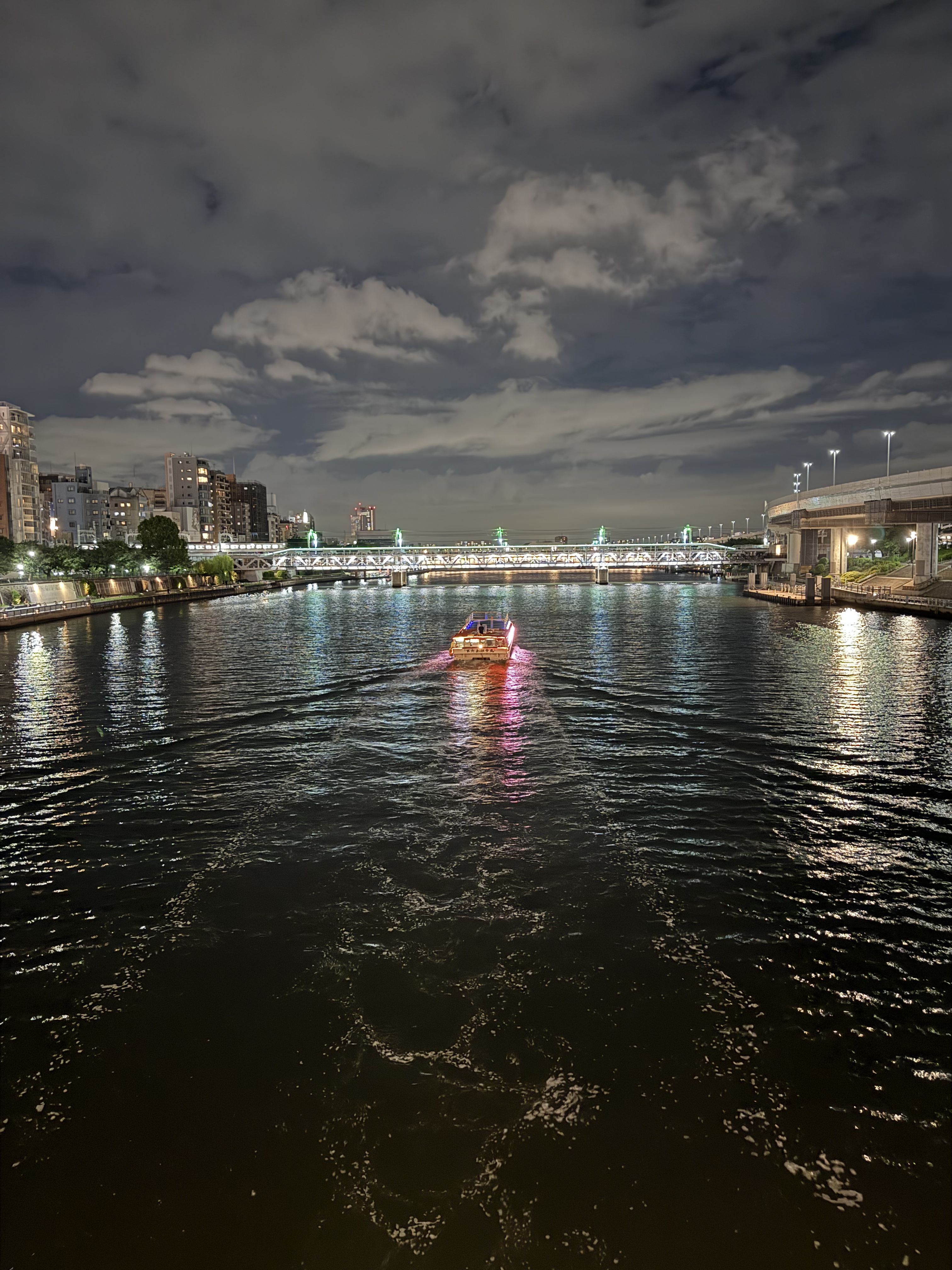
After a shower, we all headed out into the evening, walking the 20 minutes across the Sumida River to Asakusa. The weather was warm, and we fanned out to find ramen, Susi, and every other kind of food in this socially charged spot. The evening came to a quick close as we all made it back to the Hotel by 10 PM and everyone settled into our firt night in Japan.
The Sumida River near Asakusa
Today, we’ll be walking all around Asakusa and Ueno, hitting some popular spots and some hidden gems. We’ll spend some time at Senso-ji Temple complex, walk through the back streets to find ceramics, small stationary shops, and a food market hidden under a bridge near the Yamanote Station in Ueno. We’re planning to visit a couple of museums, and then the students will have the area to thmeselves as they wander this part of Tokyo.
The day will be full, our eyes will be open, and the weather looks as good as it gets in Tokyo in the summer!
Sung to the tune of Elvis Costello and the Attractions “I Don’t Want to Go to (Chelsea)”.
So, fellow humans, I’ve traveled to Enoshima so you don’t have to. Yes, Endoshima is an island linked to the mainland by a footbridge. Yes, many folks have traveled to the island and yes, there is a shrine to the poet Basho, on the far side of the island. Finally, you could climb up to the Enoshima “Candle” and look out over the ocean (and in good weather see Mt. Fuji). All of the above is true. The question I have: is it worth it. My humble response is no.
Walking bridge to Enoshima
While you will find many places in Japan filled with tourist shops and restaurants, Enoshima seems particularly prone to these kinds of places. Absolutely nothing wrong with folks plying their trade and the visit didn’t have the payoff in terms of historical and cultural significance. For example, compared to an island like Miyajima near HIroshima, you’ll find less there, there.
Headed through the tourist area to get to the stairs to the top of the island
Combine the above information with the fact you will climb, climb, climb to the top on a significant number of stairs…maybe not Fujimi Inari level stairs, but close, and your work doesn’t necessarily match the experience. You could purchase escalator tickets (!!) to make your journey a bit less challenging, and you wouldn’t get the payoff of walking up 42 flights of stairs for the KMs you’re walking. I’m not really complaining, just a little frustrated that in the few hours I have left in Japan, I really want to spend my time more wisely. If you’ve got lots of time in Japan then Enoshima might be worth the adventure.
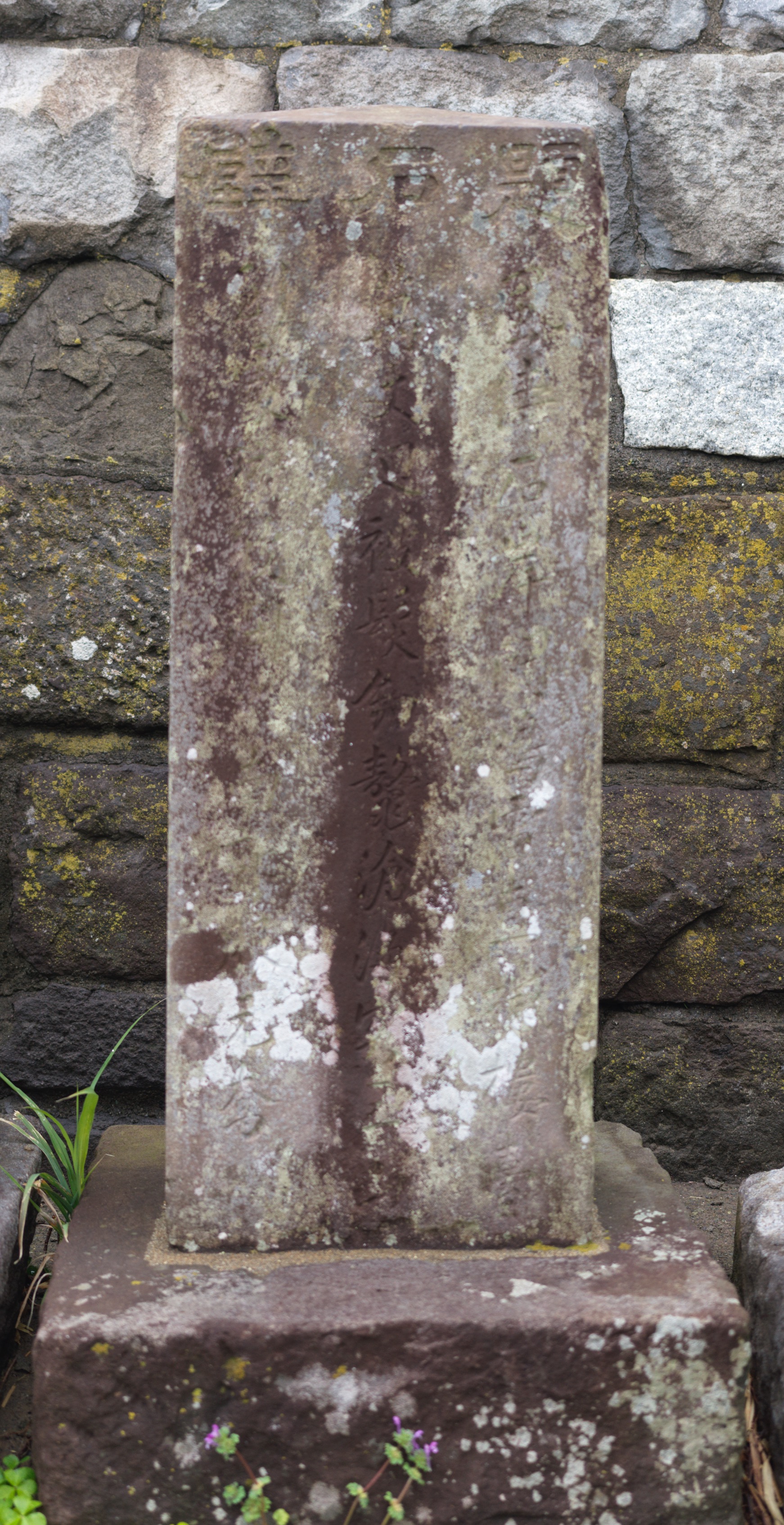
The Basho shrine…his poem is carved into the stone…
Without doubt
Flowerlike sea spray is
Spring of the bay
Despite all of that, the real payoff for this day was my visit to Kamakura. First and foremost, I absolutely love this place. I’ve now been all over the town and have felt like so many possibilities for both contemplation and adventure are in this place. Combined with the wonderful people I met, I haven’t found many places that equal the wonder of this place.
Hoping off the train at Kamakura, you’re presented immediately with two choices: left off the train leads you to a street filled with more common tourist opportunities like a cafe where you can hold owls or the ubiquitous ramen shops. To the left, you’ll walk into the town that is dramatically more quiet with shops filled with locally crafted art, jewelry, and food. My favorite spot is The Ramen Shop, a family-owned business that serves some wonderful Sio ramen broth. Purchase your ticket, have a seat at the bar (about 10 seats), and enjoy the Japanese jazz music and the wonderful ramen.
The Ramen Shop
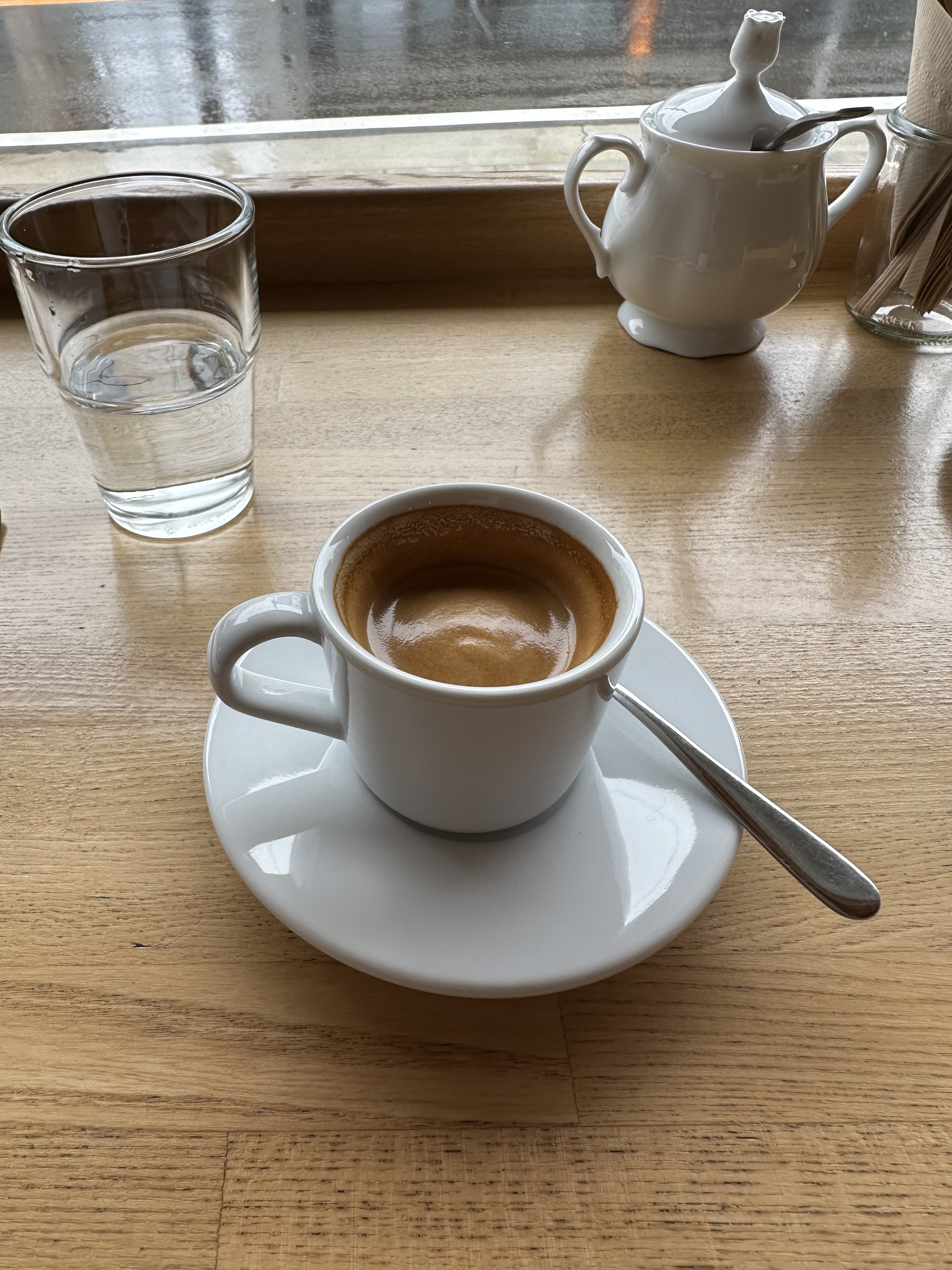
Instead of taking a bus or train close to the main attraction, the Daibatsu, I have chosen to walk from town to the sites. along the way, you’ll run into a variety of stores and restaurants. If you’re on the right side of the road, you’ll find Modernato Coffee Shop. Stop in and have some hand-crafted coffee (it takes a while) and a dessert. Sit at a window seat and just hang.
Modernato Espresso
The Daibatsu is the star of this show and even if it’s crowded, you’ll be inspired by the view. Constructed in the 13th century, the building that once surrounded it is now gone…as legend states, destroyed by a tsunami, the bronze sculpture and pedestal are the only remaining structures. Reconstruction of the building happened soon after and that too fell to a fire in a civil conflict in the area. Restoration began again in the late 18th century and then later in the 20th. regardless of the history, you’ll find a remarkable bronze Buddha. As many times as I’ve visited this spot, the reveal of the Buddha as you walk along the path is magical. If you’ve read this far and you’d like to visit, walk slowly….turn the corner, and allow the vista to unfold. It’s amazing.
The Daibatsu…I’m able to grab this shot despite the number of visitors….I’m a bit taller than most folks.
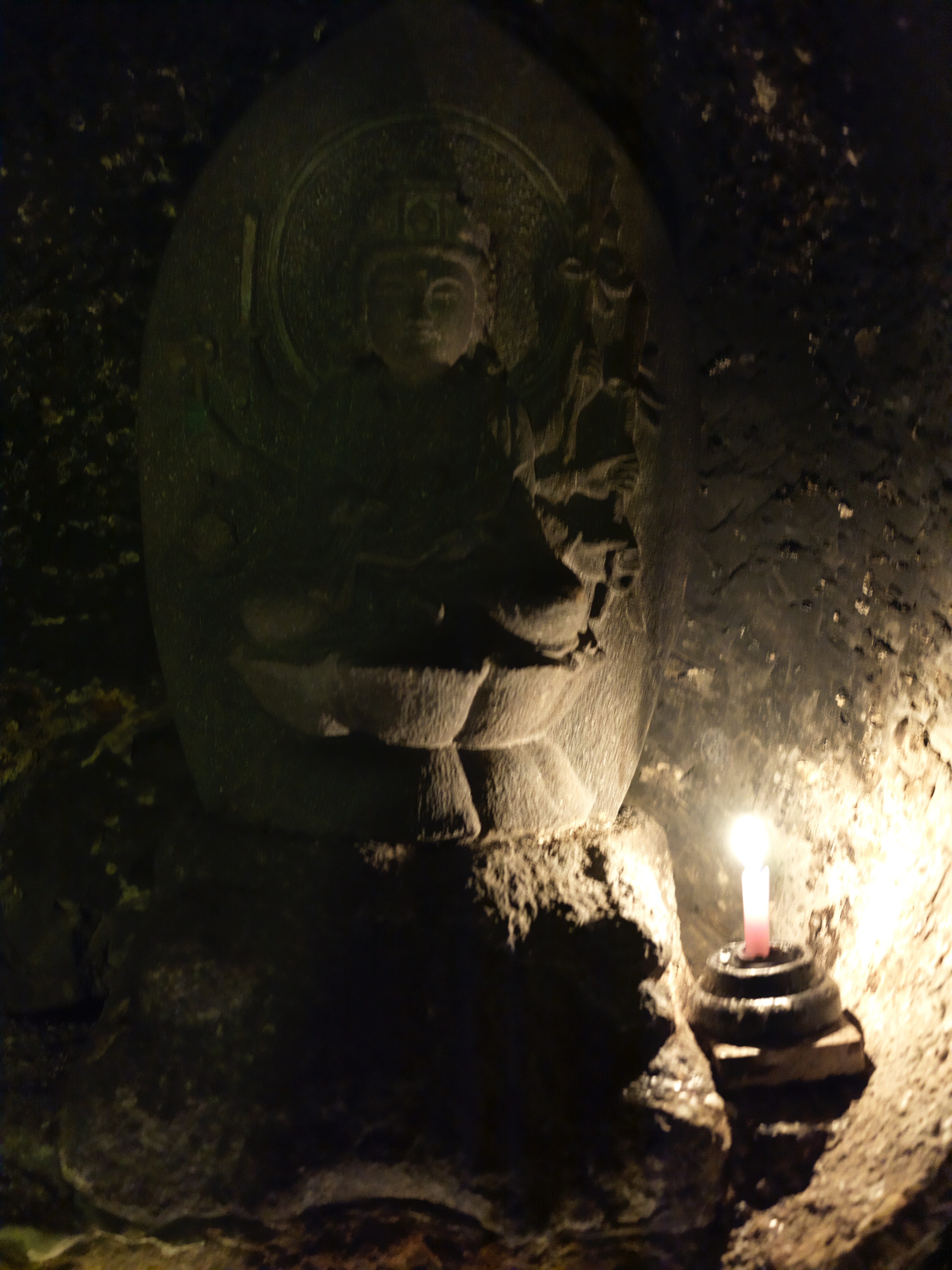
Not far from the Daibatsu is the Hasedera shrine and temple complex. The ancient caves are worth the crawl and the place holds a gold-gilt Kannon sculpture in the main shrine room. The dim light of the room combined with the presence of the statue was as peaceful a place as I’ve ever found, and I stayed in this moment for as long as I could, basking in the warm glow of the space.
So many monks!
Each of these moments today gave me something to consider…I went from joy to frustration on this day and then exhaustion as I had walked more than 15 miles, much of it uphill. After I made it back to my room, I relaxed with some soccer on TV and well-deserved sleep.
May you be happy, may you be well
At the top of Enoshima is this sitting area
If you are eating in public, crows and hawks will steal your food right out of your hand!
In the dark caves at Hasedera are these small shrines
Love this view of the Daibatsu
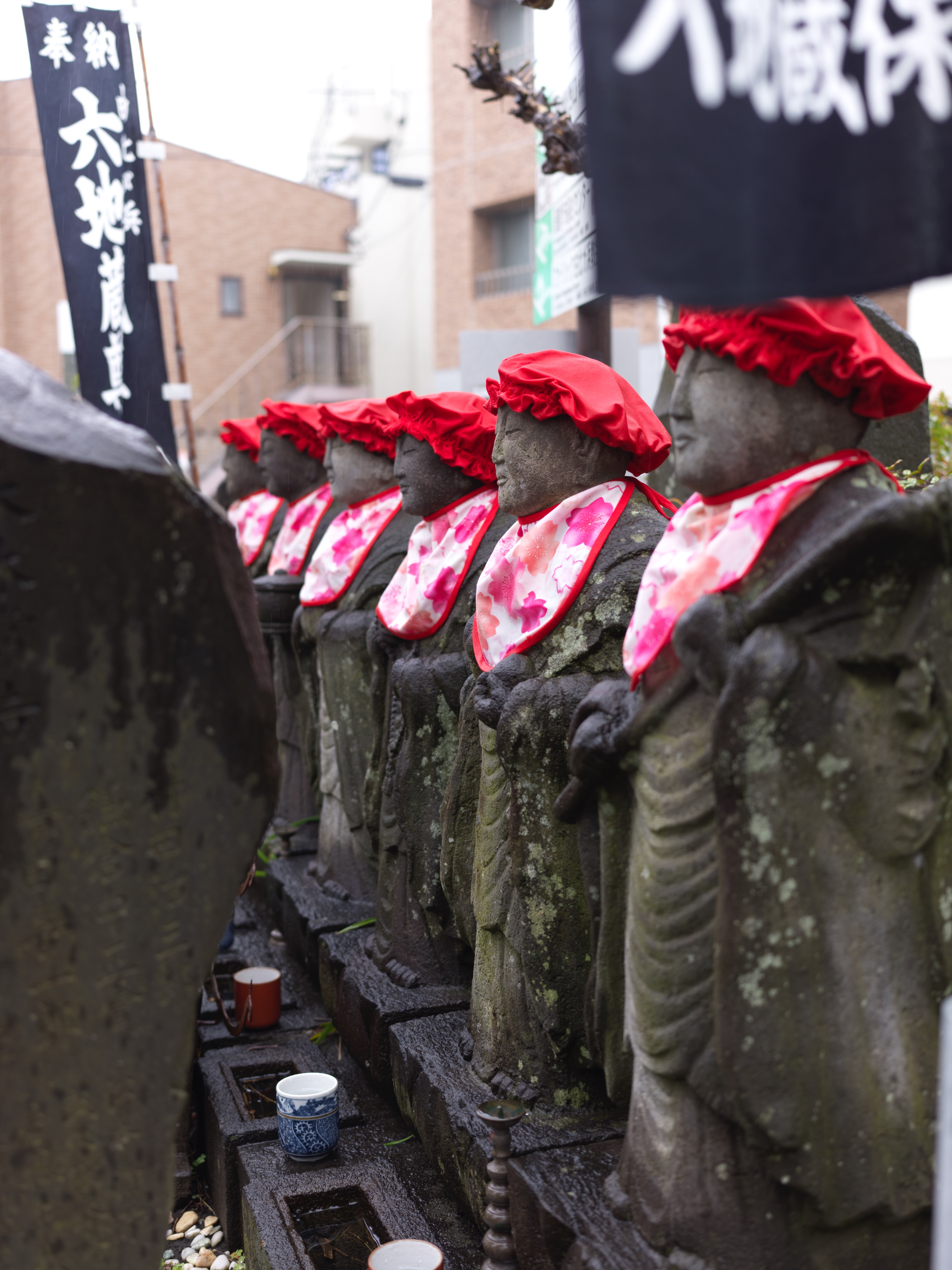
Along the streets of many towns are small Shinto shrines
OK, so, for full disclosure, I wasn’t trying to get caught. I thought I could walk into the hotel, casually walk to the elevator, punch floor number 8, and then ride up to see the terrace where the Godzilla head is located. I failed on all accounts. After my capture and return to the lobby and being politely asked to leave, I realized I was not, as I imagine, someone who can slip into and out of a building.
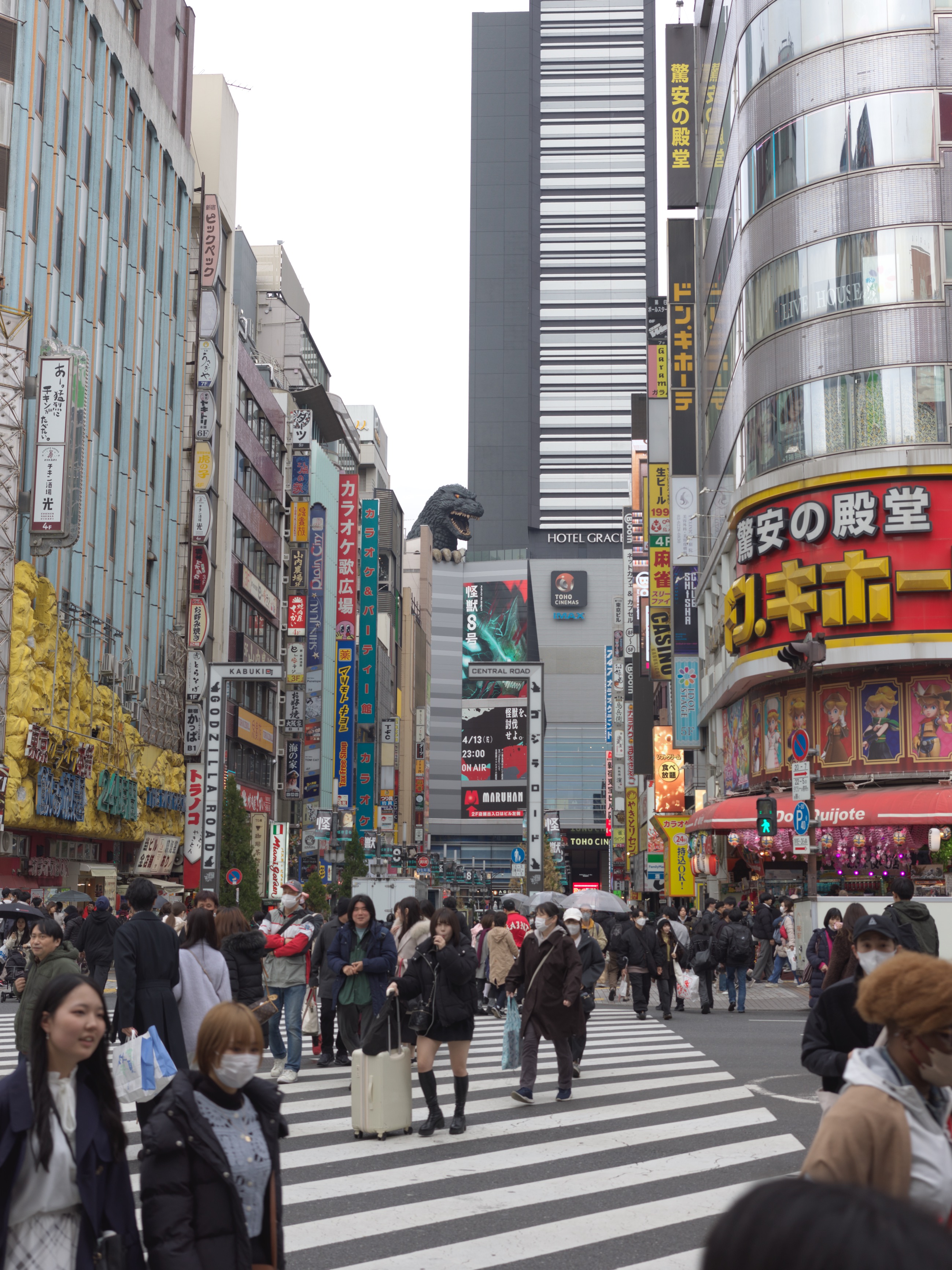
If you are interested, in Shinjuku on a terrace at the Hotel Gramercy is a sculpture of Godzilla. It’s very large. You can see the creature from street level and in the past, it was possible to walk into the hotel, head up to the 8th floor, purchase something from the cafe, and then see the Godzilla.
GODZILLA! Hotel Grammercy is the black-and-white lined building on the left.
At some point, I think the Hotel had had enough of random tourists going into this very nice hotel and disturbing their guests. So, they made it a bit more difficult to gain access. On this day, I did what many online recommended which was to walk like I had a purpose (as a guest of the hotel) and tap the elevator button to take the short ride to the 8th floor. My plan was to obviously buy something in the cafe ( that was a requirement ) and then see the Godzilla and take pictures.
So, I ignored the sign saying DON’T DO THIS and walked to the elevator. You have to pass the front desk on the way in and the elevator is within view of the desk. I simply walked up to the elevator and a very quick “sumimasen!” was spoken from over my right shoulder. I turned, slowly, and was asked to produce my room key. Oops. I explained I wanted to see the Godzilla and was told politely that I could not, it was closed, and something else I couldn’t understand. I was escorted to the front door with many kind phrases of apology.
NO GODZILLA FOR YOU!
As I walked out I grabbed a shot of the sign saying DON’T TRY THIS…ah well. Thwarted in my attempt to see Godzilla.
Outside of the Hotel is a street filled with all kinds of clubs. They were of various types and styles, and in some of the alleys were more discreet love hotels. I think Japan is the only place I’ve come across that has these kinds of hotels clearly marked as somehow different or unique. They tend to stand out, as they say…like this one.
The non-conspicuous love hotel in Shinjuku
Pretty sure you need a code to get in…
As I walked these streets about a block from the main drag of Shinjuku, the area looked a little more unusual, the clubs a bit more edgy, so to speak. Down one alley were photographs of women in a variety of undress and on the sides of some buildings were murals with interesting images. I’ll let your imagination take over…it was interesting. A man was standing outside of one place and beckoned me in…I said no thank you and he just smiled.
My wandering around Tokyo had taken an interesting turn and I found myself kind of in awe of it all.
A quick shot as I was being hustled along the street.
I just don’t wanna know, you know?
My walks took me from Shinjuku to Shibuya and Ginza. Each part of Tokyo has its own style and vibe. In Ginza, it’s an area tuned to the rich and famous dial on your FM radio. On this Saturday, the road was closed and people walked freely down the street….
Ginza on a very cloudy day…
Lastly, I grabbed some video of the Shibuya crossing…it’s a fun place to see and experience…a video is the best way to get the feel of the place. It’s packed with people.
The clipped version you see here took off the tops of everyone’s heads…that’s not how I shot it and that is how WordPress published it.
I’ve often relied on Apple Maps for my travels in Japan and generally speaking, the directions are accurate. However, the street directions for locations in the city sometimes leave something to be desired. This fact is particularly true if you rely on your watch to alert you to turns etc. The watch face will say “Turn in 200 feet” and then you’ll find a dead end at that turn. The problem has occurred more than once and one this day, I experienced a somewhat hilarious suggestion from the map.
My plan was to get to Hamarikyo Gardens and I plugged in the location into the phone/watch. The map dutifully stated I needed to exit at Akebanebashi station. I looked at the map on my phone and it sure as hell did NOT look like that was the station…the phone helpfully suggested a 10 minutes walk out of the station to the park. Hmmmm.
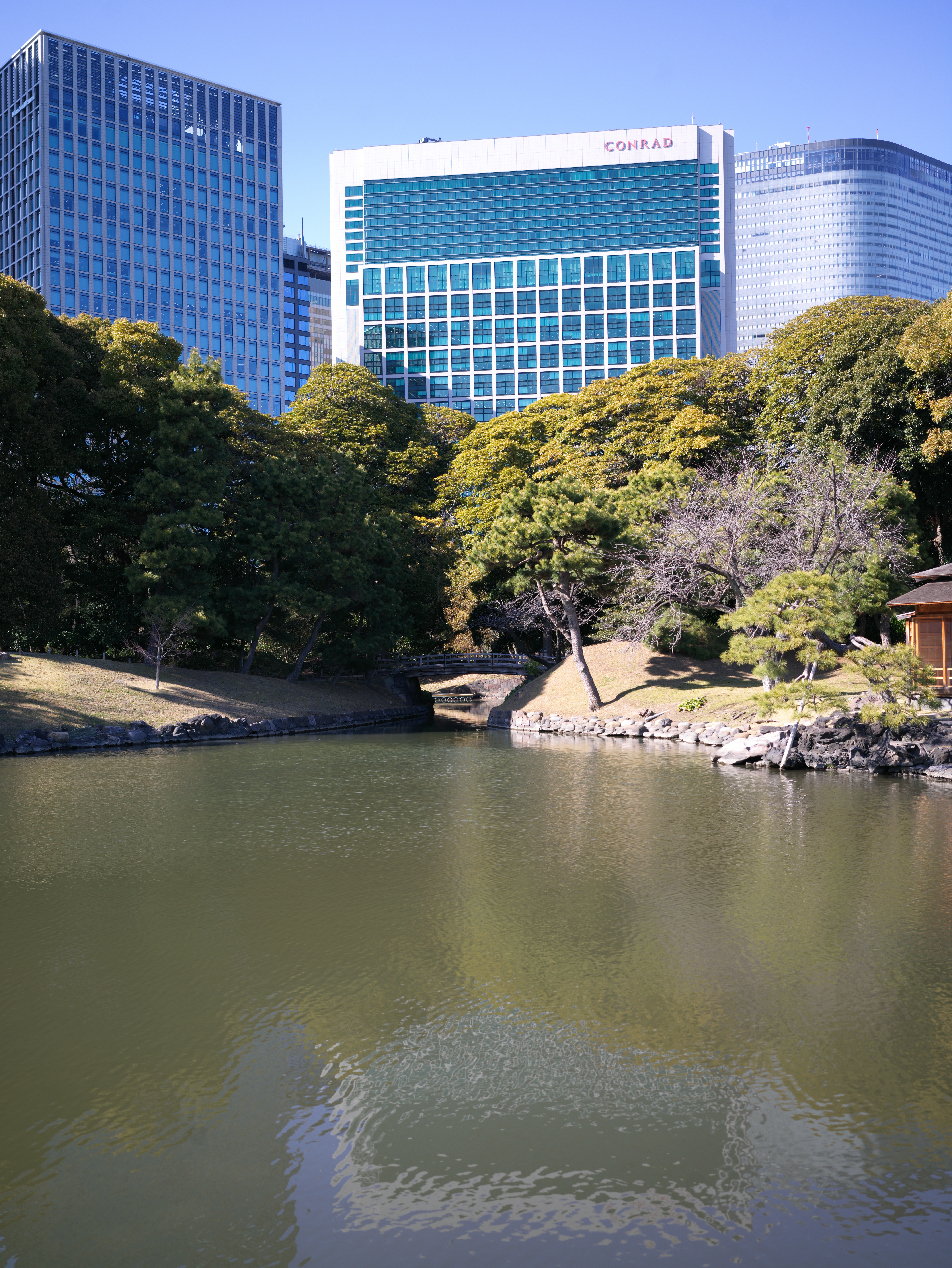
Hamarikyo Gardens in the midst of the city
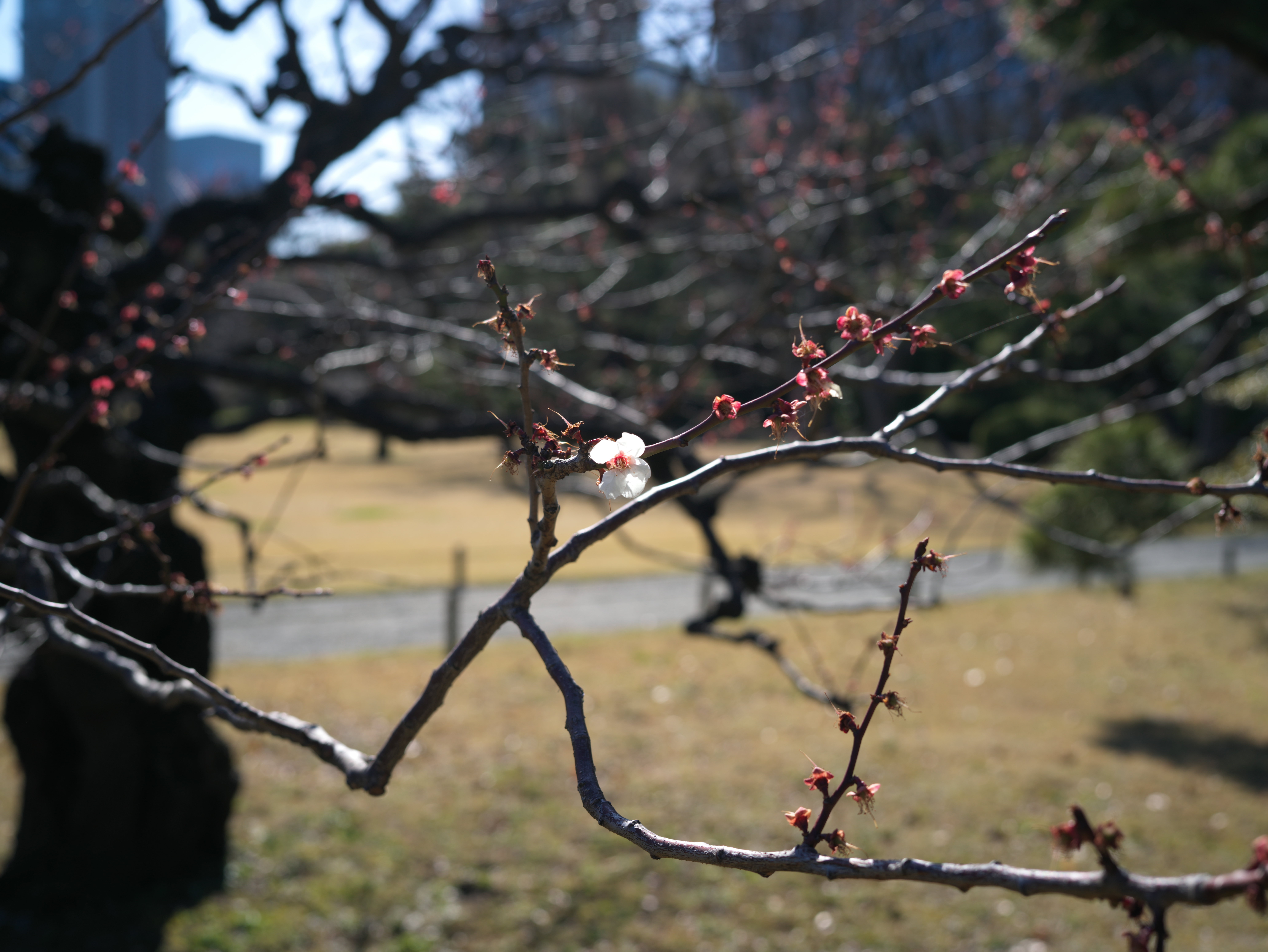
When I exited, I was smack dab at the Tokyo Tower a good 2 miles away from my location! Dude. Seriously? I took the side trip and the message to head to the Tower and maybe even head up the elevator! Sadly, the wait was 2 hours and after some photos, I headed back to the train and decided to navigate my own way to the gardens. Sure enough, I made it to Shidome and the location. I entered the physical address and the phone took me the wrong way…I stopped, looked around, and saw the park about 100 yards behind me…I turned and walked into this beautiful spot very close to Tsukiji Fish Market (the new one). The silliness was worth it and I photographed the very first sakura blossom in the park. The Yoshino cherry trees in the gardens are some of the oldest in the city and I grabbed the shot, looking in wonder at the expression of joy this flower gave to me in the moment.
As for photography, the bright sun and cloudless sky blew out the colors and photography was a challenge. I played with the shadows in the trees and tried to find some interesting spots. The ancient duck blinds, installed in the 18th century for sport, were still in place, and workers with repairing one of the older reconstructions. The Park was originally the home to the 8th Shogun of Edo and the grounds are remarkably intact.
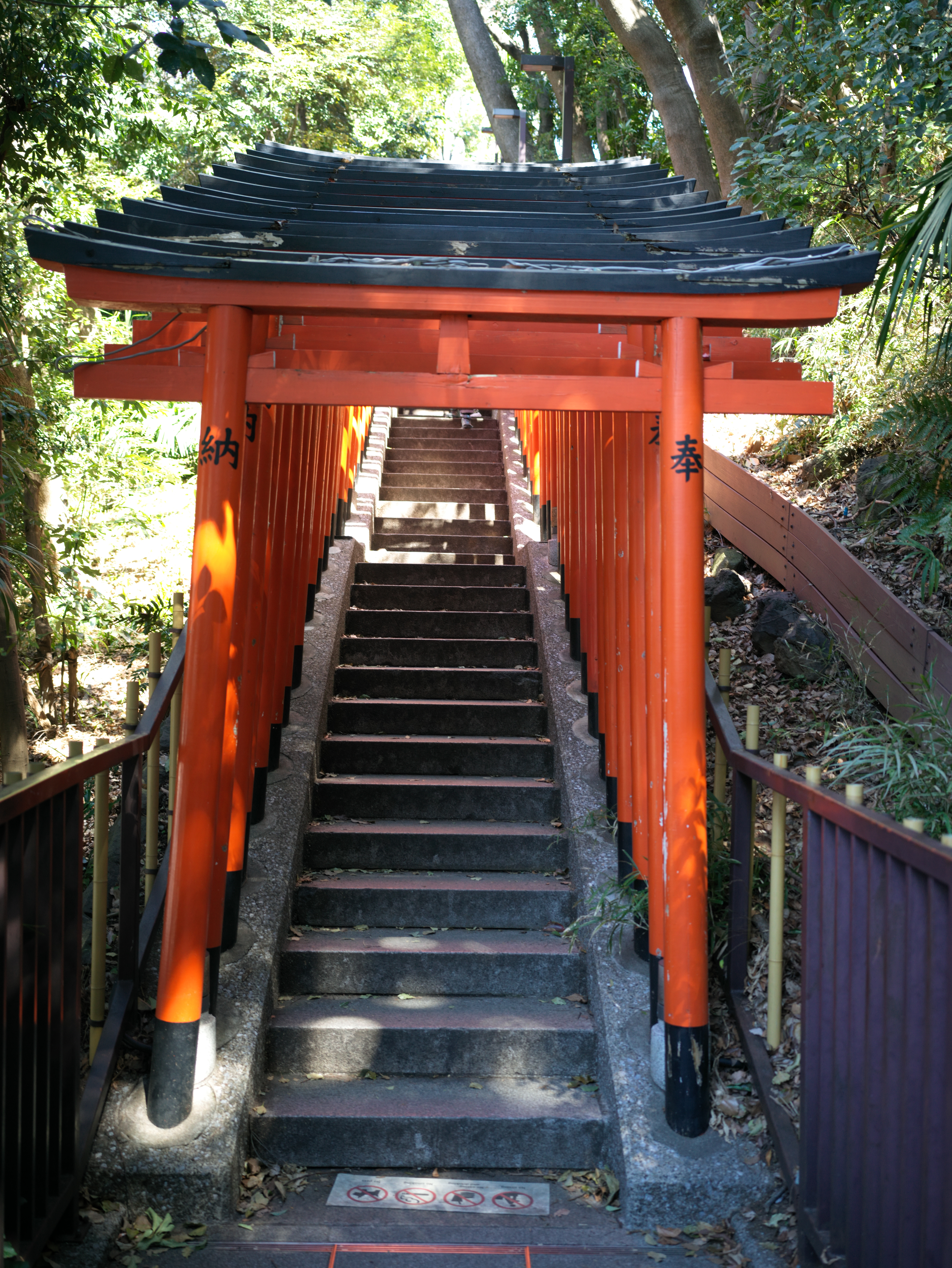
The ONE thing to keep in mind in Japan is the amount of walking that is required of anyone wanting to go anywhere. Too, stairs are all over the place and it’s not uncommon to walk miles and climb floors of stairs. For example, yesterday I walked 10 miles and climbed 70 flights of stairs….a relatively average day.
Hie Jinja Inari…and stairs.
Each of the places I visited were first-time experiences and I felt lucky to make it to each location. I sat at Hamarikyu Gardens and sat on one of the many small sitting areas…this one in the trees at the north end of the park. I wrote in my journal and admired the setting and my good fortune.
Hamarikyo Gardens…notice the bride in the distance
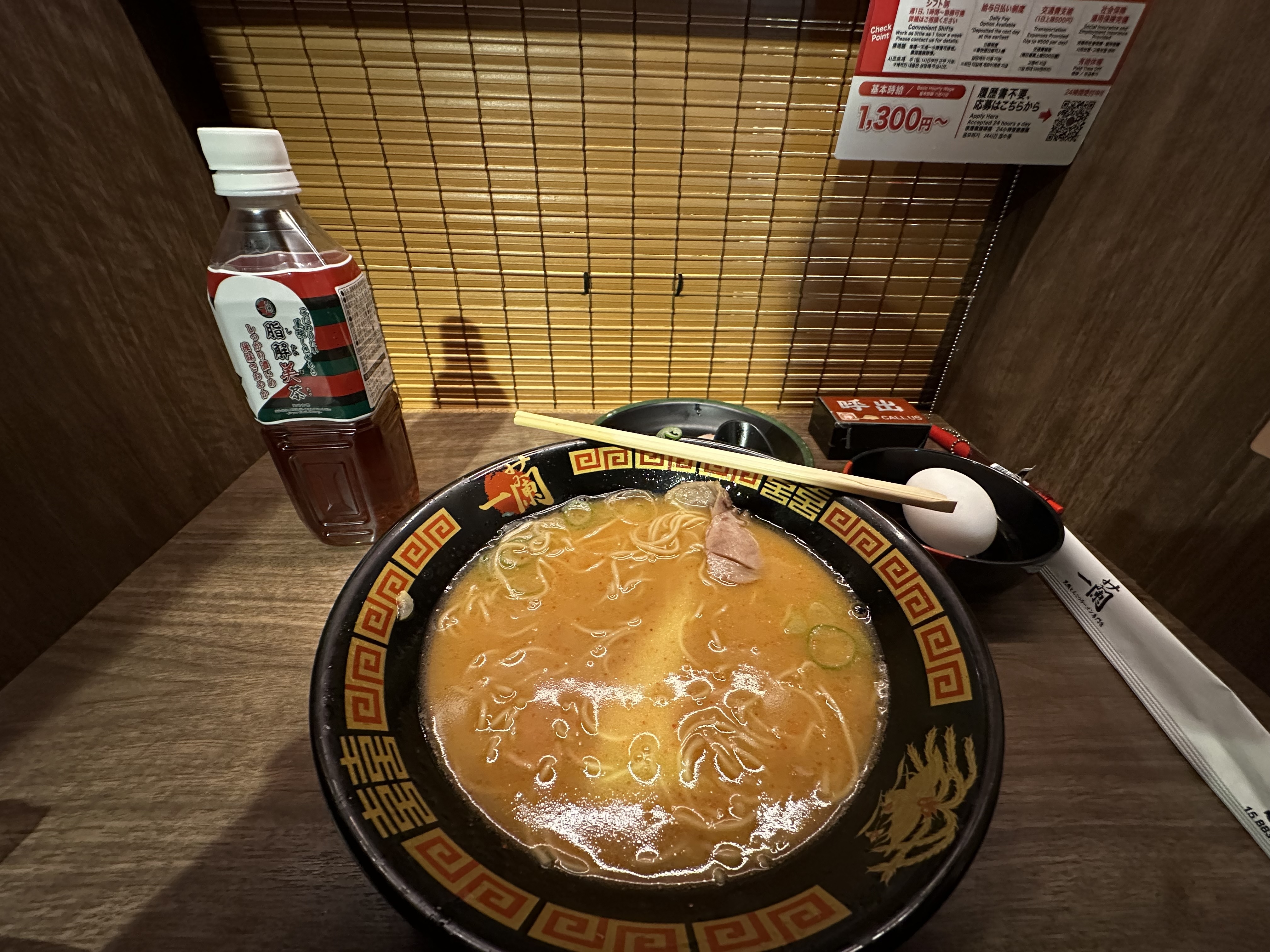
By about 5:00PM I was spent and ended my day at Ichiran Ramen, a very popular spot, quiet this early in the evening. I quietly ate my ramen, made a stop for an umbrella (I left mine at home), and dropped by 7-11 for some snacks. Once at the room, I watched the Sumo Grand Championship on TV and fell into a fitful sleep.
Ichiran Ramen in all its glory…I’m sitting in one of the private booths
Today promises to be equally adventurous as I head into Harajuku, Shibuya, and Shinjuku to capture the elusive Godzilla. Will I finally make my way to the building where it lives?
If you haven’t traveled solo or experienced a trip without family, I’m here to guide you through this daunting and thrilling moment. On these pages, I’ll be recording the journey as I attempt a trip that is not about tourism and is more about being IN a place.
I’ll start this journey in Asakusa and will stay in one location for the entire trip. I’ll provide updates on my experiences. My plan is to photograph street scenes in Tokyo, and, as Photographer Ruth Bernhard said, to “let the photograph find you.” To open my eyes to the places and people.I will see and try and capture a slice of life in the city.
As you can imagine, I’ve had a bit of trepidation knowing that I’m in a place that I am both very familiar with and completely unfamiliar with; I’ll not be leading a group of people through the city and instead leading myself around. More importantly, aside from the photography, I’m not planning on visiting tourist sites in the city…I want to just see what I see as I walk a series of paths through Tokyo.
My first day will follow city streets and neighborhood alleys from Asakusa to Ueno. My path meanders and we’ll see what comes up. In the subsequent days, I’ll refine my steps to seek out spots that are both interesting from an architectural perspective and a human one. Again, finding a way for the photograph to come to me.
I realize this approach is an unusual one and I’m hoping to capture images that reflect what I see using the tools and skills I am accustomed to.
So, what will I be using to photograph in Tokyo? First, I’ll use the camera I got in high school: a Nikon FE. I’ve used this camera consistently since 1979 when I purchased it. Since I’m trying to travel lightly, I’ll only have the unusual 36-72MM Nikkor lens as my companion. This E Series lens is not great AND it works well in the F8-11 range for sharp photos. For the film, I’m bringing HP5 and a couple of rolls of Wolfen 100. I’ll also head over to Champ Camera in Yokohama to grab some other more unusual films on my adventure.
In addition, I’ll be taking my used Hasselblad X1D II with a 40mm lens. I’ve experimented with this slow autofocus camera and am pleased with my work so far. While the autofocus is contrast only, I love the way the images pop off the printed page and am really excited to see what I can capture!
I’ll post images and videos here on this site and link to http://www.youtube.com for a channel on these adventures. Stay tuned f you’re interested in watching some random guy fumble his way around Tokyo.