Nikko: The forested mausoleum

One of my favorite places to go near Tokyo is Nikko.  The trails and dense forests are such a wonderful contrast to the mania of the city.  I prebooked tickets to the location and picked them up in the Tobu Tourist Office in Asakusa.

A word on prebuying tickets and tour offiices: OK first, the the day was fantastic.  We really enjoyed the experience of seeing the temples and shrine and just being in the mountains for a time.  The process of exchanging QR codes for tickets and buying vouchers for stuff is so interesting.

I used the app Klook to buy a set of tickets online.  Klook is like many websites that aggregate these kinds of processes: buying tickets to do stuff.  The information seems clear and straightforward….and yet, it wasn’t.  The tickets I purchased, round trip to Nikko, were on local trains that would have taken three hours each way.  The website does not and did not explain that one little anomaly.  Now, if you’re headed to Nikko for a few days, awesome…save a little money and take the long way.  However, if you’re going in Nikko in one day, you need the Tobu Limited Express.  That ticket adds 3300 yen to the cost per person.  I paid the price for what I was told was about an 1:30 hr trip that was actually a 1:50 hour trip each way.  Nikko is not close.

OK…so what about Nikko?  It’s a small town built for tourism.  At the same time, the place is quaint with some Swiss/German architectural elements to suggest your in the Alps.  After the train station, walk up the main street, Nikko-kando, and visit a shop or restaurant.  The place is not bult up like Helen Georgia or Pigeon Forge Tennessee, and it is cute.

That’s us…from a distance and looking over the Daiya River on the vermillion-hued Shinkyu bridge.

We walked our way up the hill to the park entrance.  The Shinkyu bridge, a beautiful traditional bridge spanning the …river was worth the 300 yen to walk on and across it.  From there we climbed the steep steps up to the Tokugawa era temples and shrines.

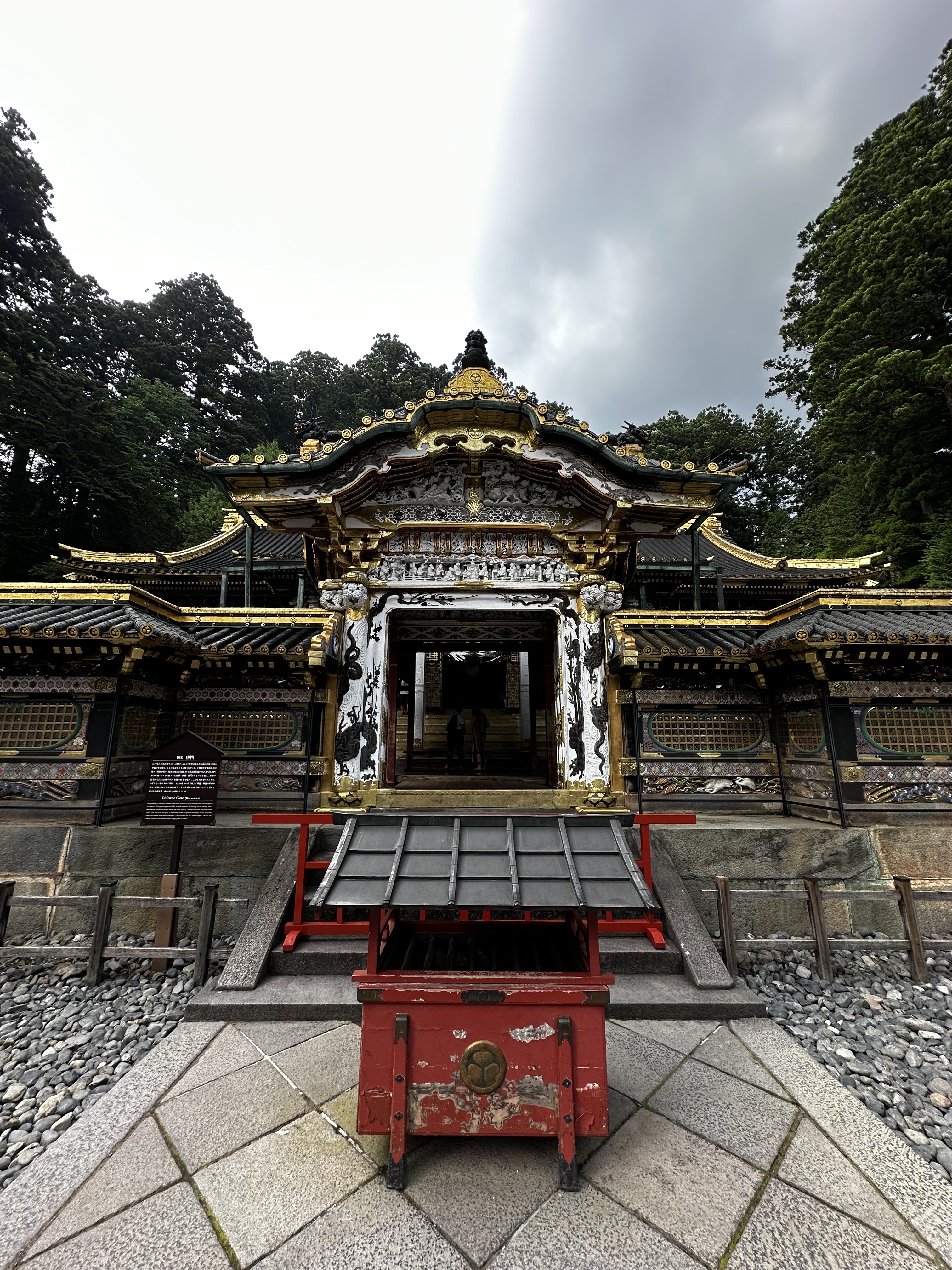
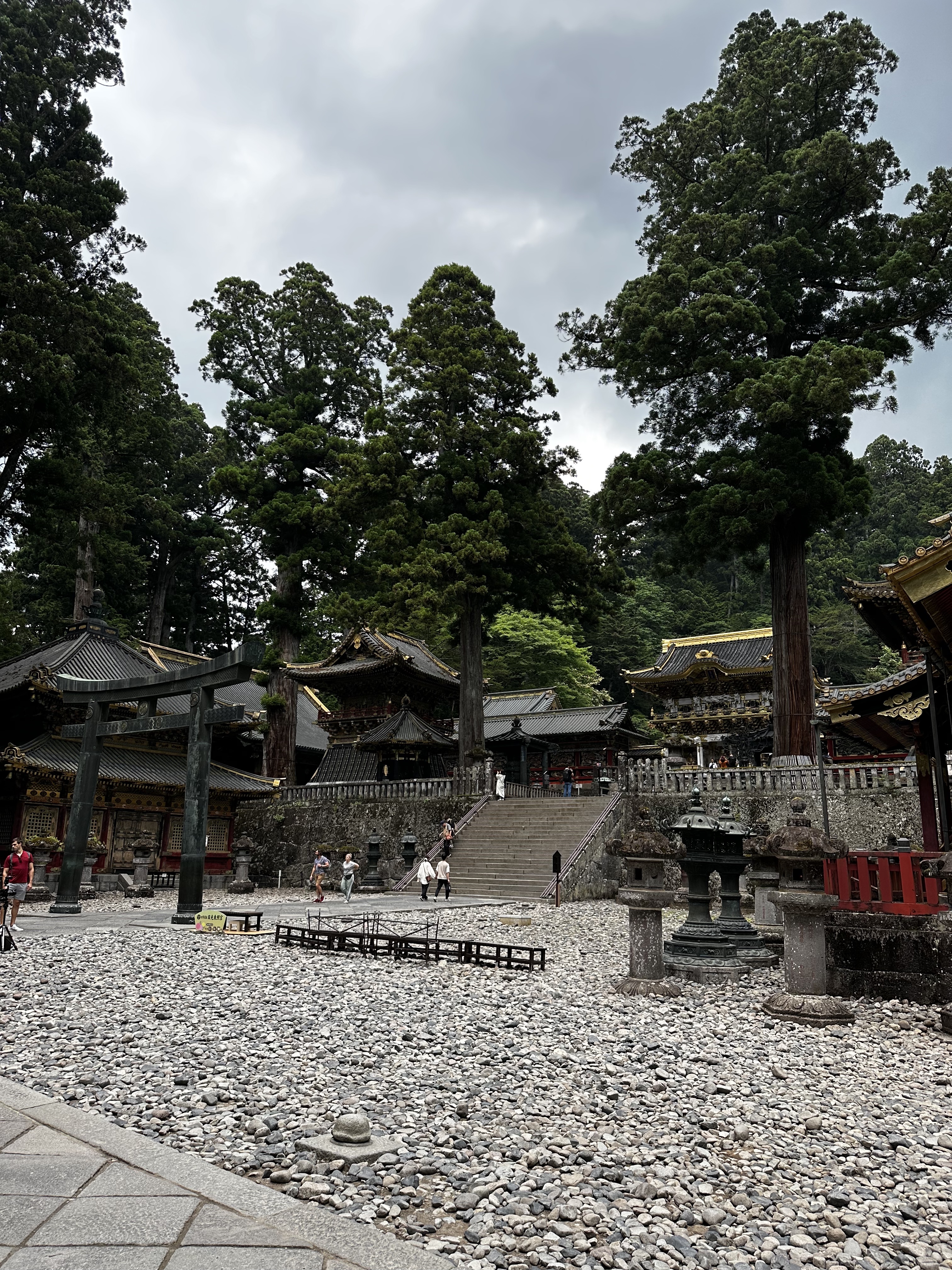
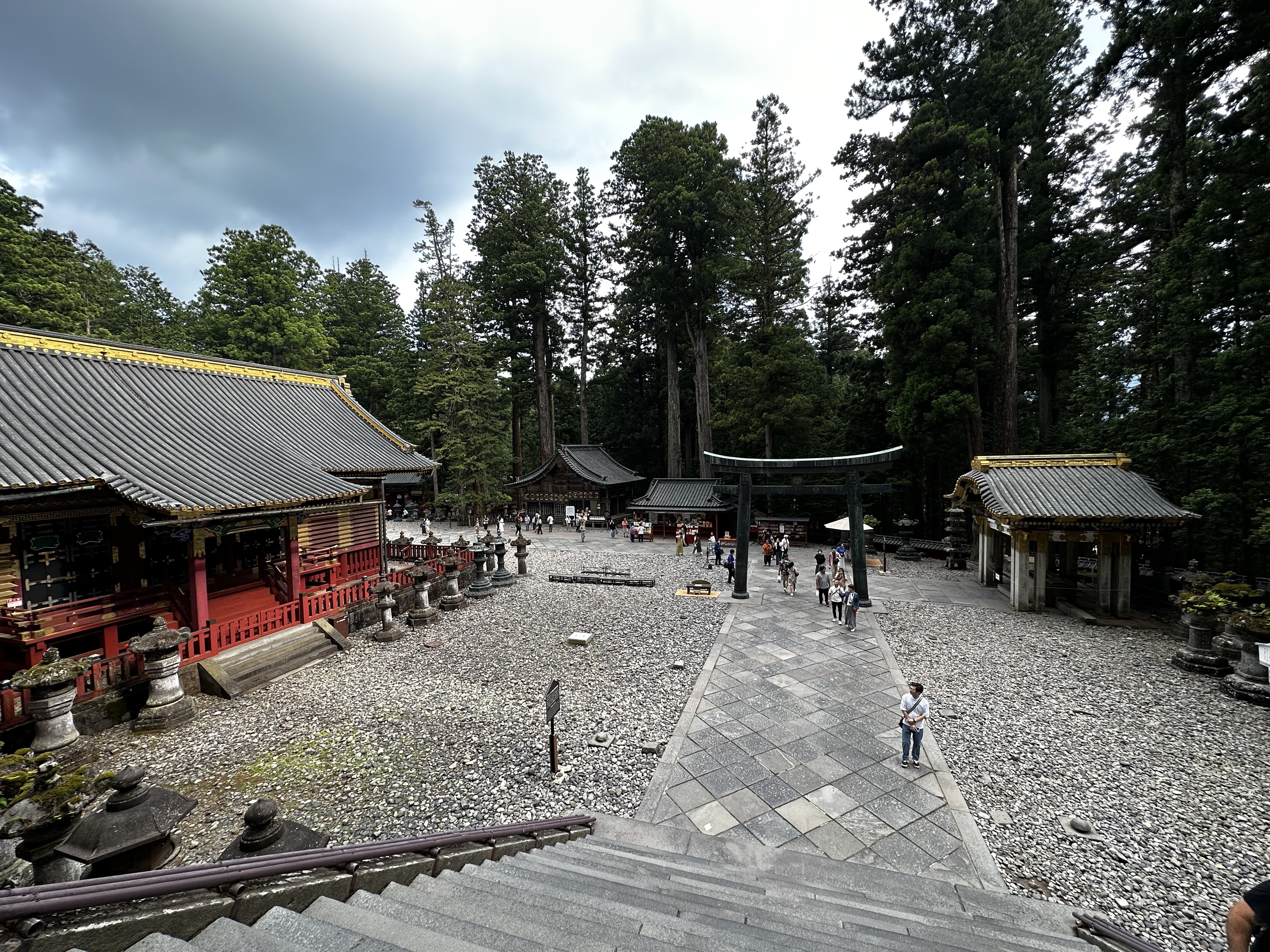
The forested slopes of the mountain were dotted with temples and their impressive designs were worth wandering through.  The Chinese influence on the Tokugawa was evident everywhere from the statuary to the architecture.  Notice the Confucian scholar- officials carved into the archway into Tokugawa Ieyasu’s tomb.

We walked our way up to the main temples, finding our way through the various torii gates and past and through numerous temples/shrines.  Many were inspired by the views, the spaces, and the atmosphere of the place.

Once we were done at the temple, we walked our way back into town and to tge train station, stopping along the way for ice cream and pudding (!!) Nikko Pudding Tei offers a pudding lover’s joy. The pudding is packed in small glass jars. If you’re leaving town, they send you with a tiny ice bag to keep your pudding fresh for your journey home…at least for a few hours! The pudding is delicious and comes in many varieties. Most of the group grabbed a treat and feasted prior to boarding the return ride to Asakusa.

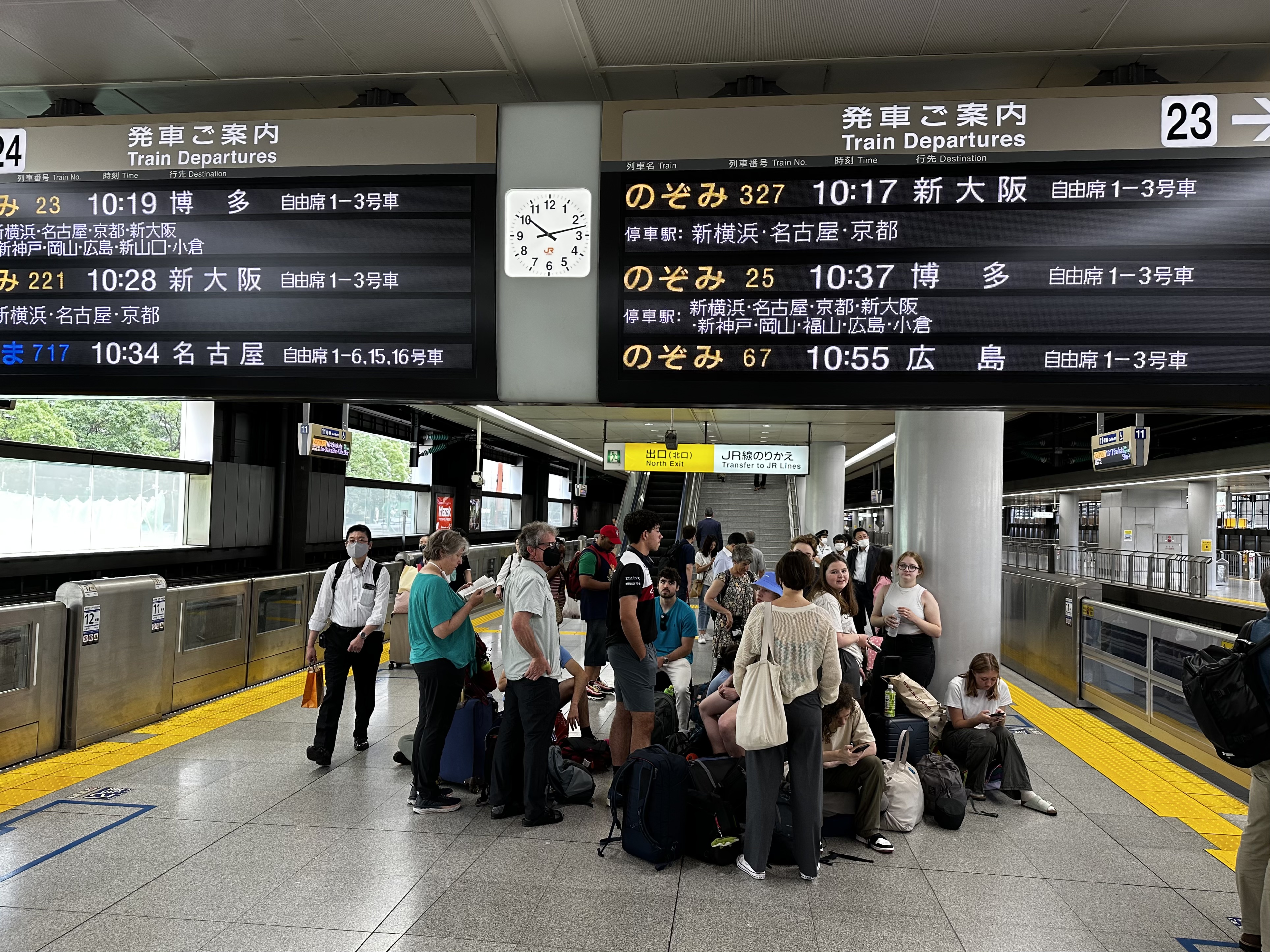
The day done we prepared for the trip to Kyoto and a bullet train ride.

Shibuya!

We were literally exhausted after yesterday’s adventures and needed downtime.  We punted the AM activities and spent the morning in an easy-going way, wandering around Asakusa again finding little out of the way parks, food, and people.  

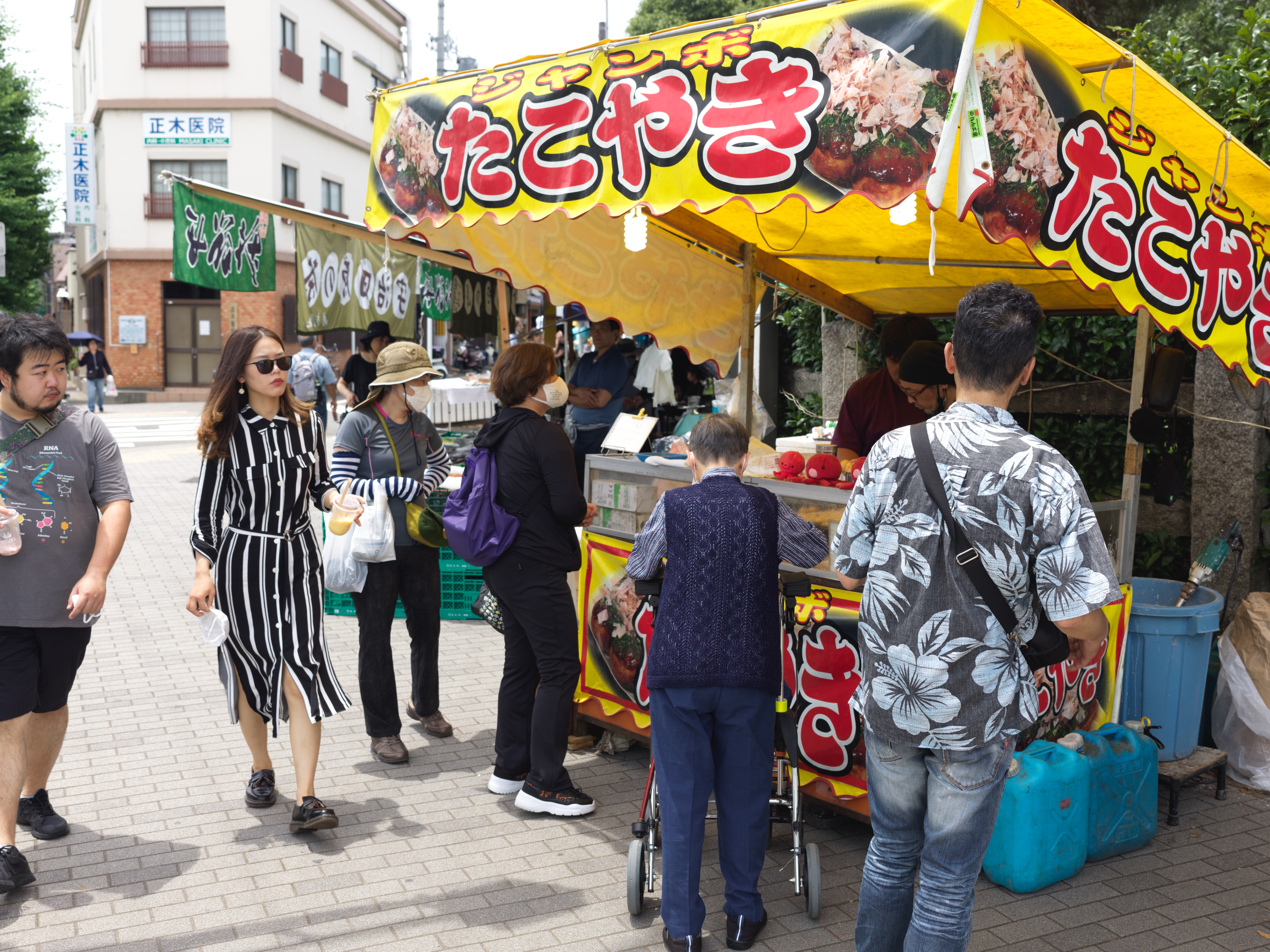
Very close to our residence is a park connected to the many parks along the Sumida river.  This one included a large shrine/temple complex with playgrounds, lawns and food trucks.  Many of us found our way here or to other local places that captured our attention and enthusiasm.  I can honestly say that even though we were in Asakusa for 6 days, we barely scratched the surface of this place.

I’d also like to advocate on this page for an alternative approach to seeing as much as you can in a short time. I’m a big believer in experiencing places by meeting and talking to people in that place.  Yes we saw some sights and going to the laundromat is as meaningful as seeing another temple .  I know that’s an unusual approach to travel, and simply being in a place and being a part of a place by staying in one location for a while and making connections is so nice.

By afternoon, we were ready to take on the whirlwind that is Harajuku, Shibuya, and the Shibuya Crosswalk. First, in Harajuku the crowds were at their height at 3:00PM and I deliberately put us in the middle of it all on Takeshita Street.  I wanted students to experience that moment in its fullest form…being among and in the crowd.

From there things got weird.  I had walked Oliver to the Nintendo World store.  ON our way back, I made the wrong decision to try and get on a train back to Harajuku that was too far to reach on time…then we had to change stations, walk to the JR lines, and grab the Yamanote line to Harajuku.  We got off the train expecting our group to be there only to find they were about ¼ mile away.  We walked, swiftly, to their location just in time to learn that the Meiji Shrine was closing…meaning we didn’t see that temple/shrine complex at all.  I started laughing hysterically at the comedy of it all as the group stared at my mirth.  Ah well!

Our group headed to the Hachiko sculpture and then I had them video the Shibuya crossing in video form…I’ll post those video today….,then we split up, searching for food.  A small group of us headed to the Starbuck Reserve Store, got lost, and then found themselves again.  Another group hung around the crosswalk, and another I led back to the Nintendo Store….it was an eventful evening in the maze of Shibuya and was part of the unique experience of seeing city life in all its glory.

Getting Ready to Scramble
Scramble in Progress
Shibuya

Shinjuku Gyoen

The vast amount of walking in the city is both surprising and terrifying.  To give you some perspective, in three days in Tokyo we walked almost thirty miles of city streets, parks, and subways.  The thing most people don’t know about Tokyo (those who’ve never visited I mean), is that you’re going to walk through subway stations all of the time.  I mean all of the time.  The sprawling Shibuya Station is under construction and finding one’s way through the maze of improvised hallways is so challenging.  Combine that with phrases like “it’s only about a mile” from students eager to find the Nintendo Store or the Starbucks Reserve or that cool small shop.  Those miles add up to a load of possibilities and very sore feet.

On this particular day, we made our way to Shinjuku Gyoen, a National park and garden that covers a wide swath of the area.  Once you’re through the gates, the garden stretches in many directions.  We chose to find the Japanese Garden and a few searched for an Anime spot made famous in a series. 

The ponds and shrines that dot the landscape also include lawns and placez for people to sunbathe or play games.  On this day, people were everywhere and we walked from site to site in this beautiful area.  If you’re in Tokyo and are looking for a respite from the din of the city, this is one place to be.

While many of us stayed in the garden for hours. Another group headed to see a nearby stadium.  That group walked for miles to find their location and quickly left that for another.  Our group has some very defined individuals who are on a mission.  We can accommodate those changes on the fly and it’s great to see people exploring the city and finding their place.

By the late afternoon, we were spent with the heat pushing 90 F degrees and the humidity close to 100%.  We found respite in eateries in the area, and many spent their time in Ginza.

Ginza is a shopping mecca filled with all of the specialty brands that people love to talk about.  Gucci, Balenciaga, and all of the “exclusive” brands that appear to be pretty much everywhere.

Some of us found our way to the Japanese specialty store like Muji, and others were content to look around at the expensive car dealerships, the crowds of people, and the crazy sense of human energy spread out over a very small physical space.

We made it back to the place we’re staying in Asakusa by about 11:00PM.  We walked over 10 miles and were pretty tired from all we had seen and heard.

Tomorrow is an adventure in Shibuya!  Get ready!

Kamakura: We Found the Mass of Humanity and it’s in Kamakura

The one thing you can count on in the spring and summer months in Japan, now that COVID is on the decline, are lots and lots of people in places that are tourist attractions. The truth is, many of these places are worth visiting even in the most crowded of situations and that was the case on this day in Kamakura.

Now, let’s be clear, even in highly traveled areas, you can find a respite and a wonderful bowl of ramen if you just walk a few paces in one direction or other. For example, when arrive in Kamakura you head away from the crowded Komachi-dori and instead make your way out of the station and down the hill to the west, you’ll locate shops and cafes uncrowded and pleasant. This was the case today as I led the group away from the thousands and into the quaint village that everyone wants to “discover.” Generally speaking, no discovery necessary here…just head downhill outside of Kamakura station and find your bliss!

Komachi-dori and the whole of the world of people

Our goals on this day were to visit temples and shrines as well as hang by the beach. Once off the train most looked for food. This search was fruitful and many found restaurants of exceptional quality (Not an exaggeration). I’ll post more information on those places as I gather all of the details.
A world away is just one block away!

One particular spot grabbed our attention and with just a few stools and a small bar, we wandered into this ramen shop filled with some questions and got some answers. First thing’s first: for many people just visiting Japan for the fist time from the US or the West generally, some folks have an overwhelming urge not to wander into small restaurants or shops and engage with the staff. Especially if you don’t know anything about the language, it’s a bit intimidating to just try to communicate. Overcoming that fear and meeting shop owners regardless of your or their language skill is worth the effort and your discomfort.

Well…a Ramen Shop…

In this case on this day, my Japanese failed me as I tried to understand and be understood. No matter, the kind chef and his partner guided my daughter and I through the ordering, thankfully supplying us with a tiny picture book of choices. These choices LOOKED THE SAME…and I knew enough to know the difference between broths (which was the main distinction in this ramen shop). We ordered and were served a wonderful bowl of ramen….then a few minutes later, more of our group wandered in, seeing me sitting there, and joined in the revelry. In just a couple of minuted, these bodies filled the space and made some hilarious mistakes like ordering ramen with no broth and looking strongly at the order….I helped correct the problem and soon we were all eating great food.

Of course, it didn’t stop there. Other groups found a French cafe and the meal was outstanding according to those folks. They commented on the amazing quality of the food, the conversation in French with the staff, and how amazing it was to find this tiny place in this small town (more specific information to follow).

A small cafe? Check.

Once we had filled our bellies, we walked the 2000 meters or so to Kotoku-in, the home of the Daibatsu or bronze buddha. When you walk into the courtyard of the entry area, you have no idea what you’re going to see in just a few seconds; there’s no real view of the Buddha from this angle and its size is hidden by the trees. Grabbing a ticket at the ticket counter (300 yen), you walk past the guard station and slightly to the right. The path opens a bit, and just around the corner the Buddha comes into view. It just feels massive. It’s not that it is so tall that you sit in awe of the spectacle like seeing a cathedral dripping with stained glass and enormous columns; here the buddha is more subtle and present. You have this sense of a place in which, about 1000 years ago, a tsunami swept the building away, leaving the buddha and its pedestal intact. Imagine THAT scene after this terrible event and finding the remains of the temple destroyed onto to see this bronze sculpture sitting firmly on the ground. A powerful message if there ever was one.

Not too crowded…and very impressive

From there our group fractured: the beach crew and the temple group headed in slightly different directions. I led the beach group and Sutherland, our intrepid chaperone, guided the rest to other shrines and temples (more to come on this adventure).

This buddha is definitely photogenic

Our beach trip was, unfortunately, not a worthy followup to the Daibatsu. Once we made it to the beach, we found the shore strewn with broken glass bottles, bags of trash, partially opened, and many kinds of junk including wood, hay, broken toys, and plastic bags. We were disappointed, especially considering that we hoped to just put our feet into the Pacific. Just north of us were surfers in the waves, and there would be no sitting on this shore, or, indeed, walking barefooted along the edge of the water. This revel was really surprising knowing the nature of Japan and the heightened sense of care in outdoor spaces. I cannot account for what we saw. It was great to walk down to the ocean and imagine the expanse of the Pacific and we left quickly, wandering back to Kamakura Station.

If you’re wondering how long to stay in this small town, I would argue for a full day and a night. There is so much to see and if your walking legs are happy, just walk. Walk the Daibatsu trail; walk to the temples in the forest, walk to every place you can. Avoid the busses, if you can, and stop into a coffee shop (there are many), and sit and be present. This town begs for you to linger…a bit longer and bit more…

Thanks for reading.

Asakusa

Tokyo offers so many options for entertainment and experiences that range from finding that perfect ramen spot or toy capsule stores to cultural and historical places that record and represent Japanese history and culture. As someone who has traveled to Tokyo many times, I always come back to Asakusa and the crowds of humanity that populate this wonderful place. So many travelogues and testimonies online suggest that travelers or visitors avoid these places with their mass of humanity squeezed into a relatively small place. I’m here to say that it is in those moments of what appear to be pandemonium you’ll find a kind of piece of shared experience and joy in the congestion of people.

Sure it would be nice to take that glamor shot of Senso-ji without the crowds and what would be the purpose? My suggestion to you, as you read these pages, is to see that the whole point of these places is to gather people together in shared awareness of the spaces around you. To rejoice, in a way, in the ways in which we really do want to be together.

So on this particular Thursday, we wandered all over the streets of Asakusa, sampling the wares, walking the steps into the temple, and listening the recitation of the Heart Sutra in the hall of Senso-ji. Our day was not without some hilarious moments and missed communications AND we reveled in the place and our time in it.

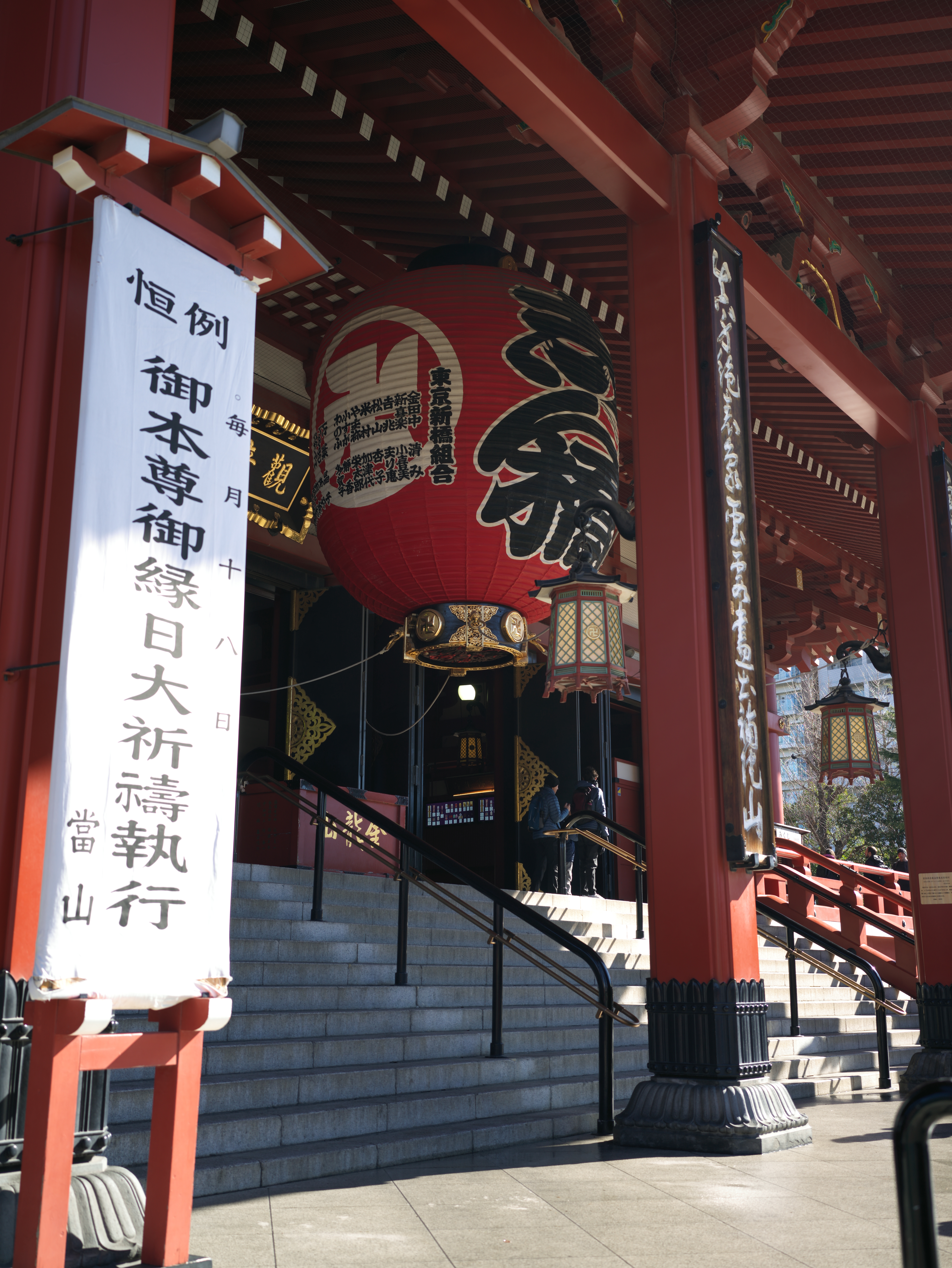
We started the day at a Starbucks (because, well, Starbucks! Duh.) and gathered, briefly, for instructions. As the hapeless guide, I offered some words of history and culture, and then the group went into the corners of the temple complex. Once we made it to the temple, the sounds of the Heart Sutra, sung out by monks in the shrine room, echoed across the open areas and the music wafted on the tails of smoke sent up by the huge incense caldron in the middle of the grounds. It was a wondrous experience seeing it all.

Your intrepid chaperones, Tom and Sutherland, were approached by a group of Japanese students asking questions about where we were from and what we were doing here. Their giddy laughter and bright faces are such a joy to behold and we did the best to respond meaningfully. Their shock at hearing we were teachers was priceless.

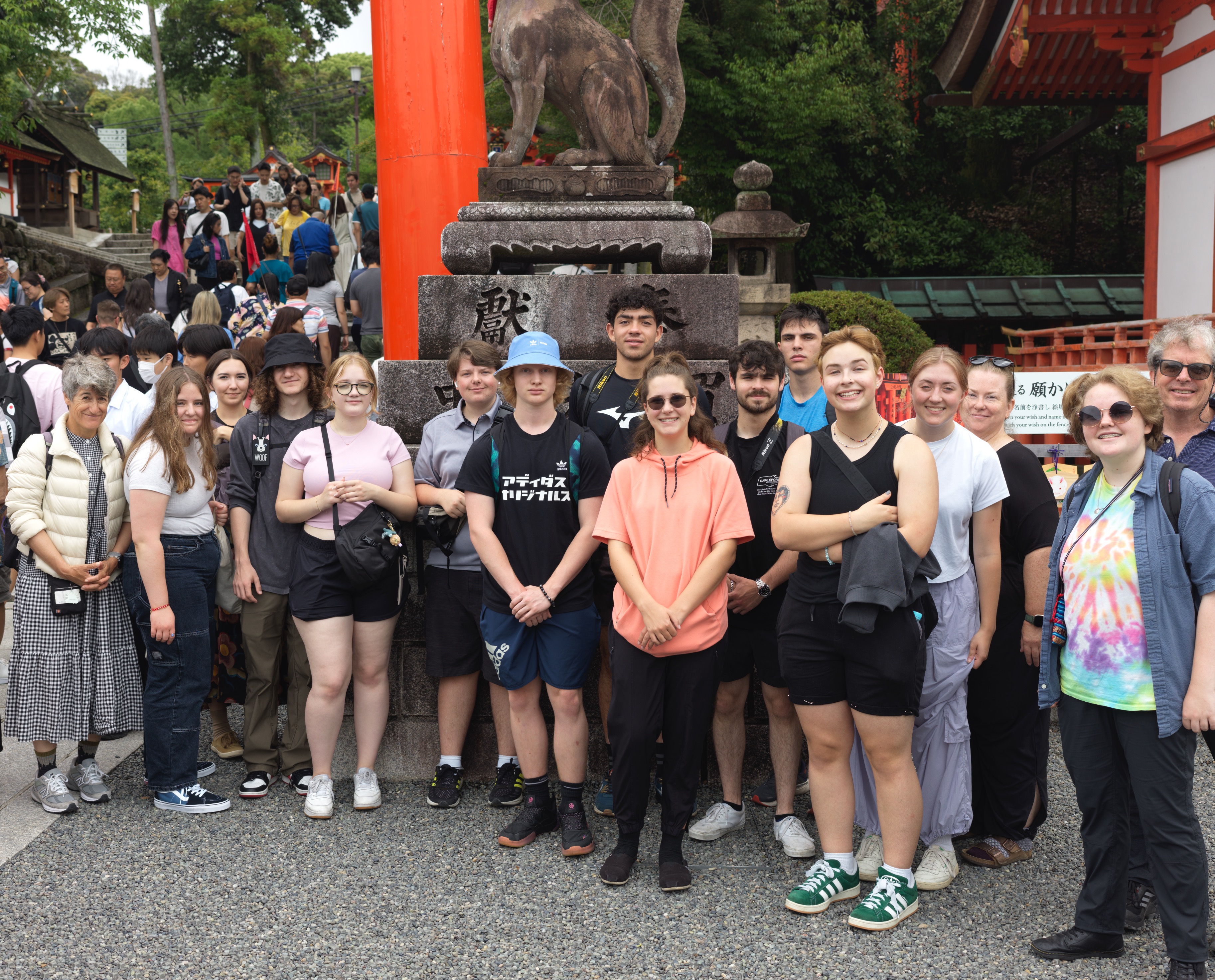
I sent the students on a hunt for the elusive Inari/Kitsune that dwell around the grounds of the temple. These statues of foxes represent so many things in traditional Shinto faith, and finding these creatures is a bit of a chore. Students spread across the temple grounds, searching. They came back with pictures of lions and that they scoured the area was my real goal in the whole thing; that they explore the area with eyes open.

Senso-ji

As we made our way through Senso-ji, we split into smaller groups, most following their fancy as it led them to places like a knife shop, or a toy store, or a place that served Takoyaki, a small round ball of wheat and octopus, cooked and eaten with a special sauce.

My last thought about this day was our near sprint to the Skytree Tower to meet our 7:00PM reservation. We ate together in Asakusa at Sushi-do, a conveyor belt sushi place. These ubiquitous places are a fun experience and the prices were cheap. The thing was, we took a bit too long to eat and talk, leaving us a brief 30 minutes to get about two miles to our appointment. To say we MOVED is an understatement. Imagine racing through a rainy city, crossing city streets and weaving through traffic. The last staircase of about 75 steps made it more brutal AND we made it in the nick of time. Up we went into the clouds. No real views of Tokyo, but a silly moment nonetheless.

All in all, your first full day in Japan was absolutely wonderful!

We’ll post photos of students and the area in a future post with just images. Here are a few captured shots over the course of the day. You can find more information at our Instagram #spsinjapan.

The Long Flight to Tokyo

I sometimes wonder at the decisions I make for travel across the globe. On this day we gathered at the Sunport at 4:45AM Mountain time…for the love of everything holy WHY did I start our day at 4:45AM? Yes, I know we going a long way by plane and maybe just a few more hours of sleep is worth the higher flight costs? OK…you get the idea.

So, we headed to LAX and made our way to United and our flights to Tokyo. I just want to say one thing about United Airlines; they’ve really improved their service and I appreciated the high level of communication with travelers getting ready to board places. The terminal maps and guides are handy, and I found their bag drop for flights in LAX efficient and easy!

As you probably know, the flight to Tokyo is usually around 11:30 hours and the best way to deal with such a long flight is to just make it through. Dividing up your time into smaller chunks helps by watching a movie, reading, writing, sleeping. I’m a big believer in chunking your time!

Even with all of the possible techniques you might use to get through such a long flight, it’s really just a long flight….long.

There’s really no way around it; we were tied when we arrived in Tokyo – Haneda. Our arrival was made quicker by using the Visit Japan website and filling out all customs documents prior to arrival. Flashing a QR code in a Kiosk is much simpler than filling out the paperwork from past trips. The customs process was easy made more efficient by the many staff directing passengers through the process. Way to go Japan!

On this trip, we use public transportation for travel throughout Japan. Once we made it through immigration in Terminal 3 Haneda, we walked a few feet to the Keikyu line at the subway station in the airport. You can purchase tickets at vending machines (just THREE for this crowd of humanity) or, in our case, I bought cards for many travelers at the Keikyu train office located next to the vending machines.

A word on subway and train travel: on iPhones and Android phones you can purchase IC cards – the cards used for train travel in Japan – and add them to the Wallet app on the phone. The CATCH is that you have to purchase with a Mastercard credit card. I’ve read online where people have been able to purchase using a Visa attached credit card on their phones AND this situation was NOT the case for our group. SO, most of us have physical PASMO cards. THE NICE thing is that I was able to purchase these cards in bulk at the Keikyu office right there…I paid one price for preloaded IC cards! Sweet! When things work easily it’s so wonderful! Of course the bonus here was the tourist issued specialty card – Hello Kitty!

With cards in hand, we boarded a Keikyu line that took us all the way to our station at Honjo-Azumabashi. The train ride during this early rush hour was crowded from the start with few of us finding a seat for the 40 minute ride. Still, it’s really nice to travel across Tokyo for only 500 Yen.

The Crowds on the Subway
Backpacked Travelers!

We are staying at the Rakuten STAY “hotel” in Asakusa. The rooms are clean and small, and the check in procedure would best be described at torturous. This spot is a hotel in name only: there are no staff on the premises and all check in is through a tablet in the lobby. You make all reservations online and once paid, you receive a code to enter the place. Think of the setup as an AirBNB or VRBO. At the three tablets in the location, you enter all of your information and then speak with a video consultant once everything is completed. The trick is that I entered all of this information in the web form provided by the hotel prior to arrival…then had to reenter the information. Honestly, it wasn’t terrible AND we had to reenter all of the information. It took a solid 45 minutes to check in. Once in, the room is neat, clean, and small. I booked eleven rooms for 18 people and am glad I did…Everyone had a space that they chose and THAT is the best thing about this trip so far.

The hotel is located in the heart of Asakusa (just off the main road – Asakusa-bashi- and a very short walk to Senso-ji and the spots in this part of Tokyo. I’ve also liked Asakusa for its vibe and this stay is no different. Once settled in, we walked to 7-11 and then to Ramen and Sushi. Our walk takes us over the Sumieda River and beautiful views of the city at night.

The Sumieda at night…

Our day tomorrow promises to be fun with a full day in Asakusa and the Skytree Tower located just outside our rooms. More information to follow tonight!

The Surreal nighttime view of Skytree…

Kyoto: The Cultural Center of Japan

Getting off the Shinkansen in Kyoto is a magical experience. Walking from the platform into the main hall of the station is an awe-inspiring view of lights, sounds, escalators rising into the heights of the building, and the light shining from the windows above casting interesting and unusual shadows across the floors, walls, and ceilings of this edifice to transportation. The space holds many surprises from small shops and stores to restaurants catering to every palate you can imagine.

The interior space of the train station defies description and with all great spaces in architecture, requires the visitor to walk the floors of the building to gain that sense of wonder. Maybe the hardest part of coming to Kyoto Station is finding a place to eat. The choices are many and one can find, at each level of the building, something new to savor.

My favorite floor is floor ten. The Ramen street is filled with a wide variety of eateries and places to relax, looking out over the Kyoto skyline. Service in each of these establishments is quick and the food hearty. I won’t bore you with specific details; my advice to the wander the halls to land on a place that suits your fancy.

Once outside of the Station, you’ll find you’re on the southern side of the city and most of where you want to go is north, west, and east of your location.

The city is laid out in a grid pattern, a holdover from the original layout designed Roughly following the ideas brought from China of the capital at Chang’an, Kyoto started as a small place with the emperor in the seat of authority. This grid pattern was extended over the years and you can still see the structure of the original city in the modern street and avenue pattern.

Our trip to the city will include a visit to a variety of temples and shrines, to stores and shopping malls, to museums and walks along the rivers, canals, and outdoor spaces. Kyoto is known as a walking city and we’ll find our way in this remarkable place.

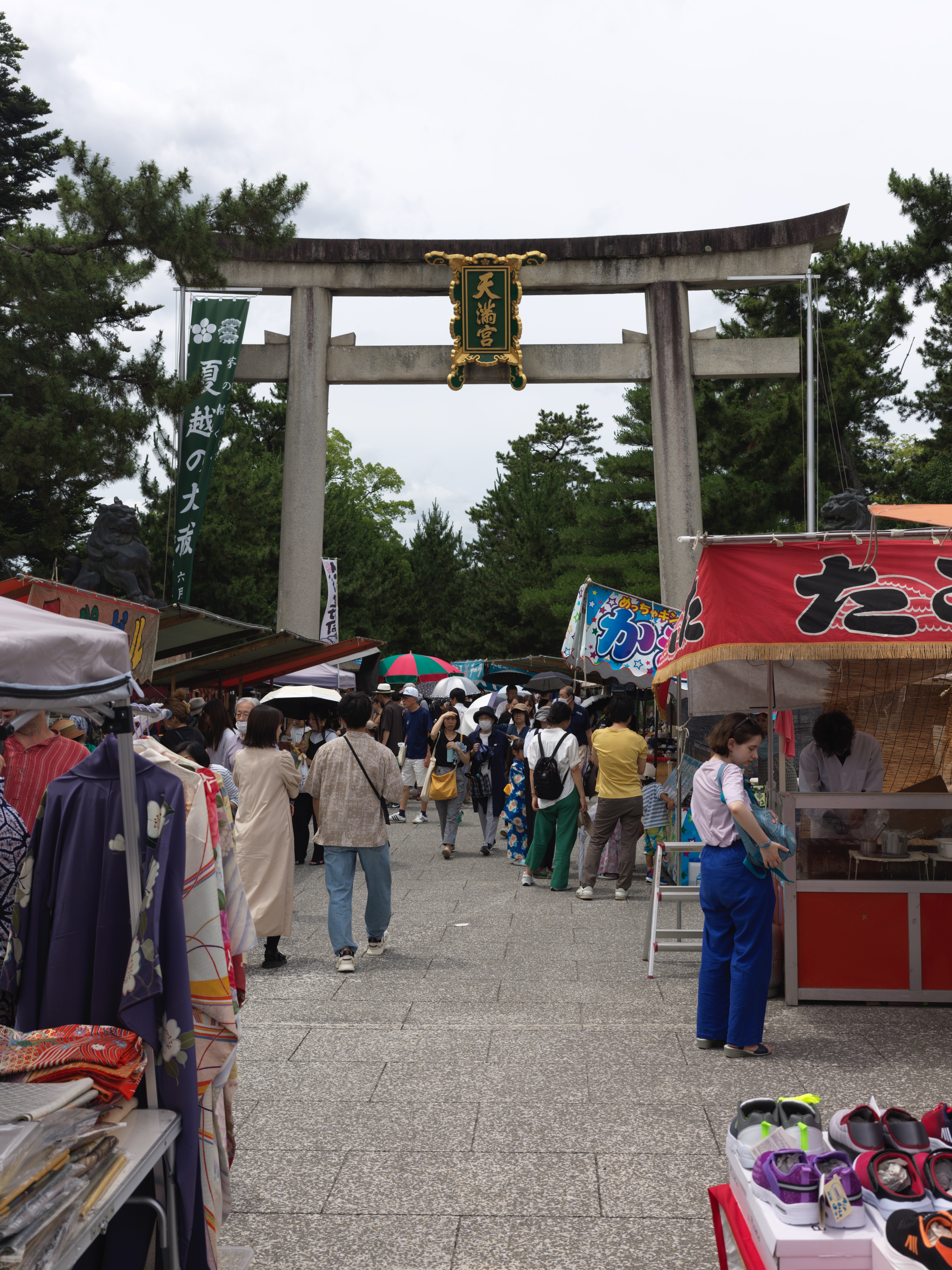
First and foremost, we’ll find our houses, get settled, and then make our plans for the coming days. On the agenda, we’ll walk the Path of Philosophy and locate Ginkaku-ji. We’ll head to Kinkaku-ji and Ryoan-ji, popular tourist locations. On the less obvious side of the city, we’ll check out a festival and flea market at Tenmagu and eventually make our way to Fushimi Inari.

Through it all, you’ll get the sense of place, the importance of this city in the history of Japan and see cultural and historical sites that will help you understand a little about Japan.

The Chaos and Thrill of the City: Tokyo Sights and Sounds

Can you navigate Tokyo by subway and train?  Let’s find out today and you take charge of the group, leading us into the city on this beautiful Saturday.  It will be crowded and busy in every location and it’s worth the time and effort as we find our way to Shinjuku Gyoen, a city park and gardens.  

The area that is Shinjuku Gardens was originally the home to Naito family gifted by the Shogun in the 18th century.  Lord Naito was the daimyo of the community of Tsuruga.  The gardens were, eventually, supported by the government under the Meiji period and by 1906 the structure and design of the gardens was completed.  Destroyed during air raids in World War II, the gardens were rebuilt and created as a National Park in 1949.

The garden melds French, English, and Japanese styles into about 144 acres.  The historical and cultural importance of the garden is displayed in buildings constructed after WWII and harken back to the Edo period architectural design.

After our time in the park, we’ll grab lunch and then head over to Teamlab, an experiential art exhibition.  From there we’ll finish our day at Odaiba, an island in the Tokyo harbor.  You can find out the origins of Anime, wander the various shops and museums, and sit along the waterfront as the sun goes down and the bridge across the harbor lights up at night!

Tokyo skyline from Odaiba.

A Day in and around Nikko

Leaving Asakusa Station at 9:00AM, we’ll make our way north to Nikko Toshugo Shrine and Temple including the resting place of Tokugawa Ieyasu, the man who unified Japan in the late 16th century.

The region around the temple complex was founded as a shrine in about the mid-700s. Founded by Shodo Shonin, a monk from Moka City, he worshipped the rivers and mountains in the area and dedicated the original shrine to Kannon, the Goddess of Mercy. This version of Buddhism came from China and was referred to as “Pure-Land” Buddhism. The current temple, Nikko-zan Rinno-ji, has elements of the original temple built in the 700s.

As we exit the train station in Nikko, we’ll head to the ticket office, purchase full passes for the area, and then walk the grounds of the Park. Keep in mind that today, we’ll be walking a lot, up and down paved pathways and through the giant cedars into the heart of the mountain.

As we walk along the trails, I’ll talk about the history of these places and the cultural significance of the complex and the deep connections between Japanese culture and nature. We’ll touch on ideas from both Shinto and Buddhist thought, and I’ll help you see the differences between Temple and Shrines.

As we walk through the park, you will see many small shrines and temples constructed by monks and various Buddhist sects. The area became famous mainly because of the choice of Tokugawa Ieyasu to make this area his official burial site. After unifying the country under the rule of the Shoguns in Edo, the Tokugawa decided on Nikko to be their resting place.

Chosen because it was considered true north from Edo Castle, Tokugawa Ieyasu believed that he might become a semi-divine kami that inhabited the area near the North star. Ultimately, the goal for the Tokugawa was to establish lasting peace in Japan and the founding of the temple complex by the family was their attempt at ensuring such a peaceful society.

As we wander we’ll see many sites AND we’ll focus on Toshogo Shrine, Rinno-ji Temple, and Futarasan Jinja Shrine. We’ll also walk through the Shoyo-en Garden and the Toshugo Museum.

Once we have a little lunch, we’ll walk the Daiya River toward the waterfalls that course through this small canyon. Once we’ve had our fill of waterfalls and nature, we’ll wander back to Nikko town to the train station and head back to Tokyo!

Asakusa and the resonance of history

If you could drop into Tokyo in the mid-17th century and walk from the city defined by the Tokugawa family and its administration into the area called Asakusa, you’d find an entertainment area dotted with a variety of restaurants, theaters, and everything in between. The center of the village was Senso-ji Temple. The legend of the temple begins long ago when two brothers found a Buddha in the Sumida river while fishing. The statue was brought back to the small community and it was enshrined in the house of a local leader. His house was turned into a shrine and that was, as the story goes, history.

The Senso-ji temple was expanded by Tokugawa Ieyasu on his arrival in Edo (later renamed Tokyo). The temple complex included the statue and remained intact through a fire in the 18th century. It was World War II that brought an end to the temple complex as U.S. bombs destroyed the community and the temple.

In 1958, reconstruction began and the current temple and shops that are housed within the grounds are a center of both local and tourist visits. While the entertainment district this ground used to be has changed, the area holds a special place in the Tokyo megapolis.

Our visit to Asakusa will include Senso-ji, the nearby gardens and a search for the elusive Inari scattered around the area! During the day we will visit the markets in Senso-ji, spend time in the shrine and the nearby temple. You’ll learn the difference between a temple and a shrine in Japan and then explore the area.

As we wander Asakusa we’ll head toward the Sumida River, walk the banks, and I’ll tell the story of the brothers who found the statue in the river and bit about it’s history. From there we’ll walk to the Tokyo Skytree Tower to get a view of the Kanto plain and Tokyo. If the weather is good, we’ll see as far west as Mount Oyama..
The Skytree Tower is the tallest structure in Japan and was completed in 2010 and opened to the public in 2012. Built as a broadcasting tower for NHK news corporation, the tower is a great place to get your bearings in Tokyo as it is visible across the city.

As we head back toward Asakusa we’ll find our way into the city and locate an inexpensive restaurant, my personal favorite, Magura Bito

As night descends, we’ll finish our day in Asakusa with a visit to Big Echo, the Karaoke spot. Be prepared to sing to your favorite song!