The Long Road Home

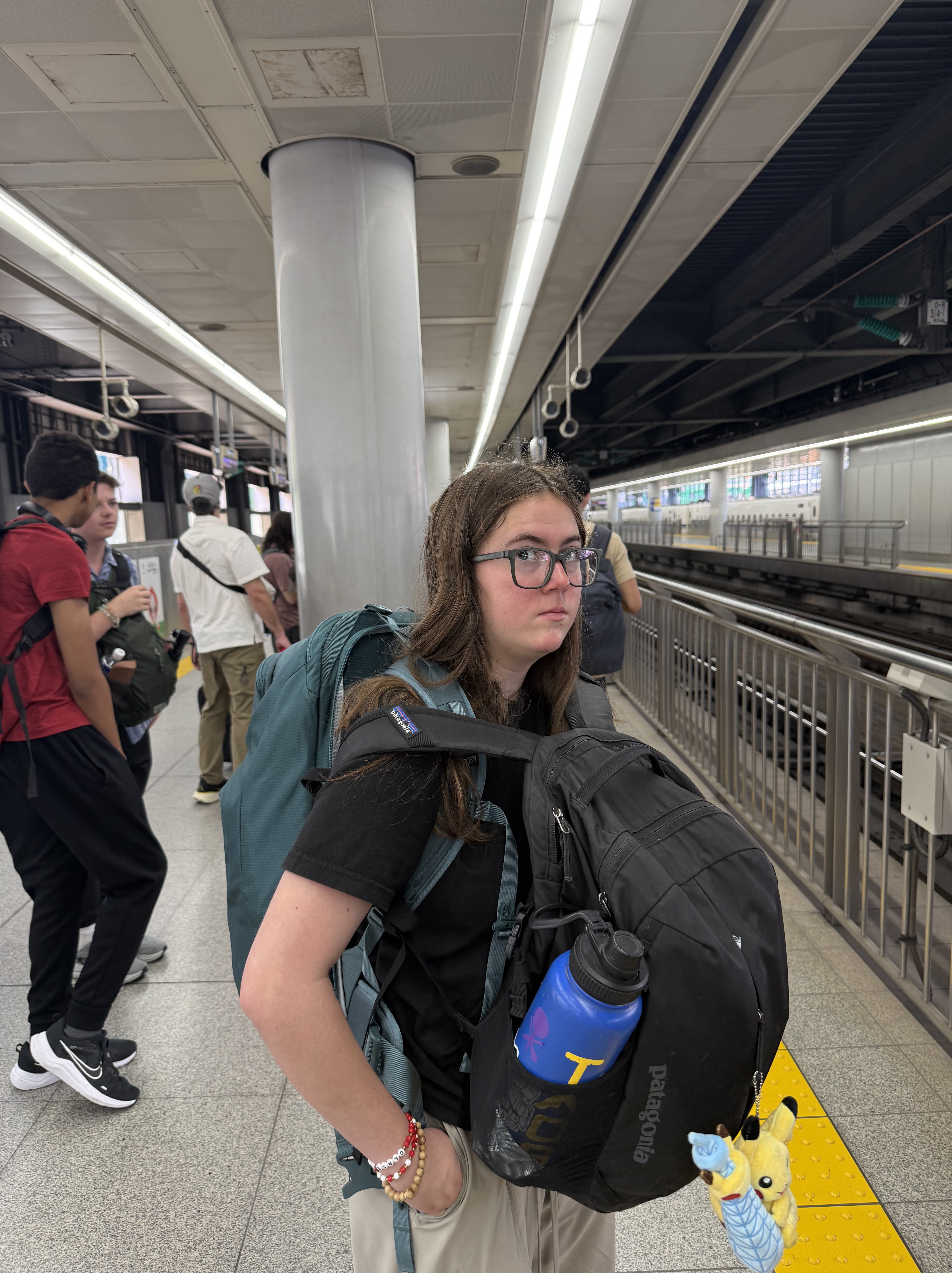
Traveling back to the U.S. after weeks in Asia is a physical challenge. The long flights, the cramped seating, the limited physical space, all of this adds up to relatively minor struggles on the way home.

For our group, we woke on the last day with a casual morning planning for a quick 15 minute ride to the airport. Our flight from Paro heads to Bangkok via a stop in Kolkata, and the four-hour flight including the stop in Kolkata is plesant enough given what we faced on the following day.

Flying Bhutan Airlines is a gentle experience in terms of the ease of boarding, the kindness of the staff, and the attentiveness to passenger needs. You get plenty of food and drinks on these flights, and it gives you time to process the fact that you’re leaving Bhutan for another world.

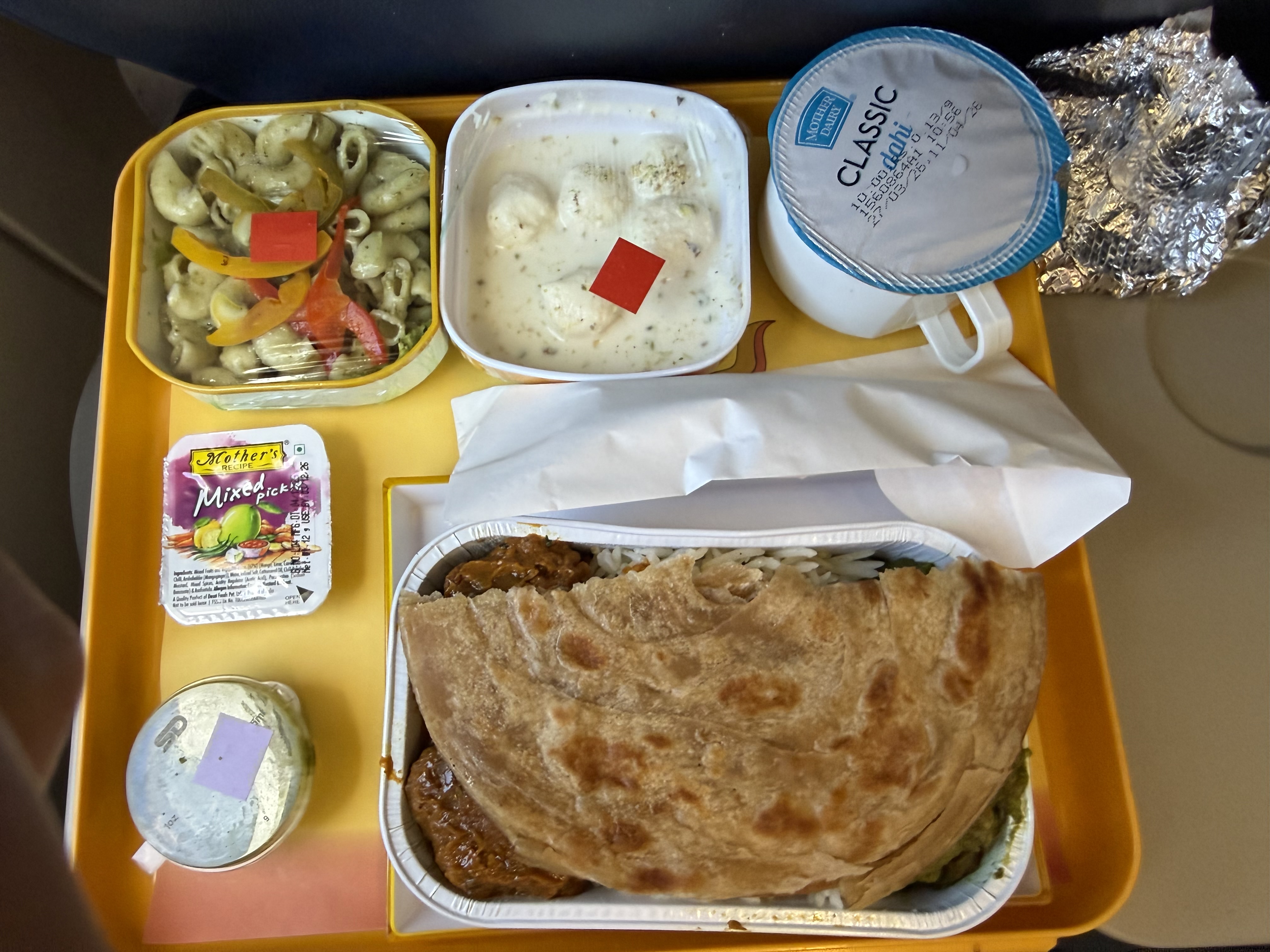
One of the two meals served on this flight from Paro to Bangkok

If you’re traveling from Bhutan TO the U.S., it’s typically a day layover in Bangkok and then a flight the following day to the U.S. When we landed in Bangkok, about 4:00PM local time, we grabbed our schedule van to the The Great Residence Hotel and planned a visit to a market that evening.

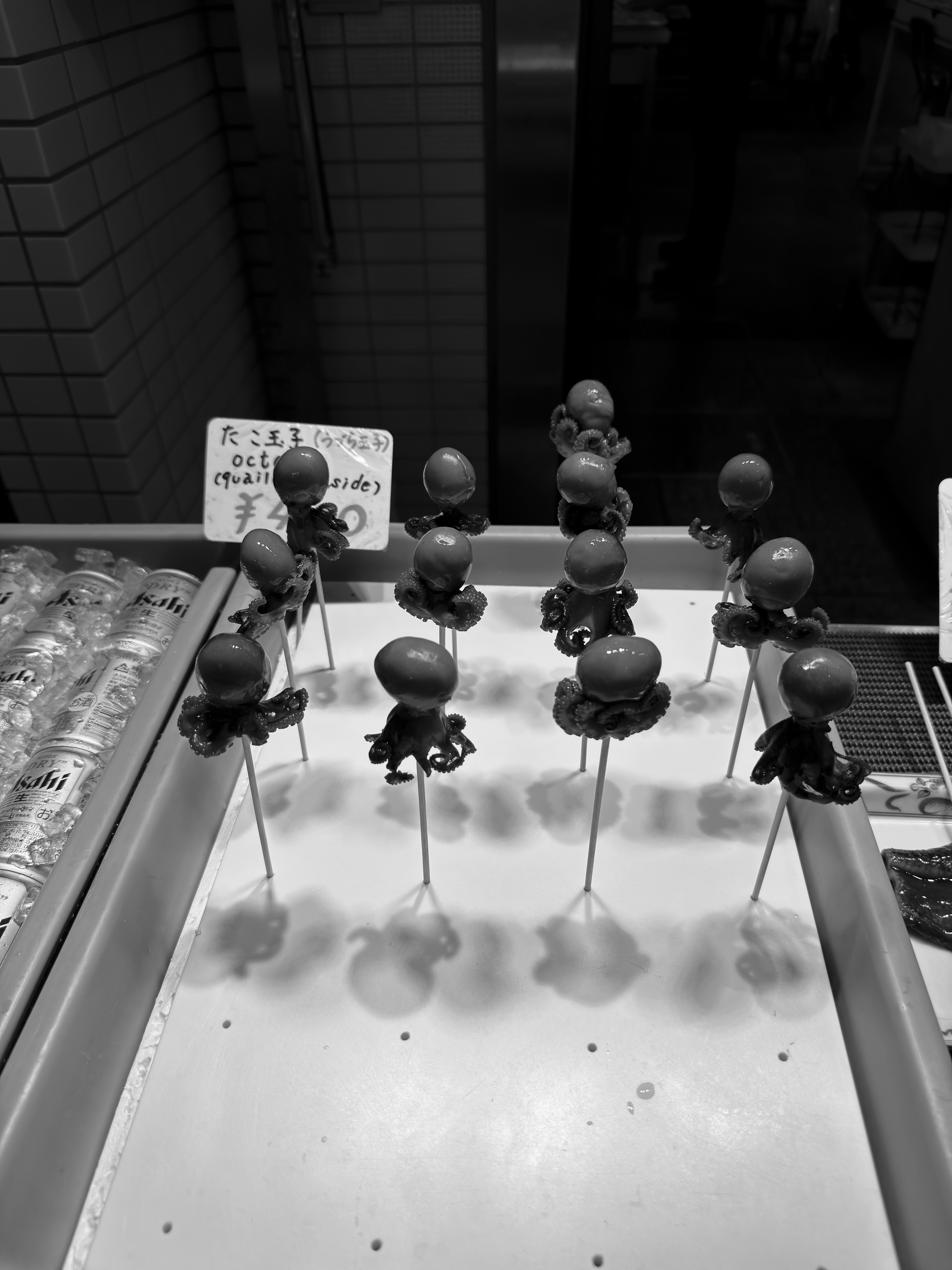
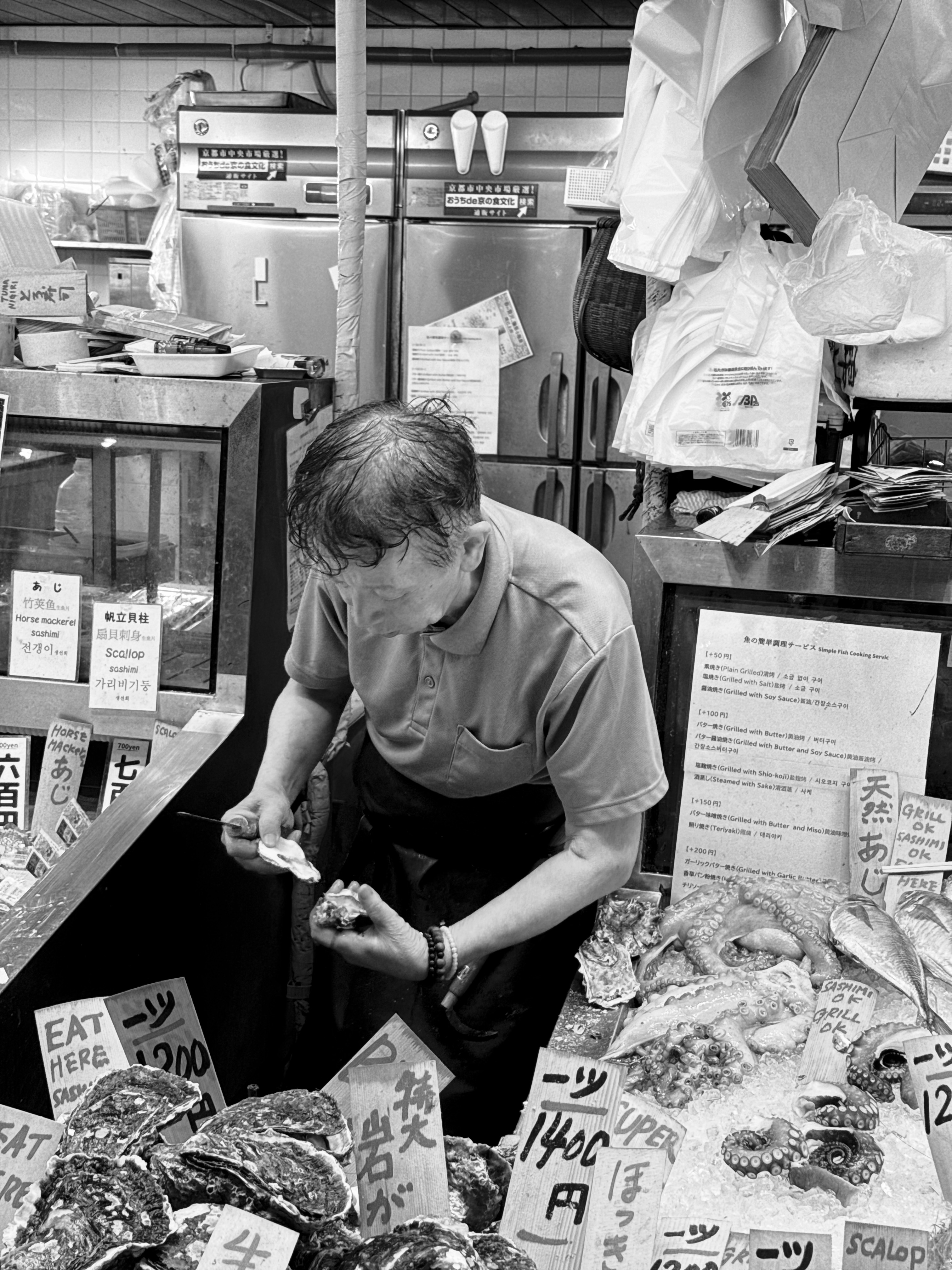
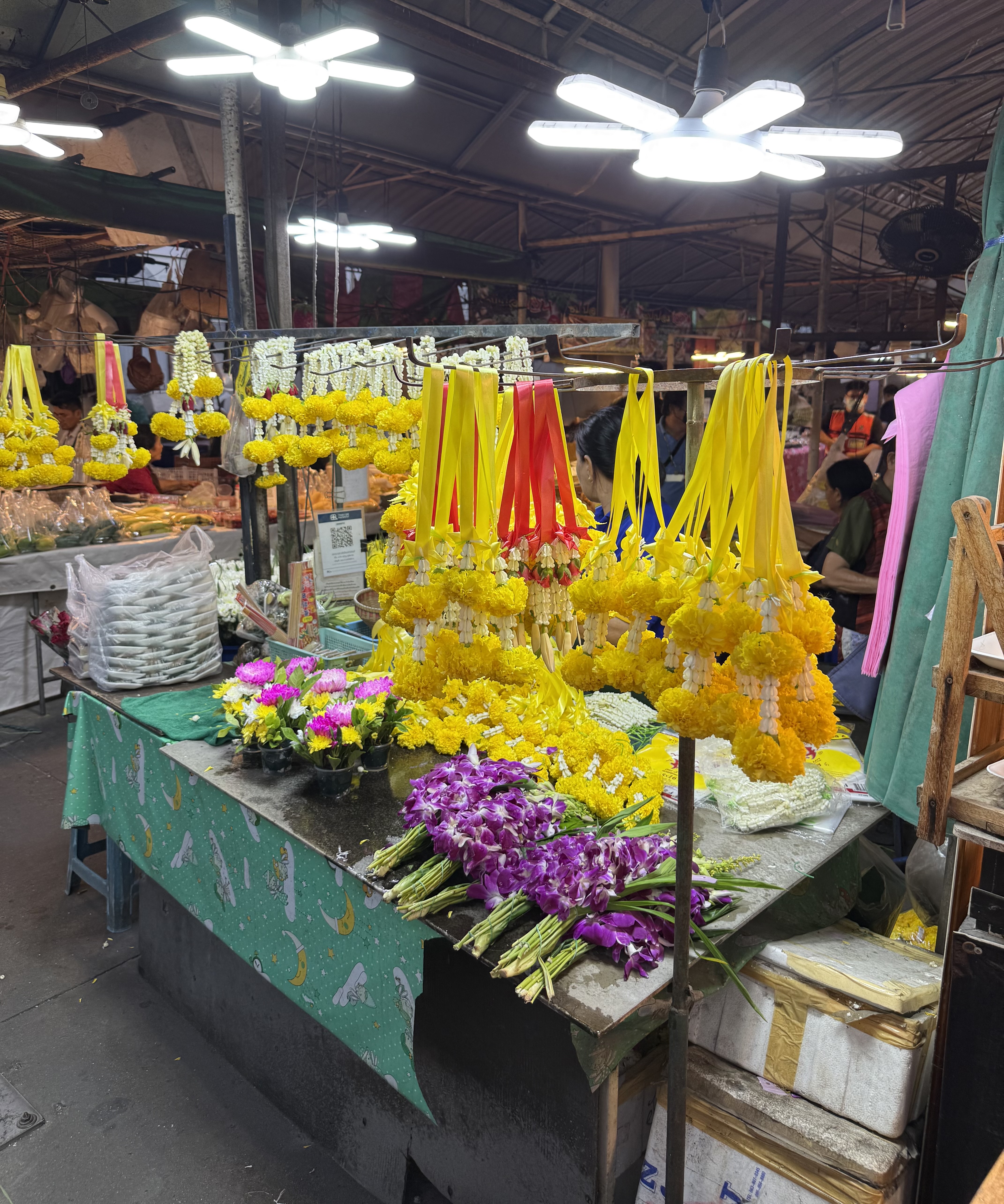
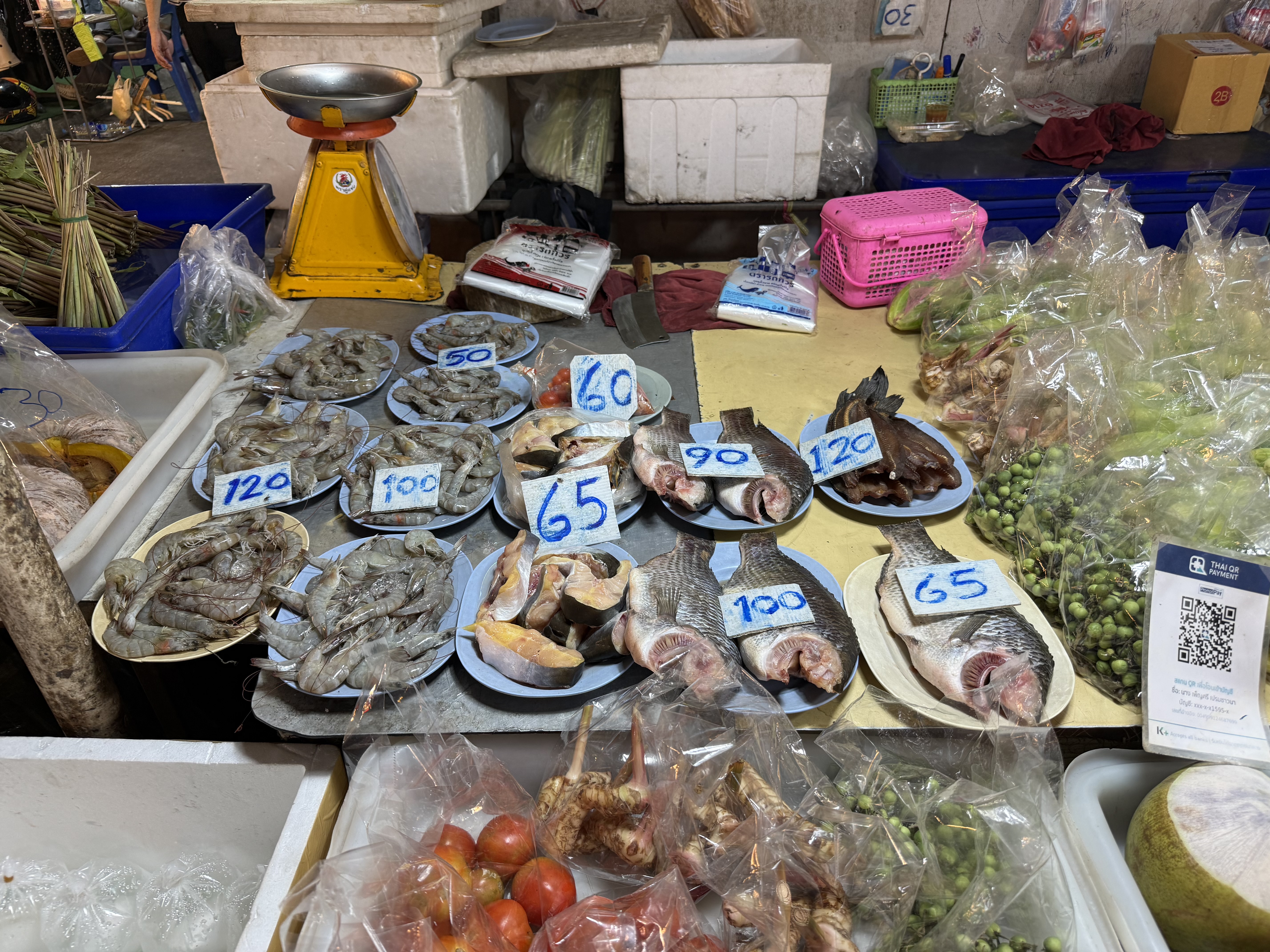
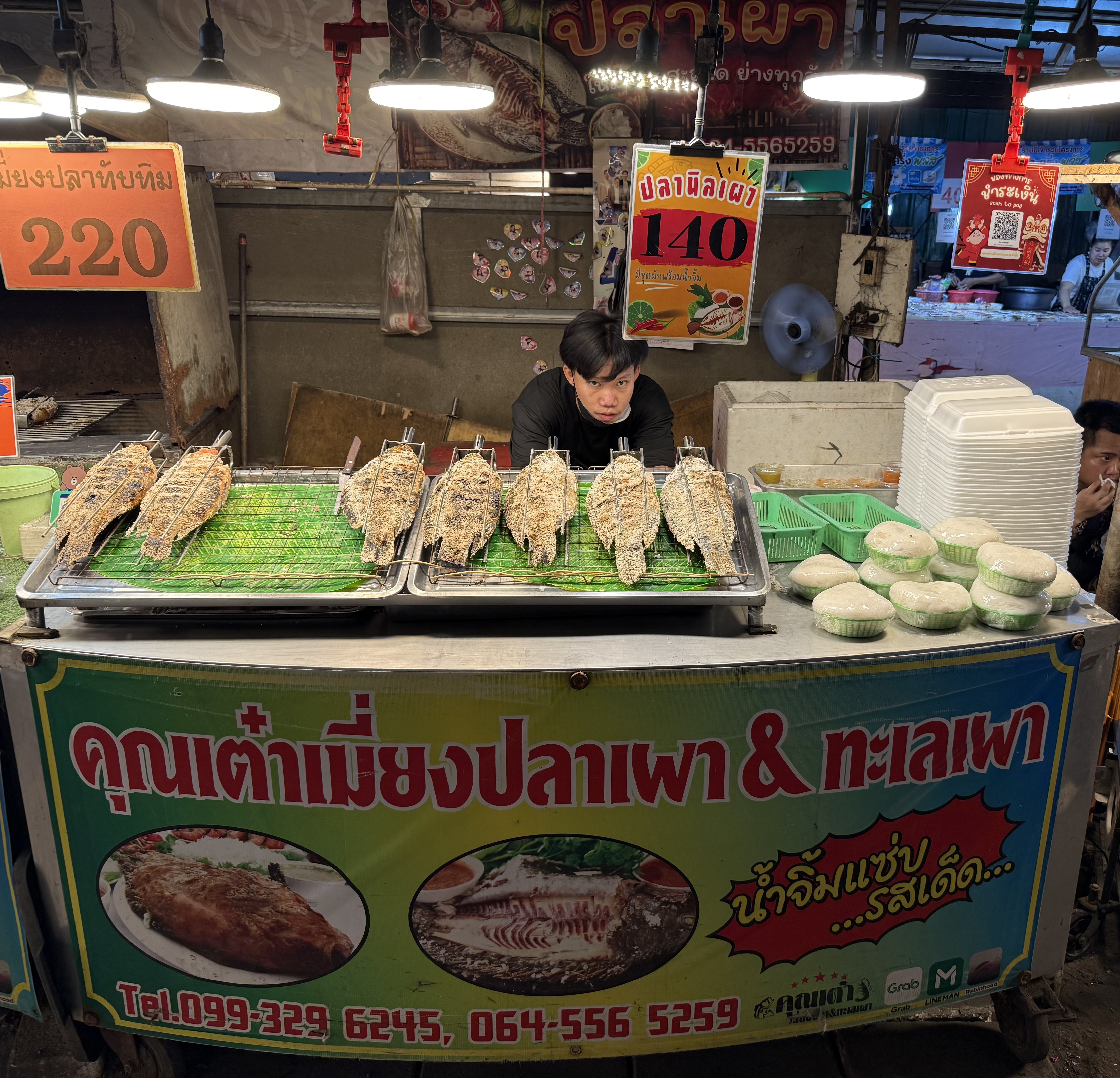
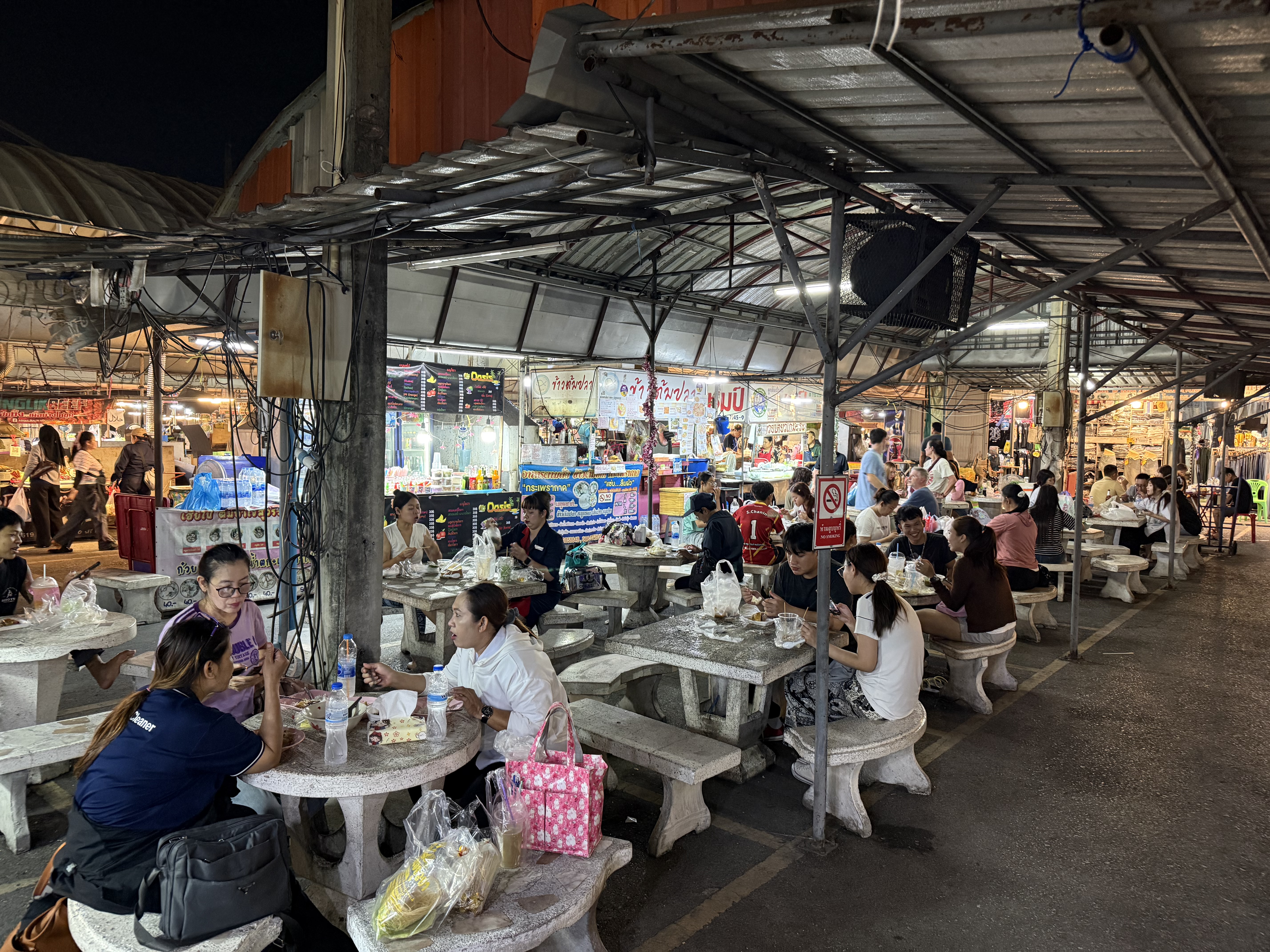
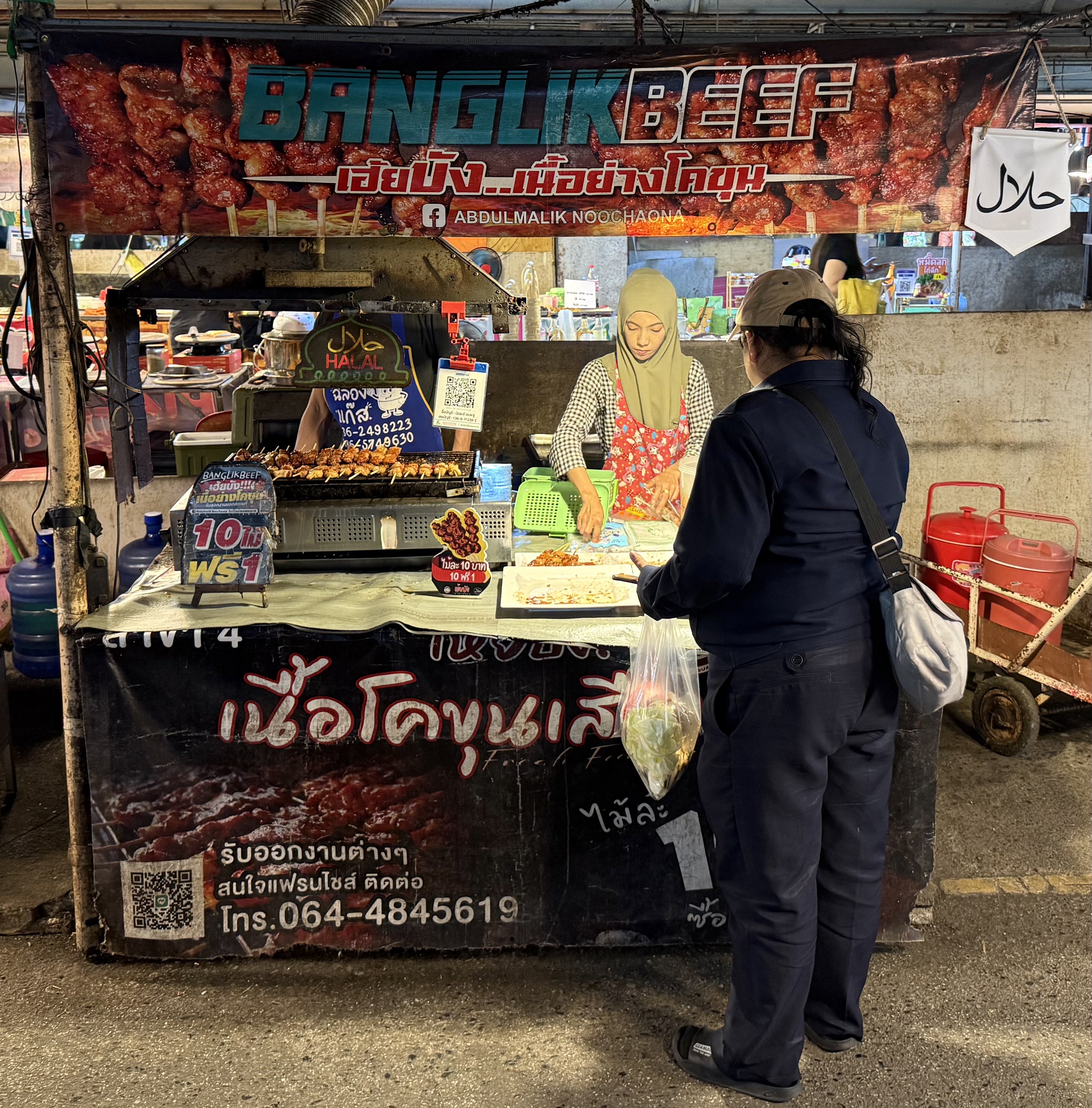
Nancy found a markey close to our hotel (about a 10 minute walk) and we made our way in the heat of the evening to the Suvarnabhumi Market on Lat Kranbang Avenue. By the time we arrived, we were soaked, and eager to find some food and other items of interest. The chocies were extensive, from fried chicken to salmon sashimi to mango rice.

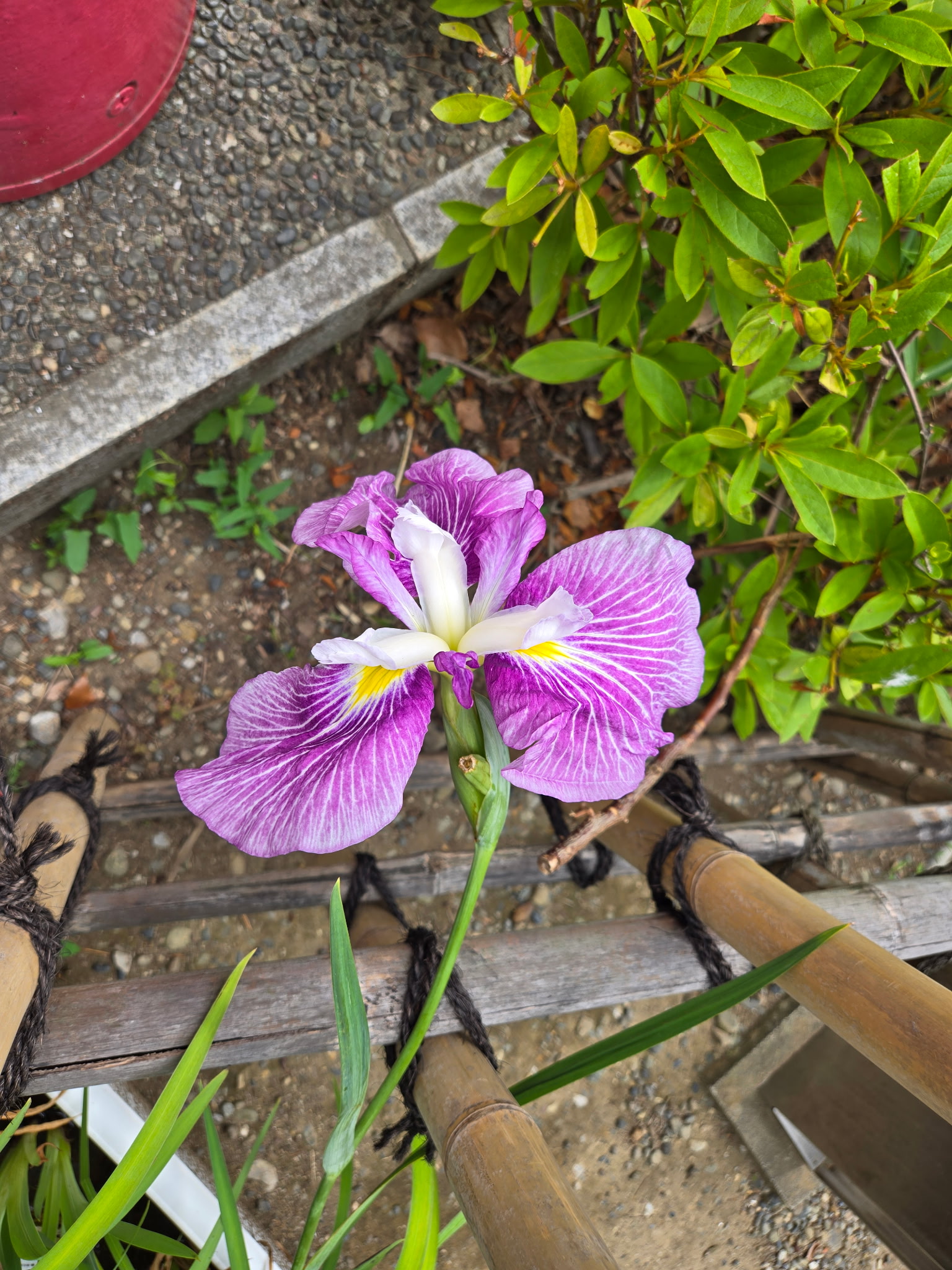
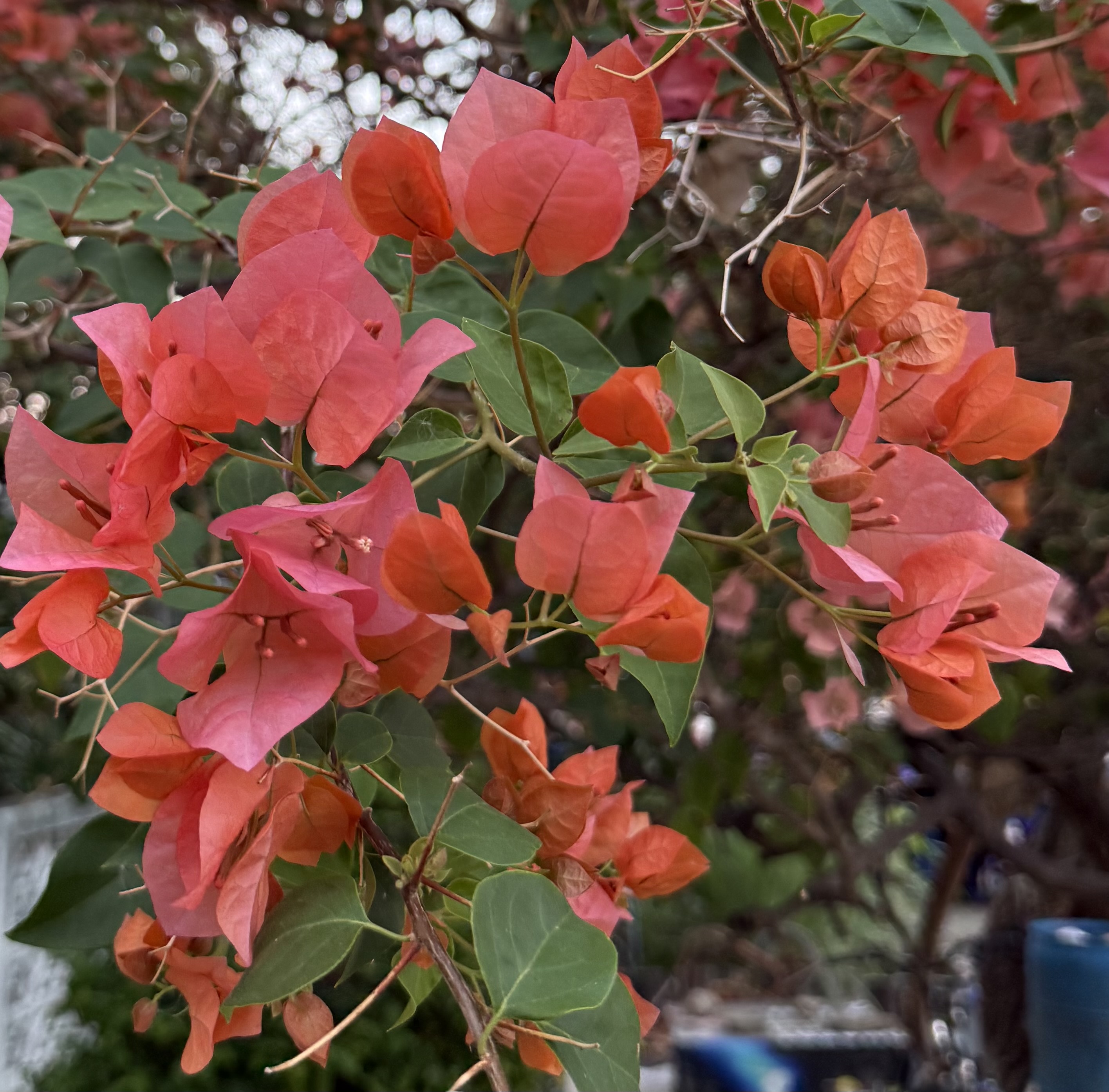
Flowers are everywhere in Bangkok
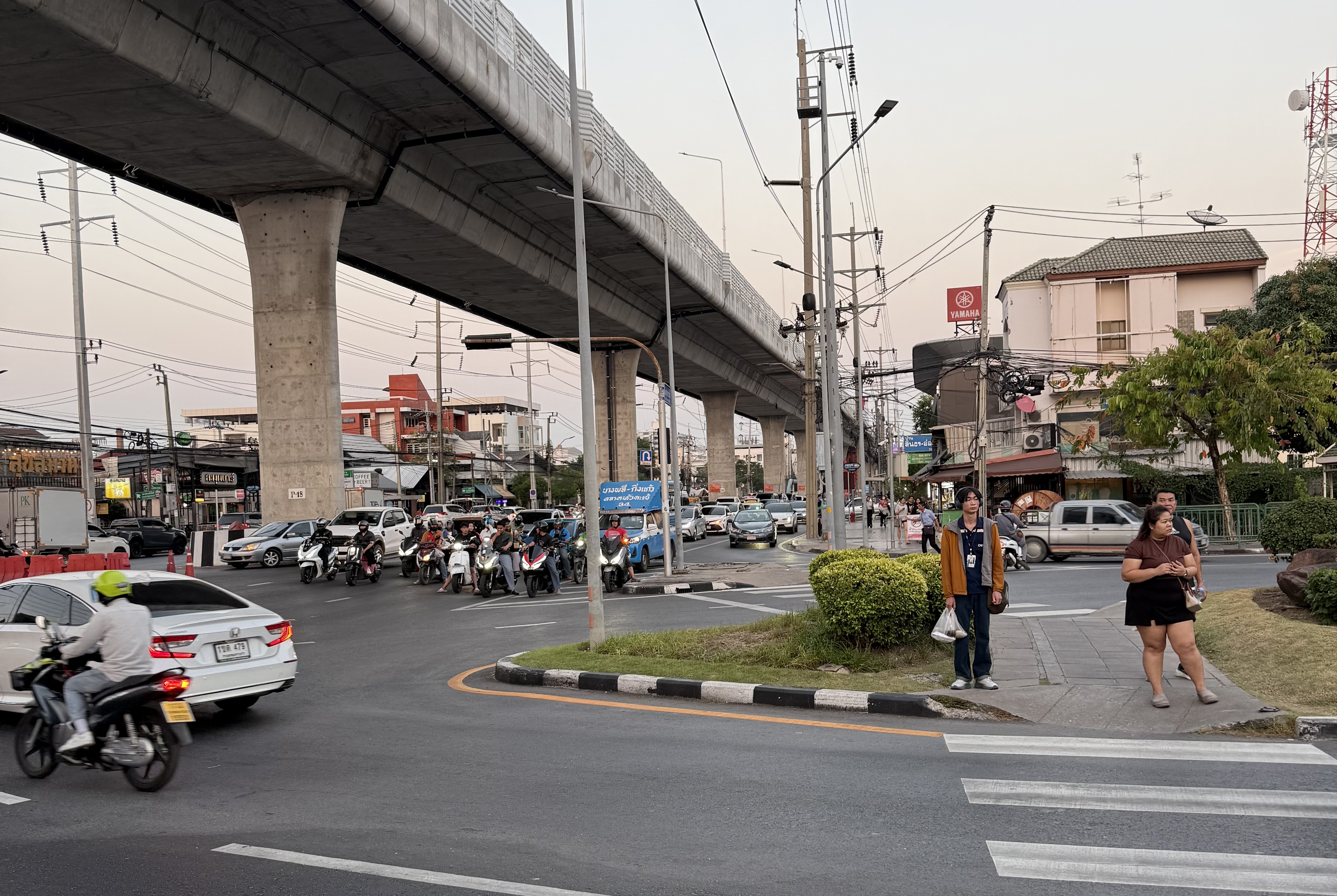
Walking to the Market

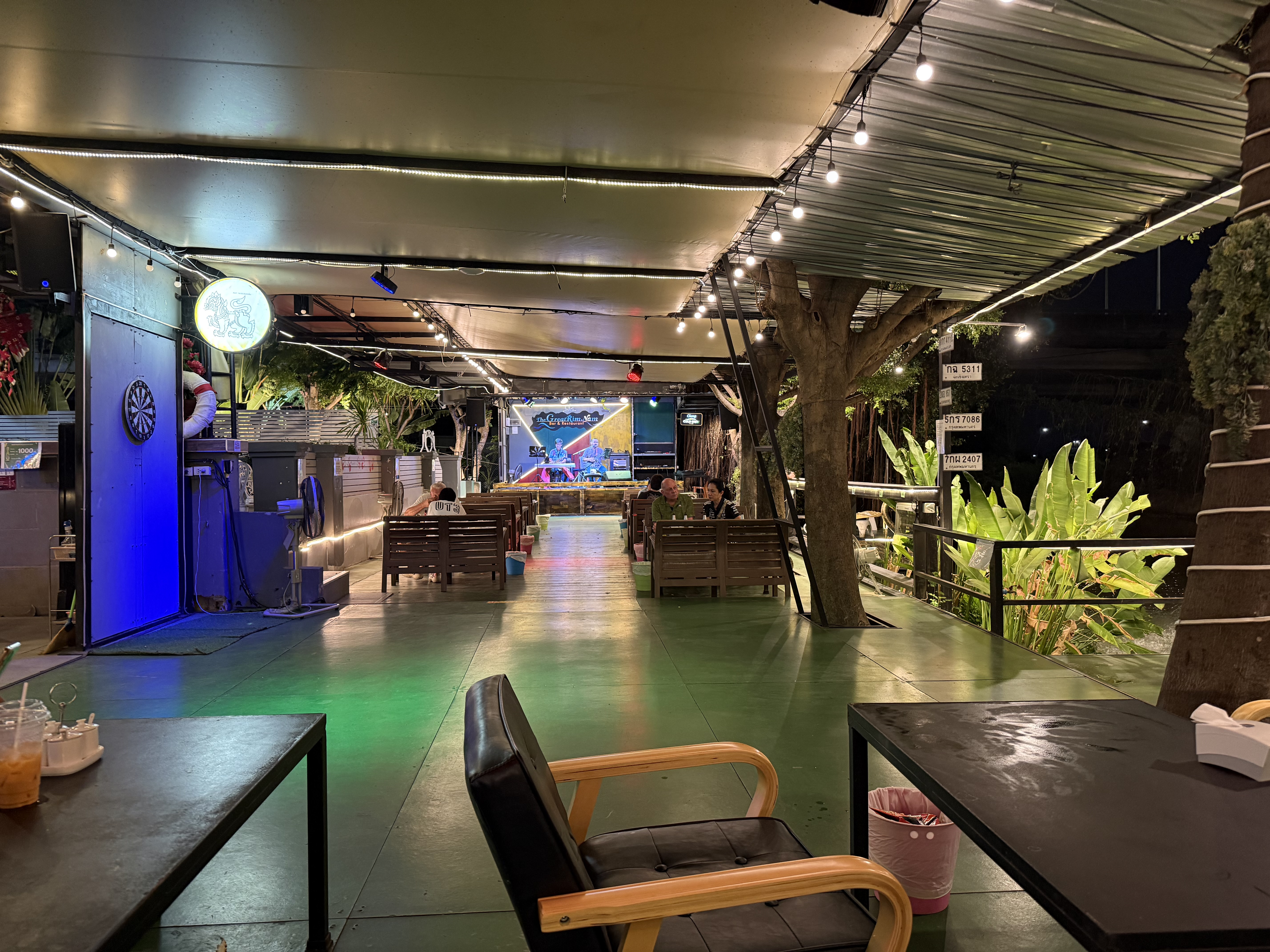
After we had our fill of sashimi, chicken wings, and fruit, we wandered back to the hotel for our final night in Asia, feeling all the feels of the end of a trip. Back at the hotel, we were seranaded by local musicians playing a variety of pop hits.

The musicians playing “She’s the One” by World Party

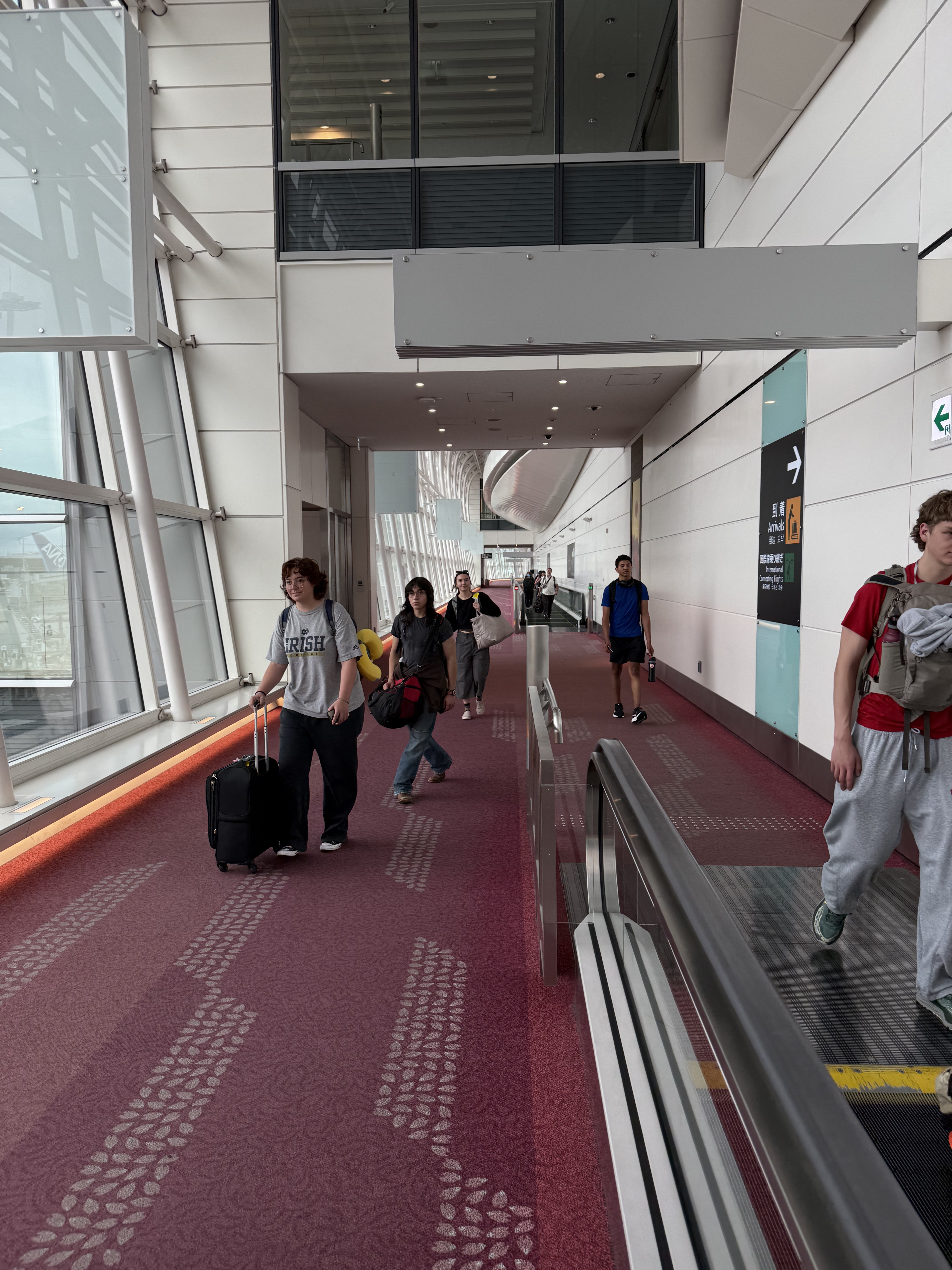
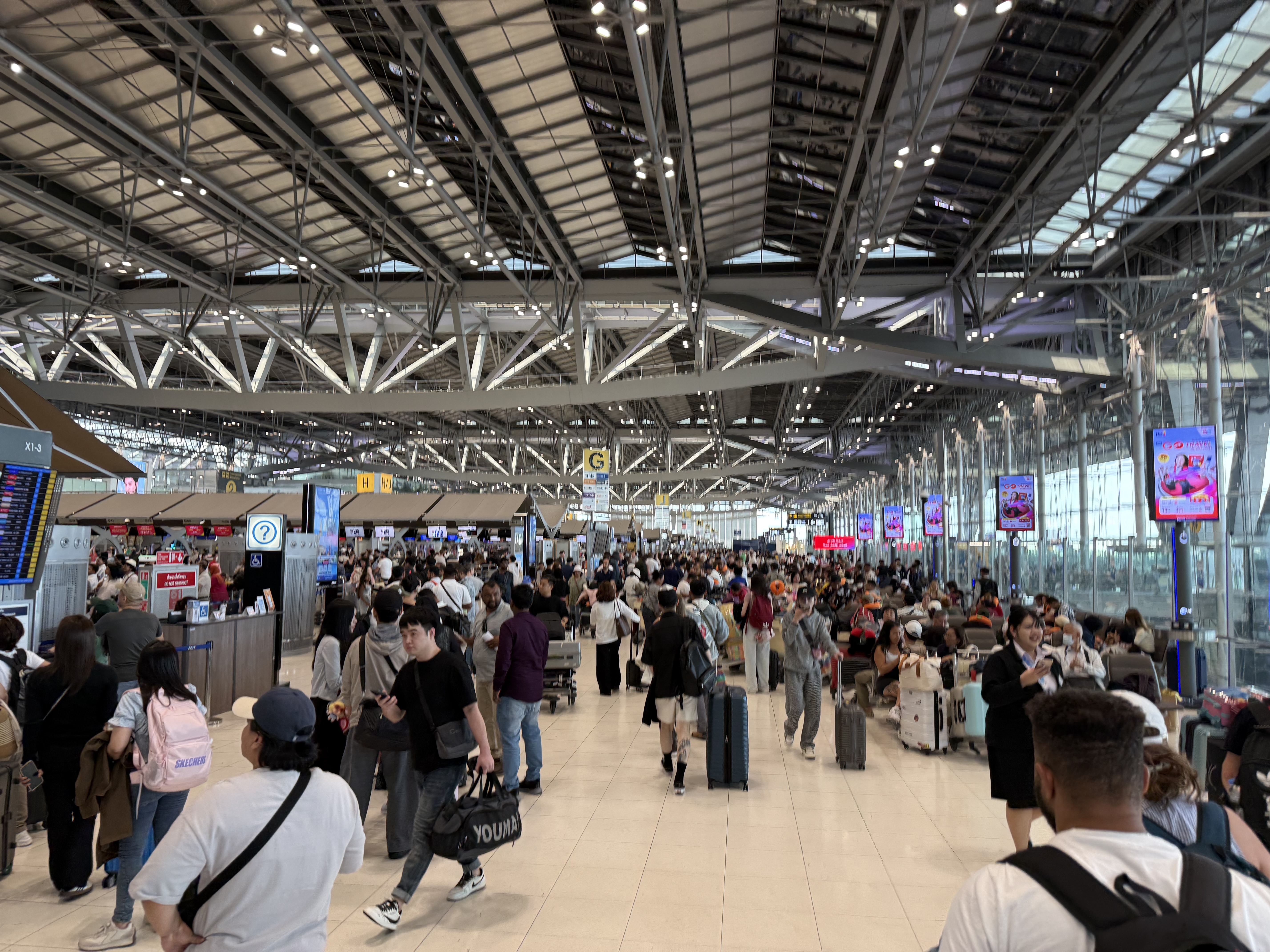
The following day, our flight departed Bangkok at about 3:00 PM, and we were warned to get to the airport with about three hours to spare. The advice was accurate as we entered the airport in this situation:

The crowds at Suvarnabhumi Airport

In the largest U.S. airports, you’ll typically see 6 to 10 airlines in the departure hall. Here, there are more than 30 different airlines flying all over the world. The United desks only have 3 kiosks compared to Albuquerque’s tiny airport of 8…the contrast is fascinating and you feel like the U.S. is just one of hundreds of nations in this departure hall. It’s an amazing experience to realize we are just one of many.

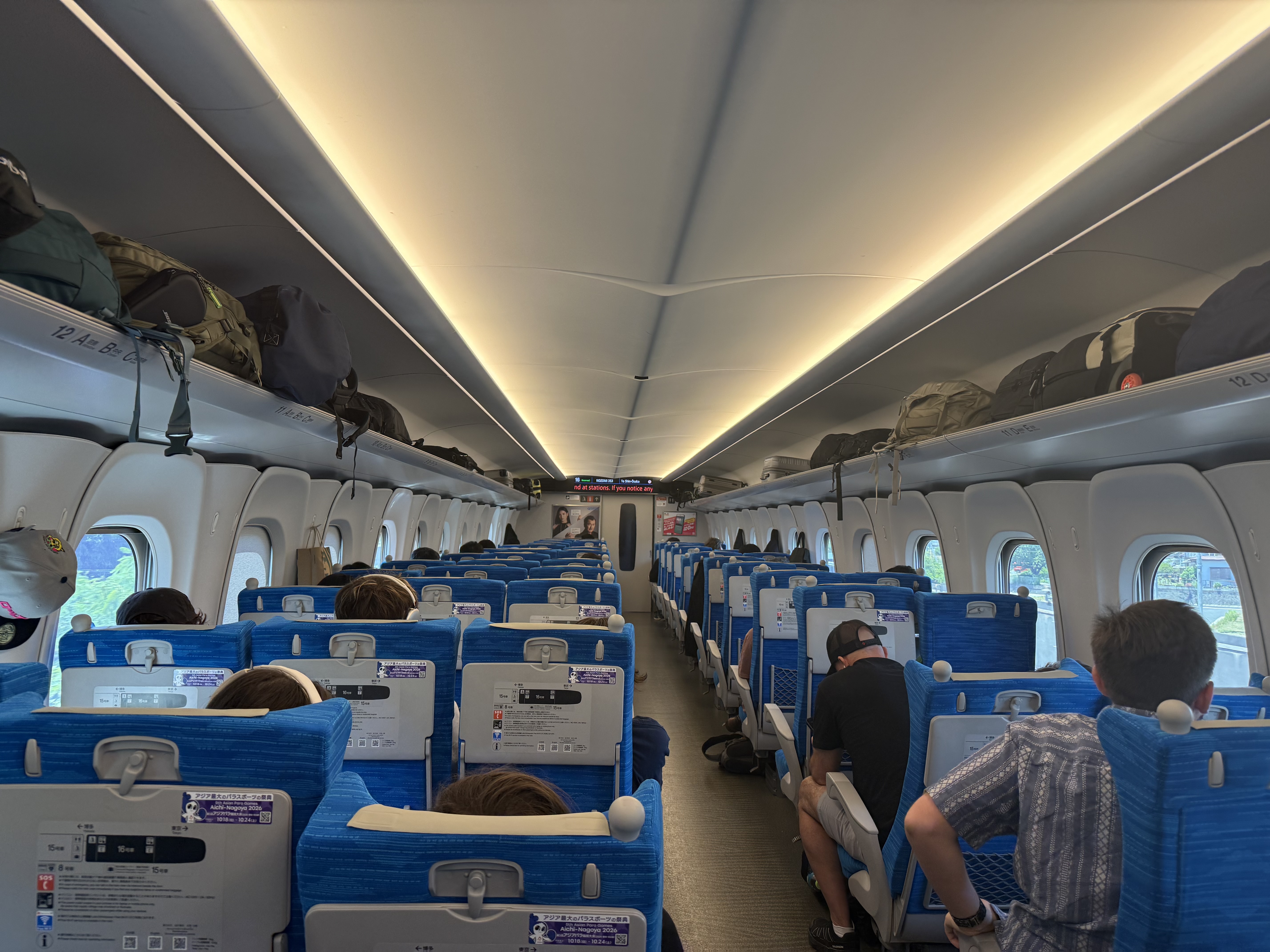
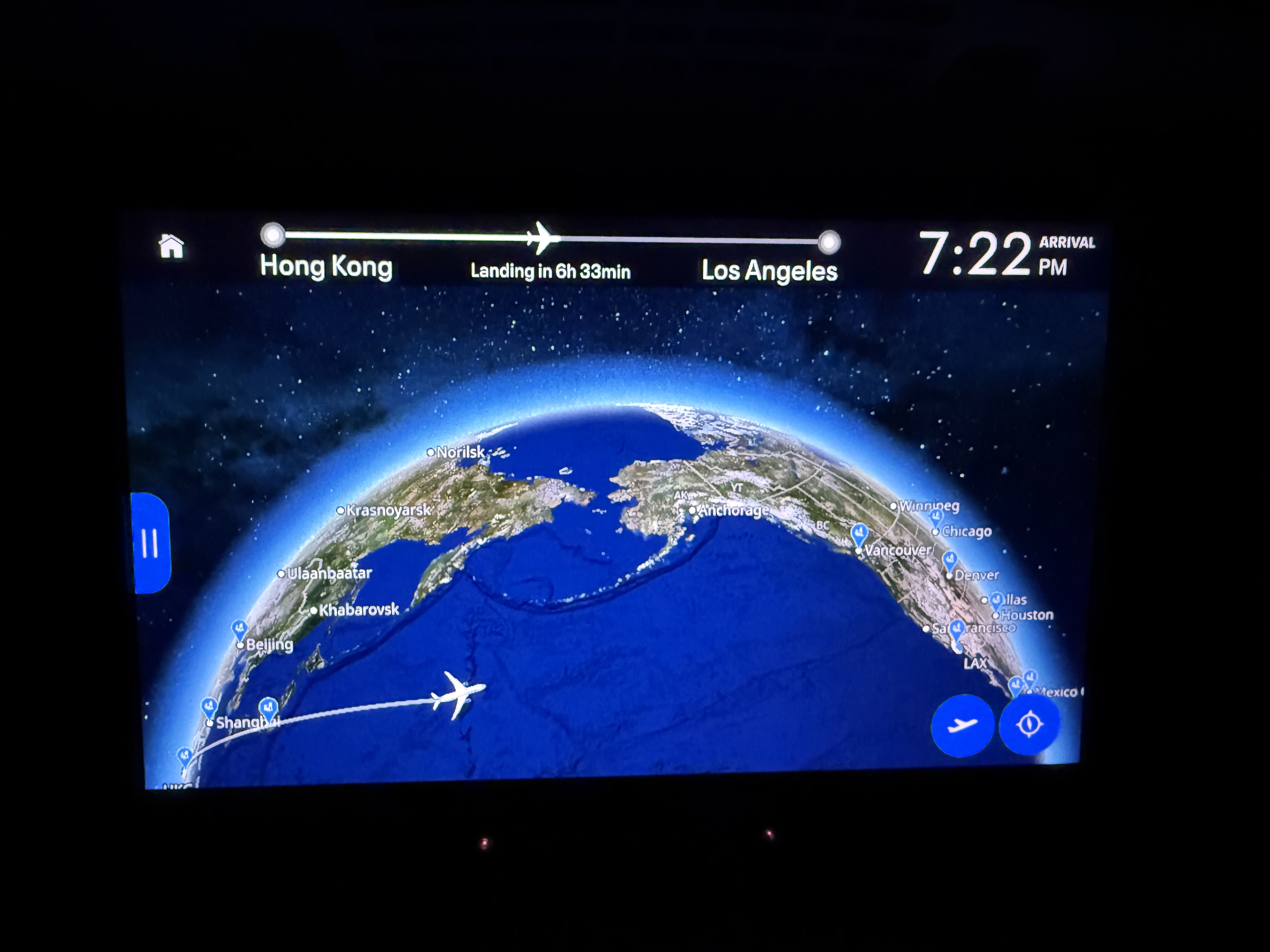
We boarded the flight with no hassles and prepared for the long trip home. We started in Bangkok at about 3:30PM and arrived in LA the same day at 7:30PM…the wonders of time travel!

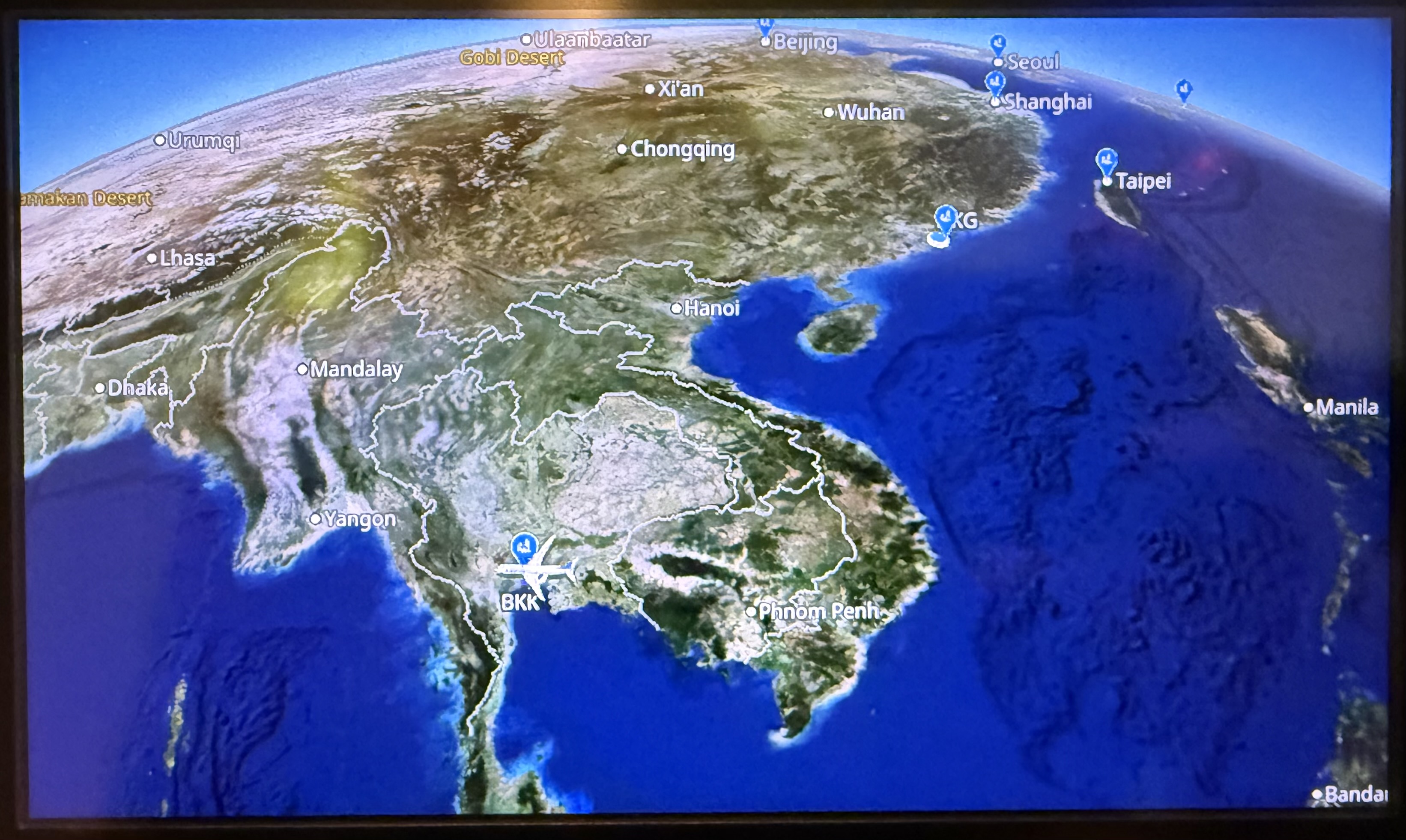
We’re waaayyy far from home in Bangkok!
Not even 1/2 way home or 1/2 way across the Pacific with 6:33 hrs left to travel

We made it to Albuquerque at about 12:20AM and the group split into it’s various subgroups as we bolted for home. WIthin minutes of arrival, we were all on our way to various homes and houses, escaping the tight knit community we created on these 14 days.

Of the many trips I’ve taken to Bhutan, none have been as connected and lovely as this one. The group was in tune,m the vibe was real, and we bonded by the end with so many inside jokes and secret handshakes. Personally, I was worried before our depature and I needn’t have been. These people from various backgrounds and perspectives were a joy to travel with. We explored, adventured, and rested together. What else can you say about a magical journey to the Land of the Thunder Dragon?

Bhutan Finals Days: Joy is sometimes a choice…

When you’re in Bhutan, joy comes easily and often. The joy of a cup of “milk tea” poured as you say “thank you”; waking up to clear skies and views of the Himalayas; watching dancers at the Paro Tsechu express the story of Milarepa. All of these things illicit joy and wonder in moments across time and space in Bhutan.

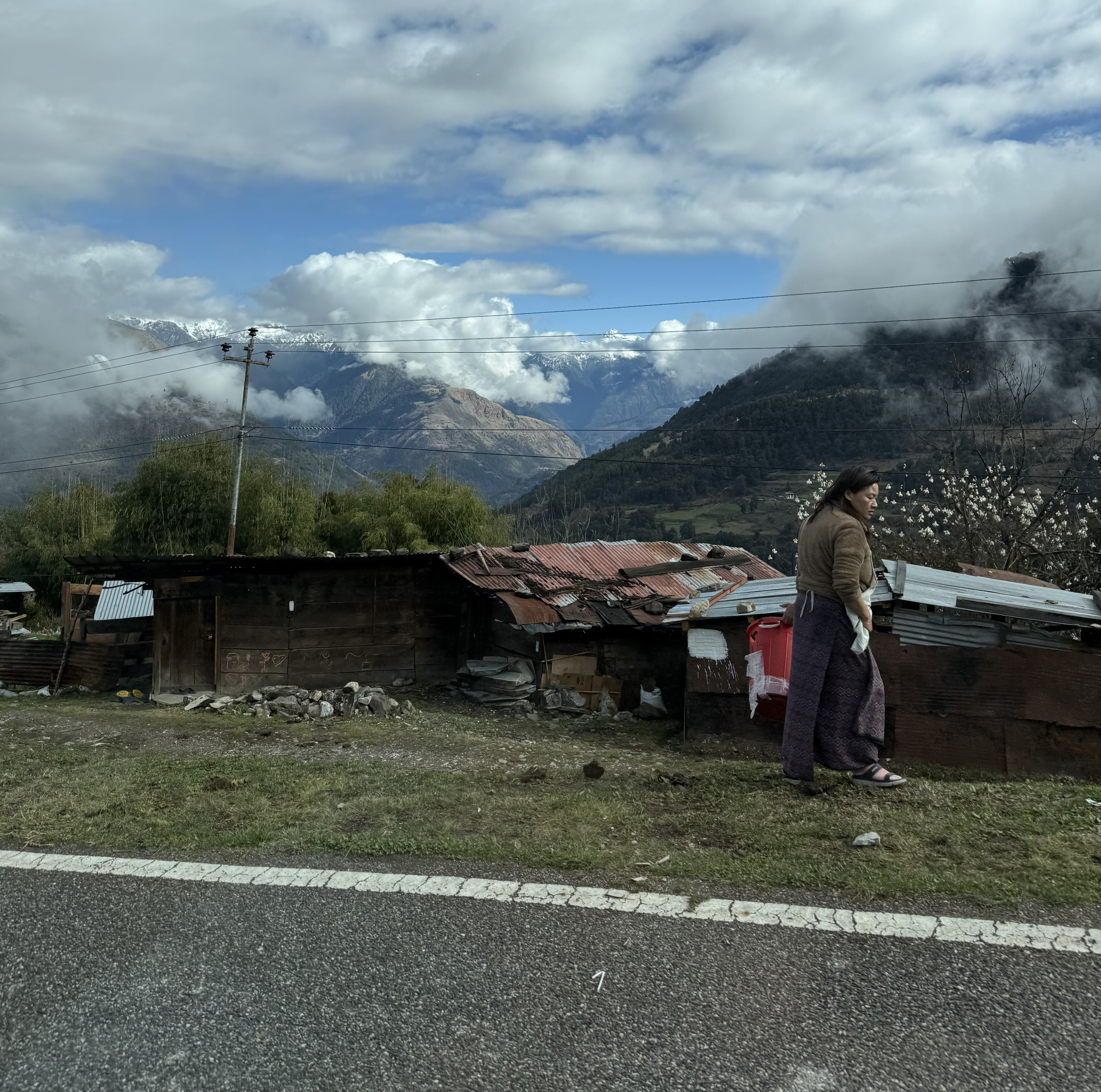
On these final days of our trip in the country, we had so many experiences and moments of wonder, that it’s hard to fit into this blog post. Let’s start with our trip to Paro from the Phobjikha Valley. If you haven’t ridden on the roads that cross Bhutan, you don’t realize that distance is relative in terms of time and space. 100 KM trip in my home state of New Mexico, it would take about an hour. In Bhutan, that same distance takes hours, stops, and photo opportunities. The pace is slow (deliberately so), and in many ways a kind of beautiful adventure of what’s around the next bend in the road.

Around a corner, the Himalayas
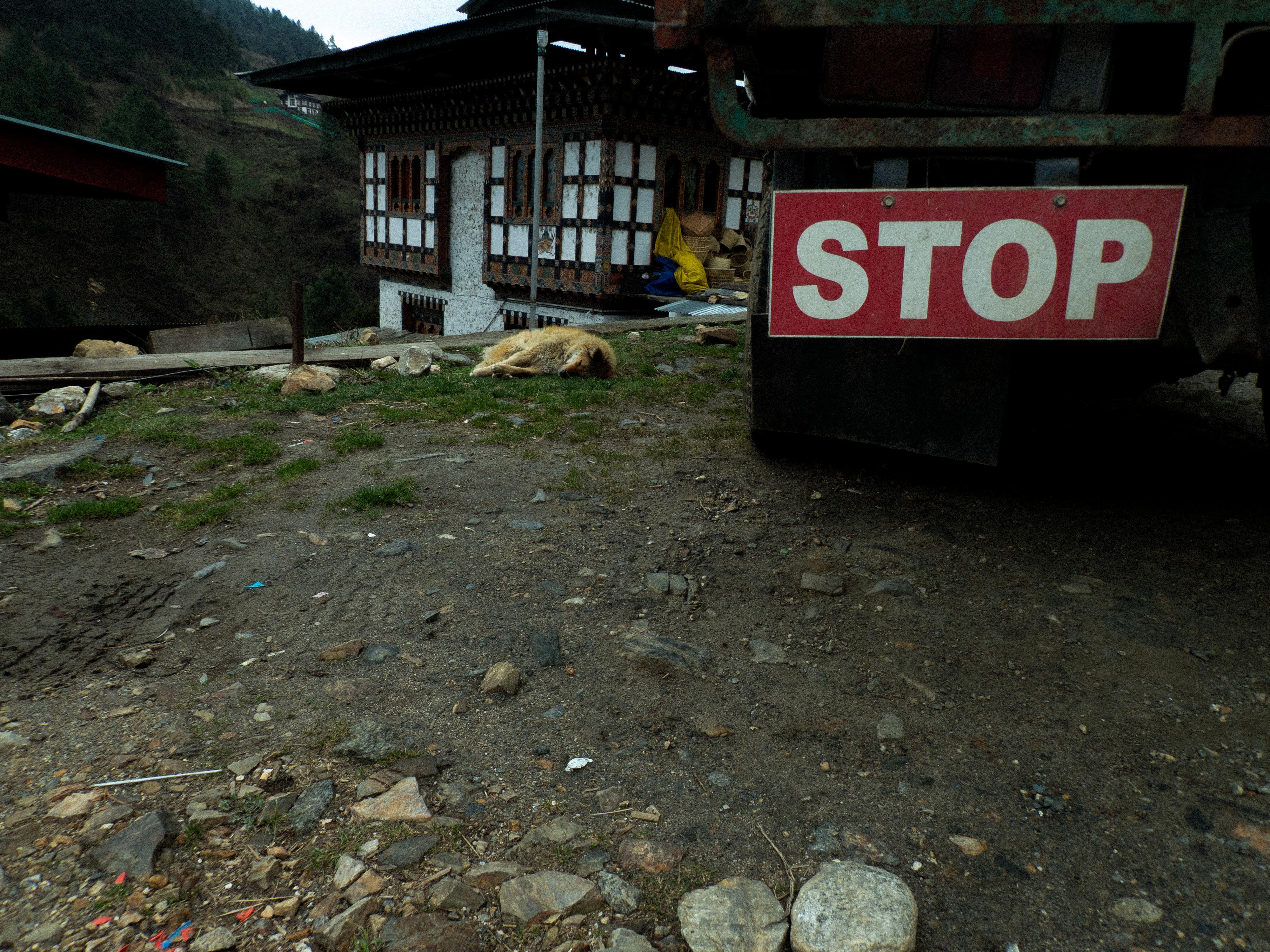
Stop….photo by Maxine

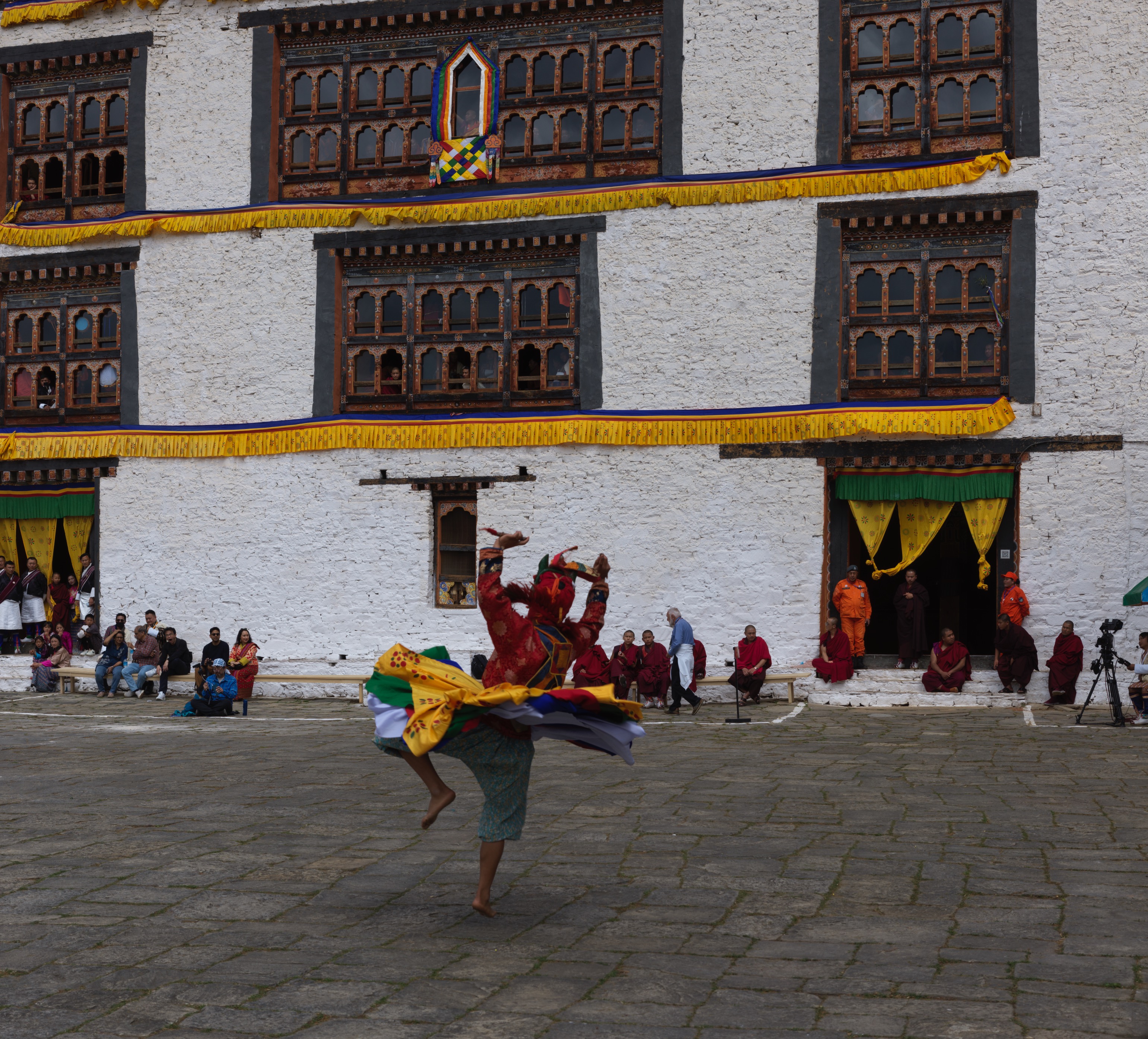
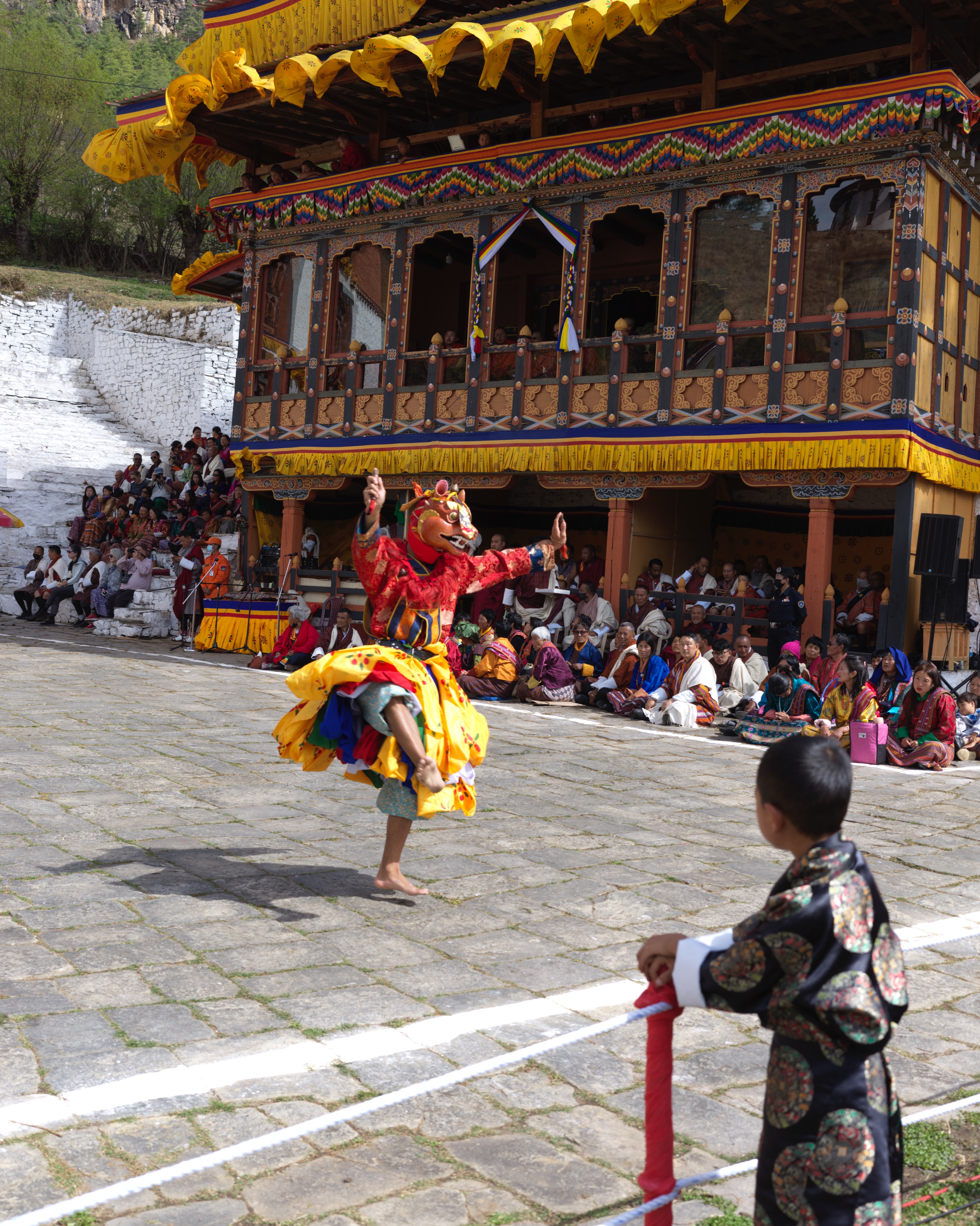
The road, today, led us into Paro, and we made our way to the Tsechu, a religious festival. The Tsechu lasted for about a week, and we visited on the second day of the celebrations. On this day, the afternoon session told the story of Milarepa and the Hunter. The story is a song sung between Milarepa, a Buddhist monk, and a hunter Chirawa Gönpo Dorje. The dance between the two includes animals and the dancers help the hunter have a change of heart.

Later the in day, we headed to our hotel, and rested for our final hike to Taktsang (the Tiger’s Nest).

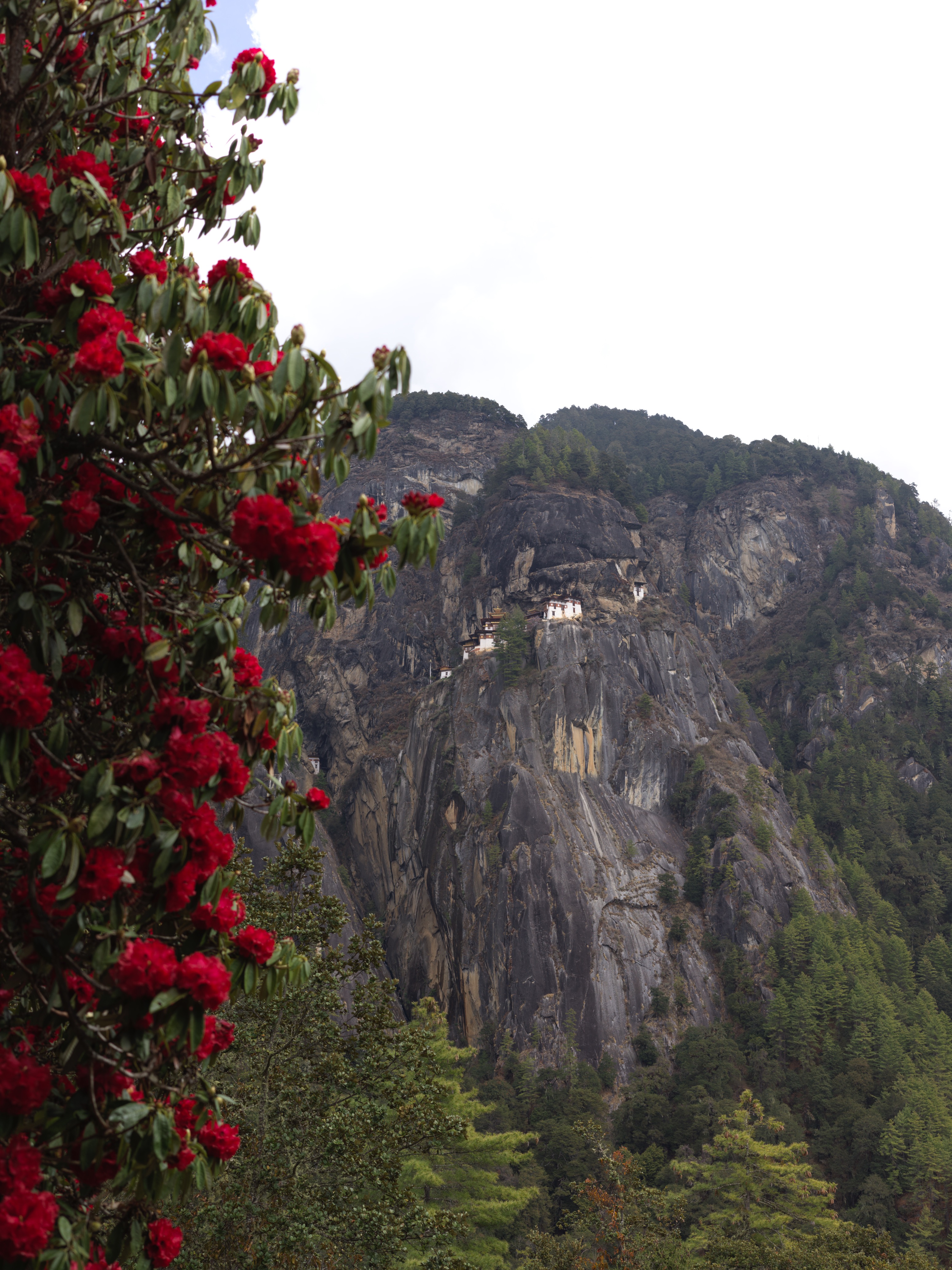
Our entire trip, it seems, led us to this hike to a temple perched on the side of a mountain, framed by rock and rhododendrons. The day began early as we attempted to beat the crowds making a pilgramage. We started the hike on a well-traveled trail through the forests that drape the mountains in this area. Mixed with pines and flowering bushes, the way is beautiful (if crowded) as we wound our way up to about 11,000 feet above the valley floor.

Looking up at the Temple from the Cafe

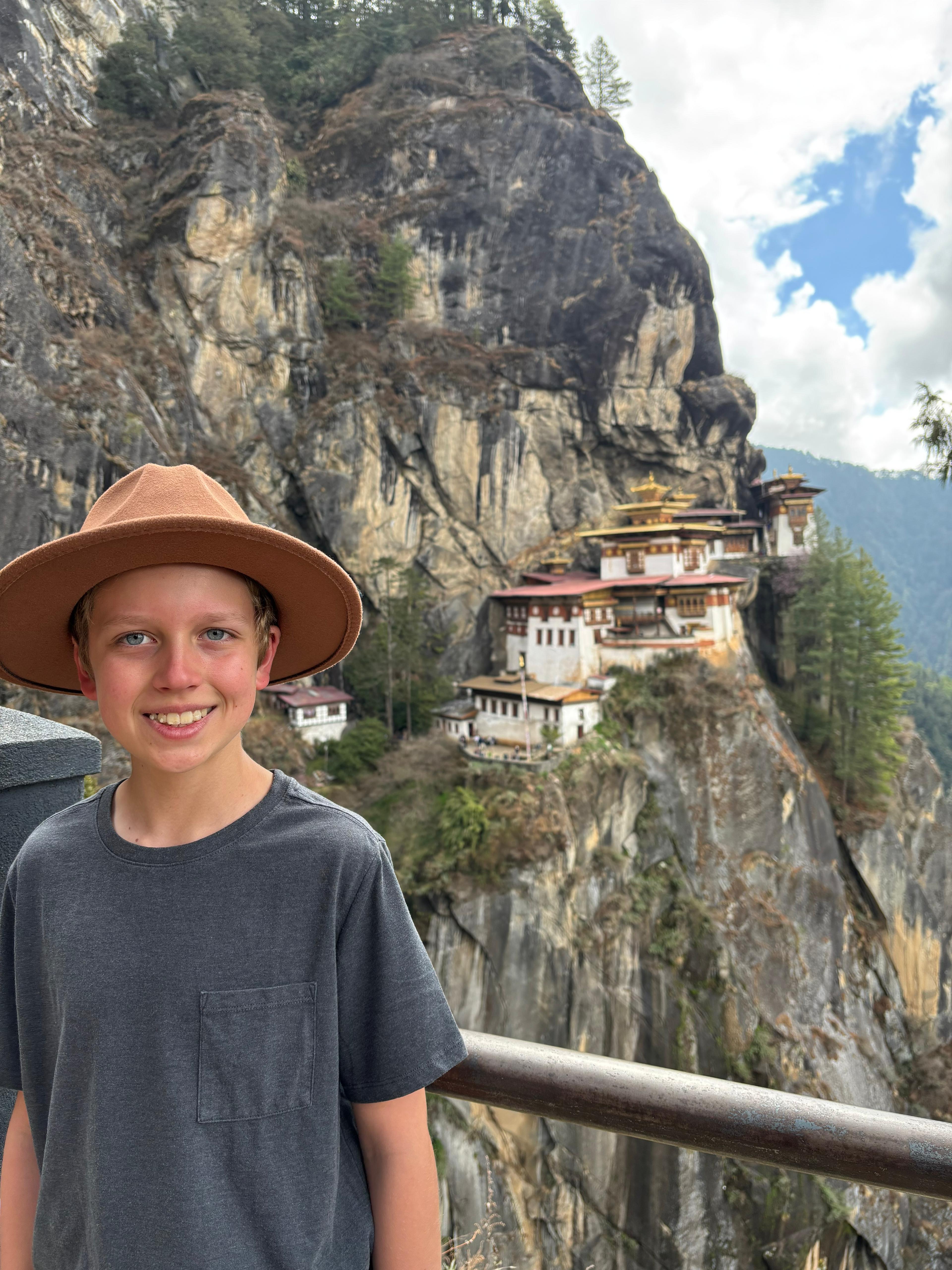
Each member of our group walked at our own pace with everyone making it to the Cafe within an hour. In reality, our pace was fast, and within about 1:45 hr were at the temple itself. To say this hike and this site is spectacular is understating it. The drama of walking up to the temple a visiting each of the shrine rooms is magical. You have aa sense of accomplishment, knowing that your effort paid off in an incredible way.

Overlooking the Tiger’s Nest…photo by Nancy

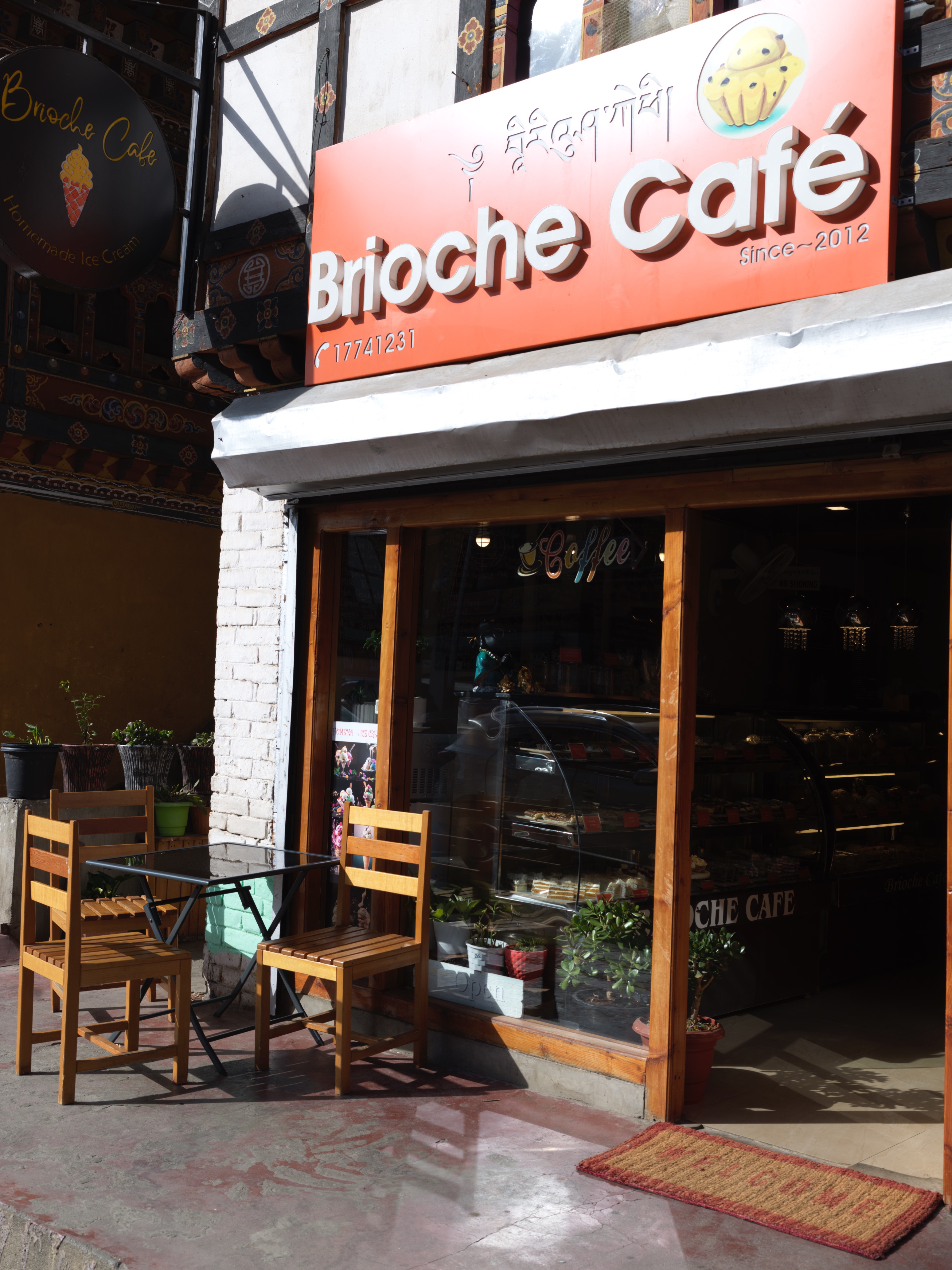
Our return to the valley floor was fast (around 45 minutes), and we headed from the hike into Paro town to find personal treasures to take home. We started it off in Namgay’s favorite new sopt, Brioche Cafe. We snacked on cakes, coffee and tea.

A cool spot in Paro

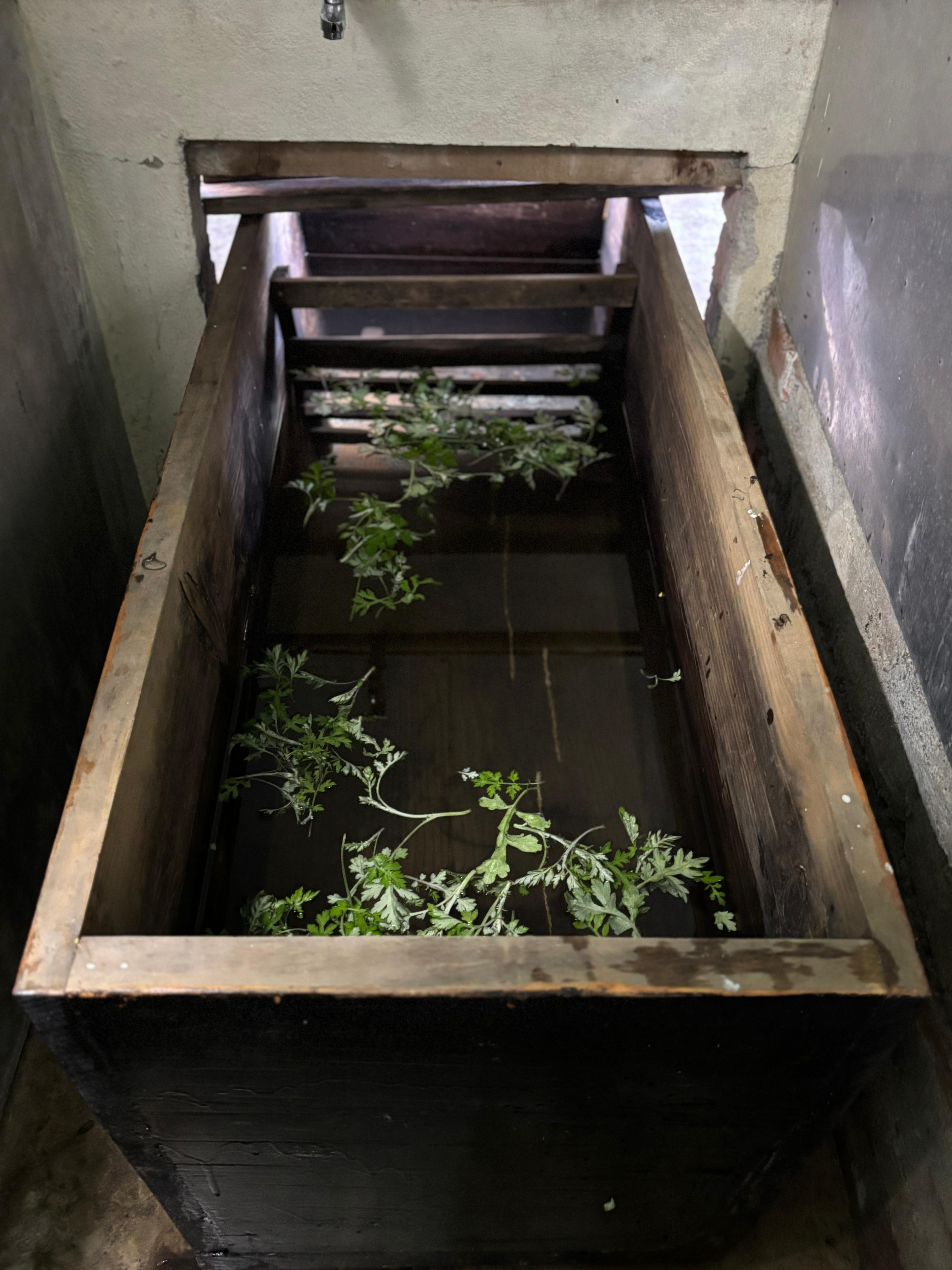
Our afternoon ended with traditional hot stone baths and tea. The day was just about perfect, and by the time we made it back to the hotel on this final night, we were tired and deeply satisfied with everything we accomplished.

Hot, fire-heated stone dropped into the wooden tub behind the slats; Wormwood leaves placed in the hot water…photo by Nancy

Of course, it’s hard to let go of Bhutan and Bhutan doesn’t really let go of you. Still, as this portion of the trip came to a close, we all talked about how this experience shaped us. Honestly, I cannot think of a better way to spend time with folks over a Spring Break.

Bhutan Days 6 & 7

Our travels to the eastern part of Bhutan was a long day. The roads in Bhutan are generally good AND the countours around the mountains take hours even though distances are short. Combine that situation with travel in vehicles no more than 35 – 40 miles per hour, and the process of travel from place to place is much longer than one might expect.

At the same time, our travel allows for a more nuanced approach, giving us time to stop for tea, photograph, and talk to people along the way. This very intentional approach to seeing a place makes for a much more considerate experience.

SO, we made our way across the country. Once in CHamkar – BUmthag, we settled into our residence for a couple of days, and then began our day in the pouring rain.

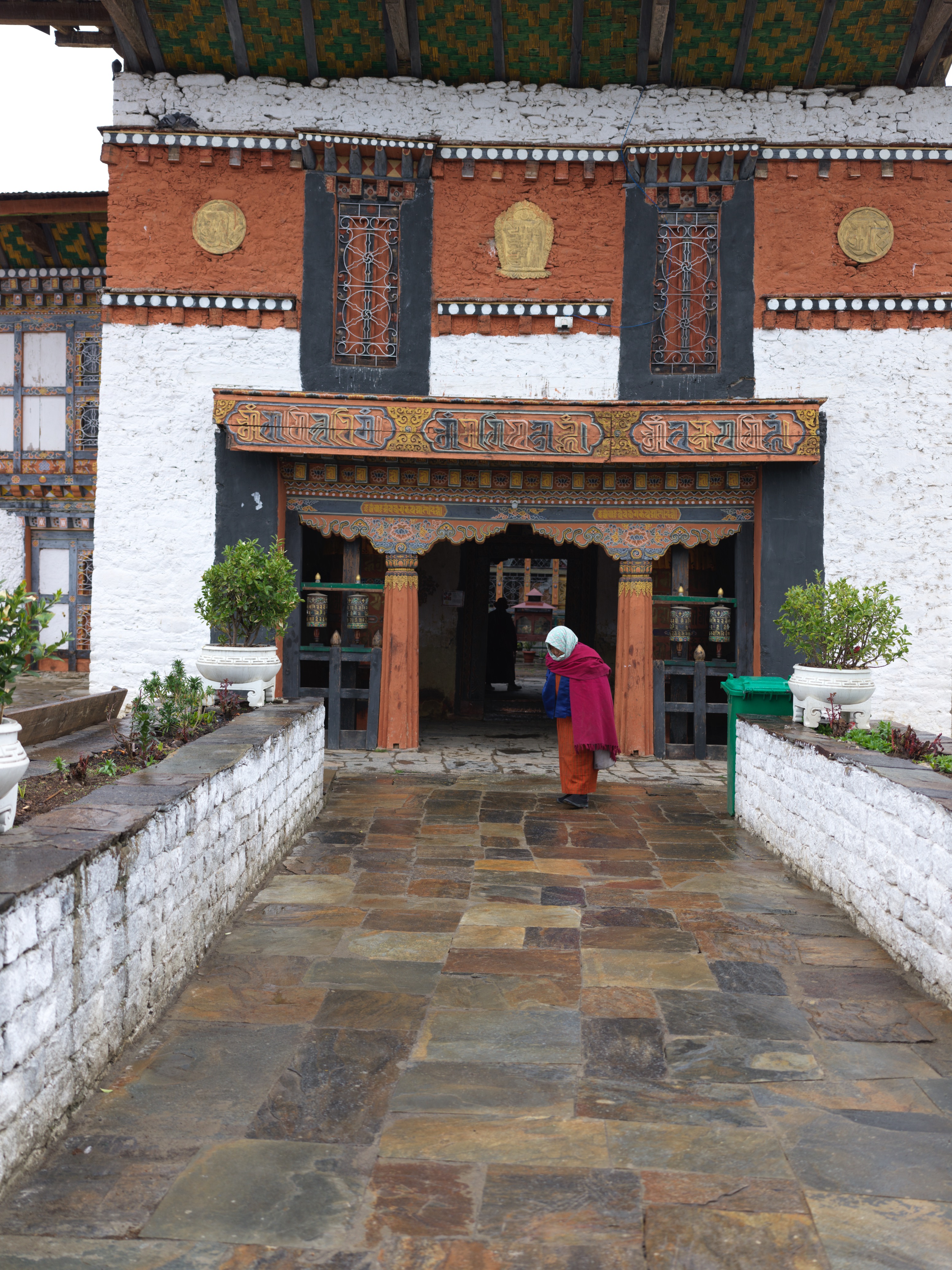
Jambay Lhakhang, Chamkar, Bhutan

Our first temple was among the oldest temples imn Bhutan, Jambay Lhakhang. Build in the 600s, this temple’s interior shrine room is filled with statues of Padmasambhava and is 8 emanations. In addition, the space includes relics and ancient objects referencing Buddhism deep past in this region. Some folks refer to the Bumthang Valley as the cultural heart of Bhuddhism in Bhutan. Everyone from Pema Lingpa, Longchenpa, and Padmasambhava visited this place, l;eaving a mark on the culture and the landscape.

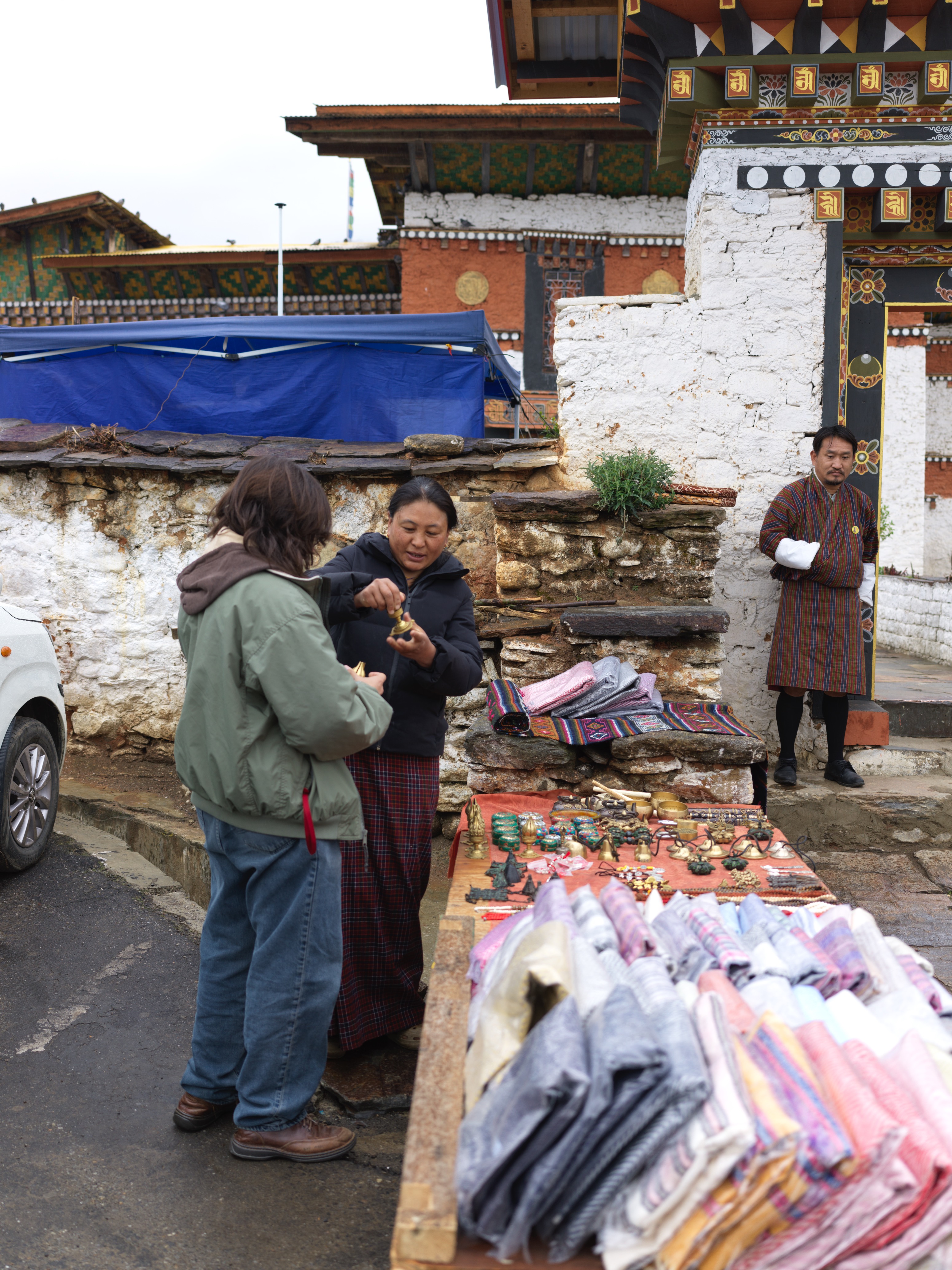
Max shopping outside Jambay

On a typicl day here in Bumthang, we would have walked the short distance to each of the temple along a dirt path to Kurjey Lhakhang, the location of the cave where Padmasambhava meditated more than 1400 years ago. Today, we took the bus to the temple and visited the shrine room and saw the cave that Padmasambhava sat in. If you ever wanted to visit one of the holiest, most sacred Buddhist shrines in the world, this one is it. The cave is distinctive in that according to legend, Padmasambhava left his mark in the wall of the cave. We sat for a while in this shrine room as Tenzin told us the story of Padmasambhava and his journey to Bhutan.

From Kurje Lhakhang, we made our way to Pema Lingpa’s temple, Tamzhing Lhakhang, across the river. Here we saw a group of people from Vietnam reciting the 100 Syllable Mantra. The temple was alive with sound, and we visted the shrine room, and saw the paintings on the wall placed there in teh 15th century.

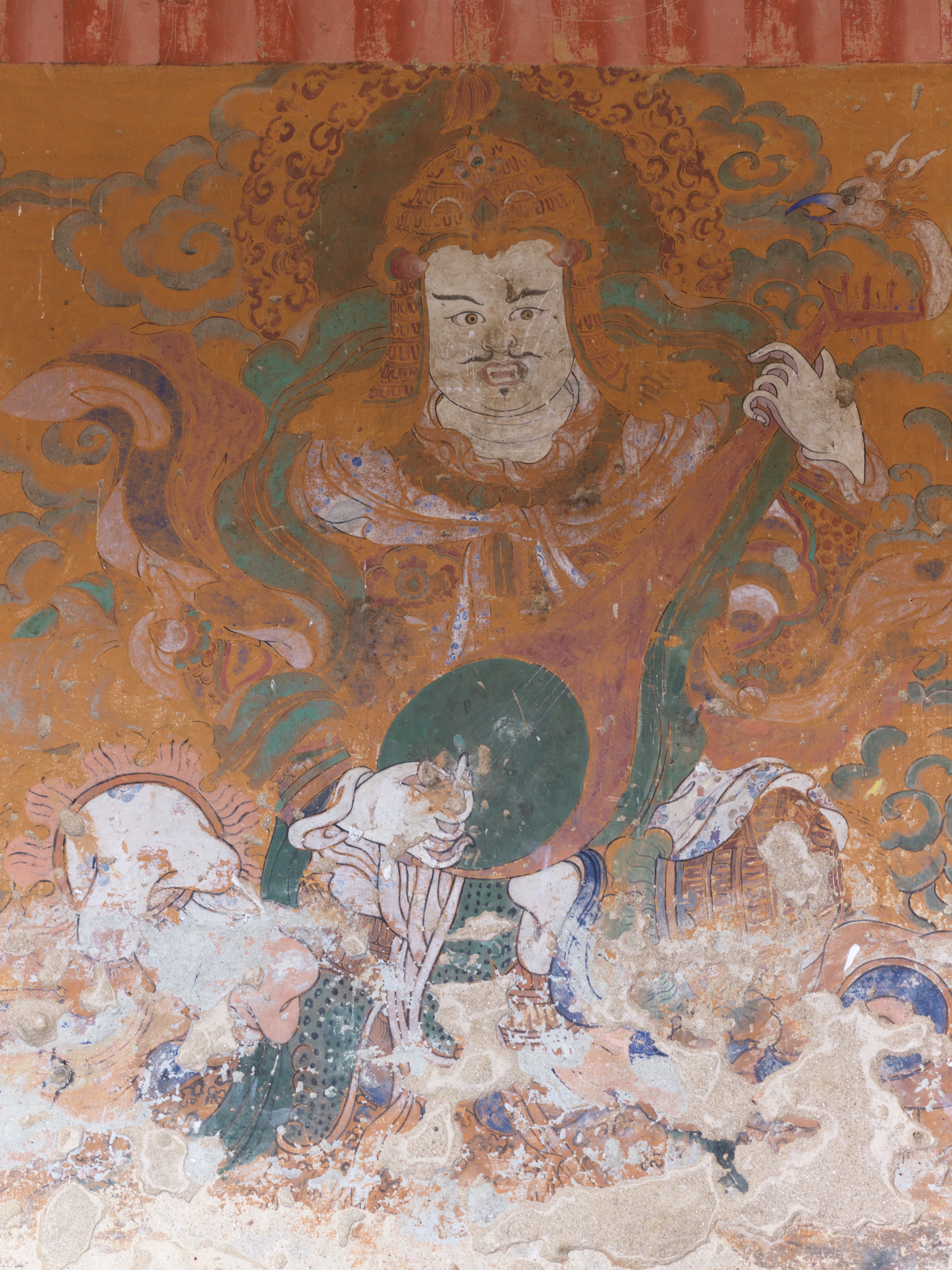
Padmasambhava at Tamzhing Lhakhang

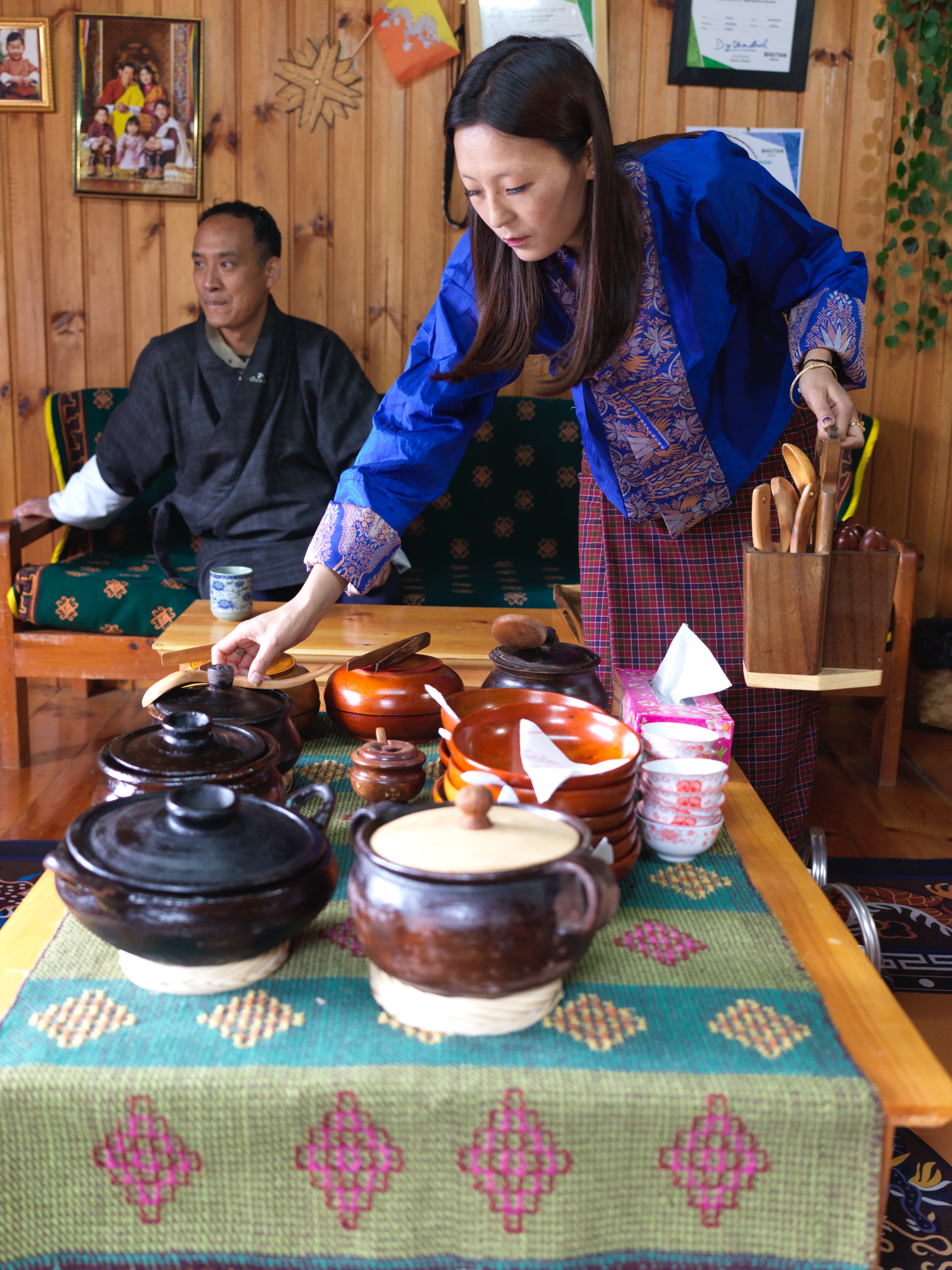
From there we headed to a local farm house for lunch to taste local food and learn aboiut how it was made. The food, by far, was among the best we sampled in Bhutan.

Preparing food in Bumthang

After the farmhouse we headed back to the Hotel and then into town. Tomorrow, our journey takes us to Phobijikha Valley and a hike through the valley and a visit to the Black Necked Crane research facility.

Bhutan Day 5: In Bumthang

You could feel it in the air as we crossed the pass; the remnants of winter’s chill holding onto the air in this high country (about 11,000 feet). Clouds hung low over the mountains as ribbons of rain tinted the sky dark gray in the distance. Our drive from Trongsa was manageable, and we had the chance to wander, a bit, to see textiles and the ancient ways of weacing using a loom and plant-dyed yak wool, as well as just settle into an early evening in Chamkar.

At this 1/2 way point in our travels in Bhutan, we’re in a groove, many of us no longer saddled with restlessness and lack of sleep. Each day we’re eager to se what’s next, what’s around the corner, and what new story we’ll hear from Tenzin.

As I did yesterday, you’ll hear from folks on our trip, and their insights and experiences in the Land of thhe Thunder Dragon. In my 6th visit to this p[lace, I remain in awe of the ways in which people live their lives, weaving together the ancient and the modern in such unique forms. As in all places and cultures, managing the pressure of capitalist demands and retaining cultural identity is a huge struggle for the country and the people.

Like so many of us in the world, navigating consumption and sustainability is a dance that few have managed to learn. When you’re here you can see how capitalist culture slowly strips away local knowledge and customs, attacking the very core of personal and community freedom. At the asme time, I am a part of that process, bringing colonial identities into this place. The tension for the Bhutanese and Bhutan is to maintain the delicate balance of tourism (one of the three pillars of the economy) and providing guardrails around established tradition and identity. That’s a lot of deep information for this light-hearted blog, and it needs to be said.

Beth: So far, we have learned and seen so many aspects of the culture. What I have found is how progressive the community is and the religion. They welcome people from outside including tourists which they consider as guests. It was also surprising that since they have such and old and long-term way of thinking and living within their culture they are so open to people being LGBTQ+ or whatever made people happy and healthy and love who they are, which is much more higher thinking than most countries are still working on. 

Luisa: This has been an amazing trip. From the spectacular building, breathtaking views, kind and welcoming people, learning about this country has open my interest in learning more about Buddhism. I considered this “A trip of a lifetime”. Love some words they use here: there is no good bye, there is I’ll see you again, there is no tourist, you are a guest.

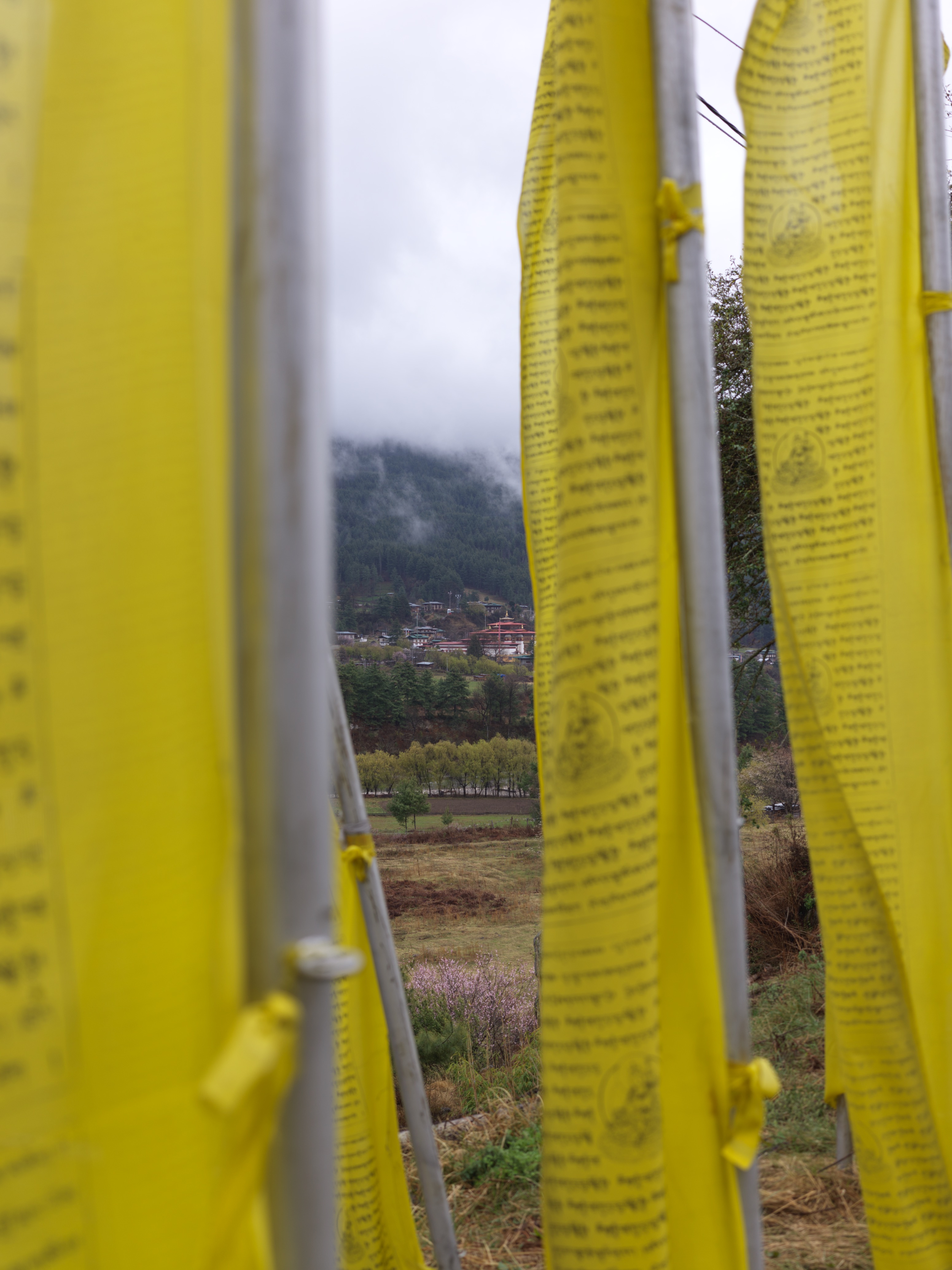
Prayer Flags (photo by Brian)
Trongsa Dzong (photo by Beth)
Monks at Trongsa (photo by Luisa)
A Ronan sighting in Jakar

Bhutan Day 4: From Punakha to Trongsa

The center of political power in Bhutan is firmly situated in Trongsa, the former capital of the country. The former province was among the most economically powerful in the region for centuries before the country of Bhutan existed as a single entity. Testimony to that past is the massive Dzong sitting on a north-south axis.

Our travels today took us to the Dzong, the National Museum, and various stops along the way seeing yak, photographing the mountains and riding our small bus for hours.

I asked our group to write something about their experiences so far. Today you’ll hear from a few people as they consider this trip. Enjoy the photos and commentary!

Ronan: One of my favorite moments so far in this trip was the Hong Kong Ladies’ night market, where we tried really good food and bought fun things. We saw a lot of people selling clothing, bags, and other souvenirs. I also tried these beef skewers that I thought were going to be questionable, but they were good. They were slowly grilled and seasoned to perfection. Sadly, we didn’t bring enough cash to buy more things so all we were able to get was the food and 3D printed snakes. 

Nancy: My favorite moment of the trip thus far was waking up at 2am in Thimphu and happening to glance out the hotel window to see a giant golden buddha statue glowing in the dark of the night. I rubbed my eyes to make sure I was seeing correctly, and opened them again to realize it was indeed, still there! I felt welcomed by the country of Bhutan and watched over as I went back to sleep for a few hours. We visited the statue the following day and I later learned that the giant statue was transported to the area in three pieces. I can imagine the shock of seeing the giant pieces traveling on the road by all those they passed along the way.  

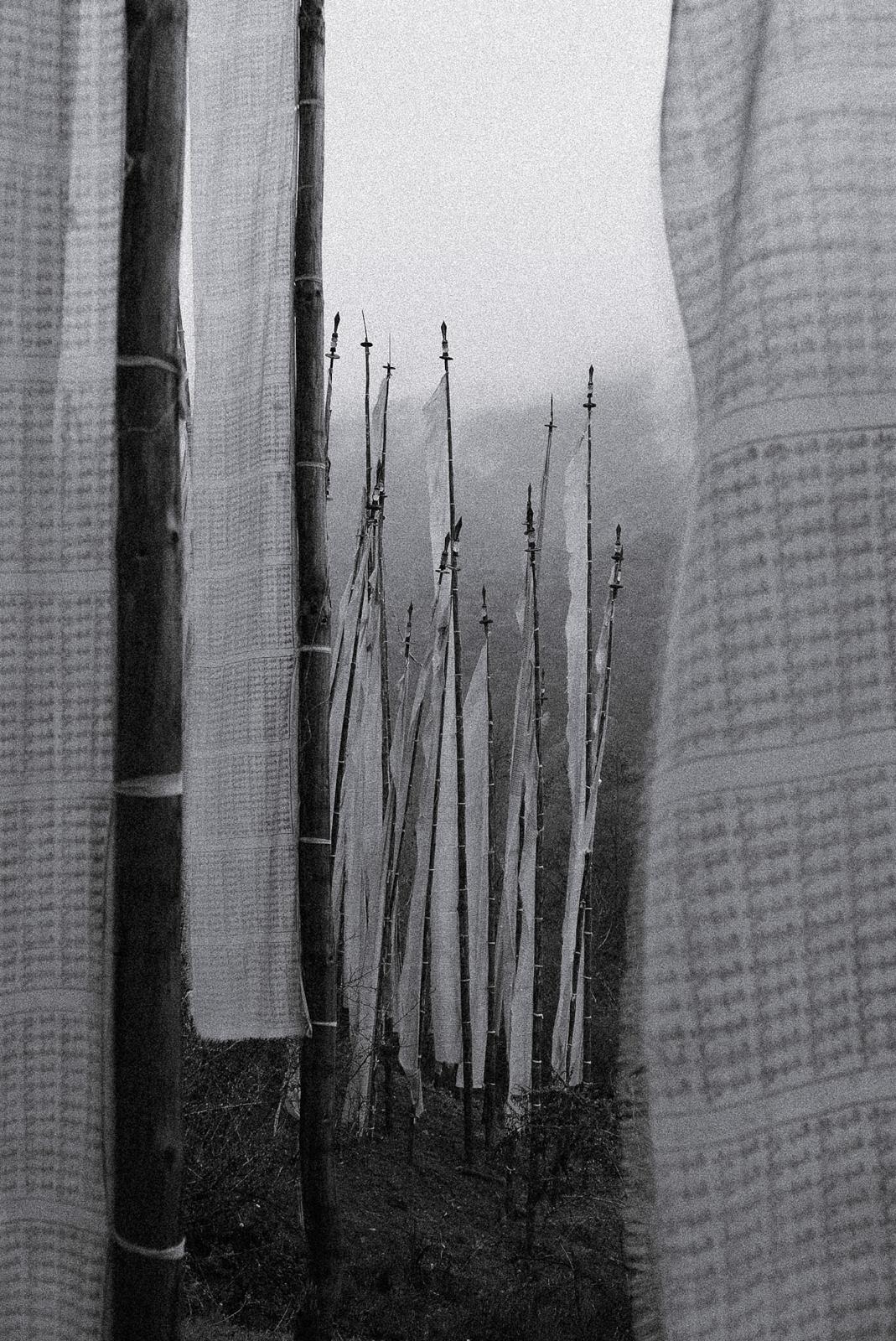
Brian: Thus far I am most struck and enjoying the continuous array of prayer flags throughout the environment. Strung on bridges; wrapped around stupas; planted high on hillsides or ridge lines on long vertical poles; yellow ones lining the winding road ascending the mountain to the golden buddha; tall white funereal ones planted in groups high on hillsides commemorating a relative. They are literally everywhere and bring so much color and joy to traveling through this beautiful landscape.

Plant-dyed yarn, Bumthang (photo by Nancy)
Loom in Bumthang (photo by Nancy)
Prayer Wheel, Trongsa Dzong (photo by Brian)
Tenzin and his Mom in Tsangkhap
House in Tsangkhap Village near Trongsa
Trongsa Dzong
Max at Trongsa
Beth at Trongsa
Ronan at Trongsa

Bhutan Day 2: Winding Roads to Punakha

With a little more sleep and a bit more refreshed we made our way around Thimphu for the morning visiting the handmade paper factory, the Dordenma statue that overlooks the city, and on the road to Punakha.

Our morning began at 7:00 AM and after a tasty breakfast, we traveled to the J-P Paper Factory. The process is fascinating and we took our time understanding the paper preparation and asking questions. Made from the bark from the Daphne tree, the bark is stripped, separated by hand, and then made into a mush/slurry in water that is then transferred to a vat where a worker uses a bamboo screen to separate the mush from the water. Individual sheets are pressed and then separated to dry. As you can see from these images, the work is involved and detailed.

From the factory, we drove the steep hills to Dordenma Buddha temple complex and toured the shrine rooms and grounds. The project, begun in 2006 is nearing completion, and the site is massive. The intricate craftwork, painting, and statuary are remarkable (I use this work A LOT in Bhutan), and we heard from Namgay and Tenzin about the project and its importance to Bhutan.

We had a bite ot eat (food on this trip has been exceptional), and drove the winding roads to Punakha with a stop at Dochu-la Pass. The Pass is the site of Chortens that honor important individuals in Bhutan, their ashes interred in the structures.

Chortens about 6 feet tall on the pass

Our adventures led us to the inevitable purchase of dried cheese. A delicacy inspired by culinary experts, this cheese is available at roadside stands almost everywhere in the country. I offered ONE caveat to those brave souls who decided to purchase these bits of hard ambroisa: they are a commitment in time in your mouth. To be specific, HOURS of time in your mouth. See, the cheese is rock-hard…no, really, like a stone. It slowly (SLOWLY) dissolves in your mouth. The taste is an acquired one and a couple of our travelers partook in the effort. I’ll let them regail you with the stories here (stay tuned to this channel!).

Dried Cheese; photo by Brian Miller

We finished our day in Punakha near the confluence of the Mo Chu and Po Chu rivers….tomorrow, if the weather holds, we’ll raft this stretch.

Have a wonderful day!

In Bhutan: Day 1

OK, let’s just get this out of the way: Bhutan is an amazing place in the world. I’ve visited multip0le times and made friends here. While the struggle is real to provide education and jobs to the population, few places address those needs so directly. Bringing students to this place has been some of my work for the past 16 years, and I’m lucky to have had willing travelers to come to a place few have even heard of.

Our first day in Bhutan began peacefully. We landed around 10:30AM and were picked up by my friend Namgay and Illuminating Tours. The welcome was wonderful, and we hopped on the small bus to our first stop at Kyichu Temple in Paro.

One of the oldest temples in Bhutan, constructed in the 7th century, the building is filled with statues of important teachers and leaders, as well as shrine rooms dedicated to the Buddha and Padmasambhava. Padmasambhava, or Guru Rinpoche, brought Buddhism to Bhutan (and to Tibet) and this location was one of a few that the Guru established in the region.

Spinning the Prayer wheels
Finding time to draw
Wandering the grounds at Kyichu
Flowers blooming all around the gardens

After Kyichu we ate lunch and made our way to Thimphu, the capital of Bhutan. On the way, we stopped for a hike at the Iron Bridge. Legend and history states that a Tibetan ironworker came to Bhutan and formed the iron links that made up the bridge in the 16th century. We walked around the area, headed up to the stupa on the hill.

Up the hill to the stupa at Iron Bridge
Iron Bridge over the Paro river

As we make our way around the Thimphu today and Punakha tomorrow, we’ll see how things unfold in terms of weather (hoping it holds for our rafting trip in 2 days), and hikes to temples in and around Punakha!

Mornings are Hard; Days are Wonderful

Waiting to head to Suvarnabhumi airport here at 3:33 AM, I think about really early mornings. For the past few days we’ve been moving at O Dark-30, and the shock of being awake is always a challenge. Still, we’re traveling across the globe, and time is relative.

For the past 2 (has it been 2?) days, we’ve been in Hong Kong and now Bangkok, finding ways to meet and engage.

In Hong Kong, we “Ubered” to the Ladies Night Market despite a 14:45 hr flight. Our drivers Chit and Wing Kin offered information about the night market (Mong Kok) and details about their lives in Hong Kong and Lantau. Their specific information made our night better!

Our group wandered the stalls, selecting various treasures and eating some tasty street food! As midnight rolled around, we went back to the hotel ( Regala Skycity) and immediately crashed.

Our 9:00 AM flight to Bangkok was uneventful, and we landed in the heat of the city. The Thai airport is beautiful and busy. The sights, sounds, smells, and sheer number of people are overwhelming with little sleep. Still, we pushed through, checked into the Great Residence Hotel and headed into the city.

The drive to the Chao Phraya river was eventful as Sanong taught us some Thai. He offered helpful information and after an hour in traffic we headed to the Golden Palace…as we walked to the entrance it, literally, closed in front of us. The gate was locked and we stood more than a little dumbfounded.

The temple complex sometimes closes unannounced, and that happened to us!

No worries, of course! We shifted gears and visited Wat Pho and the reclining Buddha.

Wat Pho is a quiet respite from the bustle of life. Many fewer people shuffled through the grounds as we walked into the many temples representign vrious aspects of historical Buddhism and individual buddhas in Thailand. In one building in particular, about 50 gold statues repesented the enlightenened teachers, all with very difference expressions on their faces from stern to laughing.

Throughout the complex, stupas representing different eras of contruction filled open plazas and were covered in small tiles of flowers and colorful designs.

Wat Pho

At Wat Pho, the the focus for many is the reclining Buddha. This representation of the Buddha is just before he died and statue is massive. As you take your shoes off at the entrance, a single file line of folks shuffle through the hall. The shock of this process was that they allowed photography in the space. It’s rare in sacred places in Asia to be able to photograph in a shrine room and I was intially taken by surprise…then, I saw people spending time looking and photographing, and it felt OK. So I snapped away.

Reclining Buddha

Our group was scattered around the Wat, and we eventually came back together to make our way by ferry across the river to Wat Arun, the Temple of the Dawn. The heat was getting to us, and lack of sleep, food, and heat crowded our brains. We managed to walk to the ferry at Tha Tien launch.

Boarding the Ferry to Wat Arun

Crossing the busy Chao Phraya is an adventure. Boats of various types are mototring up and down the river….our small ferry just had one job: cross the river. We managed it between massive boats and landed in just a few minutes at the other side.

Ferry ride Chao Phraya

Wat Arun is a huge stupa, covered in ceramic tiles from top to bottom. The current temple was expanded in the 19th century (originally constructed abou 400 years ago), and the size of the structure is hard to describe. Families and individuals were phtographing themselves in traditional dress and we watched the hundred of folks looking for the best spot to take a picture.

Photographing at Wat Arun
Wat Arun in the evening light

The weather was getting to us and we found our driver, Sanong, and headed back to our hotel, about 31 km away. Most of us crashed hard after a quick bite to eat, and prepared for our 3:45AM trip back to Suvarnabhumi Airport and our early AM flight to Bhutan!

More to come from students on the next post!

Just 75 Days Until Bhutan Travel!

Sometimes planning for an international trip with groups is a kind fo shell game trying to find the best flights for the best price. Some tools simplify the process, AND the facts are these: watching and waiting pays. Using your research skills does make a difference!

For our trip to Bhutan, I was able to grab very reasonable flights to and from Asia on United Airlines. Everyone has a favorite carrier, and United (and ANA) are the ones I have chosen. When I’ve encountered a problem, they have always been helpful. Always.

For our trip, I planned an evening in Hong Kong on our way east. We’ll land in Hong Kong around 7:30PM and then head to the Ladies Night Market for a wonderfuil experience. I’ve been to this market a few times, and it’s a great introduction to the city. Breaking up the trip to Bhutan will hopefully allow us to be rested by the tie we land in Paro!

We’ll head to Bangkok at a reasonable 9:00AM and arrive at 11:25AM. We’ll head to our hotel, get settled (briefly), and then go into the city for a visit to the temples on the Chao Phraya river. From there we’ll head back to our Hotel in teh evening, grab some food in Lat Krabang, and get ready for a VERY early AM flight to Bhutan (6:00AM!).

We arrive in Paro, Bhutan around 11:30AM (it’s a short flight and usually includes a brief stop in Kolkata, India). Once we land, we’ll be visiting a variety of temples, and sites. Our days in Bhutan are full and include travel across the country as far West as Bumtang/Jakar.

We’ll return to the U.S. on April 2nd on a long flight day. Watch this space for more detailed information about our trip and travel!

Itinerary: Thailand and Bhutan, March 2026

While we’re a year away from our travels, it’s not too early to prepare for the trip. We will fly from Albuquerque to LA and then on to Bangkok. Our adventure begins, as it always does in Albuquerque, at a ridiculously early flight. Our time on planes will be almost 18 hours and about 24 hours of travel to Thailand. If you have never flown to Asia, you should know that it is a long travel day.

Once in Thailand, we’ll spend just two nights in the city and spend most of our time on the Chao Phraya river and in the temples that line its banks. The temperature will seem hot to us for March and we’ll dress accordingly. After some street food in Lat Krabang, we’ll take another early morning flight to Bhutan (we depart around 5:00AM!) for the short flight into Paro. From there, we’ll move across the country, west to east, stopping along the way in Thimphu, Punakha, Trongsa, Jakar, and back again. Along the way, we’ll visit temples, schools, and Dzongs, and hike on beautiful trails into the forests of pine. Our final hike will be to the famous Tiger’s Nest, a 3-hour hike up to the temple.
We return to Albuquerque through Bangkok in a single day, making the adventure that much more exciting (or exhausting, depending on your perspective). Below is a brief itinerary; a more detailed one will be forthcoming in the next few weeks. All locations in Bhutan are subject to change due to weather or other conditions.

Day 1: AM Flight to LAX, LAX to Hong Kong, overnight in Hong Kong March 21st; travel to BKK, arrive around noon on March 22nd
STAY: Great Residence Hotel, 1 night
Day 2: Downtown Bangkok, Chao Phraya River, Temples, evening street food in Lat Krabang
Day 3: AM Flight to Bhutan – Arrive Paro early afternoon. National Museum, Paro Dzong drive to Thimphu, evening in Thimphu.
Day 4: Thimphu to Punakha: Chimi Lhakhang, a monastery dedicated to Lama Drukpa Kuenley (the Divine Madman), Punakha Dzong.
Day 5: Punakha to Trongsa: stops along the road (could be a long day), stay in Yangkill. First visit to Trongsa Middle School.
Day 6: Trongsa Dzong, Trongsa National Museum; travel to Bumthang, Jakar
Day 7: Tang Valley; Orgyen Choling House (story of Pema Lingpa)
Day 8: Tang Valley to Punakha: Evening hike to cremation grounds.
Day 9: Punakha to Paro: hike to Tango University. A visit to see the Takin! Evening in Paro.
Day 10: Hike to the Tiger’s Nest
Day 11/12: Return to Bangkok and the US

We generally fly United / ANA Airlines for this trip. Costs for travel are generally around $1600 for flights to Bangkok and back (although, as I write this, flights are very inexpensive, around $950). Our flight into Bhutan is roughly $800RT (prices can and do change for this ticket; we’ll lock in all costs about six months before travel).

Costs in Thailand are relatively inexpensive, no more than about $200 in total. In Bhutan, we’ll have a daily rate of around $300 per day (subject to change). These costs are all-inclusive in terms of transportation, food, and housing.

Total Costs for the trip will be between $4200 and $5000 depending on flights (that’s our big unknown). In past years, the least expensive trip was $3600 and the most expensive was $4800. Should things change dramatically, I will alert you in plenty of time.

All money is collected in-house, and refunds are granted in full up until we purchase flights and book our Bhutan travel. Funds are electronically transferred to Bhutan in full 60 days before departure.

You can make payments to the school in any amount you like up to December 1st. Once all funds are collected, I’ll book all plane tickets. We offer trip insurance through Allianz. The insurance is optional. Medical coverage and evacuation insurance for the trip are provided by the school for all student travelers.

Finally, all travelers are required to get several vaccines for this trip. A list will be provided at our first official meeting in April. All travelers must provide proof of vaccination prior to departure. We use New Mexico Travel Health Services for vaccinations, and you can get your vaccinations elsewhere.

To say that travel to Bhutan is an adventure is an understatement. I hope you will join us on this trip to the Land of the Thunder Dragon!