Bhutan Days 6 & 7

Our travels to the eastern part of Bhutan was a long day. The roads in Bhutan are generally good AND the countours around the mountains take hours even though distances are short. Combine that situation with travel in vehicles no more than 35 – 40 miles per hour, and the process of travel from place to place is much longer than one might expect.

At the same time, our travel allows for a more nuanced approach, giving us time to stop for tea, photograph, and talk to people along the way. This very intentional approach to seeing a place makes for a much more considerate experience.

SO, we made our way across the country. Once in CHamkar – BUmthag, we settled into our residence for a couple of days, and then began our day in the pouring rain.
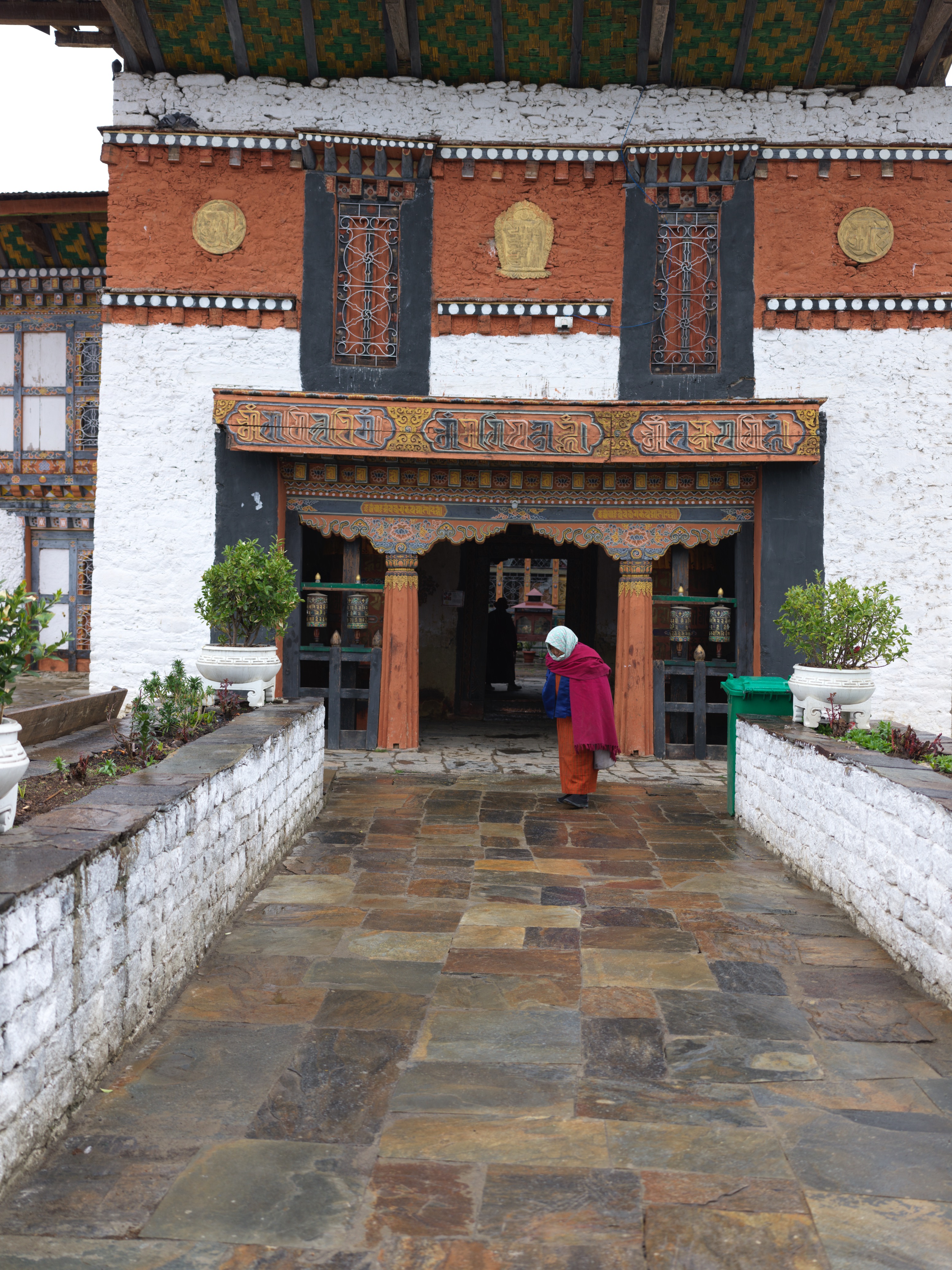
Jambay Lhakhang, Chamkar, Bhutan

Our first temple was among the oldest temples imn Bhutan, Jambay Lhakhang. Build in the 600s, this temple’s interior shrine room is filled with statues of Padmasambhava and is 8 emanations. In addition, the space includes relics and ancient objects referencing Buddhism deep past in this region. Some folks refer to the Bumthang Valley as the cultural heart of Bhuddhism in Bhutan. Everyone from Pema Lingpa, Longchenpa, and Padmasambhava visited this place, l;eaving a mark on the culture and the landscape.
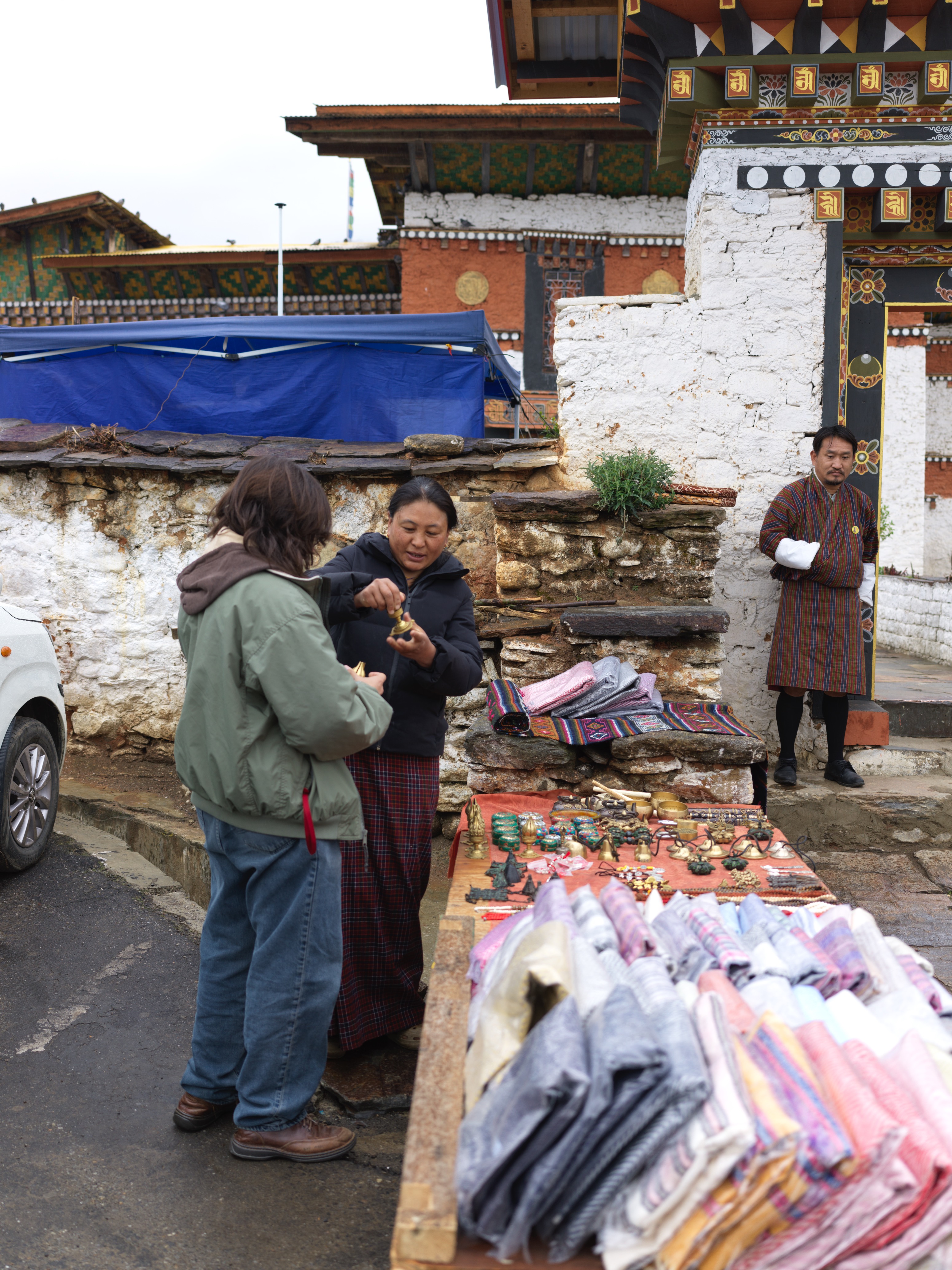
Max shopping outside Jambay

On a typicl day here in Bumthang, we would have walked the short distance to each of the temple along a dirt path to Kurjey Lhakhang, the location of the cave where Padmasambhava meditated more than 1400 years ago. Today, we took the bus to the temple and visited the shrine room and saw the cave that Padmasambhava sat in. If you ever wanted to visit one of the holiest, most sacred Buddhist shrines in the world, this one is it. The cave is distinctive in that according to legend, Padmasambhava left his mark in the wall of the cave. We sat for a while in this shrine room as Tenzin told us the story of Padmasambhava and his journey to Bhutan.
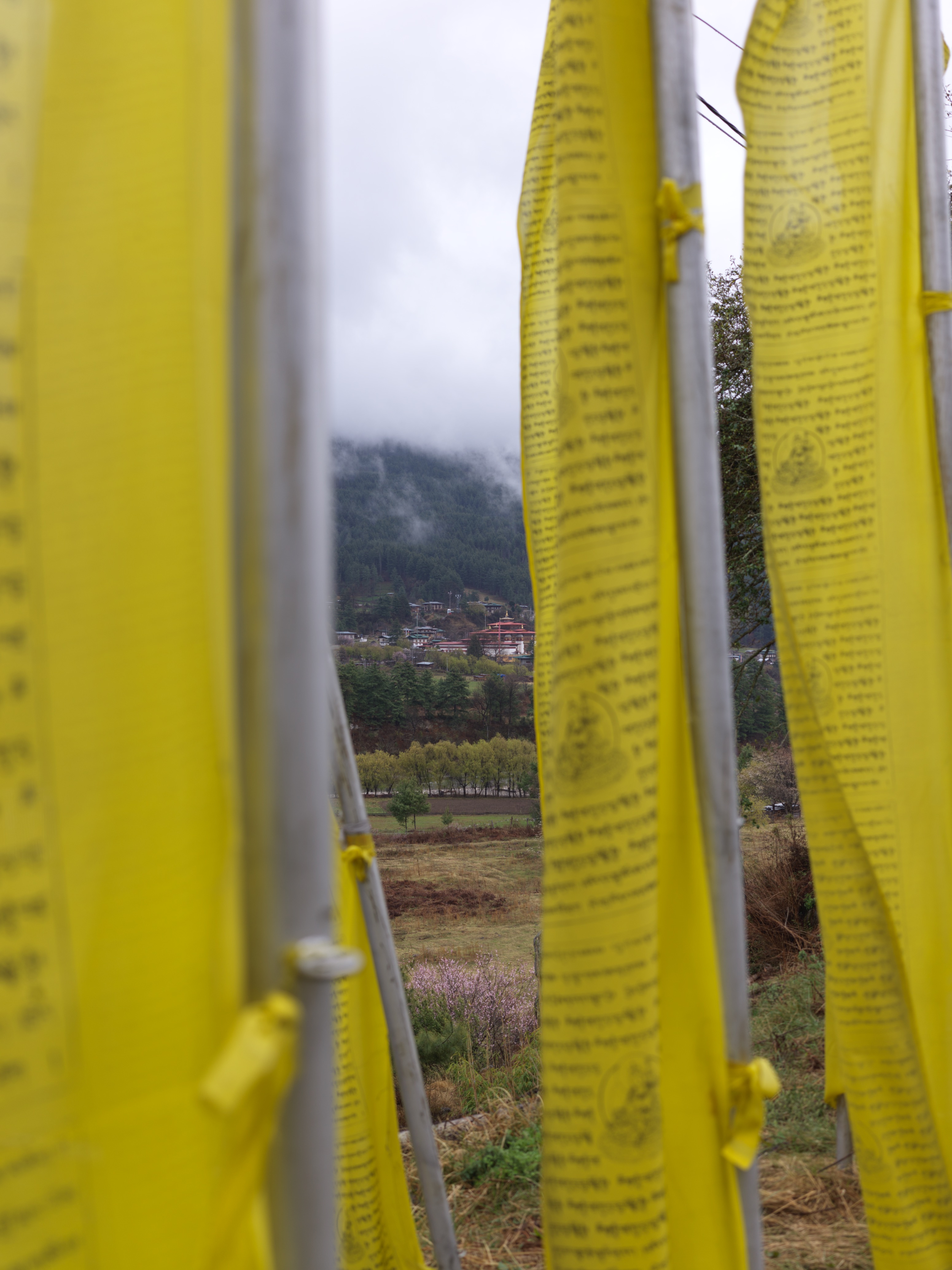
From Kurje Lhakhang, we made our way to Pema Lingpa’s temple, Tamzhing Lhakhang, across the river. Here we saw a group of people from Vietnam reciting the 100 Syllable Mantra. The temple was alive with sound, and we visted the shrine room, and saw the paintings on the wall placed there in teh 15th century.
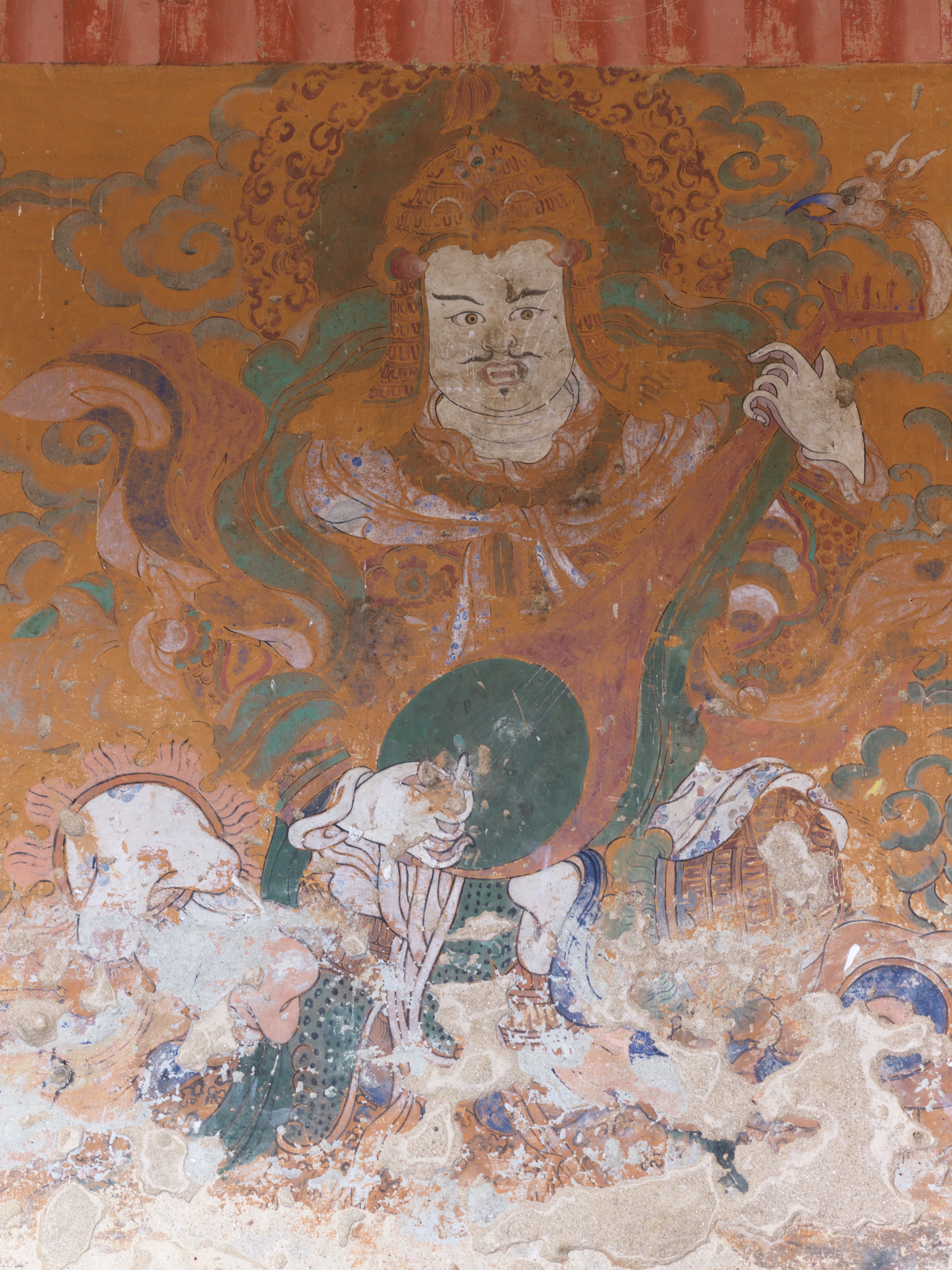
Padmasambhava at Tamzhing Lhakhang

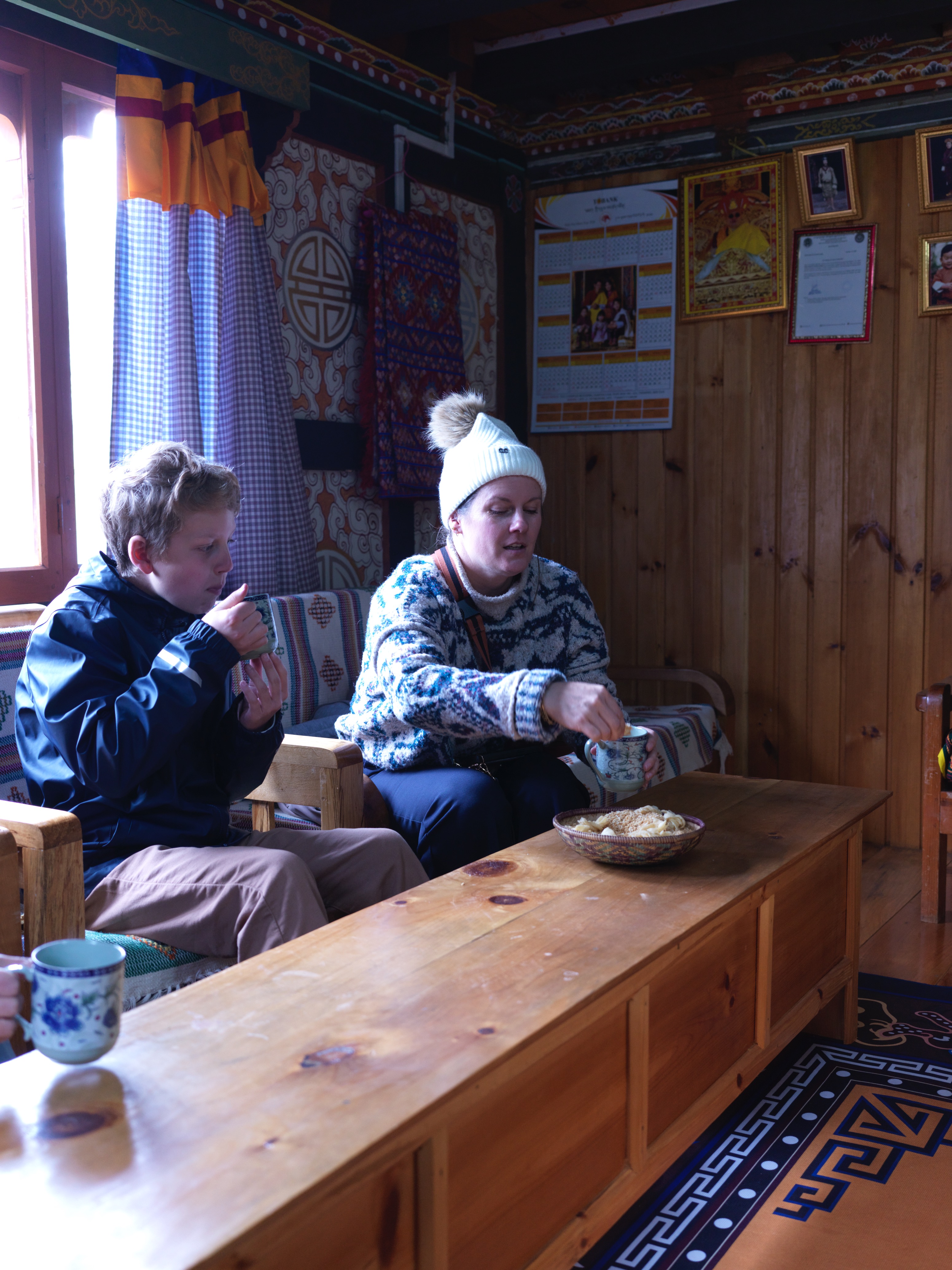
From there we headed to a local farm house for lunch to taste local food and learn aboiut how it was made. The food, by far, was among the best we sampled in Bhutan.
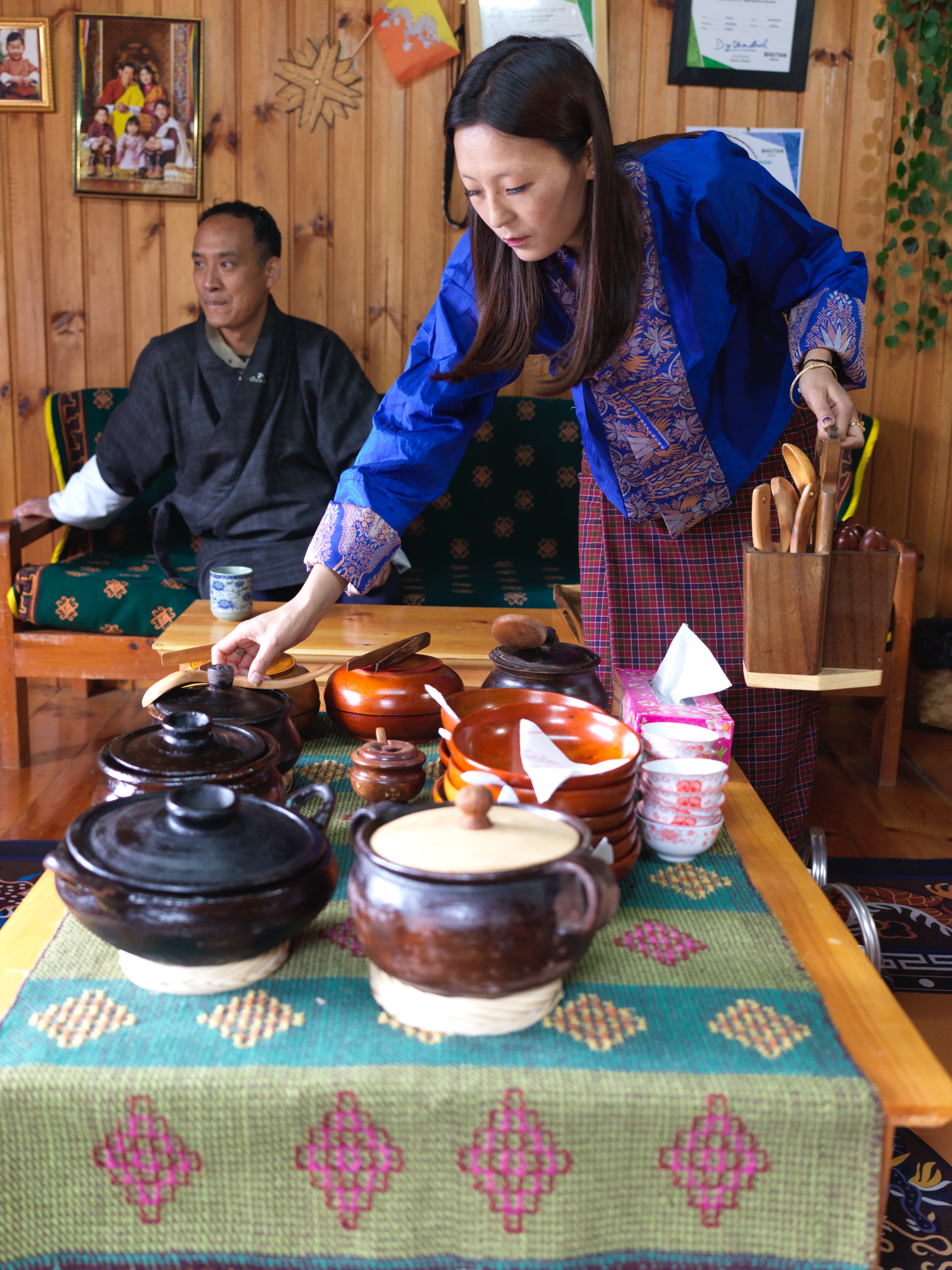
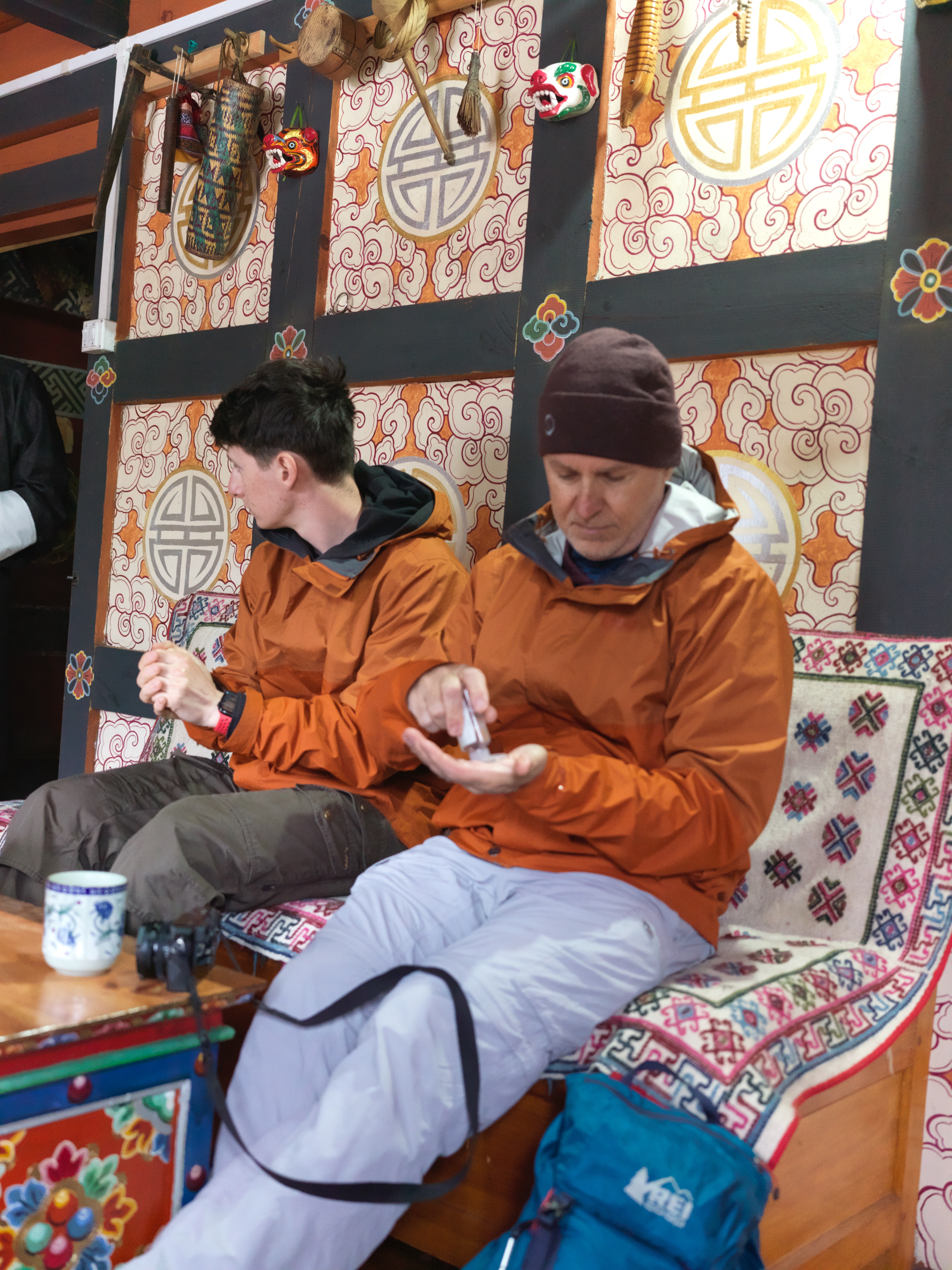
Preparing food in Bumthang

After the farmhouse we headed back to the Hotel and then into town. Tomorrow, our journey takes us to Phobijikha Valley and a hike through the valley and a visit to the Black Necked Crane research facility.
Bhutan Day 4: From Punakha to Trongsa

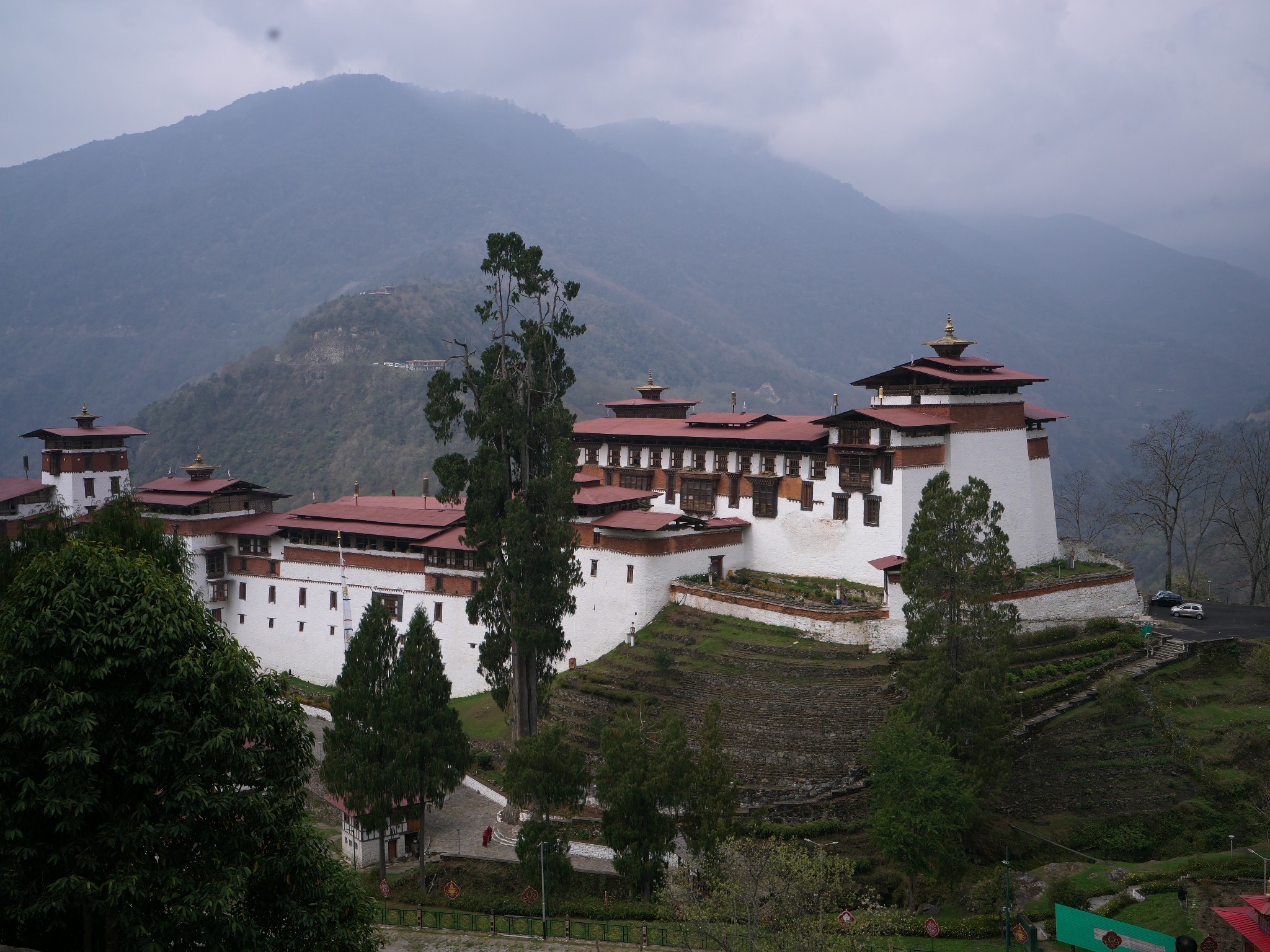
The center of political power in Bhutan is firmly situated in Trongsa, the former capital of the country. The former province was among the most economically powerful in the region for centuries before the country of Bhutan existed as a single entity. Testimony to that past is the massive Dzong sitting on a north-south axis.

Our travels today took us to the Dzong, the National Museum, and various stops along the way seeing yak, photographing the mountains and riding our small bus for hours.

I asked our group to write something about their experiences so far. Today you’ll hear from a few people as they consider this trip. Enjoy the photos and commentary!

Ronan: One of my favorite moments so far in this trip was the Hong Kong Ladies’ night market, where we tried really good food and bought fun things. We saw a lot of people selling clothing, bags, and other souvenirs. I also tried these beef skewers that I thought were going to be questionable, but they were good. They were slowly grilled and seasoned to perfection. Sadly, we didn’t bring enough cash to buy more things so all we were able to get was the food and 3D printed snakes. 

Nancy: My favorite moment of the trip thus far was waking up at 2am in Thimphu and happening to glance out the hotel window to see a giant golden buddha statue glowing in the dark of the night. I rubbed my eyes to make sure I was seeing correctly, and opened them again to realize it was indeed, still there! I felt welcomed by the country of Bhutan and watched over as I went back to sleep for a few hours. We visited the statue the following day and I later learned that the giant statue was transported to the area in three pieces. I can imagine the shock of seeing the giant pieces traveling on the road by all those they passed along the way.  

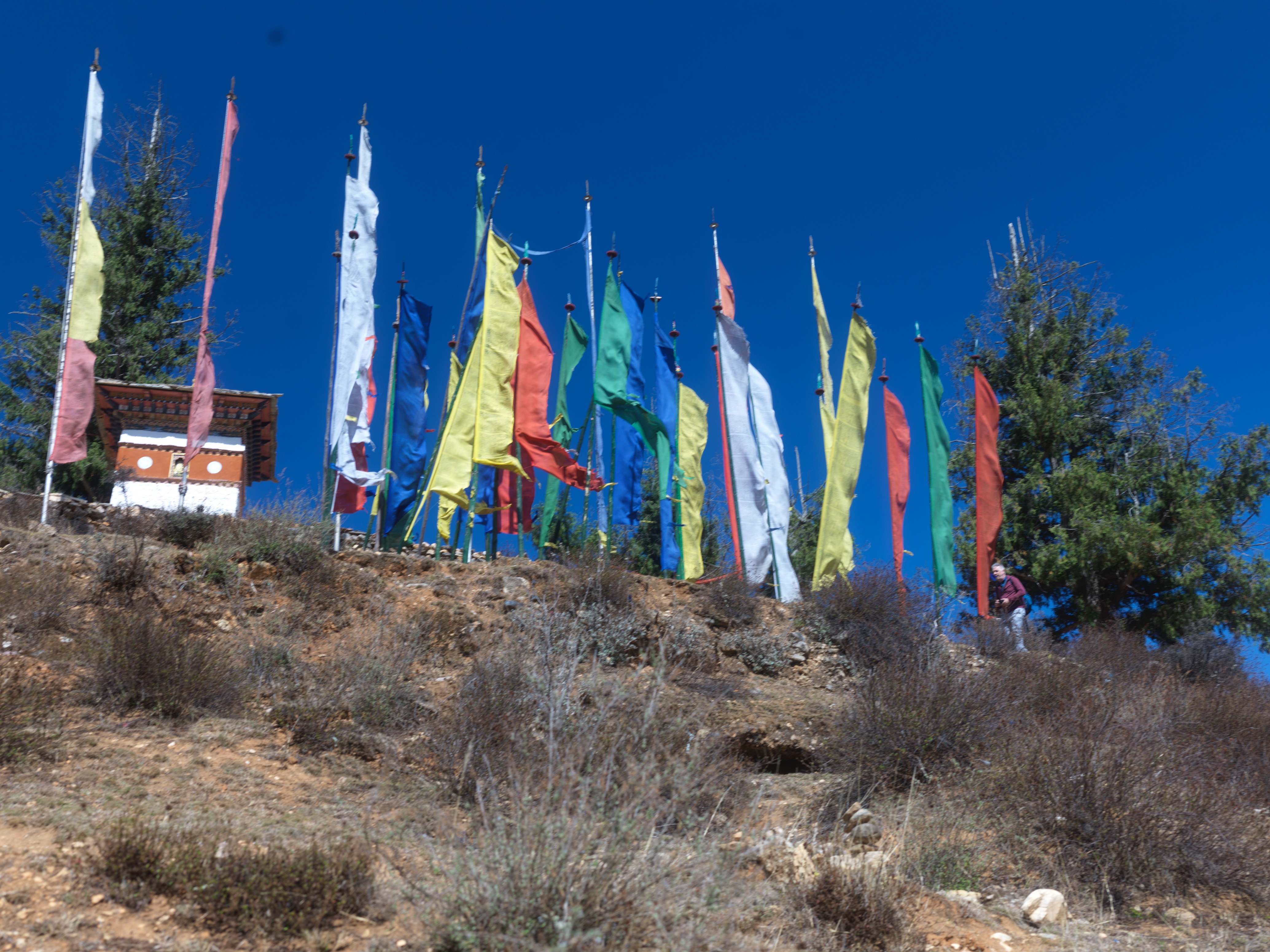
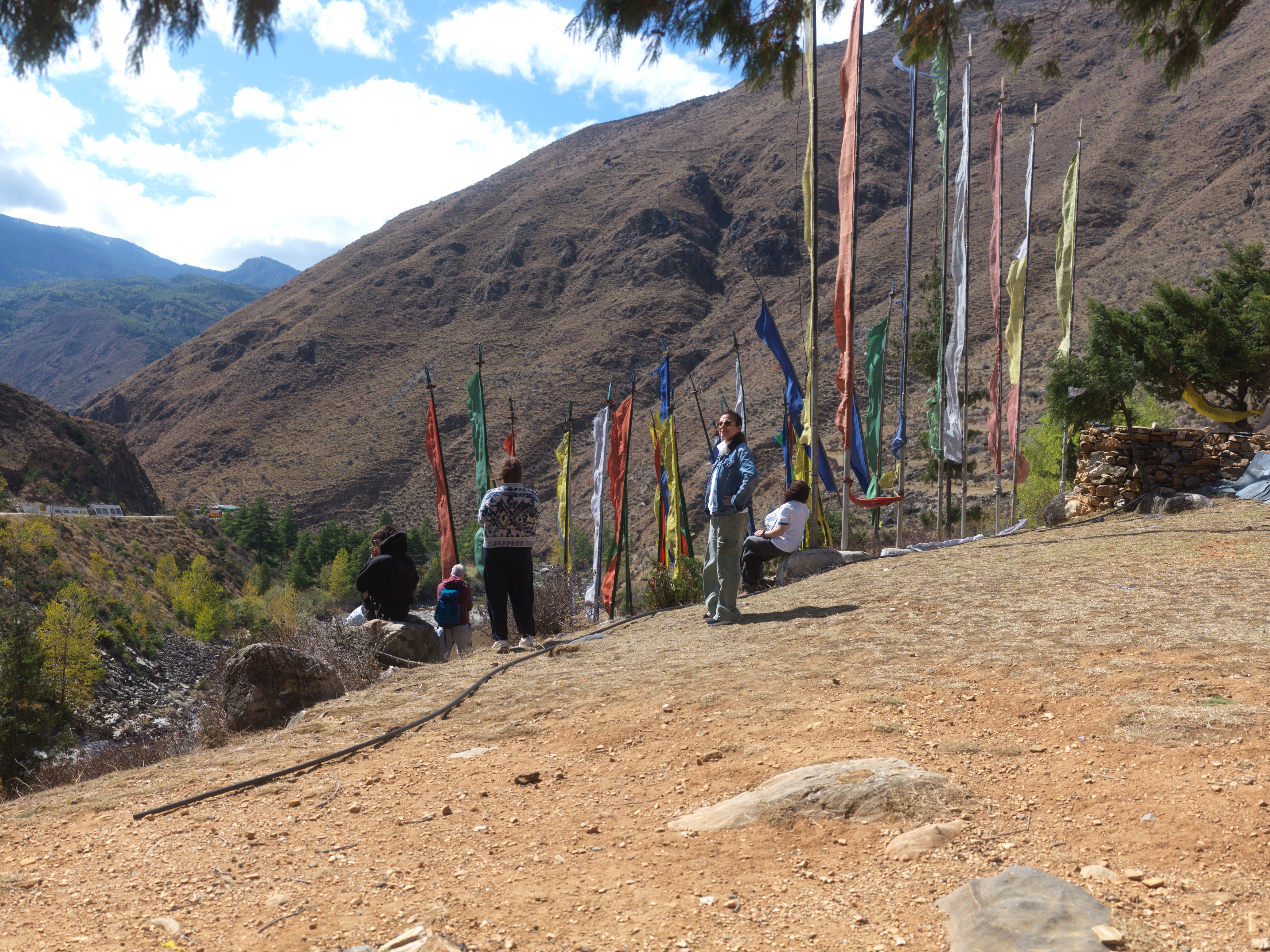
Brian: Thus far I am most struck and enjoying the continuous array of prayer flags throughout the environment. Strung on bridges; wrapped around stupas; planted high on hillsides or ridge lines on long vertical poles; yellow ones lining the winding road ascending the mountain to the golden buddha; tall white funereal ones planted in groups high on hillsides commemorating a relative. They are literally everywhere and bring so much color and joy to traveling through this beautiful landscape.

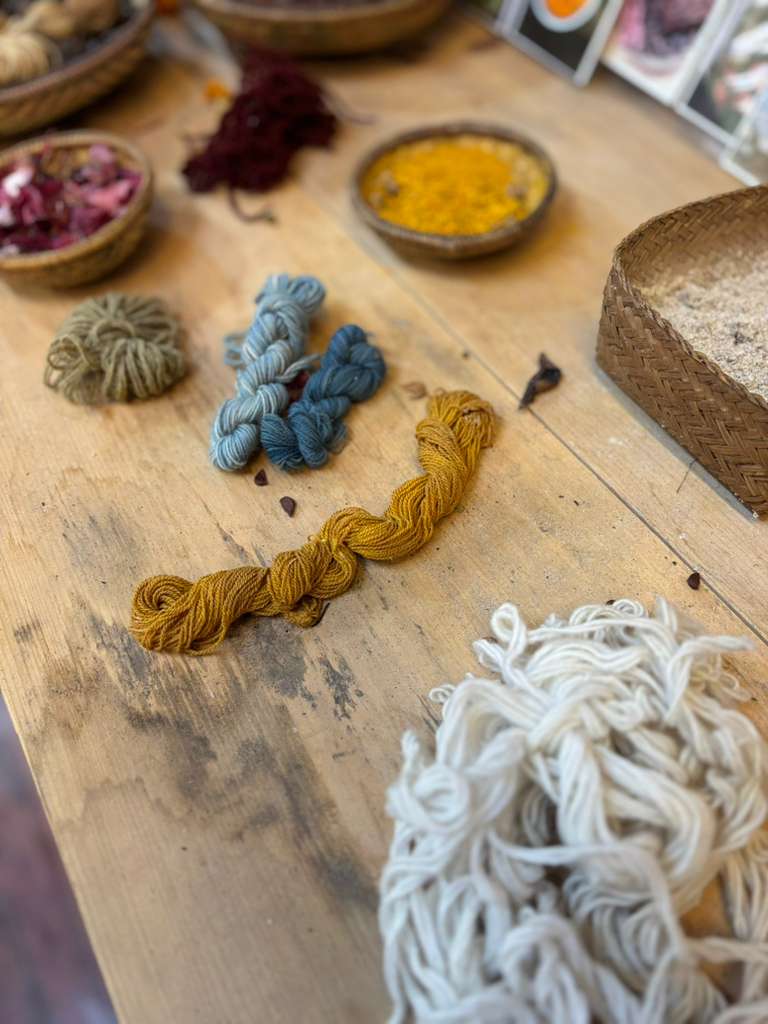
Plant-dyed yarn, Bumthang (photo by Nancy)
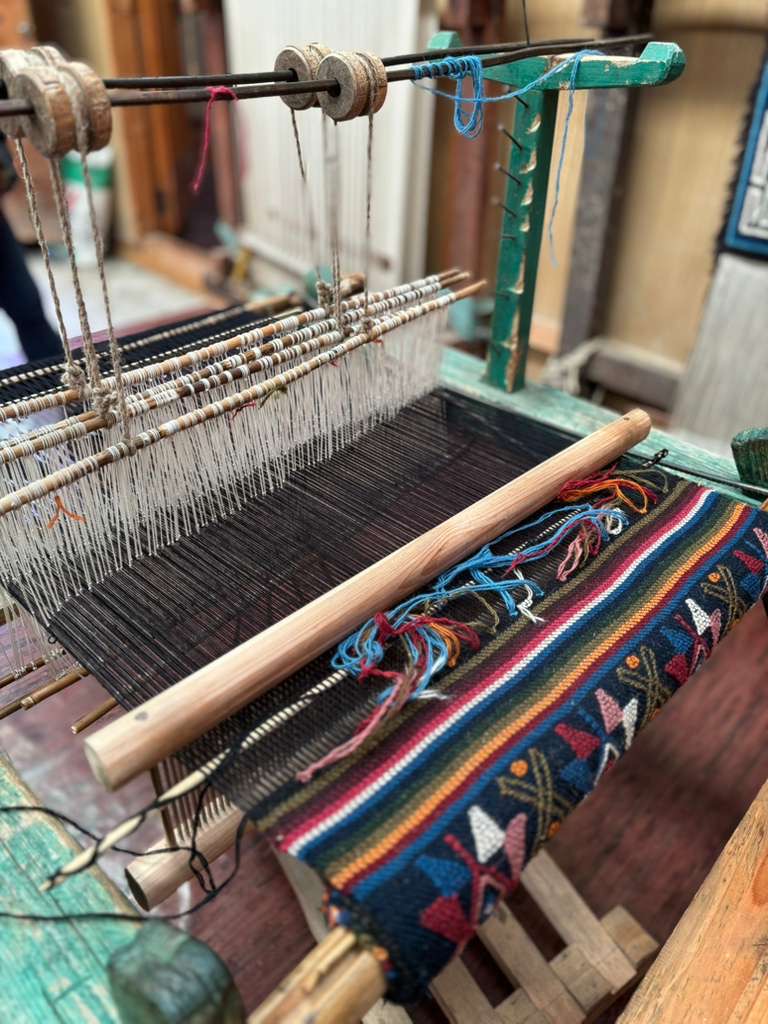
Loom in Bumthang (photo by Nancy)
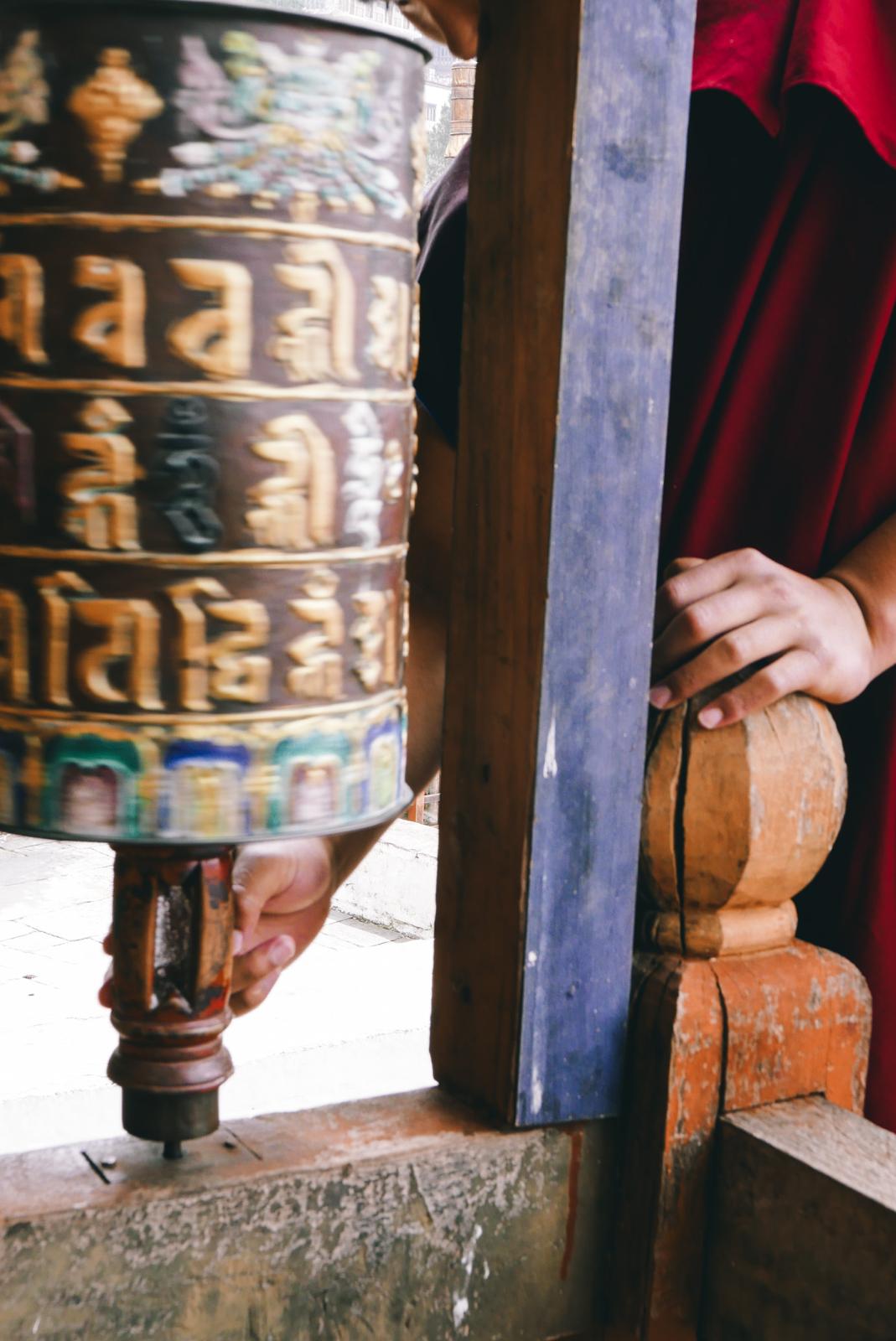
Prayer Wheel, Trongsa Dzong (photo by Brian)
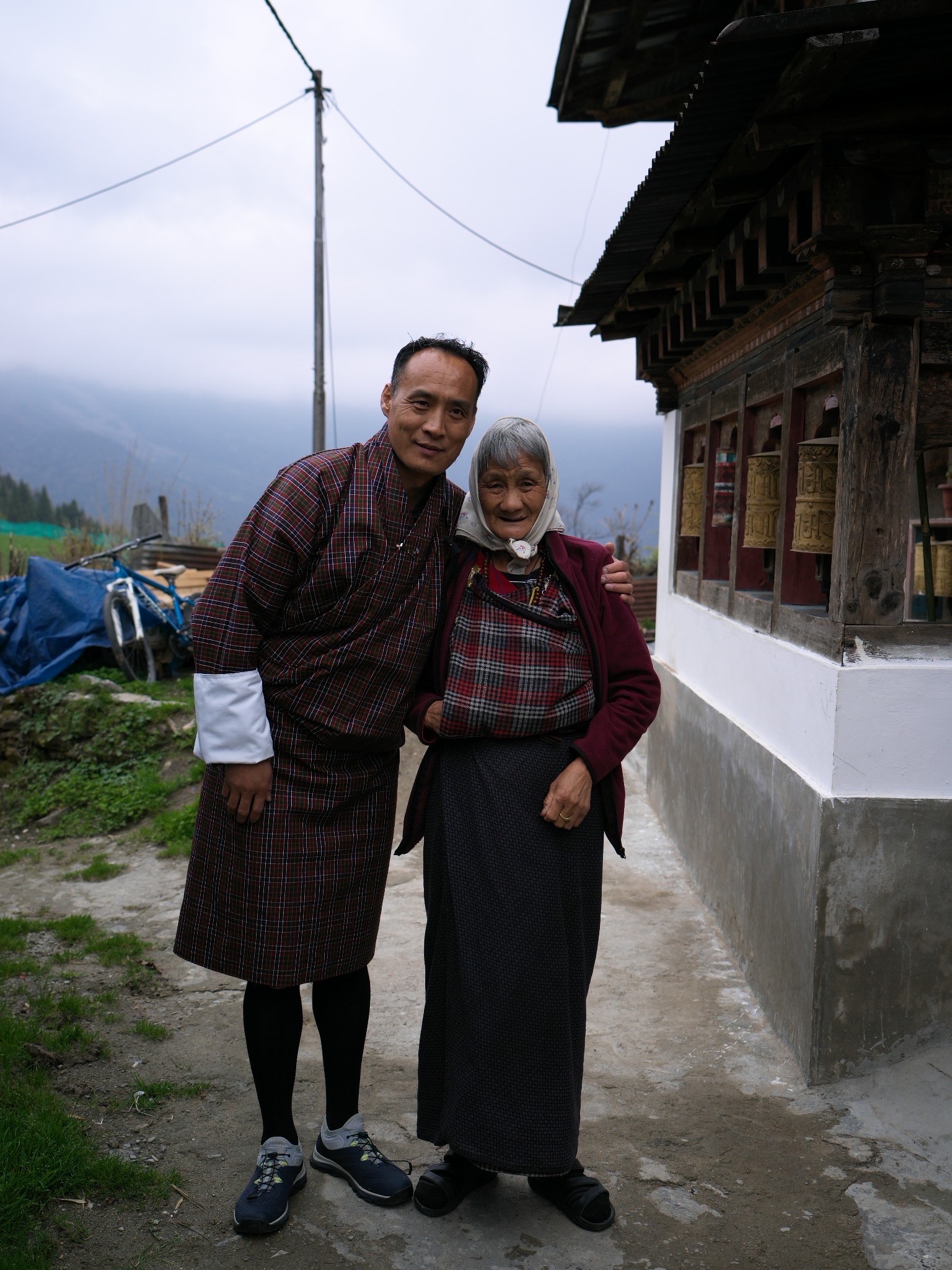
Tenzin and his Mom in Tsangkhap
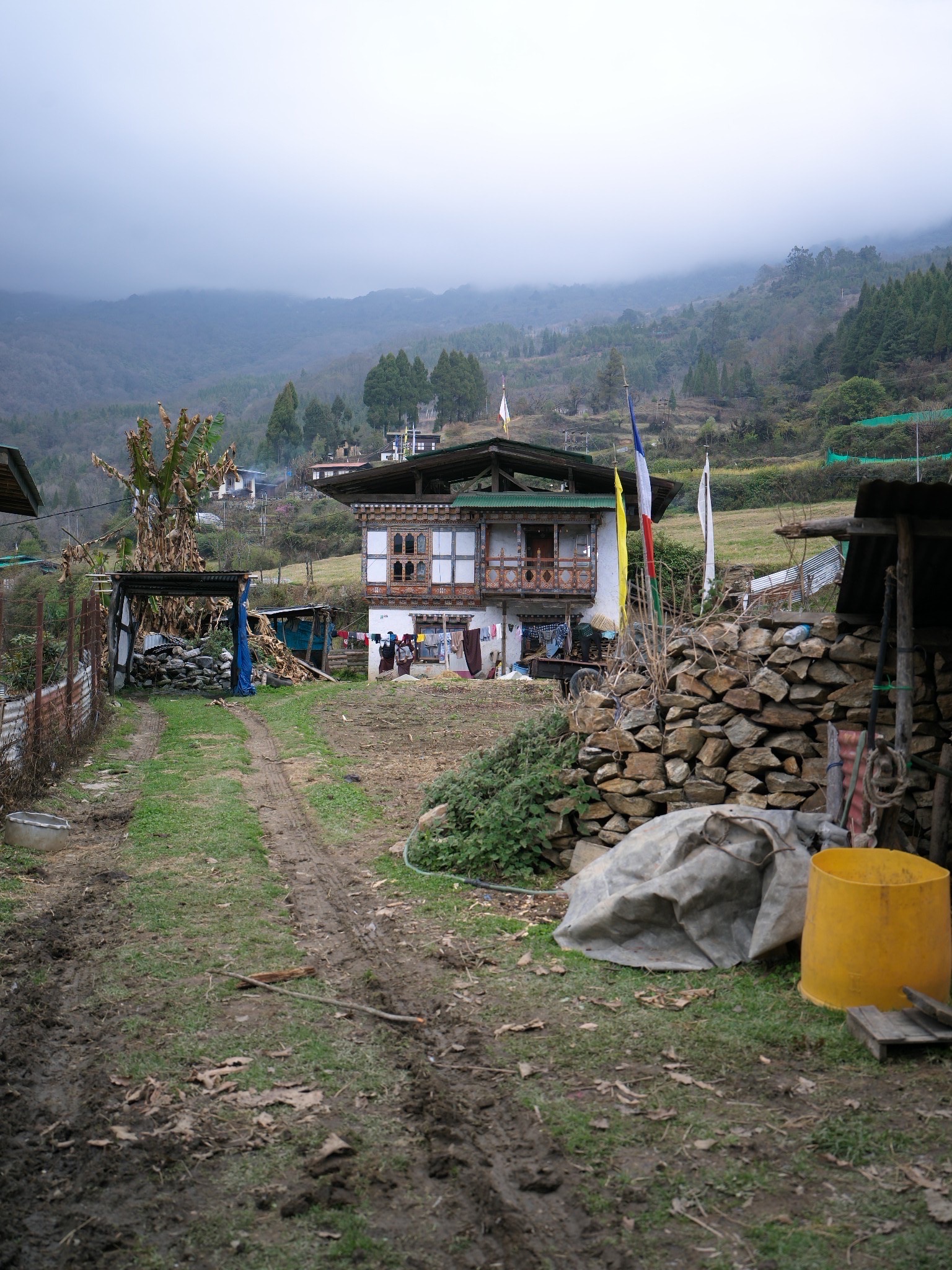
House in Tsangkhap Village near Trongsa
Trongsa Dzong
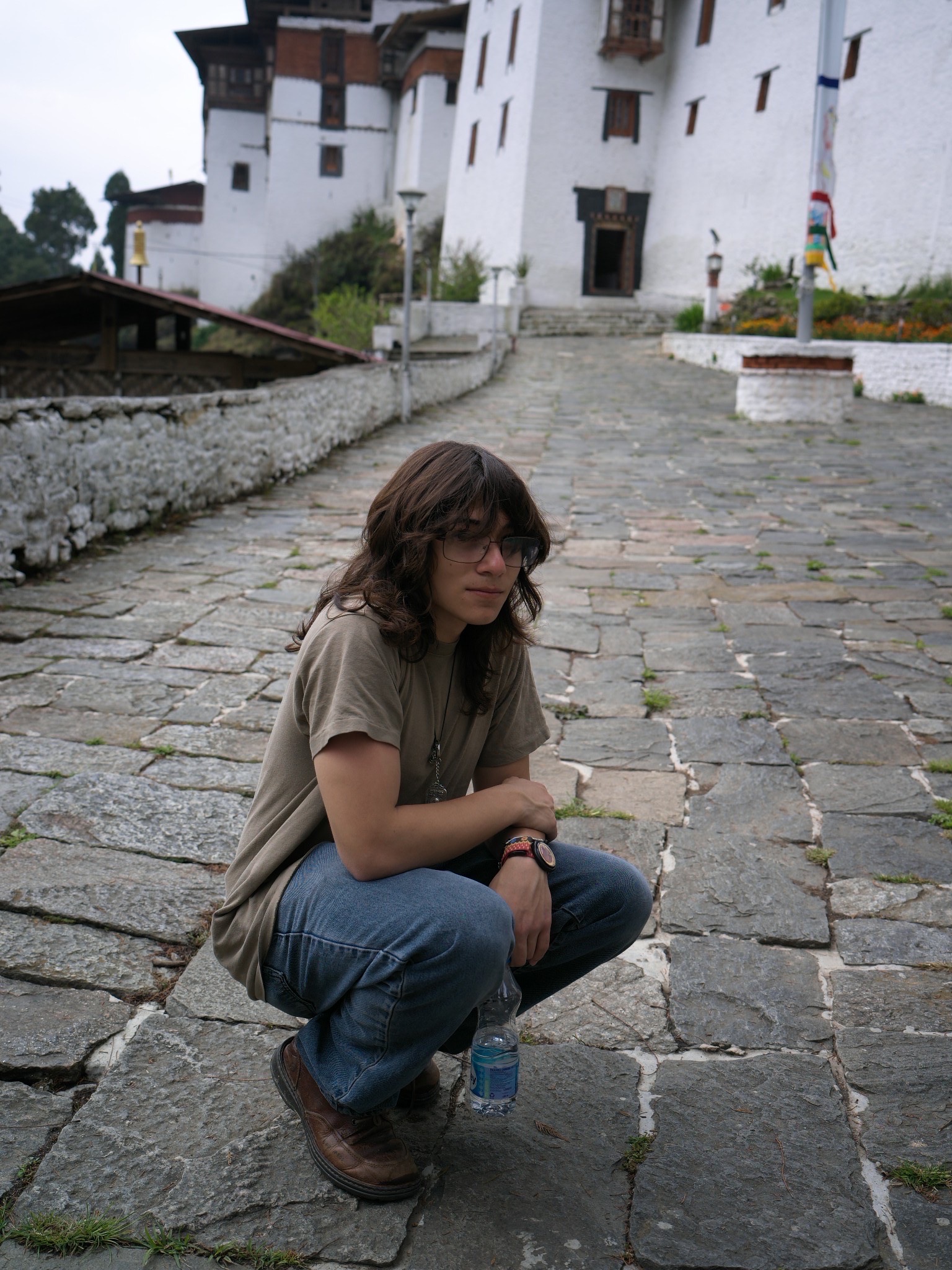
Max at Trongsa
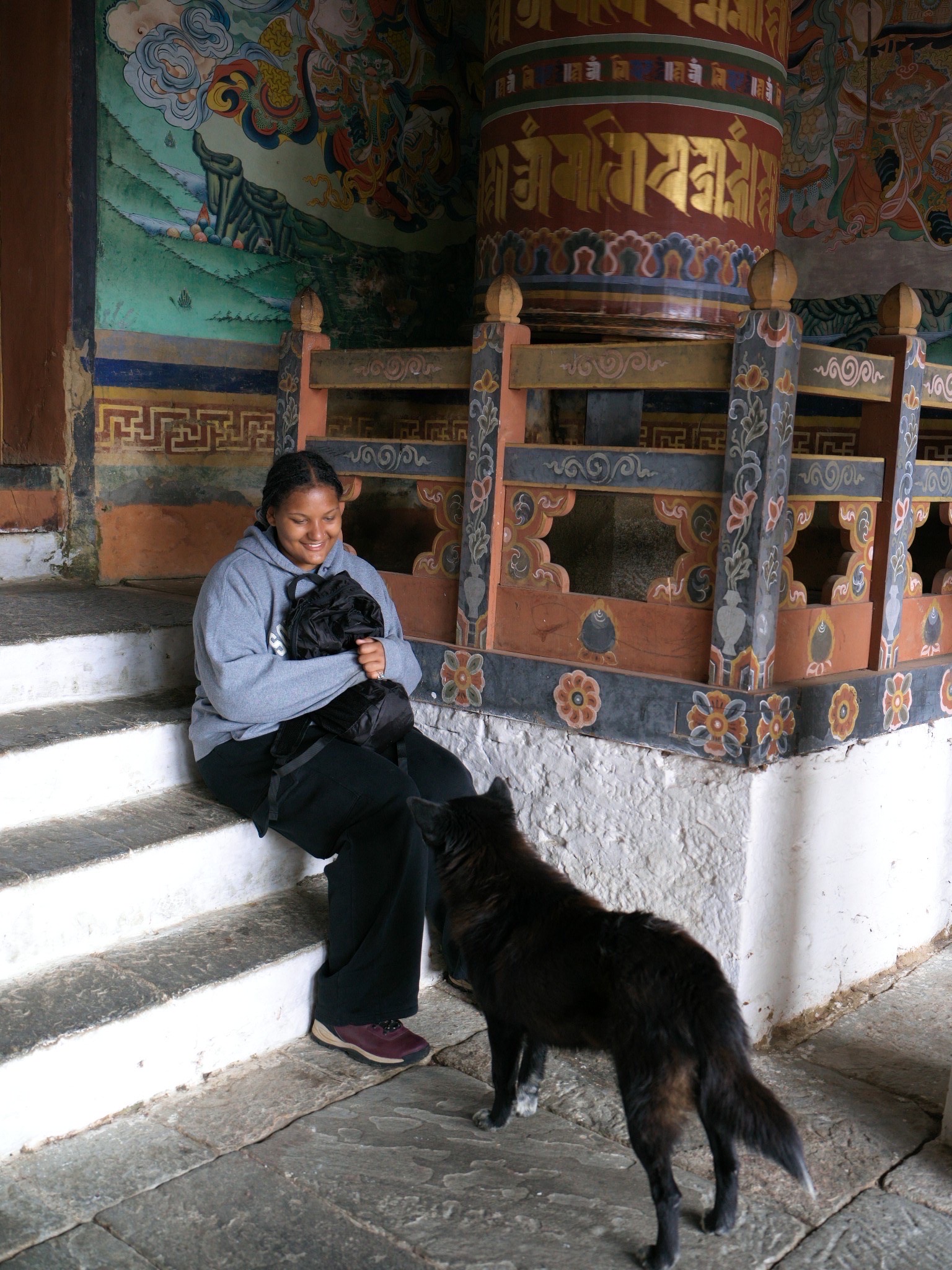
Beth at Trongsa
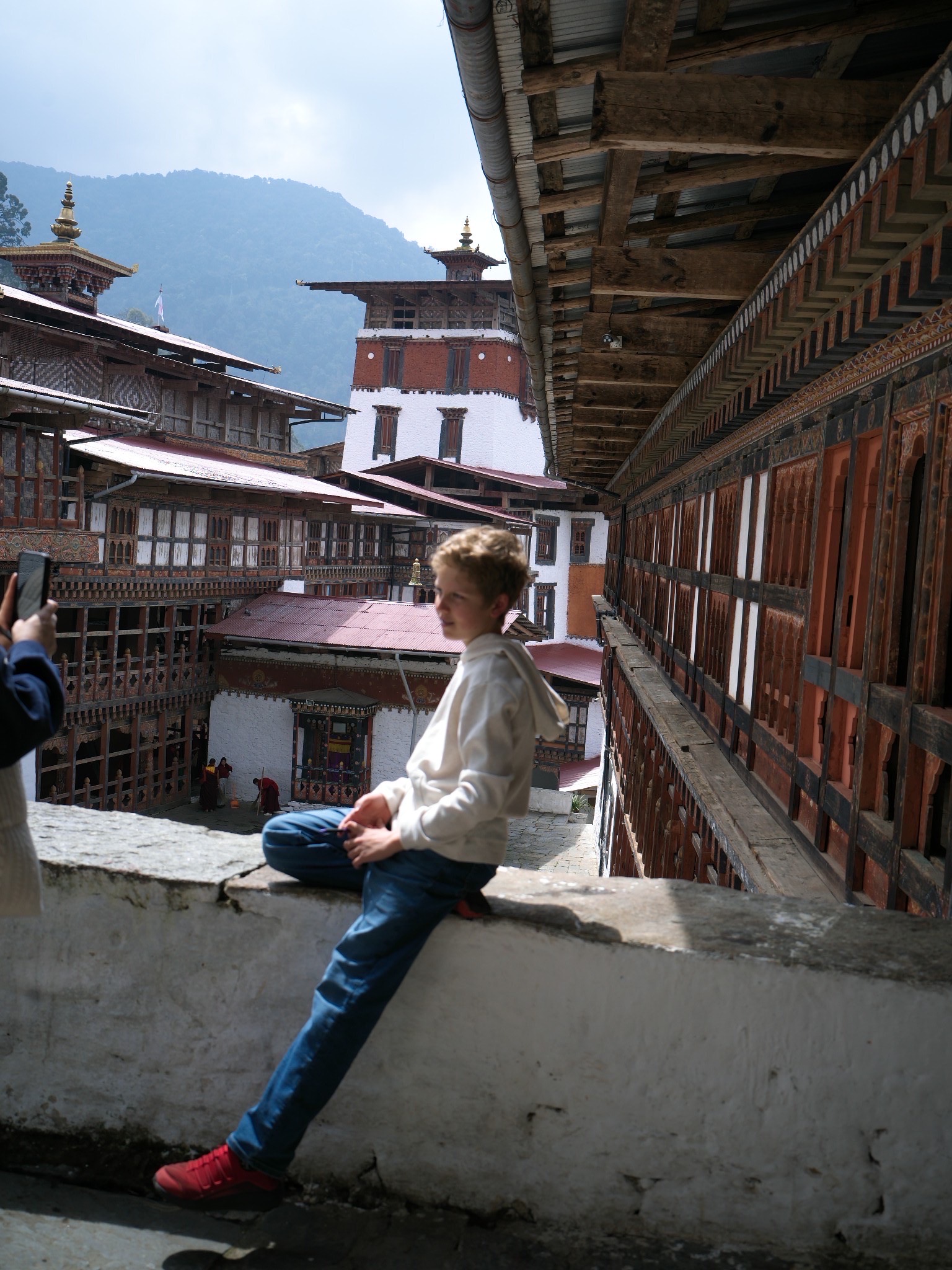
Ronan at Trongsa

In Bhutan: Day 1

OK, let’s just get this out of the way: Bhutan is an amazing place in the world. I’ve visited multip0le times and made friends here. While the struggle is real to provide education and jobs to the population, few places address those needs so directly. Bringing students to this place has been some of my work for the past 16 years, and I’m lucky to have had willing travelers to come to a place few have even heard of.

Our first day in Bhutan began peacefully. We landed around 10:30AM and were picked up by my friend Namgay and Illuminating Tours. The welcome was wonderful, and we hopped on the small bus to our first stop at Kyichu Temple in Paro.

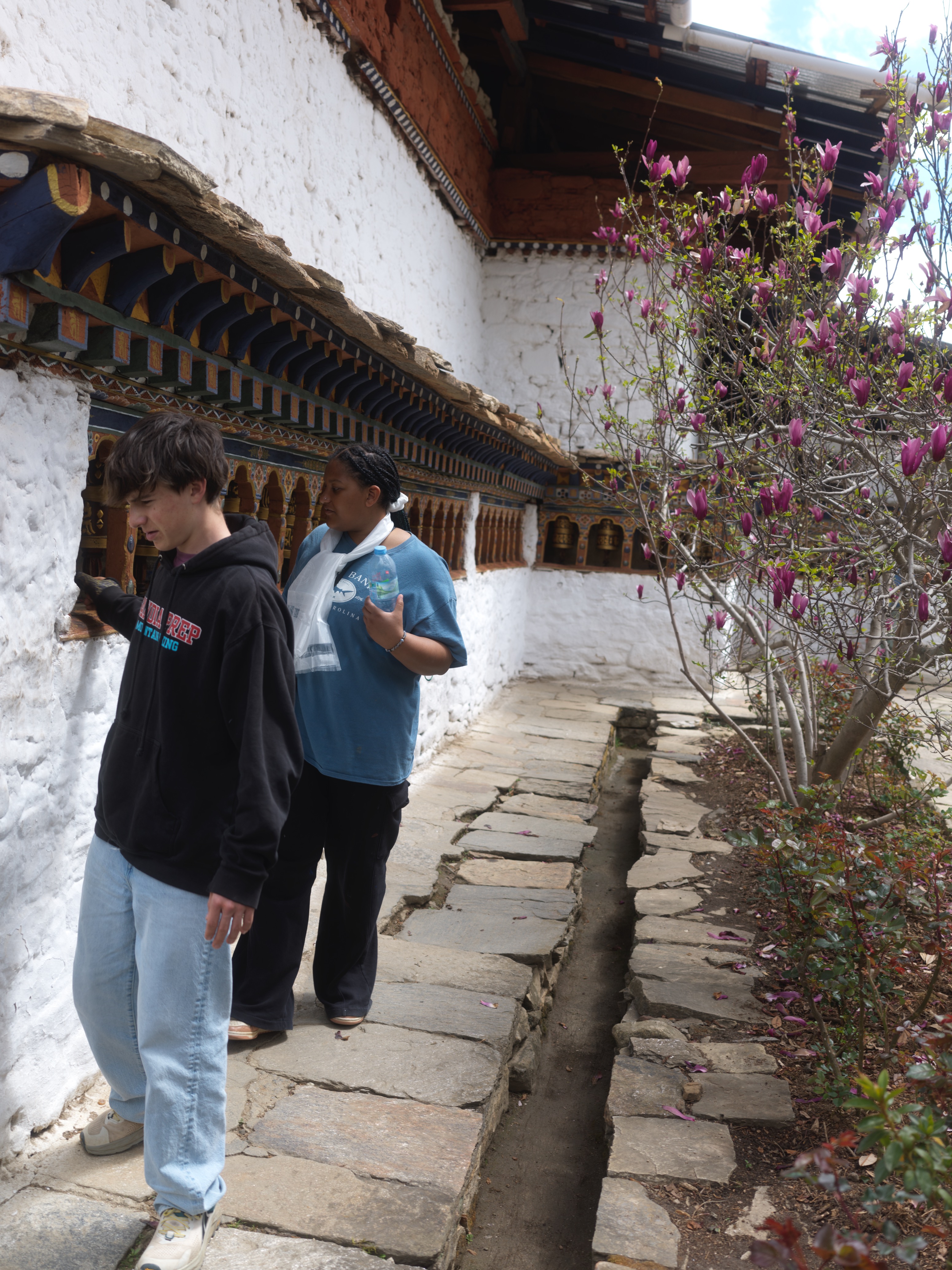
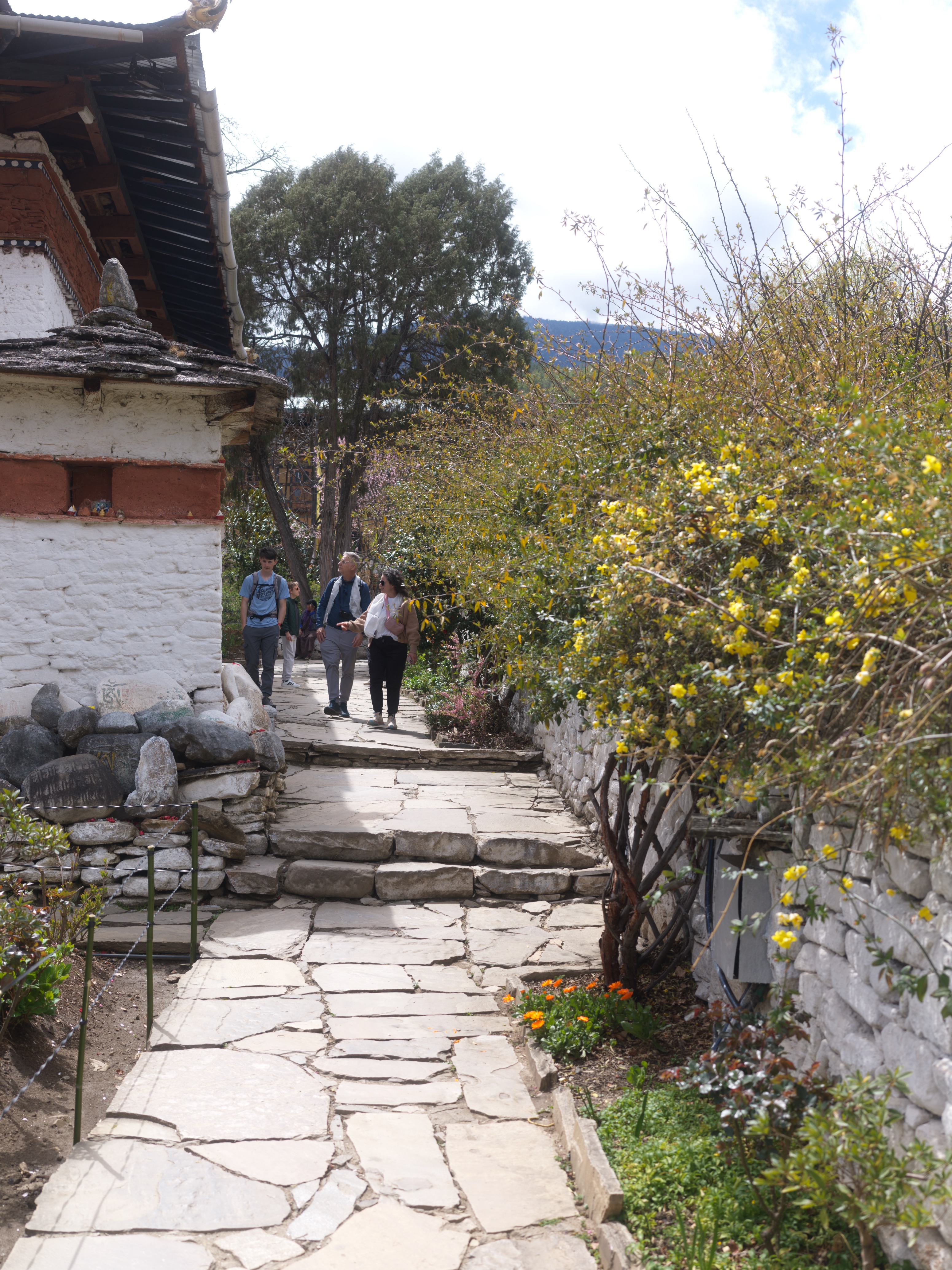
One of the oldest temples in Bhutan, constructed in the 7th century, the building is filled with statues of important teachers and leaders, as well as shrine rooms dedicated to the Buddha and Padmasambhava. Padmasambhava, or Guru Rinpoche, brought Buddhism to Bhutan (and to Tibet) and this location was one of a few that the Guru established in the region.

Spinning the Prayer wheels
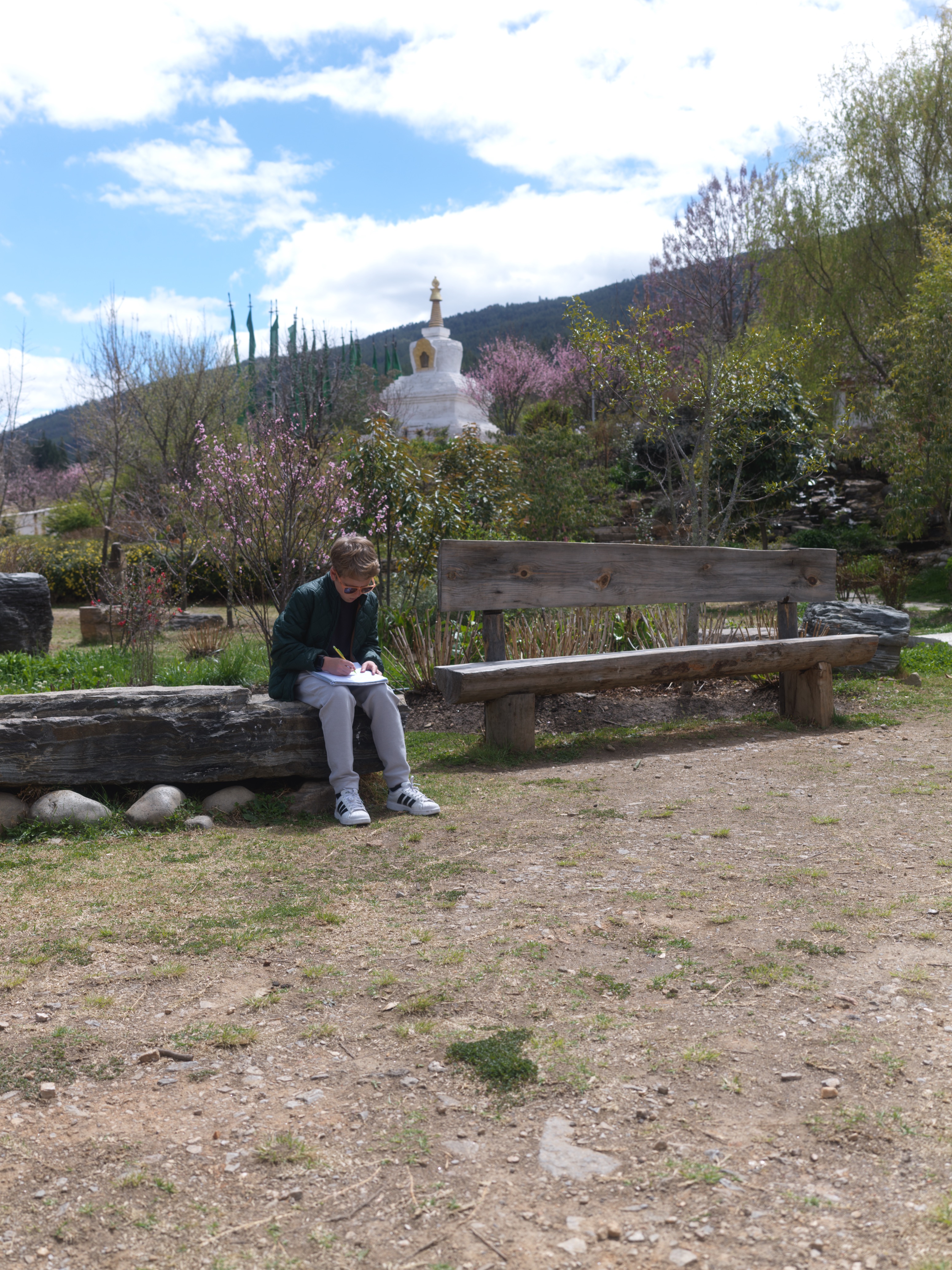
Finding time to draw
Wandering the grounds at Kyichu
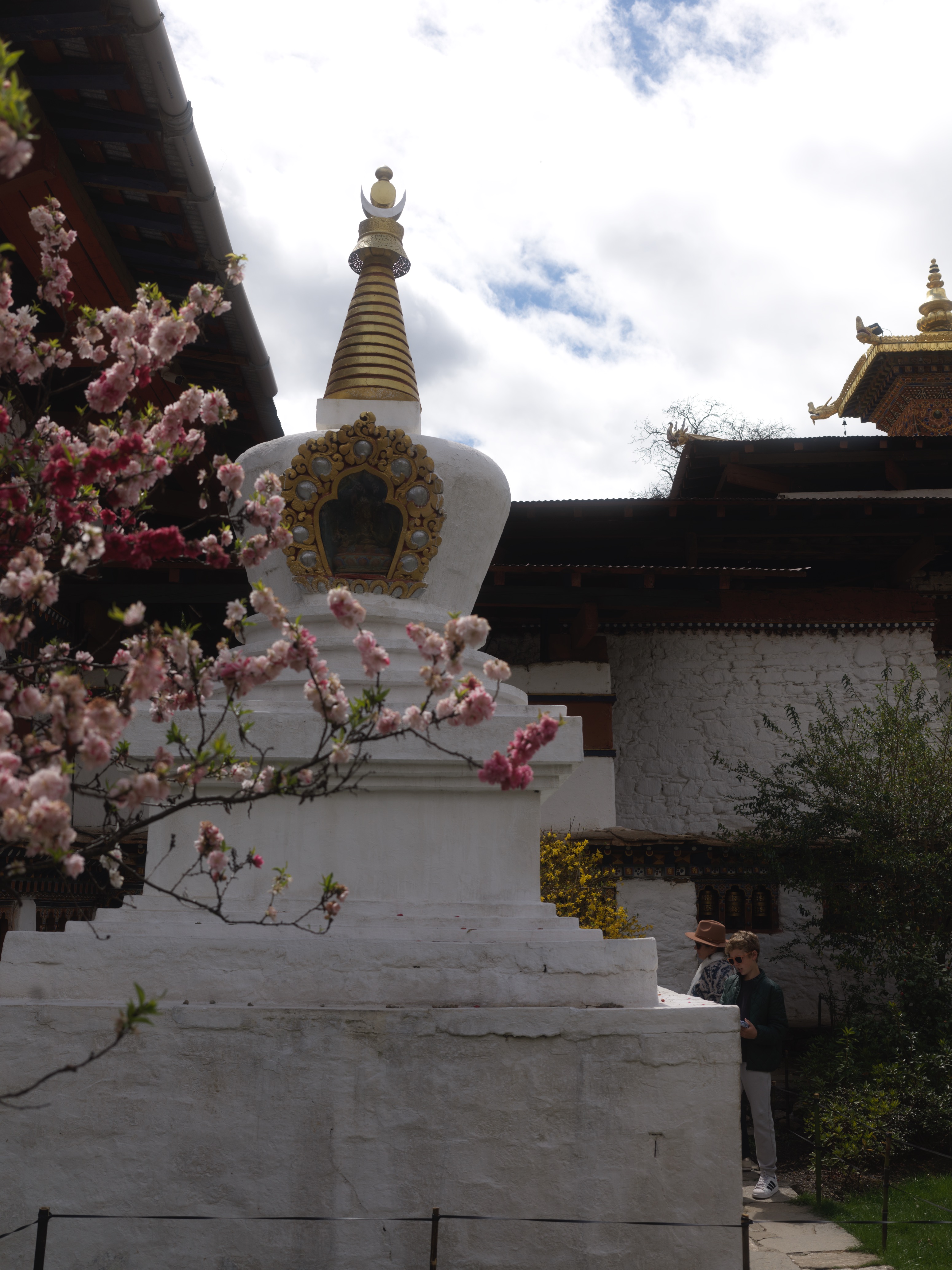
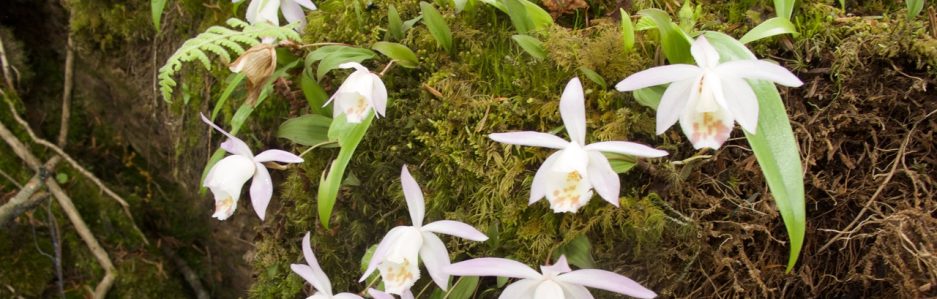
Flowers blooming all around the gardens

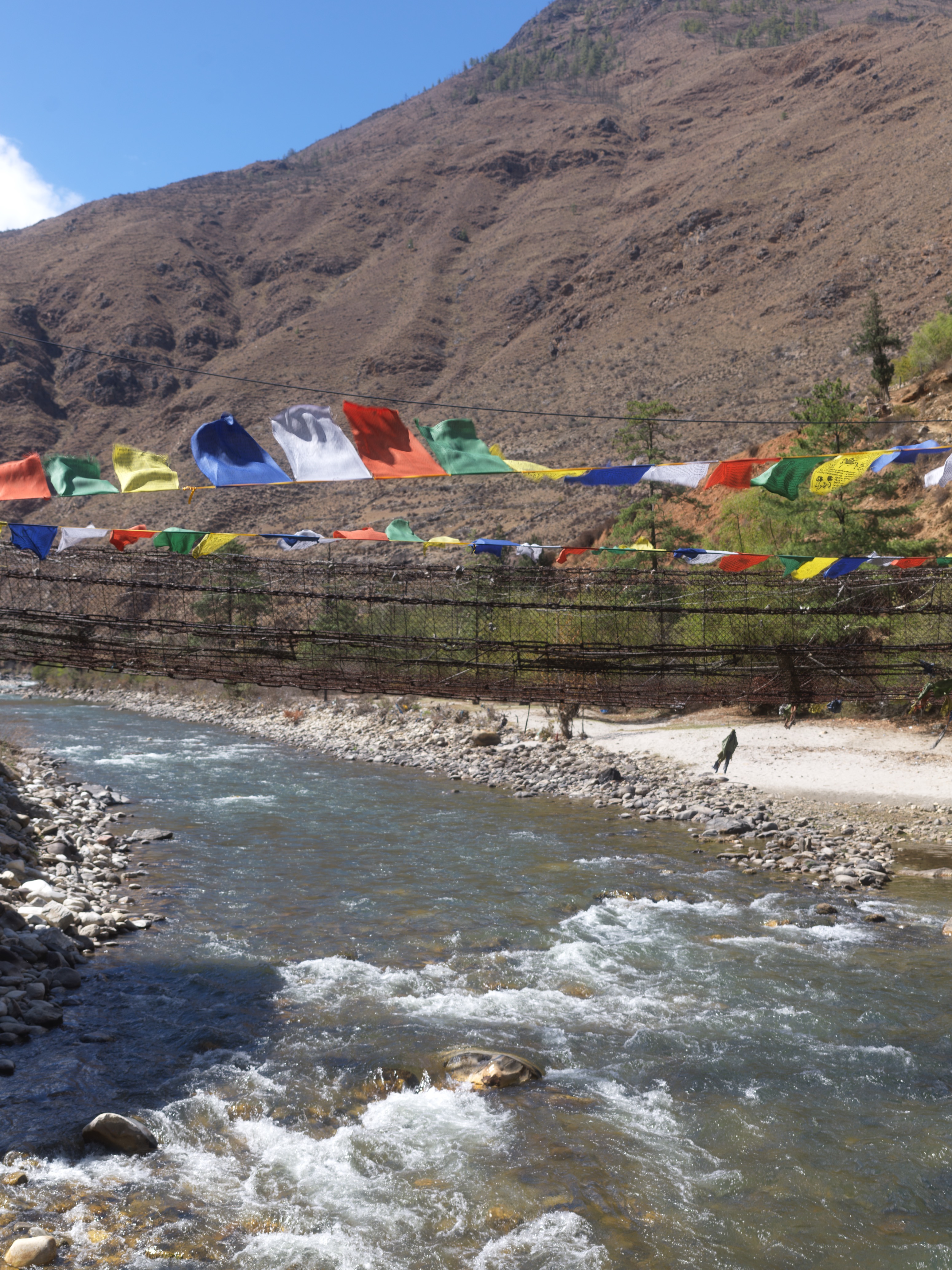
After Kyichu we ate lunch and made our way to Thimphu, the capital of Bhutan. On the way, we stopped for a hike at the Iron Bridge. Legend and history states that a Tibetan ironworker came to Bhutan and formed the iron links that made up the bridge in the 16th century. We walked around the area, headed up to the stupa on the hill.

Up the hill to the stupa at Iron Bridge
Iron Bridge over the Paro river

As we make our way around the Thimphu today and Punakha tomorrow, we’ll see how things unfold in terms of weather (hoping it holds for our rafting trip in 2 days), and hikes to temples in and around Punakha!