

Reflections, Observations, Meanderings in Asia



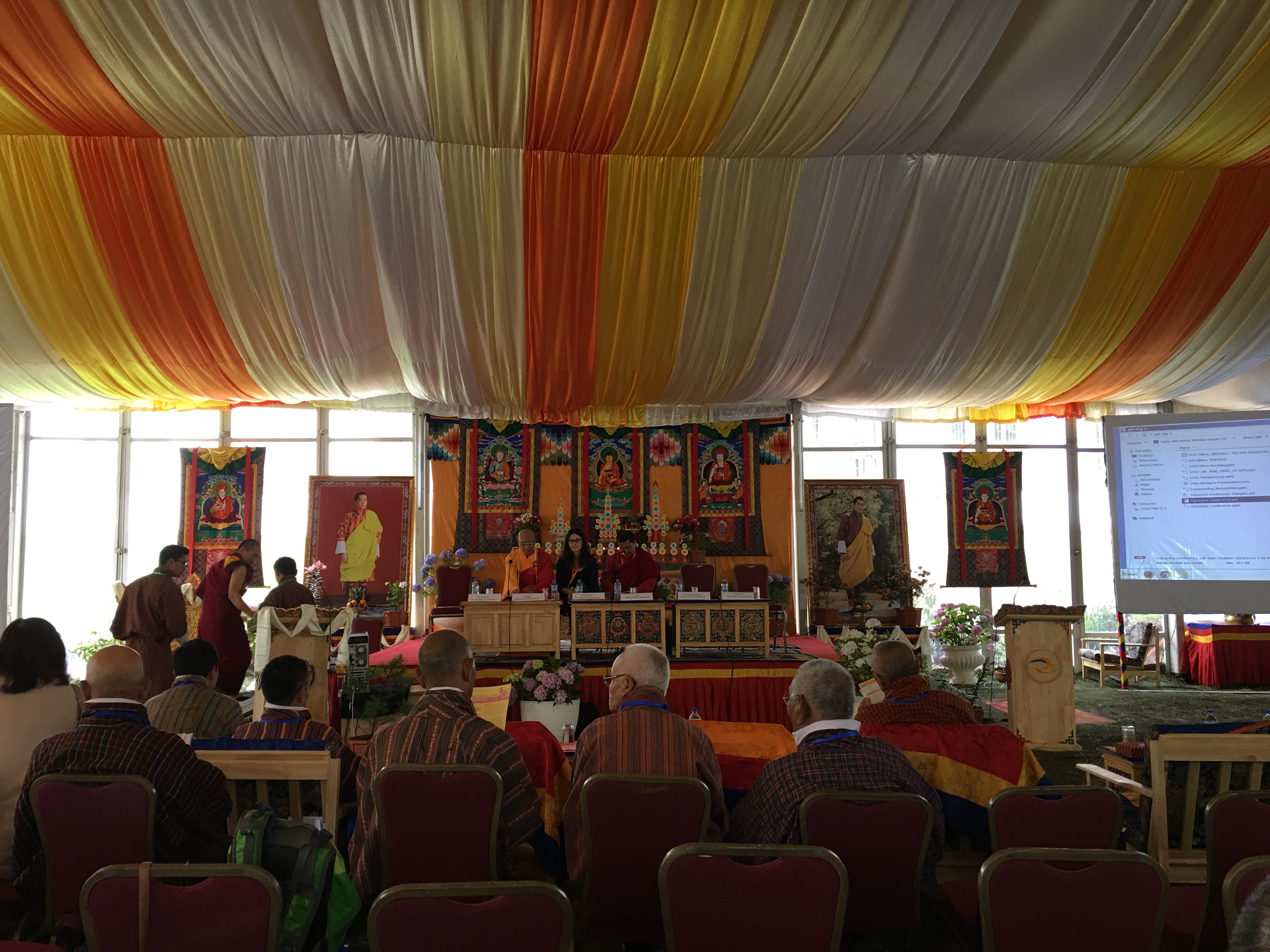

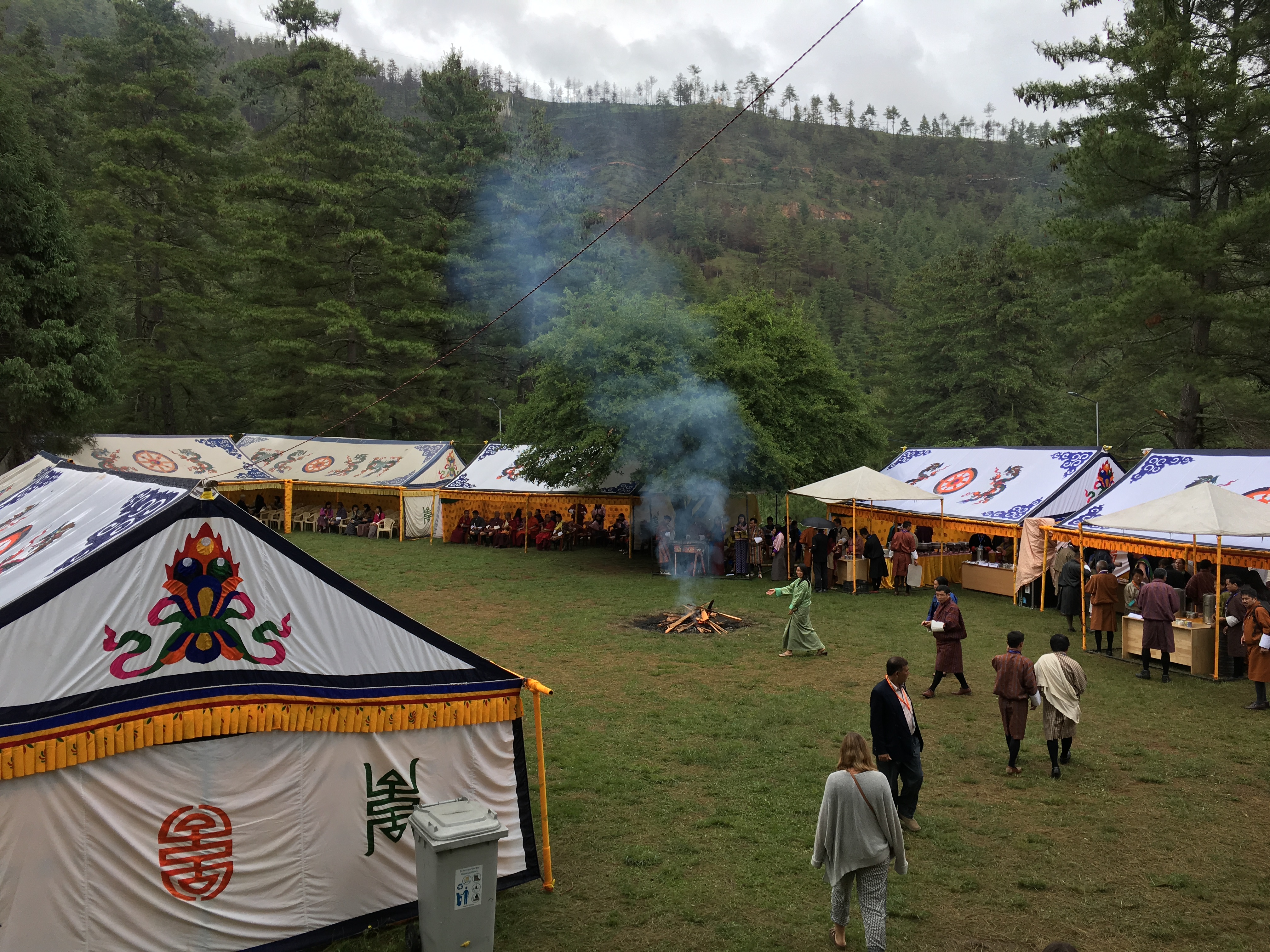
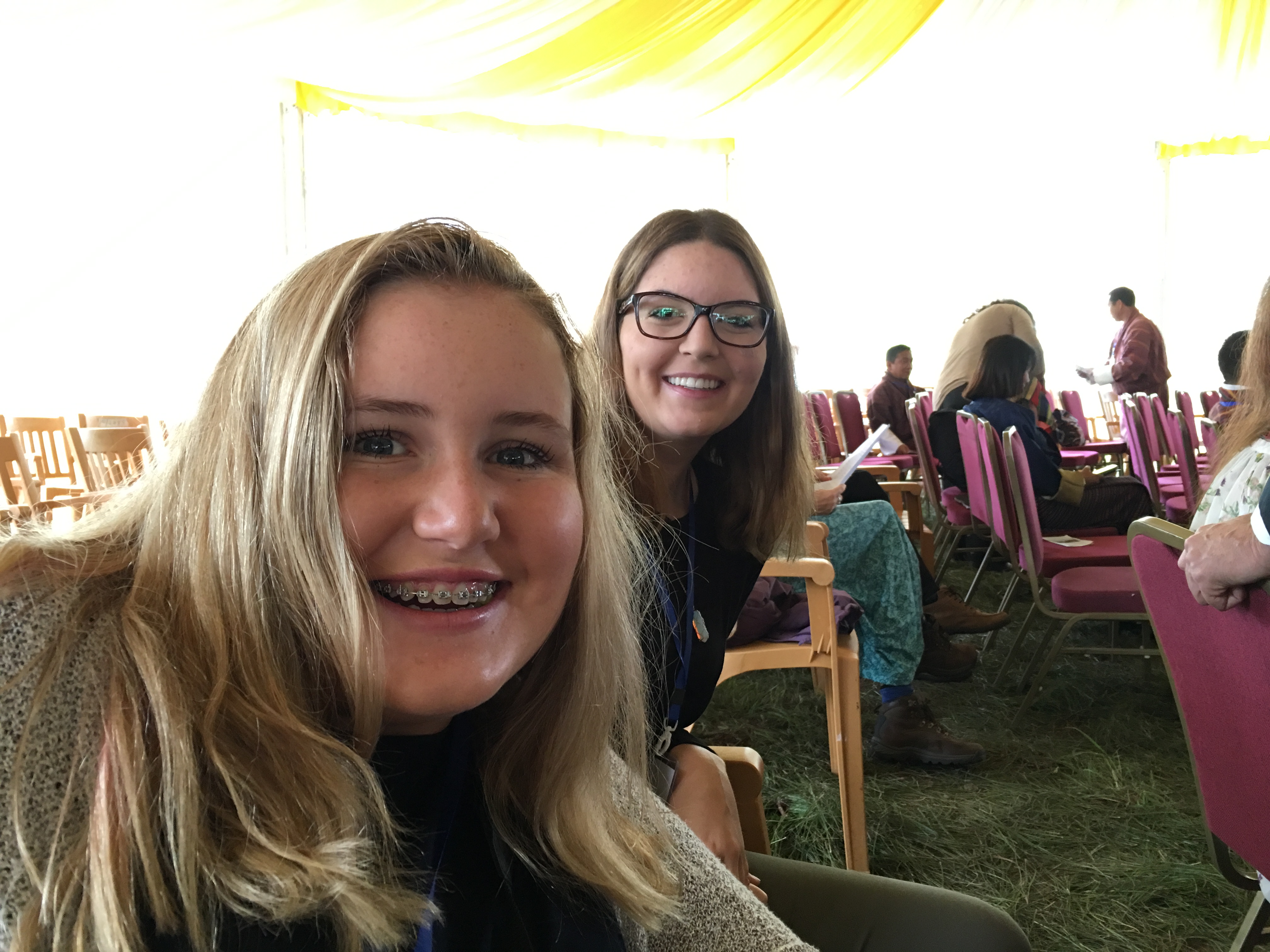
Halle, Natascha and I arrived at the conference on Day 3. We unfortunately missed the talks on education and teaching, but we were excited to hear the days speakers on the more technical aspects of Himalayan culture and its influence on history, math and science. The talks ranged from a detailed analysis of the spread of Vajrayana culture across Asia and the rest of the world, the development of geometry in the ancient world for the creation of sacred structures, the spread of dance based on geometry (!), and the newest psychological studies on meditation and the brain. Overall a packed schedule.
A word about the format of the talks; each talk was no more than 10 minutes long (with one exception). While that allowed for a lot of speakers, the amount of information was limited.
The session began with a talk from Lopon Sangay Dorji, the head of development for Bhutan. He is a realized being (enlightened) and spoke on the historical significance of Vajrayana and the culture developed from that practice. Unlike the other talks, his lasted about 45 minutes and included details about how Vajrayana and Himalayan culture have spread across the globe. He mentioned the people responsible for the spread of this culture beginning with Padmasambhava (about 800 C.E.) and extending through the more recent historical figures like Sanjay Pari (about 1600), Zabdrung Rinpoche (1680), and later scholars. Ultimately, he commented that the idea of dependent origination (cause and effect philosophy and science) has it’s roots in this particular cultural trend.
The 2nd session of the morning focused on historical and modern art, and the influence of Vajrayana on art forms. The talks started with conversations about early iconographic art that spread from India into the rest of the region. Iconographic art then transformed into something like the people’s art in which folks created art forms that reflected their lives and experiences. These general art forms included textiles, functional art (cups, plates), weaving basketry, and dance.
One of the more fascinating aspects of the talks on art concerned how the early development of geometry influenced everything from construction, sculpture, and dance. The form was something called a mandala that originated in India in the very distant past (evidence from around 4,000 BCE) and developed into more elaborate and precise forms. The art of painting adopted geometric precision in the creation of art and extended to textiles and dance.
The geometric system developed an elaborate math system that came to be used in everything from painting to architecture and dance.
Just before lunch, the last presentation was given by a psychiatrist in England who is examining the brain function of advanced meditators. Her work examines the Vajrayana belief that the human brain includes 8 different forms of consciousness. Her study is fascinating and concludes that Buddhist concepts of consciousness do, in fact, offer insight into what we know about consciousness. Controversially, she offered that the idea that the 8th consciousness mentioned in Vajrayana, a consciousness that continues after death, has some evidence in the science of the brain….her team are doing research on this idea now. Whoa.
If you have read this far, then good on ya….I can fill in all of the details of the talks and you are all welcome to my notes. The conference folks will provide more detailed information to the participants in the coming weeks.
[A Brief Word about Photos: so it’s tough to upload photos to the blog with slow internet connections. I will load as soon as I can.]
Officially started to laugh out loud. Yes, I received a number of strange looks. We had to abandon the airplane as the flight computer “fix” did not work and so we were ushered back into the terminal and given vouchers for a stay at the Louis Tavern VIP Lounge. We were told that someone would alert us when the plane was ready to board again….I know you know that I know where THIS story is going.
So Halle, Natascha and I were escorted to the lounge and relaxed for a couple of hours. The escort said, quite clearly, that we would be alerted personally once the flight was boarding.
At some point into our stay, I thought and Natascha said, maybe we should check on the flight status? I walked to the counter and the staff could not determine what the status of our flight was. Hmmm. When all else fails, find someone else to ask….so I did. Headed downstairs to the customer service counter and asked “Have you heard anything about the Bhutan Airlines flight”? “Why yes sir, the flight is boarding on concourse E, gate 1 A”. This young lady offered the comment as a kind of aside….like oh, yes that’s happening now, why do you ask?
PANIC! I take two steps at a time to the second floor, yell at Natascha and Halle, WE HAVE TO GO NOW! Natascha bolts upright out of her comfy chair and we race through this tranquil place, out into the concourse (which is, of course, NOT concourse E!!).
We start to run through concourse G, past all of the shops and eateries, racing by people looking at us bemused at this spectacle….I glanced to the side as we passed concourse F, and I saw the glint in the eye of a security guard I know we saw hours earlier on our previous junket through the mall….I swear he was laughing!
All the while I’m thinking “we are going to miss our flight, we are going to miss our flight!” On we ran down two escalators, through the hall toward the gate. The gate number, E1A, was not readily apparent but we did see the giant TV screen with our flight listed as being at gate C2A! WHAT! The staff person at Louis Tavern said E1A! Natascha moaned, Halle said, “this is not happening.”
I found someone who looked like they worked in the airport and gasped, “Bhutan Airlines?” No words came from her lips, she looked at us (you know the look) and pointed…that way. Further down the hall a group of people were gathered. Was this our group? I scanned the faces for someone familiar….YES! A Japanese tour guide with her flag in the air, waving at her flock!
We made it! Again! That’s when I, literally, laughed out loud. It was a little maniacal. And yes people looked at me….I didn’t care. At this point in the journey, nothing could phase me.
We climbed in a van this time for the ride to the plane, still where we left it. We dragged ourselves up the stairs to the seats, collapsed in a heap….me still laughing, Halle worried at her crazy father.
Sitting next to me was Sanjay, a businessman living in Bangkok and headed to his company’s factory in Kolkata. Sanjay knows everyone. He knew everyone on the plane, walked up to the captain and asked for status updates. He always asked for information and received more details than any of us ever did. We sat together and I asked about his work and his life. He is, without question, a remarkable man. Born and raised in Kolkata, he is a regional director (most of Asia) for a large corporation that sells premium tea. I am grateful to have met such a well-traveled, knowledgeable person in the world.
The flight to Bhutan makes a stop in Kolkata. The plane travels north from Bangkok, over Yangoon, past the Andaman Sea and over northeastern India to Kolkata. While the city is massive, the airport is less so….almost tiny by most standards….an abandoned plane sits by the runway, overgrown with vines and covered with a thick carpet of green. The airport is surrounded by a wall with wire above a block structure. The terminal is new and includes about 6 gates for planes. After our 30 minute stop, we travel on to Paro.
The weather in July is rainy. Monsoons move across the Himalayan region slowly and by July are situated across India and through Bhutan. This weather pattern makes landing in Paro even more exciting than it already is. You see, the airport in Paro sits in a small valley and just about the only flat piece of ground in the valley is made up of the runway. On this particular flight, the landing was dramatic. The clouds obscured the view of the runway and we had to circle low over the mountains to see if all was clear. When I say “over the mountains” it looks like we are about 100 feet above the trees….I’m not sure I will ever get used to flying on a plane that close to the tree tops.
Anyway, the flight banked sharply left, then right, then left and hard down to the runway. It felt like we were in a dive toward the ground. When we landed we hit the ground, tossing us into the air, briefly. Then the pilot hit the brakes HARD and we quickly came to stop.
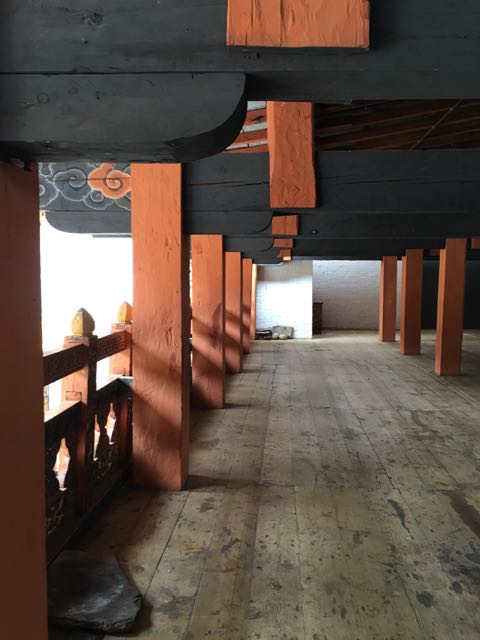
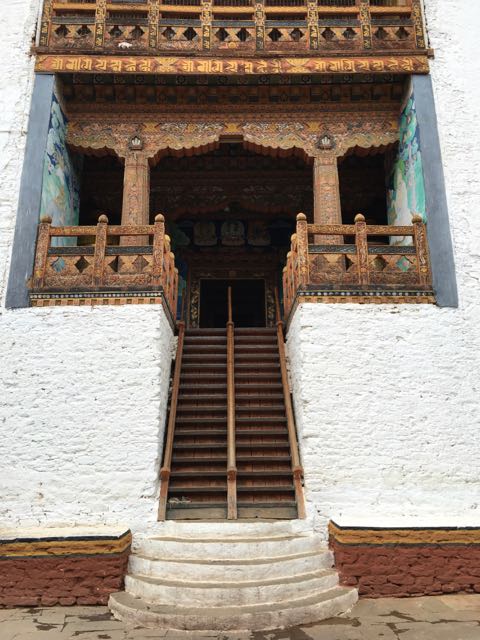
Landing in Bhutan is unlike any place I’ve ever been. Surrounded by mountains and a river on one side of the airport, the scene is idyllic. The new terminal structure is beautiful and typifies Bhutanese architecture.
The Customs process has been streamlined dramatically. In the past, you had to present your VISA have that checked by an official and then have your entry card checked against your passport. Now, the officials check your passport, scan it, and you are done.
Namgay was waiting outside for us. It’s hard to describe the feeling I have when I return to Bhutan and meet Namgay. It’s a strange mix of wonder and excitement. If you are reading this blog and have not visited Bhutan, I’m not sure any language can articulate the feeling. I’ll say this: there is something about the place that is unique. One scholar I read said, basically that Padmasambhava (Guru Rinpoche) consecrated this land so that one’s experience of the place and the people would bring great joy and compassion into your being. I think Padmasambhava said something like this: “seven days in Bhutan is like spending seven years in Tibet”. He meant that the blessings available to someone coming to this place exceeded those in Tibet. Maybe that blessing is what I experience each and every time.
Maybe that’s why I come back to this place again and again.

We are on day 3 of our journey to Bhutan and the day has run pretty much like the days before; PANIC. Maybe panic is too strong a word. I’ll let you decide. Our evening in Bangkok included sleeping. We arrived at Great Residence with the idea that we would shower, change, and head to downtown Bangkok for dinner and an experience (you can look at our previous wacky experience in Bangkok here)….
With all good intentions in mind, we headed off to our rooms and immediately crashed….well, at least SOME of us did. Having not slept in 30 some odd hours, sleep grabbed me like a tiger, shook me around and left me laying there wondering what happened. With a solid five hours under my belt, I woke at 9:45PM ready for the day! Only, it was night. In Thailand. Something was definitely off….(no comments on THAT point, please).
Intrepid as always, I decided let’s go anyway! A taxi ride into Bangkok would get us there by 10:30 and then we had the night! Right? Riiiiigggghhhhhttt. In the meantime, Halle and Natascha, eager to head to town waited on me until they passed out around 8:00PM….and so it went….we woke up around 3:00AM, got ready for our flight from Suvarnabhumi airport.
I have said it before and I will say it again: the Bangkok airport is a wonder. In so many ways, this airport defines the modern world and consumer culture. An entire mall of goods is presented to you as you wander the concourses. The King Stores (in recognition of the King of Thailand) offer a variety of food items including the ubiquitous dried fruit. I am a sucker for the various versions of dried mango (freeze dried is particularly delightful). The various other shops and stores include the “duty free” expensive goods like Hermes, Gucci, Prada and the like. These places represent a kind of experience of life that few can understand (me included). Not really trying to take anything away from the place at all, it interests me that these expensive duty free shops abound in this airport. Simply put, the place is remarkable in its scope and, I imagine, is miles long.
Which brings me to the other part of this tale: running through the airport. I have experienced running through airports to make flights twice in my life. This day included one of them.
So it all started like this: we decided on a breakfast spot, a place called Volare (no singing that song!) which is a European-style café with various tasty food and coffee. I have visited this business every time I have visited the airport for any length of time. Today’s fare included a couple of shots of espresso, the ladies had some forms of coffee (of the frozen variety!), croissants and Caprese. The Illy coffee was really wonderful and I am always impressed by its flavor (and no, I am not a coffee expert….just some guy who likes espresso).
We arrived at the coffee shop at 5:10 AM. The flight left at 6:30 AM. We believed we had plenty of time. (Mistake number 1) We ate our food and leisurely wandered the mall and headed back to the gate. As we walked, I glanced up at the list of departing flights. It was raining outside, and I thought, “maybe it’s delayed”. In BRIGHT RED letters, next to the flight number were the words FINAL BOARDING CALL. WHAT?! You have to be kidding me right now. FINAL boarding??
As soon as I saw the words I yelled to Halle and Natascha “WE HAVE TO RUN”! Natascha looked at me and the panic swept across her face — and she ran. Halle matched her pace and I was behind by maybe 20 feet….we ran for 1000 M. Why do I know 1000M? Because the signs reveal how far it is to a particular concourse (A – F). Each concourse is about 300M from the other. We were lounging in concourse E. We had to run to concourse C, past the sign, down two escalators, through the hallway to the gate. 1000 M.
In past years traveling on Druk Air has been a casual affair. The staff are friendly and attentive. Things move at their own pace. This statement is NOT to say that the airlines or staff are not serious in every way; they are. The ethos of the airline, I felt, represented the ethos of the country. This year, we are traveling on Bhutan Airlines. Bhutan Airlines is a private company unlike the airline owned by the monarchy (Druk Air). The staff and way we have interacted with the company has been professional and the people exceptionally kind.
Regardless, we ran to the gate and up to the counter….we got the look (you know what I mean) from the Thai staff…I could see it, “yea we both know you are late so don’t say anything just get on the bus.” On flights to Bhutan, the planes sit on the tarmac away from the terminal. Busses transport you from the concourse to the plane and then you walk up steps to the aircraft. Needless to say, we were the last three to make it to the bus! (Are you still reading this tripe?)
And then we waited. OK, here’s the thing: I am NOT a believer in fate or chance actions that speak to a greater all knowing, all powerful entity that directs life as we know it. While there may, in fact, be a greater, all knowing, all seeing entity directing life, my experience tends to explain most human endeavors as a series of sometimes complex, sometimes not, situations that reflect a cause and effect. In most cases you can find the root cause and follow the tortuous road to the effect. AND our experiences on this trip are challenging my understanding of the world….NOT profoundly…just in an interesting way.
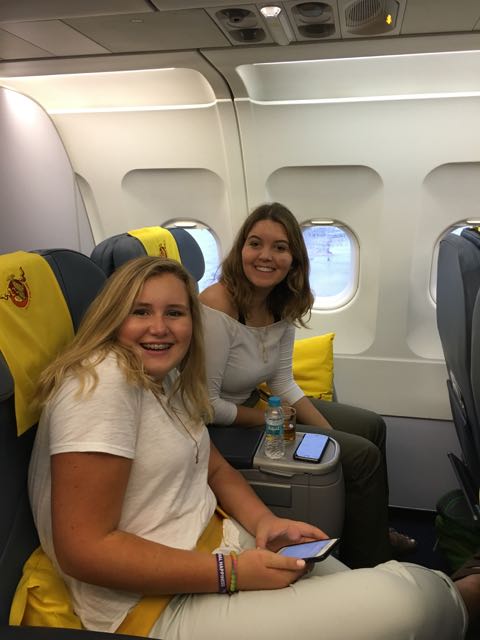
To continue the story, we waited on the bus for about 15 minutes….then we drove for about 5 minutes to the airplane. We climbed the stairs, were greeted warmly, found our seats. All was good with the world. WE MADE IT to the plane and were ready for our travel into Bhutan.
And. We. Waited. Past the 6:30 departure time; through the 7 o’clock hour. With a crackle, the speaker came to life and the captain said the flight computer was damaged and maintenance was called. The FLIGHT computer! At this point in our travels, we wondered aloud, Halle, Natascha and I, if we weren’t bringing the various challenges with us OR that WE were being challenged to strain our patience or otherwise got through some test. To show us (read me) that all of the best laid plans of mice and men are truly subject to the whims of chance….or some other power turning the wheel of the ship or car or whatever metaphor comes to your mind.
In reality, I gave up worrying about the conference and my place in it….I can do nothing to affect the outcome of whether or not I, TGF, can make it to Bhutan on time. I emailed the conference coordinator, let her know my difficulties, and let the rest go….I released it all. At that moment (about half way across the Pacific), peace arrived…I relaxed into what is possible on this trip and allowed the rest to just be. Am I getting too woo woo for you? OK, enough said…I tend to wander into those thoughts sometimes anyway….so la dee dah.
More ridiculous thoughts to come…..
And then everything fell into place. As I mentioned in my last post, our travels to Asia faced a snag. Cancelled flights, changed planes, all kinds of details I won’t bore you with….I wondered aloud at the fruitless attempt to travel around the world to miss a conference.
The thing to always keep in mind is that my intrepid friend and host in Bhutan, Namgay, moved earth to get Halle, Natascha, and I on a plane to Bhutan….the chances of that happening, hundreds to one….and yet we fly our way to Bangkok, ready to take a July 2nd, 6:30AM flight to Paro.
I cannot say enough about being patient and letting the world work its magic….maybe not magic, but at least trusting that what can happen will happen with the right pieces falling into place when it needs to.
I’m also thankful to have friends and colleagues around the world who work for each other’s benefit….I think THAT is the real globalization; a world in which we are in it together….OK sure, maybe I am being sappy right now (after about 2 hours of sleep in 24), and I’m a big believer in the power of people to make a difference in the lives of each other. Maybe that’s the lesson from this silly little experience…one that certainly doesn’t measure up to any real scale of difficulty….AND I do think what we experienced is worthy of acknowledgement. Let’s just chalk it up to Namgay, a remarkable human being on this planet.
Still more to come….
So yesterday started like any other international travel day: very little sleep the night before, dragging out of bed, shower, shampoo, shave, gradually make your way to the kitchen only to just remember that you forgot to pack that one thing that you said you cannot forget….only you did, so you go find that thing, bring it back to your bag, carry-on, or other particular piece of luggage (and I mean that word, luggage as in “to lug”). Then you get a little nervous; you pace, or fidget, check for your passport, documents (again), now look at your flight status AND (dun dun dun!) the flights is CANCELLED.
Exactly. If you don’t really know Albuquerque (it IS a city in the United States), you don’t know that while we have one of the best airports EVER (not kidding), there are few flights coming and going from this high desert city on the Rio Grande. So, when I discovered that our flight was cancelled, I began a slow panic. See, here’s the thing: it’s hard to rebook flights out of Albuquerque to somewhere because chances are that the few flights that also go to that place are being booked by people in Albuquerque trying to get out as well!
So, here’s the scenario: flight to Denver cancelled…no flights to Denver (at all) before the departure of the international flight to Bangkok. BTW, want to know something else about travel to another part of the world from Albuquerque? Miss that FIRST flight and the rest of your schedule is toast….blackened toast, left way too long in the toaster…you can smell the burned crisp of bread across the whole house….ANYWAY flight to Denver cancelled…on the phone (now panicking officially) with airline agent who cannot get us to Bangkok on the time necessary to make the connecting flight (on the next day) to Bhutan.
And that’s another part of this fractured tale: Bhutan is less hard to get to than it was, but it is hard to get to…enough so that if you miss that connecting flight you are TOASTED…meaning no way to get to Bhutan no how.
So, here we are, on our way to Bangkok: rebooked, traveling the 1:20AM flight out of LAX….arrive in Bangkok in the early afternoon…just in time to get to the hotel and crash hard.
Well, that’s the TRAVEL side of things. The mental/emotional toll is always something else entirely. I supposed to be at a conference. The conference lasts only 3 days…..I am going to miss AT LEAST 1 ½ of those days…..at least. The whole reason for the trip, wiped away in an instant. Certainly a test of patience….I guess that’s why I am listening to Pema Chödrön on how to breathe deeply and allow spaciousness to occupy my mind rather than those other crazy thoughts (I’m missing the friggin conference!!!)
Ah well, more thoughts soon….stay tuned.
As I have written here before, the country of Bhutan adopted the principle of Gross National Happiness as both a product and a goal for the country. The idea is a radical one and originated with the 4th King of Bhutan (the Druk Gyalpo). The origins of the idea and how it developed can be found here: http://www.kuenselonline.com/the-origins-of-gnh/.
The Centre for Bhutan Studies sponsors conferences and speakers to further research on Bhutan, GNH, and Vajrayana Buddhism. My travels to Bhutan this summer (graciously supported by a partial grant from Sandia Preparatory School), include a conference on the influence of Vajrayana Buddhism on Science, Medicine, Culture, and even History. My participation in this conference coincides with my work on teaching and mindfulness in the classroom, as well as ways to incorporate cultural studies in the Modern World History and Global Studies program at Sandia Prep.
In addition, I will have the chance, courtesy of the Bhutan Tourism Bureau, to visit a number of cultural and historical sites for the upcoming student trip in June 2017. Our plan is to investigate the availability of home stays in Bhutan and to continue creating deeper connections with the people and places in this remarkable country. With the help of my friend and expert guide Namgay and his company Illuminating Tours http://www.illuminatingtoursbhutan.com, we will scout out the perfect trip for our students.
I will keep the blog updated, refreshed and hopefully interesting for those out there who read this kind of information. Details about the conference and sessions will be posted here each night (between July 1st and 3rd, as well as information about the future trip and new sites we plan to visit.
If you have read this far, wonderful…..be well, my friends.
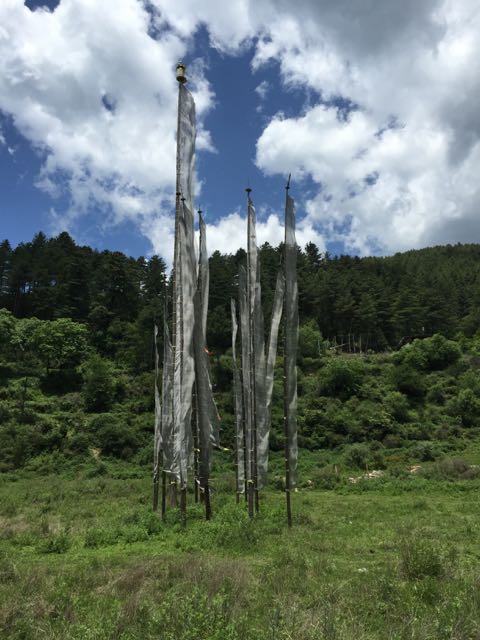
As I sit here nearing the end of my school year, I am planning my summer trip to Bhutan. My travels take me to the Vajrayana conference in Thimphu and then into the country side with my friend and guide, Namgay.
My goal this summer is to scout sites for my next student tour into the country. I am looking for appropriate home stays and talking to folks about ways to expand and enhance the student experience in Bhutan.
As you may have read, student’s experiences in Bhutan are remarkable. The people students meet are always interested in talking about their country and the U.S. While I’m not suggesting that somehow these experiences can’t be had in some other place, the particular experience for students in Bhutan is unique.
A student asked me a couple of weeks ago why I go back to the same places in Asia. She said, “With all of the world in front of you, why keep going back to Japan, Thailand, and Bhutan?” I thought about that idea for a minute and offered, “What I find, each time I travel to those places, is something new, something interesting, and something I can be a part of.” For me, visiting the whole world or having some kind of “bucket list” seems anathema to the whole idea of cultural exchange. I have been to a few places in the world, and I come back to these places because I’m interesting in digging in; in meeting people and being a part of a community (as much as you can in a short time). I also want students to realize that you don’t have to see every possible historical or cultural site in the world to gain an understanding of a people, a history, or culture.
So I’m headed back to Bhutan in July. This trip will be my first one on my own; without 20 students in tow and all of the planning that goes with it. I’ll let you know how the trip fares, what I learned (or didn’t learn) and where this all takes me. Maybe, what I find will be something completely new in a place I have seen many times.
 gentryfunkblog